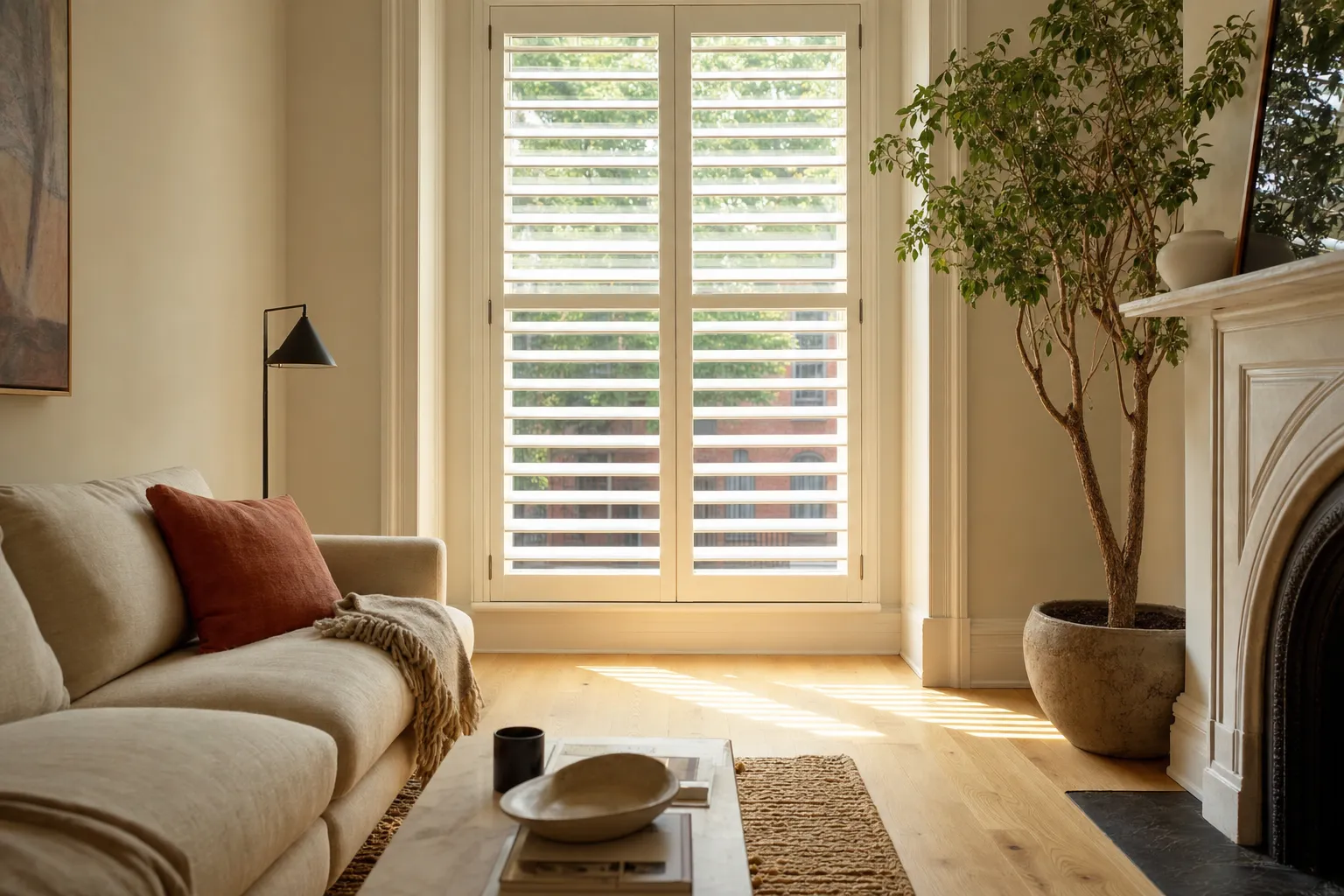
Shutters
Rigid panels of tilting louvres in a frame, hinged to the window like a small door. They stay on the glass all day, which is the whole point of them and the first thing to decide before you order.
Blinds Company · Rated 4.8 out of 5 on Google
Free in-home measure · open 8am–9pm, 7 days
In short
A shutter is a rigid frame of tilting louvres, hinged to your window and built to its exact size. We measure at your home, write the quote line by line, and install it ourselves.
Book
Let's measure your light.
We come to you, measure at your own windows, and go through fabrics and fits together. The visit costs nothing.
$99 off when you order three or more blindsApplied to your written quote at the measure.
Rather just talk?(437) 782-5452Open 8am–9pm, 7 days
The short version
Is this right for your window?
Yes — if the room is one of these.
- Street-facing rooms that want daylight kept and the pavement view broken
- Older houses with deep reveals and trim worth leaving in sight
- Bay windows that would otherwise need three separate blinds
Where it is wrong is below, and that half is the useful one.
And this is what you would be getting.
- 01
- Rigid hinged panels in a frame, built to one opening
- 02
- Louvres tilt together to steer daylight and break the sightline
- 03
- No cord or chain hanging down, and no fabric to launder
- 04
- Measured at your home and installed by our team
In a room
What shutters look like once they are up.
The product, not our installations — a gallery of rooms we did not fit would be somebody else's portfolio with our name on it.
What a shutter is, and what it is not
A blind is fabric or slats that hang from a rail and move up and down. A shutter is none of those things. It is a rigid frame with louvres set into it, hinged at the side of the window, and it opens and closes like a small door rather than rolling or lifting out of the way.
The louvres are the slats, and they tilt together on a bar, so one movement of the hand changes the angle of every one. Tilted open, they let in daylight and a view of the street. Tilted shut, they lie edge to edge and screen the room. Between those two positions is a whole range of angles, and that range is what people mean when they say a shutter gives them control.
What a shutter is not is a covering you lift away. It stays on the window, all day, all year. Some people want the glass bare for most of the day, and some want a hard, finished line across the window with a view they can adjust. The second group tends to love shutters. The first tends to regret them. It is worth knowing which you are before the quote.
What they do well
They steer light rather than block it. Because the louvres tilt, you can aim daylight up at the ceiling and keep the room bright while the glare stays off a sofa or a screen. A roller blind cannot do that. It is either over the glass or it is not.
They give privacy and keep the view. Tilted down and in, the louvres break the line of sight from the pavement while you can still see the sky and the tops of the trees from a chair. In a street-facing room on a narrow Toronto lot, that is usually the whole brief.
They have no cord or chain. A shutter is moved by hand and by a tilt rod, so there is nothing hanging down within a child’s reach. Canada’s Corded Window Coverings Regulations came into force on 1 May 2021 and they are the reason many people now ask the question. With a shutter there is simply no cord to ask it about.
They have no fabric to launder. There is no cloth to fade along a fold or hold a smell from the kitchen. The main enemy is dust, and dust wipes off.
They look built in. The frame is finished to suit the room, and the hinges and louvre lines read as joinery rather than as a covering. In a house with good trim and deep reveals, that is the reason people pick a shutter over anything that hangs.
Where they are the wrong answer
An honest list saves a visit that goes nowhere, so here it is.
A bedroom that has to be fully dark. Louvres close edge to edge, but they are not light-tight, and light shows along every louvre and around the frame. For a room that has to go properly dark, the answer is a blackout blind fitted behind the shutter, or a different product altogether.
A window you want bare most days. A shutter does not roll away. Even folded back against the wall, the panels remain in the room and cover a strip of the reveal. If you like the glass clear in daylight, a roller blind that you lift out of the way is the better fit.
A small window in a room where the budget is tight. A shutter is built to one opening, so a small window needs much of the same framing and hanging work as a large one. For a small bathroom pane, a faux wood blind often does the same job with less.
A window with something in the swing. Panels open into the room. A handle, a crank, a radiator or a deep sill in the way changes what is possible, and we say so at the measure rather than after the quote.
The parts, and what each decision changes
Four decisions shape a shutter, and each is easier to make with a sample in your hand than from a description.
The louvre width. Louvres come in a range of widths. Wide louvres show more of the view and read as more open when tilted. Narrow ones give more privacy at the same angle and a more traditional look. Height decides it more than taste does: a tall window carries a wide louvre well, and a short window can look crowded by one.
The tilt rod. The bar that moves every louvre in a panel is either visible, running down the middle of the louvres, or hidden along the edge. A visible rod is easy to find and easy to grip. A hidden one gives a cleaner face. Either way one hand moves the whole panel.
The frame. The frame is what makes a panel rigid. A deeper frame is sturdier and covers more of the glass when the panel is open, and a slimmer one leaves more of the window showing. Which is right depends on how much of the reveal you want to keep in sight.
The mid-rail. On a tall window, a horizontal rail splits the louvres into an upper set and a lower set. With it, you can tilt the top open for daylight and keep the bottom shut for privacy at eye level. That single arrangement is the most useful thing a shutter does on a street-facing window, and it is decided at the measure, because the rail has to land at a height that suits your own sightline.
How they open
Panels can be arranged in a few ways, and the window usually chooses for you.
Hinged panels swing into the room like a door, one panel or two to a window. They are the simplest arrangement and the one most people picture. They need clear floor in front of the glass.
Bi-fold panels are hinged to one another as well as to the frame, so a pair folds flat against the side of the window. On a wide opening, that lets you clear the whole of the glass and put the panels away from the view.
Track-mounted panels slide along a rail at the head of the opening instead of swinging. They are the usual answer for a wide glazed door, where swinging panels would block the way through. They are also useful in a room where there is simply no space to open a panel into.
Inside the opening, or on the frame
A shutter is mounted one of two ways, and the choice is made by the window rather than by taste.
An inside mount sits the shutter within the reveal. It looks built in, and it keeps the sill clear. It needs a reveal deep enough for the louvres to clear the glass and the hardware to sit without rubbing, and in many older Toronto houses the reveals are generously deep. In a newer house or a condo, where the frame sits almost flush with the wall, they often are not.
An outside mount fixes a surround frame to the wall around the opening and hangs the shutter in that. It hides a reveal that is out of square, and it can make a small window look larger. The cost is that it projects into the room and sits over the trim, so on a window with mouldings worth looking at it covers them.
Neither is better in general. We look at the depth, the trim and the squareness, and tell you what the window will take.
Why the measure matters more here than for a blind
A blind forgives a little. A roller cut half a centimetre narrow still works. A rigid frame that is a few millimetres wrong, in a window that is out of square, binds on one side and shows a gap on the other, and nothing you do at home will correct it.
Older houses are the clearest case. They settle, and it is normal to find the top and bottom of the same window differing by a centimetre or more. A shutter built to the average of those numbers fits nowhere. One built to the right number at each point fits the window you actually have.
That is why the measuring is the whole job. We measure width and height in more than one place, check the reveal for depth and for square, and note every handle, crank and sill in the swing. The numbers go into the quote line by line, one line for each opening. If you want to see what that looks like on a window of your own, the guide to measuring windows for blinds sets it out, and it is a useful way to see why we do not ask you to do it for us.
Bays, corners and awkward openings
A bay window is the place shutters earn their keep. Each pane gets its own panels, hinged to meet at the corners, so the whole bay reads as one piece of joinery rather than as three blinds that happen to be next to each other. The corners are where the measuring has to be exact, because two rigid frames meet there and neither can give. A bay window with three roller blinds is a legitimate answer too, and a cheaper one. A shutter is the answer when you want the bay to look finished.
Windows that are not rectangular, such as an arched head or an angled gable, are templated at the measure and quoted separately. Some are worth doing in shutters and some are not. We give you the honest version of which yours is.
Kitchens, bathrooms and anywhere damp
A shutter in a kitchen or a bathroom has a harder life than one in a living room. Steam and grease settle on every louvre, and a panel has a lot of louvres. Shutters are made in more than one material and they do not all cope equally with moisture, so the room should be named when the quote is asked for, and the material chosen for it rather than for the rest of the house.
In a kitchen, the louvres closest to the hob take the grease. They wipe clean, but they need wiping. In a bathroom, a shutter that stays closed while the shower runs holds the steam against the louvres. Tilting them open while the room clears is a ten-second habit that adds years.
Looking after them
Dust is the usual enemy. Tilt the louvres open and run a soft brush or a dry microfibre cloth along each side, working from the top panel down. For a mark, use a barely damp cloth and dry the louvre straight away.
Do not soak a panel, and do not use a strong cleaner on the finish. Do not hold the louvres to move a panel either, since the tilt rod is there for that. Pulling on single louvres is the quickest way to get one out of line with its neighbours.
Shutter, blind or curtain, decided properly
These three get compared on looks, which is the least useful axis. The better question is what the window has to do for most of the day.
If the window should be bare most of the day and covered occasionally, a blind is the better tool, because it goes away. If the window will be covered most of the day and the finished look of it matters, a shutter earns its place.
The closest relation is the venetian blind, or a wood blind, which tilts a slat in the same way. The difference is that a venetian blind hangs from a rail and lifts out of the way, and a shutter is a fixed piece of the window that you tilt but cannot raise. Choose the venetian when you want the option of clear glass, and the shutter when you do not.
Curtains are a different job again. A curtain softens a room and stops a draught, and a shutter makes the window itself look finished. Many rooms end up with both, with the shutter doing the work of privacy and light and the curtain doing the work of the room.
Where we measure
We measure and install in Toronto, Mississauga, Brampton, Etobicoke, Richmond Hill, North York, Vaughan, Milton, Burlington and Markham. If you are not sure whether your street is covered, ring and ask. The pages for Toronto, Mississauga and Brampton say more about measuring in each area.
Last updated .
A shutter is built to one set of numbers, and the measure is where they come from. The visit is free.
Our commitment
Because we take the measurements and fit the shutters ourselves, a panel that does not fit its opening is ours to remake.
If it does not fit, we remake it
You never held the tape.
Nothing owed before you agree
No deposit, no card.
Licensed and insured
Both, before we come in.
Your date, in writing
Set at the quote. It does not move.
We will tell you not to buy
If a stock size does it, you hear so.
Cordless where a child sleeps
Standard, at no extra charge.
Reviews on Google
What people said afterwards.
Rated 4.8 out of 5 — the ones below are quoted in full, with a link to check each on Google.
Nick has delivered the greatest service as I recently moved in to my new townhome and needed to have blinds for all three floor windows. Not only the price was the best, but he accommodated all my requests in the process. Definitely worth every penny
Anton KovunovI was blown away by the exceptional customer service from Blinds Company! Their staff was knowledgeable, friendly, and helped me find the perfect blinds for my living room. The installation was quick and flawless. I highly recommend them!
Merdan Berdiyev
Real names, real dates, and a link to all of them — including the ones we would not have picked.
Read them on GoogleQuestions
Before you book
Do shutters make a room completely dark?
Not on their own. Louvres close edge to edge, but light still shows along each louvre and around the frame, so the room goes dim rather than black. Where a bedroom has to be properly dark, the usual answer is a blackout blind fitted behind the shutter, or a different product for that window. We raise it at the measure, because it is the most common surprise.
How much room does a shutter need to open?
A hinged panel swings into the room by about its own width, so the floor or furniture in front of the window matters as much as the window itself. Where that space is tight, the panels fold back in pairs, or a wide opening is fitted on a track so the panels slide instead of swinging. We check what is in the swing, including handles, cranks and radiators, before anything is quoted.
Can shutters go on a bay window or an unusual shape?
A bay is three small shutters meeting at two corners, and it is a common and good place for them. Arched heads and angled gables are templated at the measure and quoted separately. Occasionally we judge a shape not worth doing in shutters and say so, rather than sell something that will look forced.
Will shutters work on a patio or sliding door?
Usually, but not with swinging panels, which would block the door every time you used it. A wide glazed door is normally fitted with shutters that slide on a track, so they stack to one side when the door is in use. If a vertical blind or a panel track blind suits the door better, we say that instead.
How do I clean them?
Tilt the louvres and dust each side with a soft brush or a dry microfibre cloth. For a mark, use a barely damp cloth and dry it straight away. Do not soak the panels, and do not use the louvres as handles. Move the tilt rod, and the whole panel moves with it.
What happens at the free measure?
We come to your home, measure each opening, and check the reveal for depth and for square. We bring samples to hold against your own glass in your own light. Then we write a quote line by line, one line per window, and your installation date is confirmed in writing on it.
Not this one?
The rest of the range.
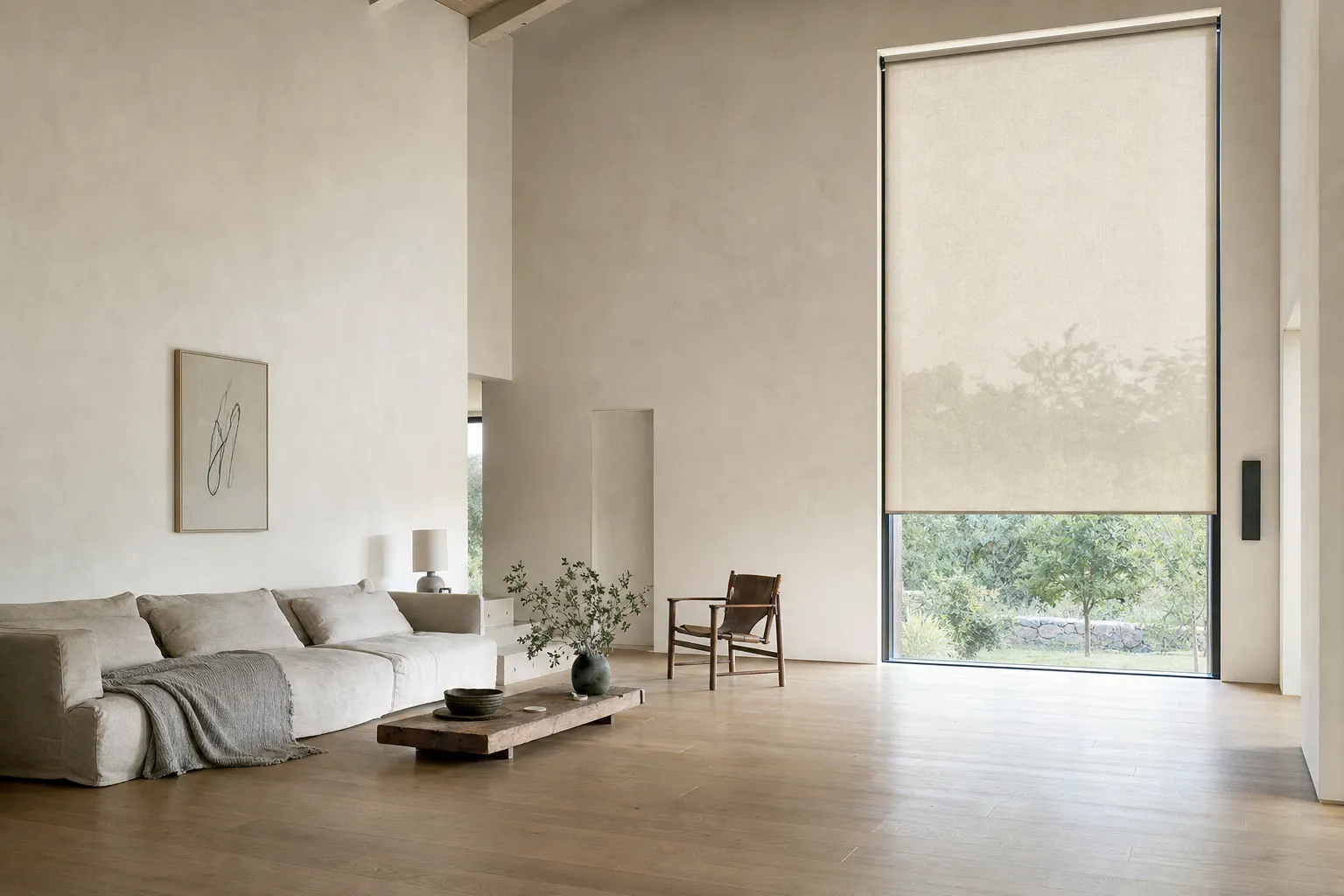
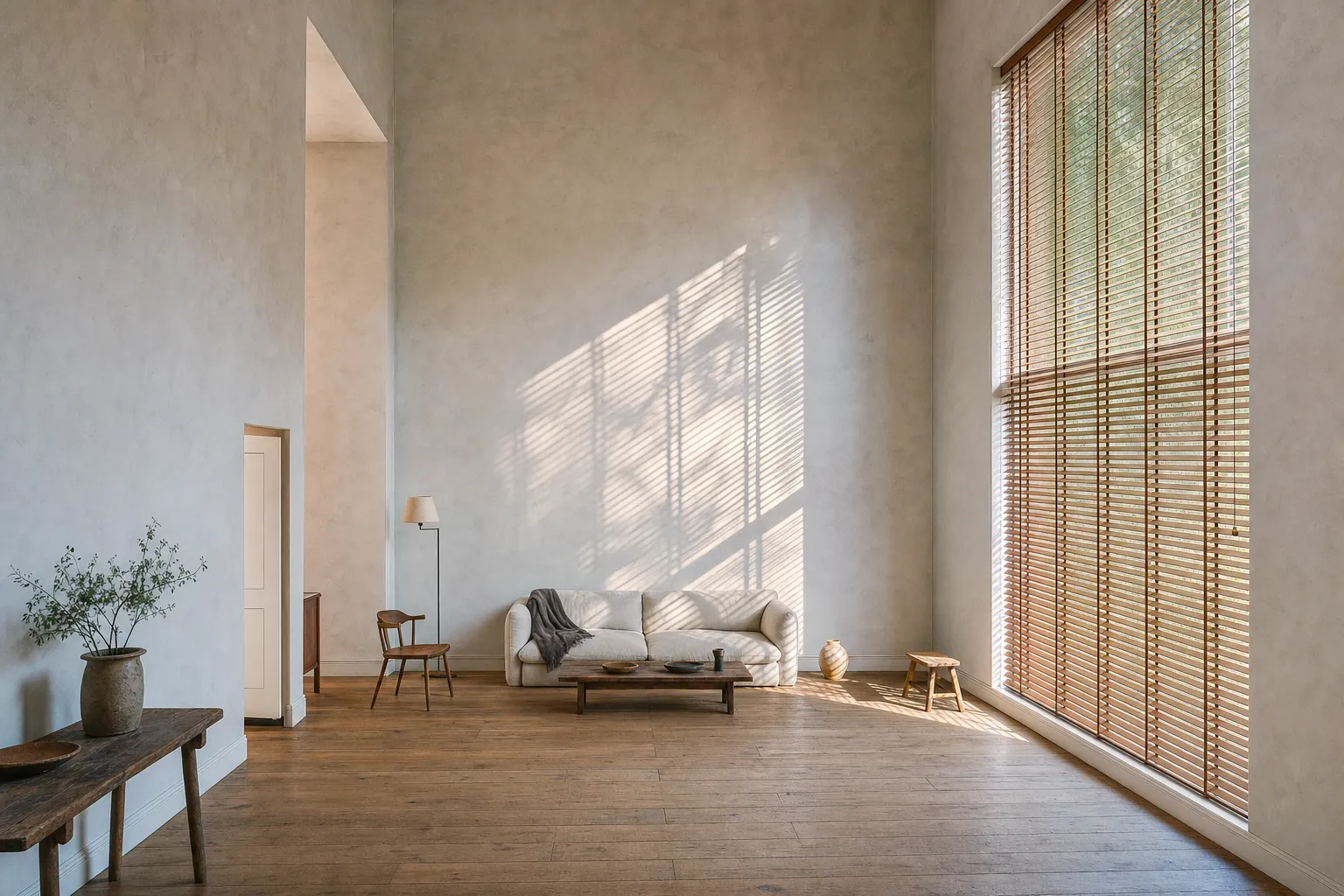
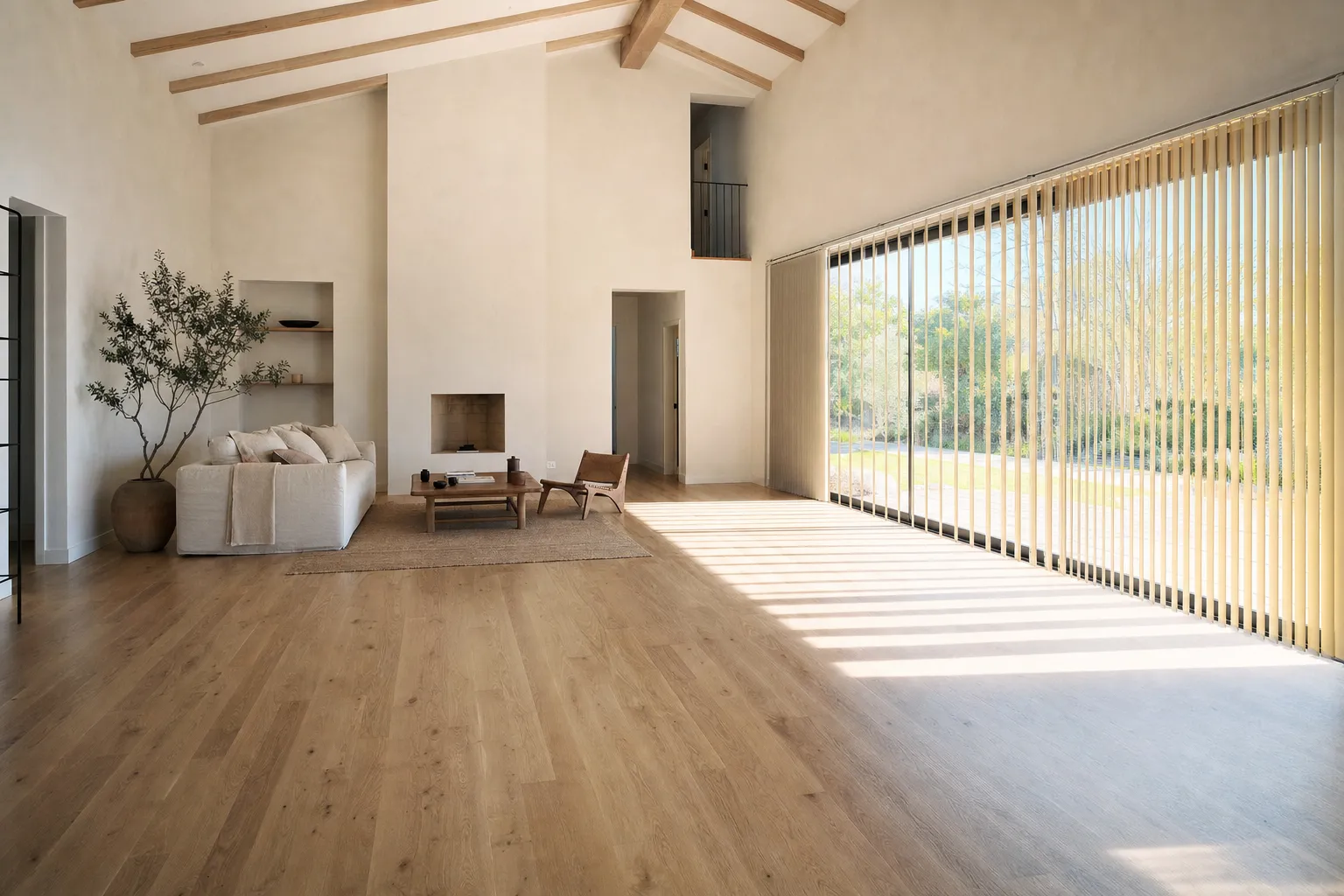
Each of these is the wrong answer somewhere, and its page says where. That is usually the faster way to find the right one.
Would rather talk a window through before booking? Ring, and the person who answers is the one who comes to measure.