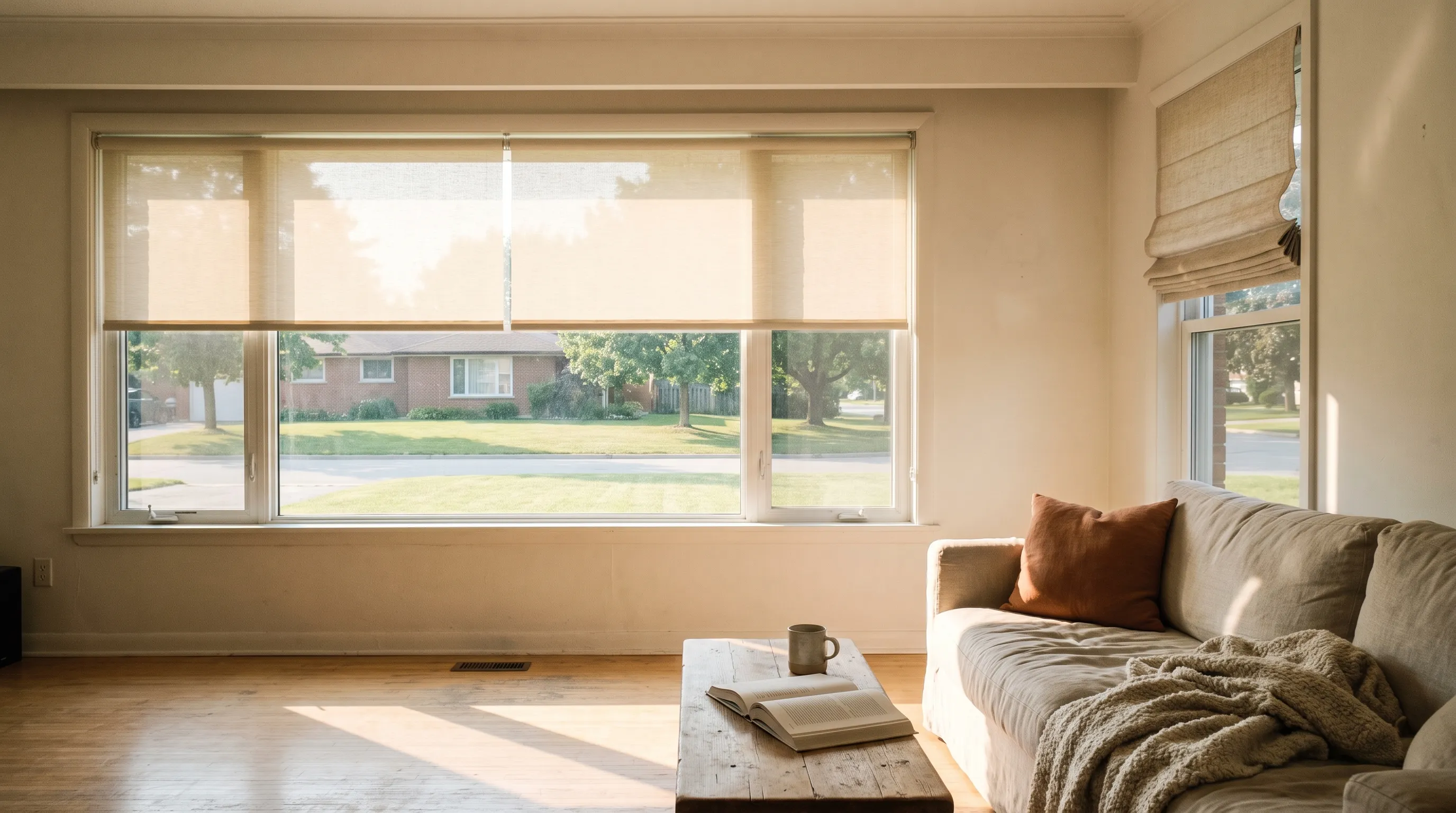
Blinds in North York
Made-to-measure blinds and shades across North York, on streets where a 1958 bungalow and a four-year-old custom build sit side by side and need opposite answers. Measured in your own rooms, fitted by the crew that measured.
Blinds Company · Rated 4.8 out of 5 on Google
Free in-home measure · open 8am–9pm, 7 days
In short
North York is the part of Toronto being rebuilt one lot at a time, so the two houses either side of yours were probably built fifty years apart. That is the whole specification problem here: the original bungalows have small openings with deep reveals and settled frames, while the replacements have tall glass, shallow reveals and rooms open to the floor above. We measure whichever one you are standing in, and the visit costs nothing.
Book
Let's measure your light.
We come to you, measure at your own windows, and go through fabrics and fits together. The visit costs nothing.
$99 off when you order three or more blindsApplied to your written quote at the measure.
Rather just talk?(437) 782-5452Open 8am–9pm, 7 days
One street, fifty years apart
Drive along a residential street in Willowdale or Newtonbrook and count the roofs. You will pass a 1957 bungalow, then a house finished last spring that is three times its volume, then two more bungalows, then a lot with a hoarding around it.
That is the defining fact about specifying blinds in North York, and it is not a detail. The two building types have almost nothing in common at the window: not the size of the opening, not the depth of the reveal, not the height off the floor, not whether the frame has moved, and not what the room is doing. A rule of thumb that works on one is actively wrong on the other, and there is no way to know which house you are in without standing in it.
So more than anywhere else we work, this is a place where measuring is not a formality performed before the real decision. It is the decision.
The original houses, and what sixty years does to an opening
The bungalows and back-splits that make up the older stock here were built between roughly 1950 and 1970. They share a pattern: openings that are modest relative to the room, walls thick enough to give a genuine reveal, and wooden frames that have had six decades to move.
The reveal is the good news. Anything from ninety millimetres deep will take an inside mount and hide a headrail completely, which keeps the casing visible and makes the window read as part of the house rather than as something applied to it.
The movement is the part that has to be checked rather than assumed. Frames settle unevenly — a sill drops at one end, a head bows slightly, a replacement unit gets fitted into an opening that was already out of true and inherits the problem. On a window like that, a product ending in a rigid horizontal bar shows the error as a wedge of daylight that widens across the opening, and no fabric hides it.
Two diagonals tell us within thirty seconds whether we are dealing with a rectangle or a parallelogram. If the diagonals differ, the honest answer is an outside mount with an overlap, which forgives what an inside mount would frame. We would rather say that at the measure than fit something technically correct that looks wrong on the wall.
There is a third thing specific to this stock: a great many of these houses have had their windows replaced once, in the eighties or nineties, with units that sit differently in the opening from the originals. It is common to find two windows in the same room with reveals that differ by fifteen millimetres. Measuring each opening separately rather than measuring one and multiplying is not thoroughness for its own sake here — it is the difference between blinds that line up and blinds that nearly do.
The rebuilds, and the room that is open to the sky
The replacement houses invert every constraint.
The openings are tall, sometimes floor to ceiling on the ground floor. The reveals are shallow, because modern framing and modern window units do not need thick walls. The frames are square, because they went in last year. And there is very often a space open to the second floor — a front hall two storeys high with a window following the stair, or a family room with a wall of glass reaching up to the bedroom level.
Squareness makes the fitting simple. The other three make it complicated in a new way.
Shallow reveals mean depth is the constraint. A zebra needs more room front to back than a plain roller, and where there is not enough the blind mounts to the face of the wall or to the ceiling. That is not a downgrade — mounted at the ceiling, a blind covers the head of the glass and removes the strip of sky that otherwise sits above a blind fitted inside.
Height means reach. A bottom bar at nine or ten feet cannot be operated by a person standing on the floor, and a blind nobody can operate becomes a permanent fixture in one position. On those windows we specify a motor and say why, rather than fitting a manual blind that will be left down for four years.
And a two-storey space changes what the blind is for. At that height nobody is looking in. The blind is managing heat, glare on a screen, and — the one nobody mentions — sound. A double-height room with glass, hard floors and a flat ceiling is acoustically unpleasant, and a large fabric blind is the biggest soft surface you can introduce without buying furniture.
Additions, and the join nobody plans for
North York has an unusual number of houses that are half original and half not: a back extension, a raised second storey, a garage converted into a room.
The window question at the join is always the same and it is almost always left to the last minute. The original rooms have deep reveals and the new rooms do not, so the same product mounted the same way sits differently on each side of the wall. Fabric matching is easy and it is what people ask about. Mount matching is what actually decides whether the house reads as one house.
Sometimes the answer is to mount everything outside the opening throughout, so the line is consistent even though the old rooms could have taken an inside mount. Sometimes it is to accept the difference and make it deliberate — inside in the original rooms, outside in the new, with the change happening at a doorway where the eye expects something to change. What does not work is deciding it window by window as each one is fitted.
The Yonge corridor and the towers
Willowdale and Bayview Village carry a dense band of newer condominium buildings, and the work in them is a different trade again.
Reveals are shallow to non-existent, so the products that need the least depth dominate: plain rollers, and honeycombs where the priority is keeping heat in. Many of these buildings are glazed on two sides of the unit, which means the light problem changes character through the day rather than peaking once.
The building will usually want a certificate of insurance naming the corporation and a booked service elevator. Many also specify what the window may look like from the street, and that rule concerns the backing rather than the fabric you see from inside — a dark room-side cloth with a pale reverse satisfies almost all of them. We read the declaration; guessing at it is how a blind ends up coming down again.
The older apartment stock, and the radiator problem
The mid-century apartment buildings off Bathurst, Sheppard and Wilson are the third category, and they have one recurring feature that changes the specification more than anything about the window itself: a radiator sitting directly under the glass.
A blind that finishes behind or on top of a heat source has two problems. Fabric ages fast in dry rising heat — it discolours and it stiffens. And a blind hanging in front of a convector traps the warm air against the glass, where the room does not benefit from it and the window loses more of it.
So on those windows the blind stops above the radiator, or it mounts outside the opening and stands proud of it, or the room accepts a shorter drop than the glass. Which of the three is right depends on what the room needs at night, and it takes ten seconds to work out with somebody standing there.
Steel casement windows are the other feature of that stock. They open inward on a handle that projects into the room, and a blind fitted inside the opening will foul it. The handle position is one of the things we write down at the measure, because it is the single most common cause of a blind that fits perfectly and cannot be used.
Ravine lots, and light that arrives green
A large number of houses in Don Mills, York Mills and the streets around the Bayview ravine back onto trees, and the back of the house behaves nothing like the front.
Two things happen. The first is obvious once it is said: from May to October the canopy is doing most of the work a blind would do, and the rooms at the back are already shaded. People arrive wanting a screen for the back windows and discover at the visit that the back windows have no glare problem for half the year — the problem is November to April, when the leaves are gone and the low winter sun comes straight through bare branches at exactly eye height.
That inverts the usual advice. On a front window we specify for summer. On a ravine window the difficult months are the cold ones, and a fabric chosen against July is often too open for a low January sun that sits under the roofline for two hours in the afternoon.
The second thing is colour, and it catches people out because it is not a defect. Light filtered through a canopy arrives with a green cast. Hold a warm cream sample against a ravine-facing window in July and it reads slightly sour; hold the same sample at the front of the house and it reads exactly as it did in the book. Nothing is wrong with the fabric. It is the light.
So on those rooms we hold samples at the actual window rather than at the kitchen table, and where a house has both a ravine side and a street side we will sometimes recommend two different whites — not because it is a nicer idea, but because one white matched to both rooms will look wrong in one of them.
The third feature of ravine houses is the walkout. A lower level that opens onto grade has full-height glass at the back and a door that is used constantly, and it is usually the room in the house with the widest gap between how it was drawn and how it is lived in. It gets treated as its own brief.
How the visit runs
We call back and ask which rooms, and what is wrong with them — not which product, because the product is the conclusion.
At the visit each opening gets six measurements, cut to the tightest. Reveal depth before fabric, because depth rules on possibility and fabric only on preference. Both diagonals on anything in an older house. Handles, sills, radiators and ducts written down.
Samples are held against your own glass in your own light. In a Don Mills living room with mature trees outside, a fabric that reads light in the sample book can be a different thing entirely once the canopy is filtering everything before it arrives.
You leave with a written quote itemised opening by opening, no deposit and no card.
What we would tell a neighbour
If your house is original: the reveal is an asset, use it, and check the diagonals before falling in love with a product that ends in a straight bar.
If your house is a rebuild: decide the tall windows first, because they are the ones with a genuinely constrained answer, and let the ordinary windows follow. Deciding the easy rooms first and reaching the two-storey glass with the budget gone is the most common sequencing mistake we see here.
If you are in a tower: start the building paperwork the day you agree the quote, not the week of the fit.
Last updated .
Everything we make
The rest of the range, in North York.
Each is wrong somewhere. Its page says where.
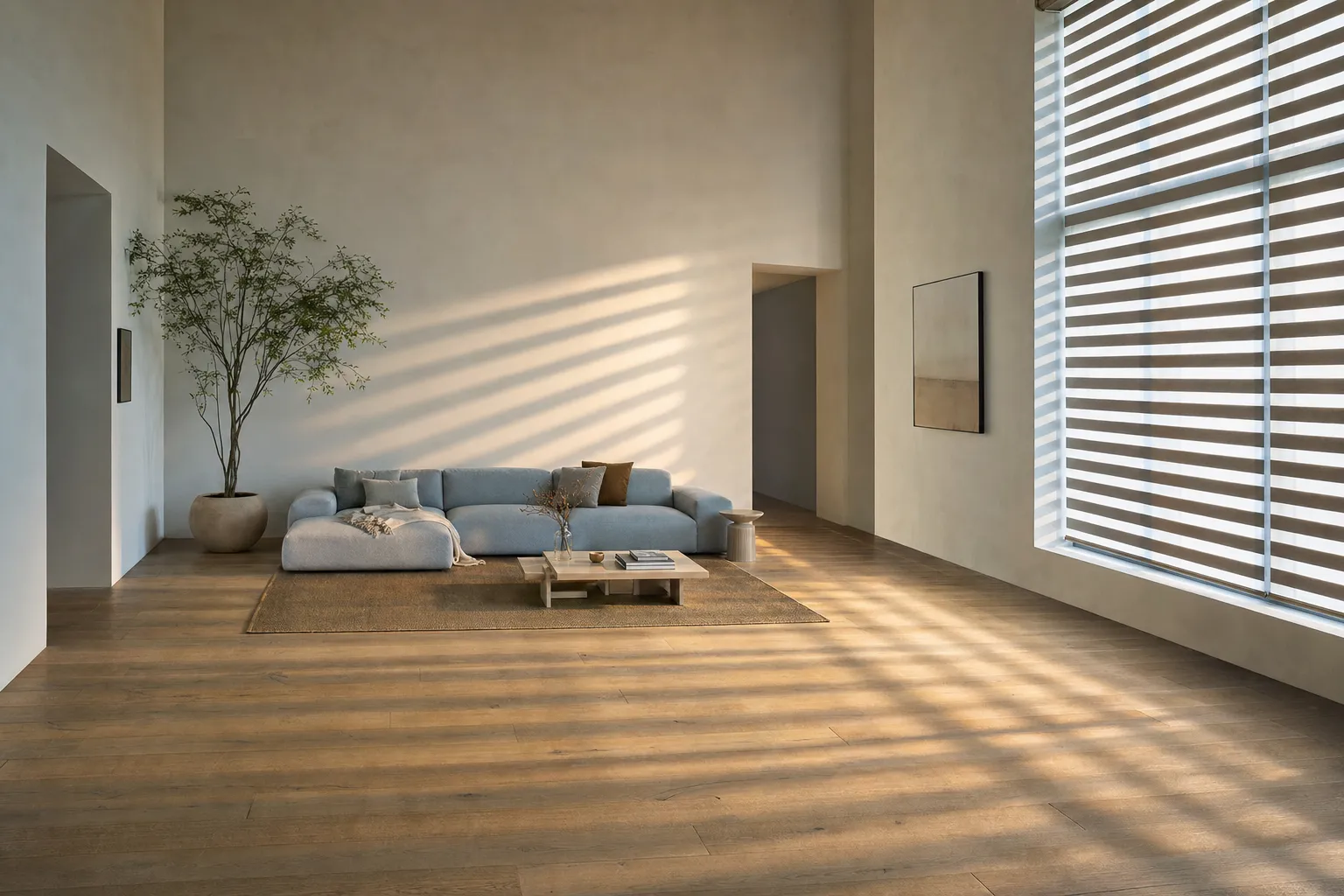
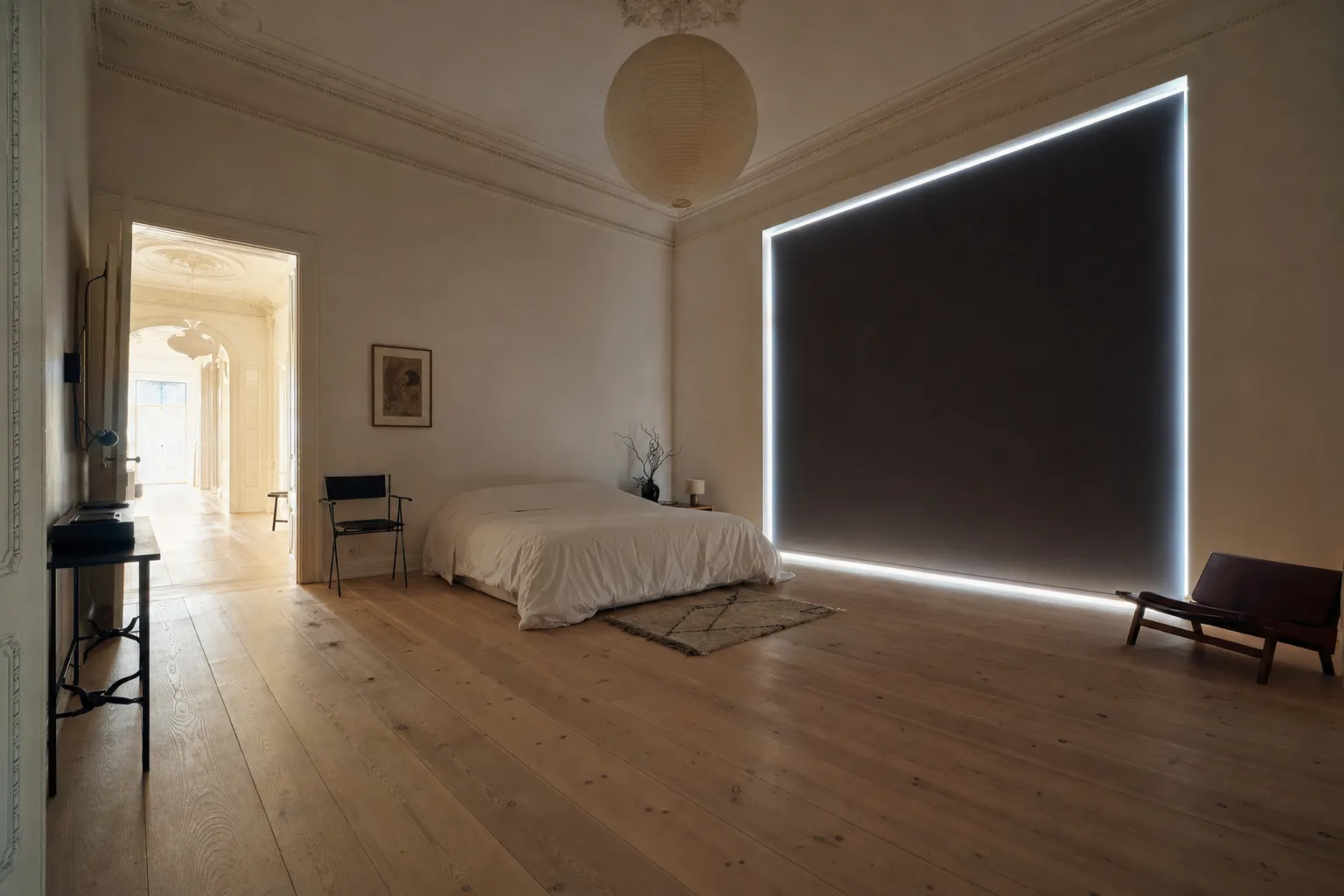
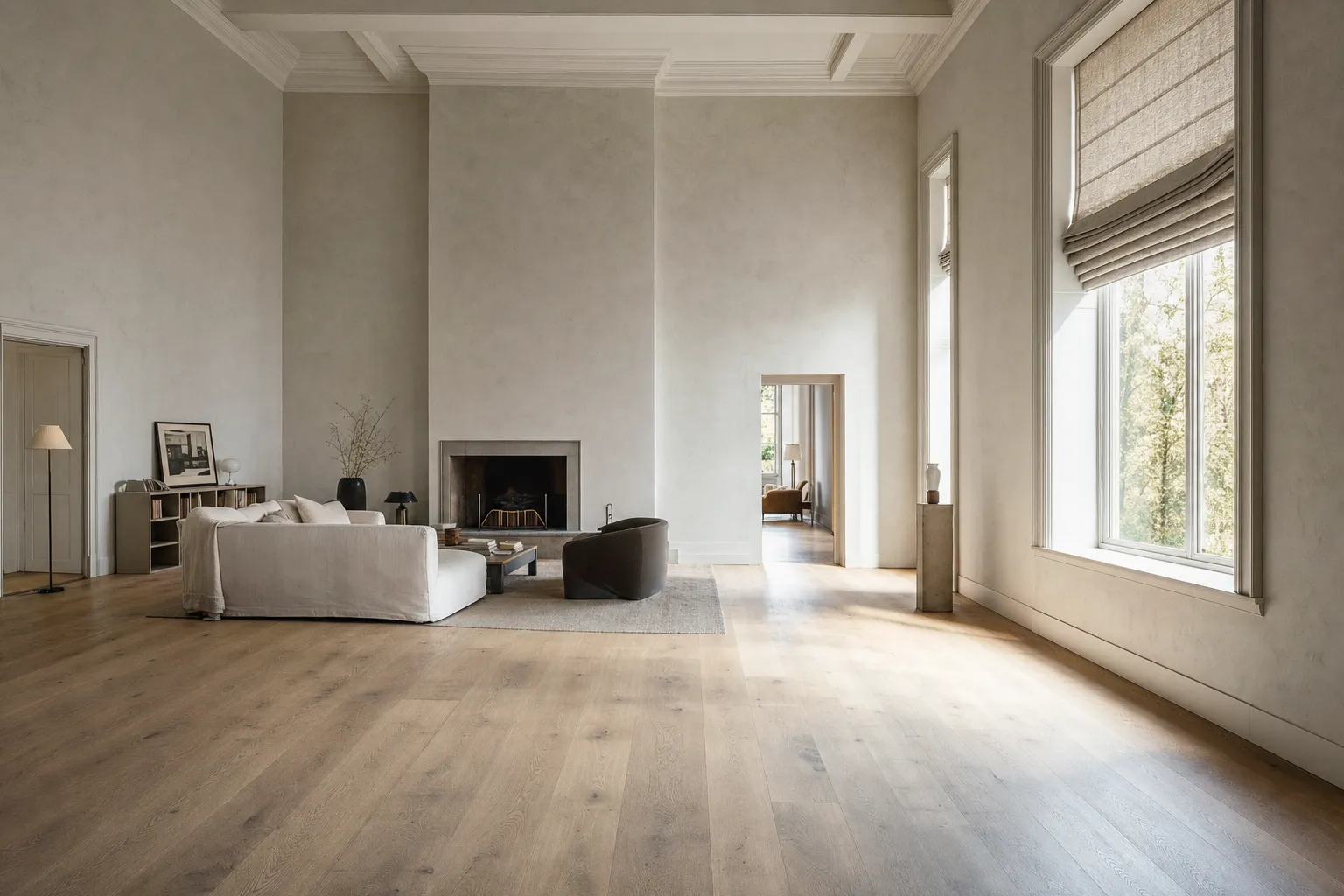
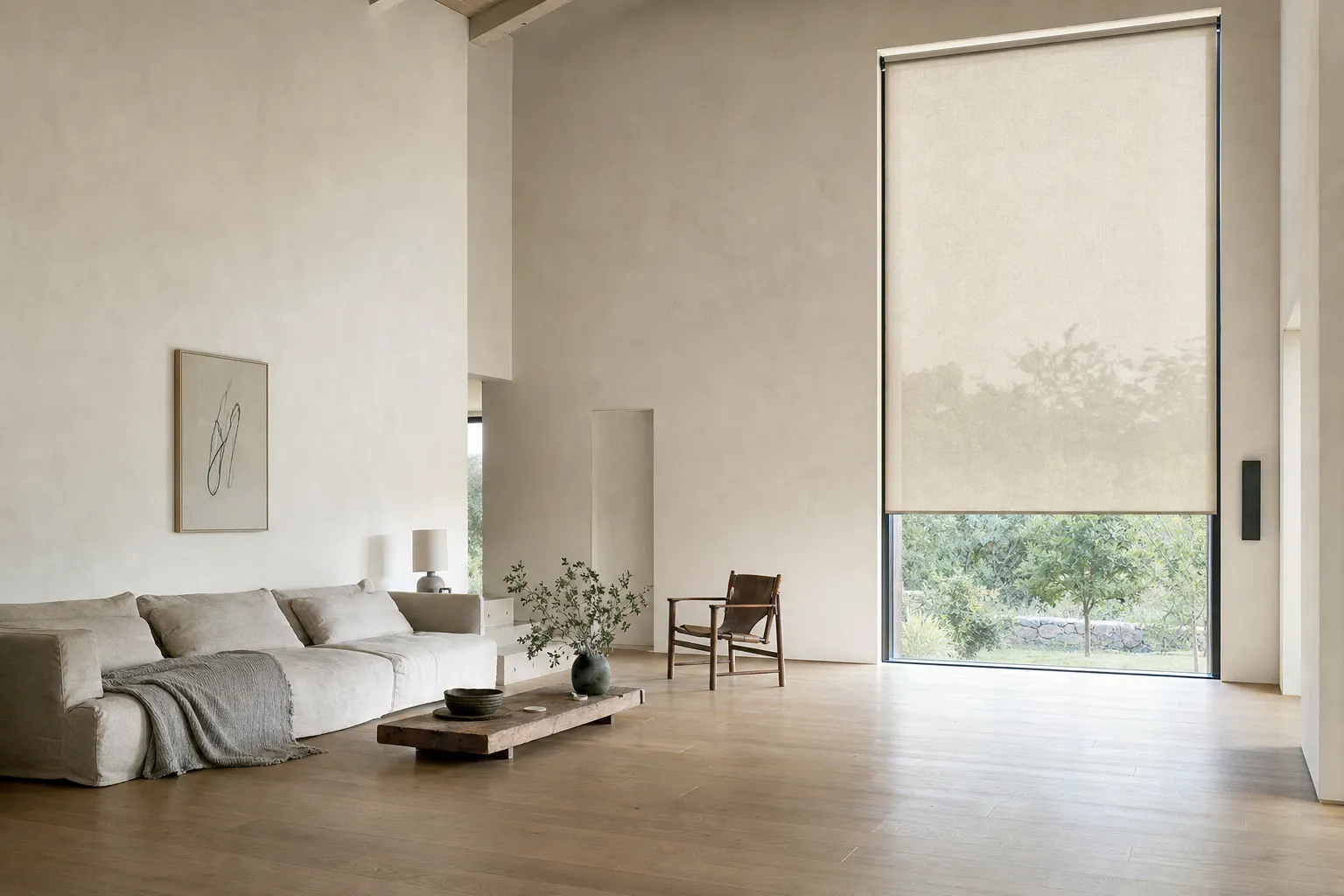
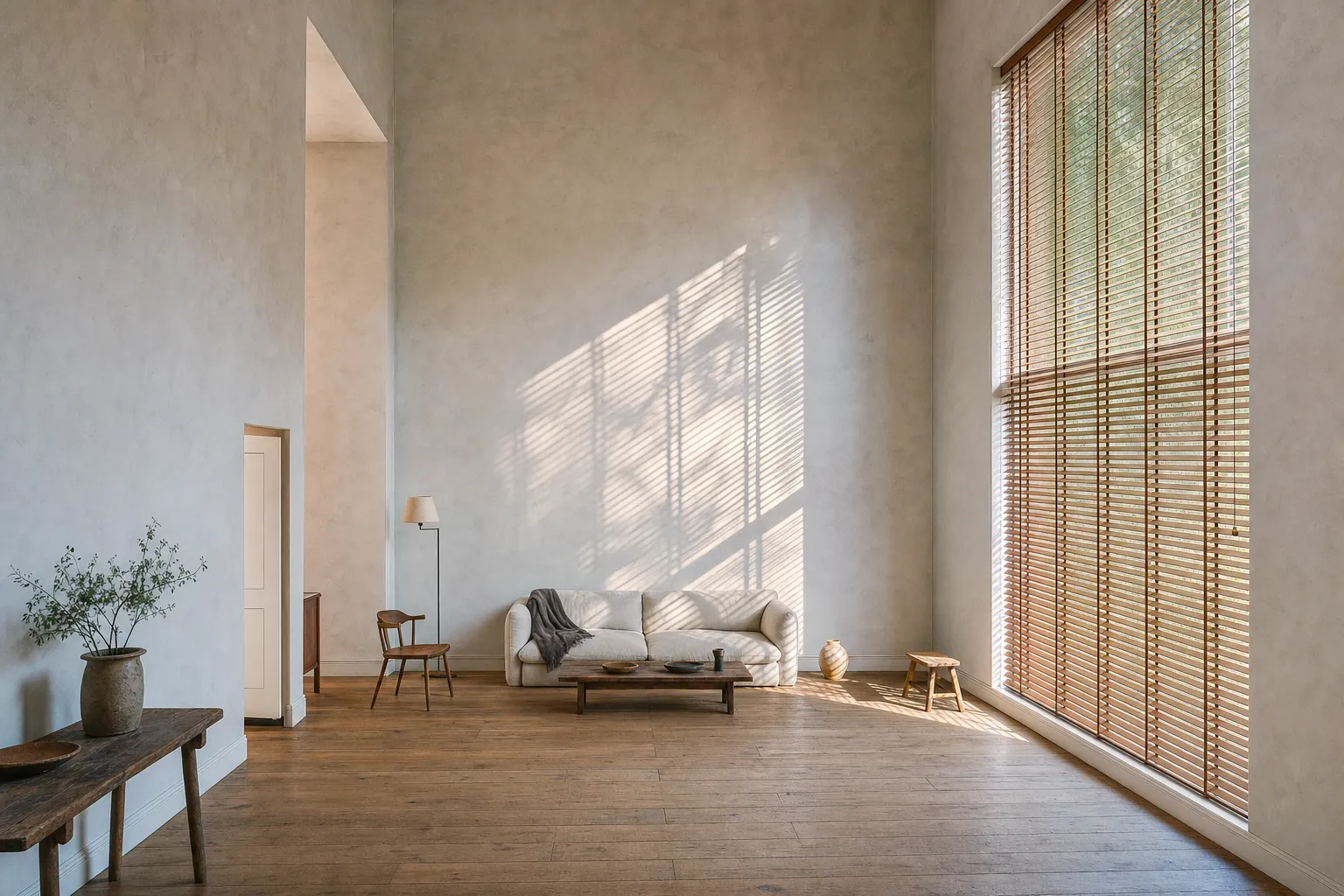
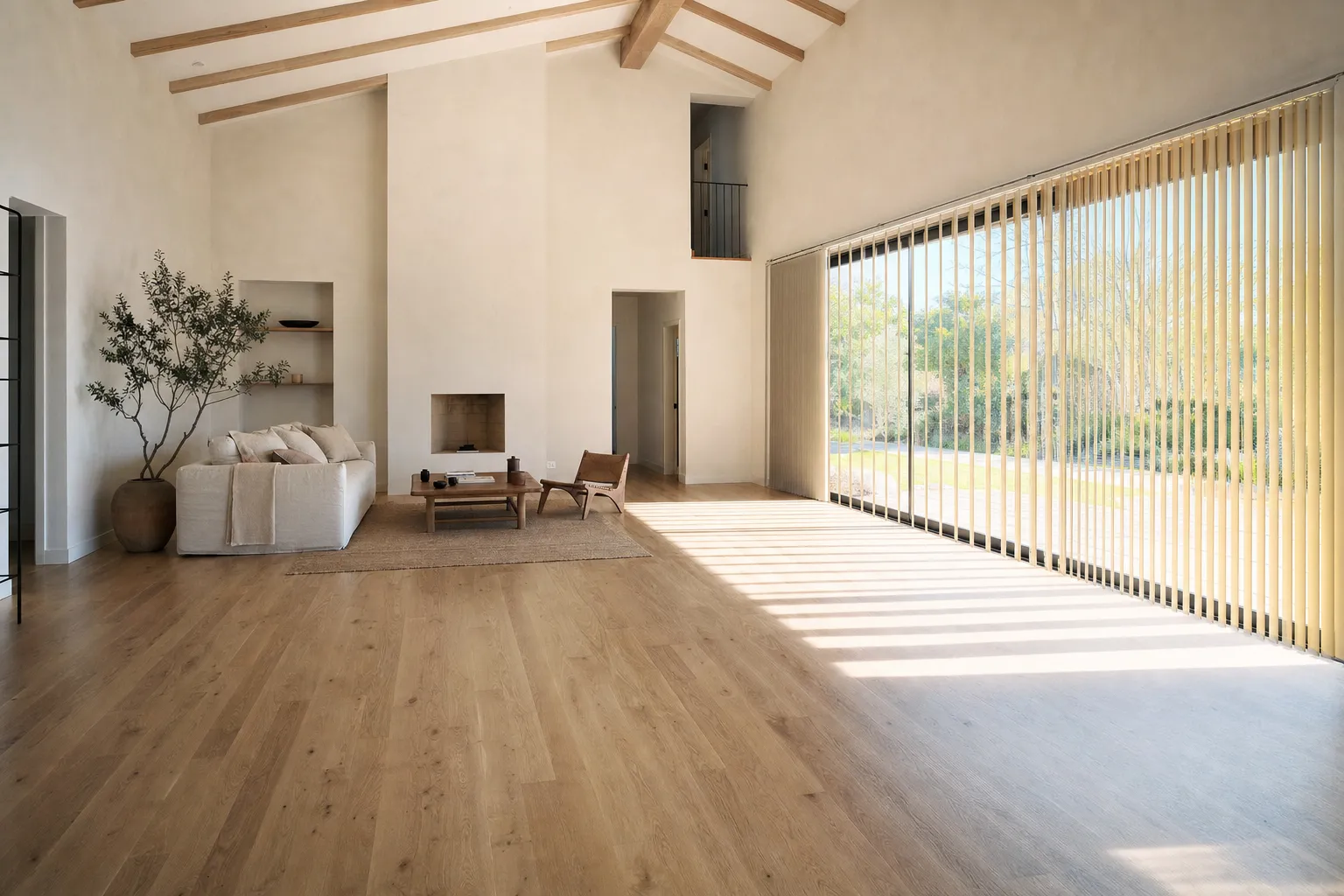
Bungalow or rebuild, the tape settles it in about forty minutes and costs nothing.
Our commitment
A sixty-year-old opening is our problem to solve, not yours to describe.
If it does not fit, we remake it
You never held the tape.
Nothing owed before you agree
No deposit, no card.
Licensed and insured
Both, before we come in.
Your date, in writing
Set at the quote. It does not move.
We will tell you not to buy
If a stock size does it, you hear so.
Cordless where a child sleeps
Standard, at no extra charge.
Reviews on Google
What people said afterwards.
Rated 4.8 out of 5 — the ones below are quoted in full, with a link to check each on Google.
Nick has delivered the greatest service as I recently moved in to my new townhome and needed to have blinds for all three floor windows. Not only the price was the best, but he accommodated all my requests in the process. Definitely worth every penny
Anton KovunovI was blown away by the exceptional customer service from Blinds Company! Their staff was knowledgeable, friendly, and helped me find the perfect blinds for my living room. The installation was quick and flawless. I highly recommend them!
Merdan Berdiyev
Real names, real dates, and a link to all of them — including the ones we would not have picked.
Read them on GoogleQuestions
Before you book
Our house backs onto a school or a park. Does that change anything?
It changes the timing rather than the product. A window facing a school field or a park is overlooked in bursts — before nine, at lunch, after three — and empty the rest of the day, which is the pattern a product with two states suits rather than a fixed filter. It also means the back of the house has no neighbouring building to cut the low sun, so a west-facing rear room there behaves more like an exposed street elevation than a sheltered garden one.
Our house is a rebuild. Why does that change anything?
Because almost everything about the openings is different from the house that stood there. New builds here run to tall glass with shallow reveals and often a two-storey space at the front, so depth and reach become the constraints instead of squareness. The blinds that were right for the original bungalow next door would look and behave wrong in your rooms.
Can you match blinds across an addition?
Usually, and it is worth asking before you order, because the windows in the addition are almost never the same depth as the windows in the original house. Matching the fabric is easy. Matching how the blind sits — inside in one room and outside in the next — is the part that decides whether the two halves look like one house.
What do you fit on the Yonge corridor condos?
Mostly rollers and honeycombs, because the reveals are shallow and both of those need the least depth. The buildings usually want a certificate of insurance and a booked service elevator before anybody arrives, and many have a rule about the colour facing the street. All three are ordinary and we handle them at the quote.
Do you cover the older apartment buildings off Bathurst and Sheppard?
Yes. Those are a different job again — steel casement windows, sills that are not square, and often a radiator directly under the glass. The radiator is the one that changes the answer, because a blind that ends behind a heat source ages badly and blocks the convection the room depends on.
Our windows were replaced in the nineties. Does that help or hurt?
It usually helps the seal and complicates the mount. A replacement unit is normally fitted inside the original opening with a flange or a trim strip around it, so the depth you can actually use is less than the depth you can see — sometimes by twenty or thirty millimetres. That is often the whole difference between a product fitting inside the opening and having to sit on the wall, which is why we measure to the glass rather than to the plaster.
Can a blind sit over a window with a handle that opens inward?
Only if it clears the handle through its full travel, and on the steel casements common in this area it often does not. There are three ways out: mount the blind outside the opening so it stands proud of the handle, use a product with a slim enough profile to pass it, or fit a cranked handle that folds. We note handle positions at the measure because a blind that fits the opening perfectly and fouls the handle is the most annoying possible outcome.
Is there a charge to come out?
No, anywhere we work. The measure, the samples held against your own glass, the advice and the written quote cost nothing, and there is no deposit or card taken at the door.
Half the houses on your street were built fifty years apart from the other half. Tell us which one you are in and we will bring the right questions.