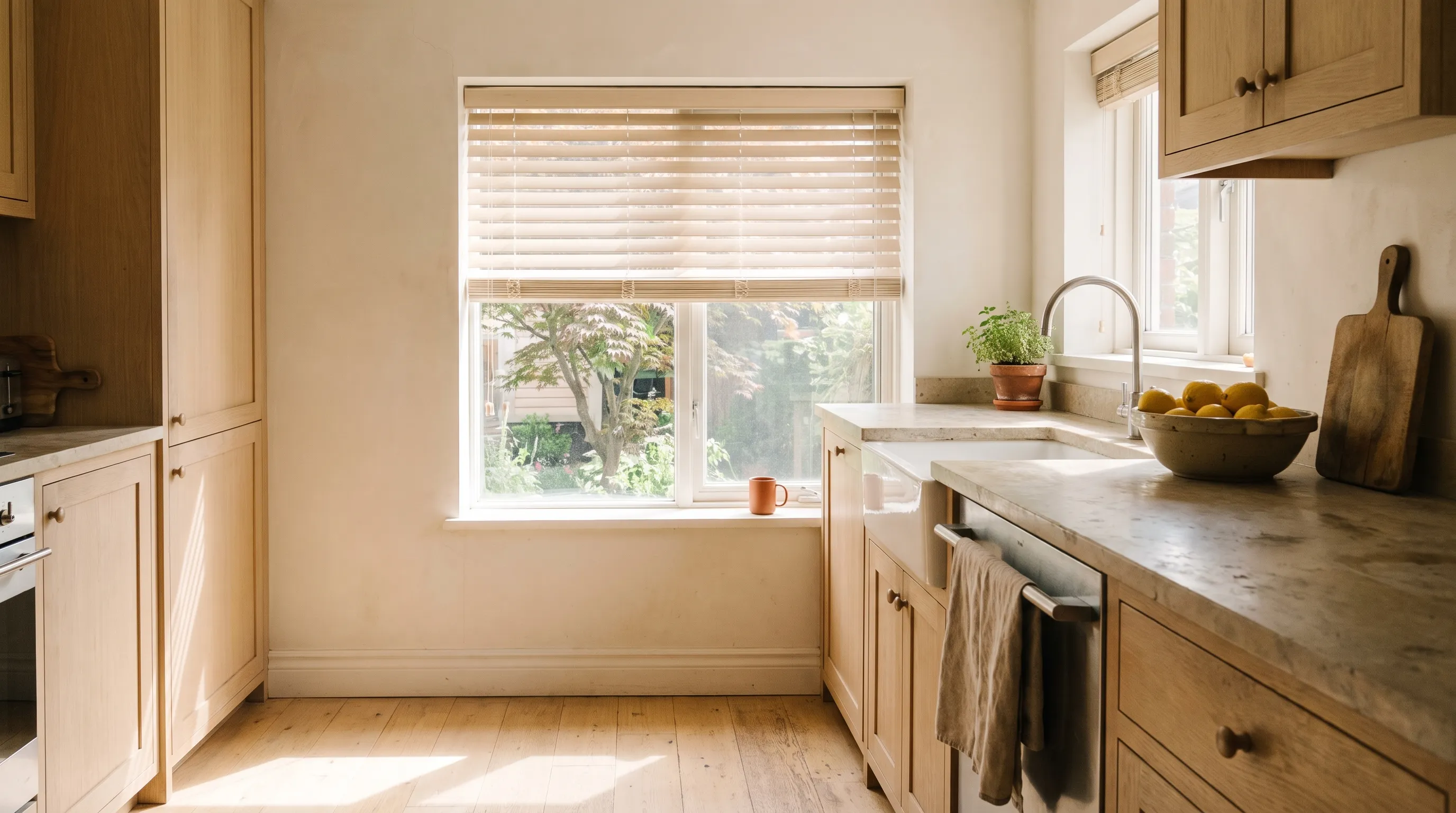
Kitchen blinds and curtains
A kitchen window is short, wide, usually over a working surface, and lives in steam and cooking grease. It is also the window in the house you look through most — and those two facts pull the specification in opposite directions.
Blinds Company · Rated 4.8 out of 5 on Google
Free in-home measure · open 8am–9pm, 7 days
In short
Kitchen blinds and curtains are made to your exact opening and installed across Toronto and the GTA. They suit windows over a sink or a run of worktop. The in-home measure is free and carries no obligation.
Book
Let's measure your light.
We come to you, measure at your own windows, and go through fabrics and fits together. The visit costs nothing.
$99 off when you order three or more blindsApplied to your written quote at the measure.
Rather just talk?(437) 782-5452Open 8am–9pm, 7 days
The short version
Is this right for your window?
Yes — if the room is one of these.
- Windows over a sink or a run of worktop
- Garden doors and side doors off a kitchen
- Open-plan kitchens where the window is seen from the sofa
Where it is wrong is below, and that half is the useful one.
And this is what you would be getting.
- 01
- Faux wood, PVC or aluminium where there is steam
- 02
- Minimal stack, because the view is the point
- 03
- Wipeable, and reachable across a counter
- 04
- Cordless as standard, clear of a hob or a tap
In a room
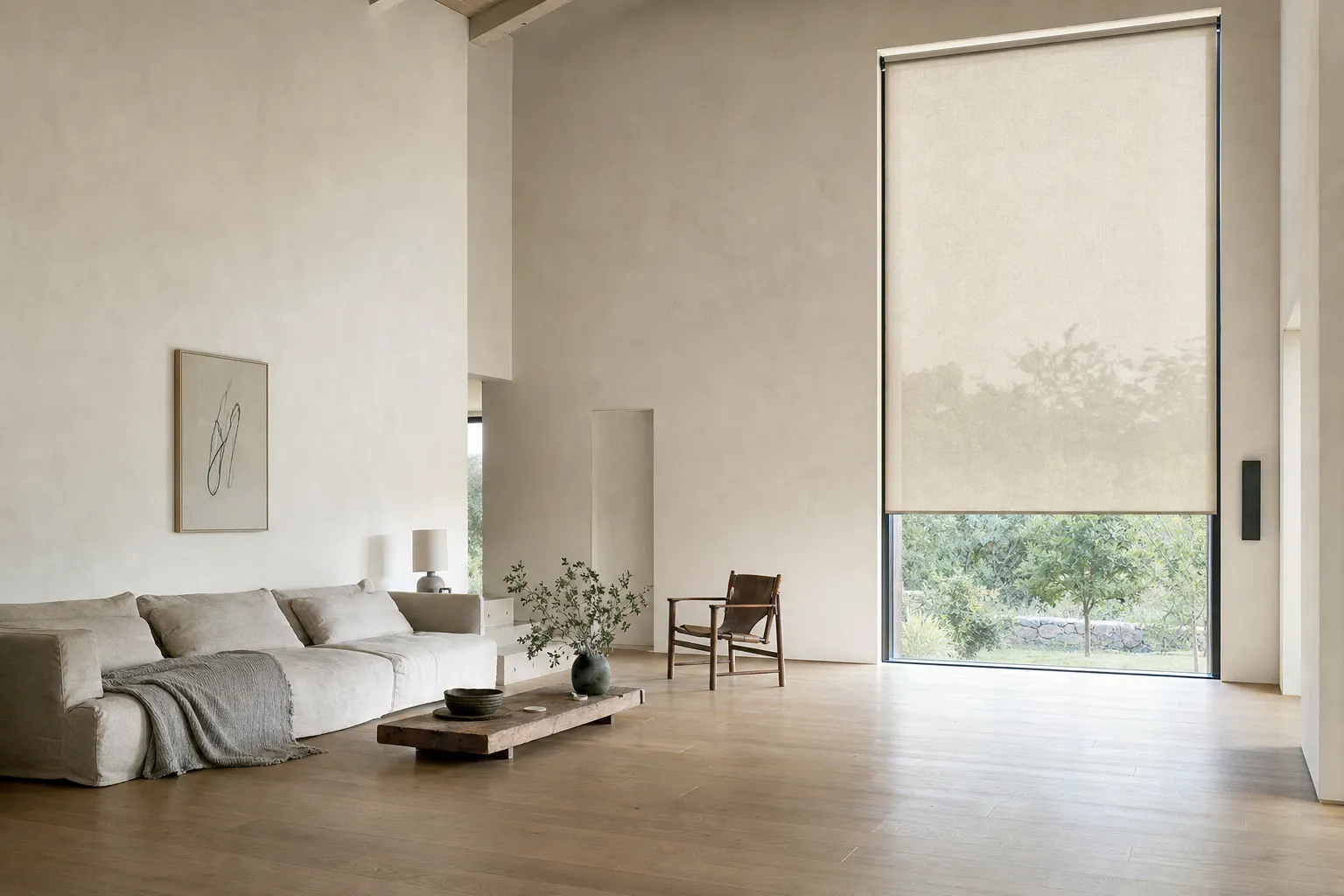
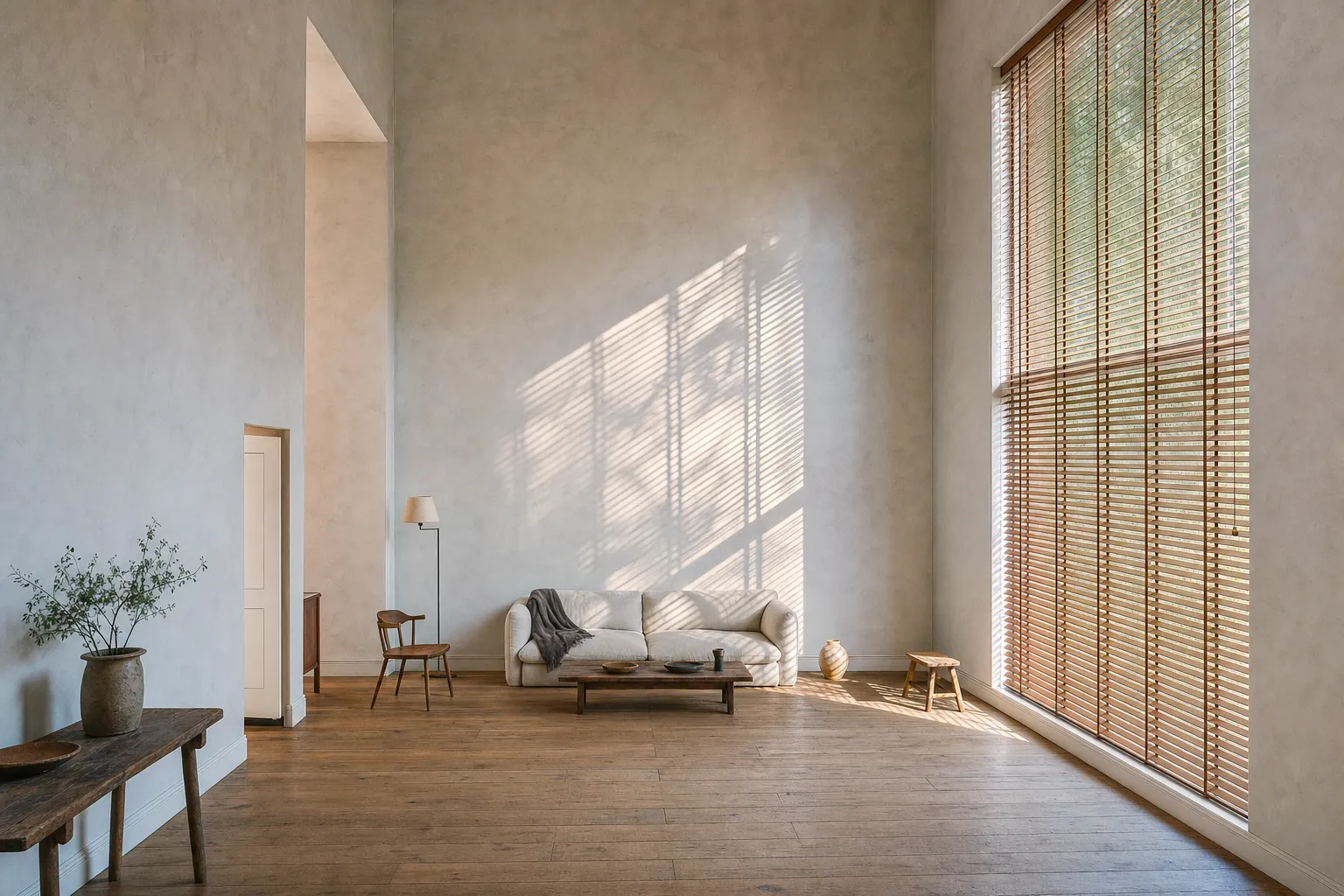
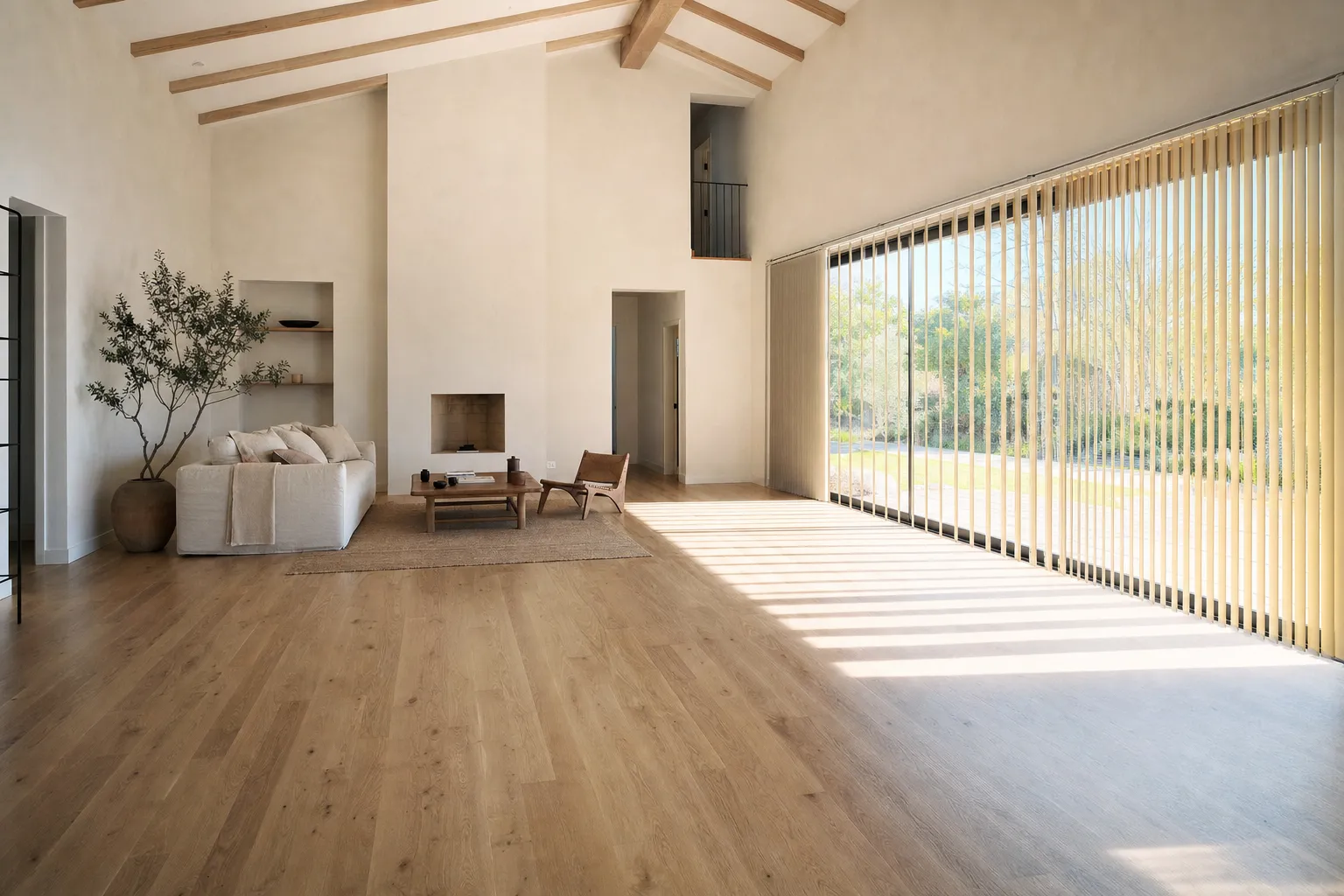
What kitchen blinds and curtains look like once they are up.
The product, not our installations — a gallery of rooms we did not fit would be somebody else's portfolio with our name on it.
Two requirements pulling opposite ways
Every other room in the house asks its window for one thing. A kitchen asks for two, and they do not agree.
The view. The window over the sink is the one people look through more than any other in the house, because standing at it is a thing that happens several times a day with nothing else to do. Anything that eats the glass costs you that.
The environment. It is also the most hostile window in the house for a covering: steam from a kettle and a hob, airborne grease that settles as a film, splash from a tap, and a surface underneath it that gets wiped down and sprayed.
So the kitchen answer is always a material that survives the second requirement while taking up as little of the first as possible. That rules out more of the range than in any other room, and it rules it out for reasons that have nothing to do with how anything looks.
What survives a kitchen, and what does not
Faux wood venetian. The one we fit most. A PVC composite slat, so moisture is irrelevant, it wipes with a damp cloth, and the tilt lets you keep the view while cutting the low sun that comes through a west kitchen window at exactly eye height. Heavier than timber for the same size, which matters only on a wide opening.
PVC or coated roller. Slimmest stack of anything — a tube and a slim cassette — so on a short wide window it keeps the most glass. Wipes completely. The trade is that a roller is all or nothing: no tilt, so you are choosing between the view and the shade rather than aiming the light.
Aluminium venetian. Underrated in this room. Modern aluminium slats are nothing like the flimsy ones people remember, they are light on a wide span, and they are completely indifferent to steam and grease.
Real timber. No, above a sink or a hob. A thin wooden slat takes up moisture unevenly across its width and cups — curves along its length — and once one slat has cupped it catches the one below and the blind stops closing cleanly. Gradual, not repairable, and no finish prevents it. It is fine on a kitchen window at the far end of a large open-plan room, well away from the cooking.
Fabric — roman, cellular, most rollers. Ages fast in steam, cannot be wiped, and holds cooking smells. There is one exception, below.
Curtains. Only away from the cooking: a garden door, a breakfast nook, a window on the opposite wall. Over a working surface they are in the way and they collect what happens on it.
The café curtain, which is the one fabric answer
Worth its own section because it is the exception and it is genuinely popular for a reason nobody explains.
A café curtain covers only the lower half of the window, hung from a rod set at mid height. It comes from exactly the situation a kitchen has: you want privacy at the level people can see in, and you want the daylight above it.
Three things it does that a full-length curtain in a kitchen cannot.
It sits above the splash line. The fabric starts at mid-window, well clear of a tap and a worktop, so it does not sit in the wet.
It keeps the top of the glass. In a kitchen the light comes in high and the privacy problem is low, so covering the bottom half solves the problem and costs almost nothing in daylight.
It suits a short wide window. A full drop on a window that is wider than it is tall looks wrong; a half drop looks intended.
What to check before choosing one: whether the window is overlooked from an angle that a half-height curtain does not cover — a first-floor window opposite, or a raised deck — because in that case the sightline comes in above the fabric and the café curtain solves nothing.
Stack, and why a roman is the wrong shape here
A kitchen window is usually wider than it is tall, and that geometry punishes any product that gathers.
A roman shade stacks its folds above the glass and that stack is roughly a fifth of the drop. On a two-metre bedroom window nobody notices. On a kitchen window that is sixty centimetres tall, a fifth is twelve centimetres of a window you spend a good deal of time looking through — and it is gone permanently, whether the blind is up or down.
The same arithmetic applies to a cellular shade, though less severely, and to a curtain heading.
A roller stacks to a tube and a bracket. A venetian stacks to a compressed pile of slats, which is more than a roller and much less than a roman. Those two are the right shape for this window, and it is a matter of geometry rather than taste.
The window that actually gets opened
Worth its own section because a kitchen window is opened more often than any other window in the house, and almost nobody accounts for it when choosing a blind.
Every other room’s window gets opened seasonally. A kitchen window gets opened because something is boiling, because the toast burned, because the room is warm from an oven — several times a day, often in a hurry, frequently with one wet hand.
That matters in a way that decides products.
A blind that has to be raised before the window will open is a blind that stays raised. An inside-mounted blind sitting close to the glass fouls a casement as soon as it swings inward, and it fouls the handle of almost anything. After the third time somebody has to lift the blind to get air into the room, the blind stops coming down at all and the money is wasted.
The handle is a measurement. A crank on an awning window, a lever on a casement, a latch on a slider — each projects into the reveal by a different amount, and each wants a different clearance. It gets measured and written down rather than discovered on fitting day.
An outside mount fixes most of this. Bringing the blind proud of the opening lets the window work underneath it, and on a kitchen window that also solves the side light leak and covers a frame that is rarely the prettiest thing in the room.
Where an inside mount is wanted for the look, the answer is a product that clears the sash entirely when raised — a roller, whose tube sits above the glass, rather than anything that leaves material hanging in the opening.
Reaching it across a worktop
The commonest practical complaint about kitchen blinds, and it is about the control rather than the blind.
A window behind a sink puts the bottom bar an arm’s length beyond a wet surface, usually past a tap. Reaching for it with wet hands is unpleasant enough that the blind stops being adjusted — it settles at whatever height it was left at and stays there, which means you paid for something that is now a fixed panel.
Three fixes, decided at the measure rather than afterwards:
A wand at the side. On a venetian the tilt is the daily adjustment, and a wand at the edge of the window is reachable from beside the sink rather than across it.
Size the blind so the bar sits forward of the tap. A mount that brings the blind slightly proud of the reveal puts the bottom bar in front of the obstruction instead of behind it.
A motor on a wall switch. Beside the light switch, not on a remote that lives wherever it was put down. On a window used daily this is the one room where that is easy to justify.
Sun in a kitchen, which arrives low
Kitchen windows are frequently west or south-west, because that is where a back extension usually points, and the sun there arrives late and low.
Low sun is a different problem from overhead glare. It comes in under any covering that is partly lowered, straight into the eyes of somebody standing at a sink, and it lands on a worktop at exactly the angle that makes a stainless steel surface unusable.
That is the strongest argument for a venetian in this room specifically. Tilting the slats redirects a low beam upward at the ceiling — you keep a bright room and lose the glare — where a roller can only shut it out along with the view.
Where a roller is used on a west kitchen window, the fabric wants to be tighter than you would choose for a living room, because low sun is intense and the window is small enough that a tight screen does not make the room dark.
Directly above a hob, which is a different question
Not every kitchen has a window over the cooking, and the ones that do need saying out loud rather than treating as a slightly worse version of the sink case.
Heat rises, and a blind above a hob sits in the column. A gas burner or a hot pan sends a plume straight up. Fabric in that column discolours quickly and stiffens; PVC softens over years; painted aluminium takes it best of anything we fit.
It is also a fire consideration. Nothing that hangs loose, nothing with a cord or a chain that can drift over a burner, and nothing that dangles below the head of the window. That rules out curtains outright at that position and rules out a vertical.
And it is the one place we suggest covering less. A window above a hob is rarely overlooked — it is usually high, often small, and frequently the only ventilation in the room. Leaving it bare, or fitting something that lives permanently rolled up and comes down only when the low sun is a nuisance, is a legitimate answer and it is the one we give most often.
Where something is genuinely wanted there: an aluminium venetian mounted outside and above the opening, clear of the plume, with a wand rather than a cord.
Open-plan, where the kitchen window is in the living room
A large share of newer GTA housing puts the kitchen and the sitting area in one space, and that changes the kitchen window from a utility decision into part of a room somebody sits in.
Two consequences, and both are about agreement rather than performance.
The kitchen window is seen from the sofa. Whatever goes on it is read alongside whatever is on the living-room glass, from across the room, at the same time. Two different products on one sightline read as two decisions — and the kitchen is usually the one that looks like an afterthought, because it was specified for steam while the other was specified for looks.
But the requirements genuinely differ. The living end wants glare control and evening privacy; the kitchen end wants something wipeable that keeps the view. You cannot honestly put the same product on both.
The way this resolves in practice: match the colour and the mount line, not the product. A faux-wood venetian in the kitchen and a roller in the sitting area, in the same tone, with their heads set at the same height off the floor, read as one decision from the sofa. Different products at different heights in different colours read as three.
The mount line is the part people forget. If the kitchen window is smaller and higher than the living-room glass, mounting both blinds from a common height rather than each to its own opening is what makes the wall look considered.
What the visit involves
The window measured, and then the room looked at, because most of this page is about the room rather than the glass.
Where the hob is relative to the window. Where the tap sits and how far it projects. Whether the sill is a working surface. Whether the window opens, and which way the handle goes. Which direction it faces, and at what hour the sun lands on the worktop.
Samples held at the window rather than at a table, and if the room has a strong low-sun problem we will suggest coming at that hour, because it is the one condition a sample book cannot show you.
You keep a written quote with a line per opening, the material named and the control type stated. No deposit, no card, nothing owed either way.
Last updated .
The window over the sink is the one you look through most. Worth getting right.
Our commitment
We chose a material that survives your kitchen, so a warped slat is ours.
If it does not fit, we remake it
You never held the tape.
Nothing owed before you agree
No deposit, no card.
Licensed and insured
Both, before we come in.
Your date, in writing
Set at the quote. It does not move.
We will tell you not to buy
If a stock size does it, you hear so.
Cordless where a child sleeps
Standard, at no extra charge.
Reviews on Google
What people said afterwards.
Rated 4.8 out of 5 — the ones below are quoted in full, with a link to check each on Google.
I was blown away by the exceptional customer service from Blinds Company! Their staff was knowledgeable, friendly, and helped me find the perfect blinds for my living room. The installation was quick and flawless. I highly recommend them!
Merdan BerdiyevI'm thoroughly impressed with Blinds Company. From the initial consultation to the final installation, their team delivered exceptional service, expertise, and quality.
Oleksandr Stakhurskyi
Real names, real dates, and a link to all of them — including the ones we would not have picked.
Read them on GoogleQuestions
Before you book
What is the best blind for a kitchen window?
A faux wood venetian, a PVC roller or an aluminium venetian, in that order of how often we fit them. All three wipe clean, none of them cares about steam, and all three stack to very little at the head so the view is kept. What we would talk you out of is real timber above a hob or a sink, and any fabric that cannot be wiped.
Why not real wood in a kitchen?
Because a thin wooden slat takes up moisture unevenly across its width and cups — it curves along its length — and once one slat has cupped it catches the one below and the blind stops closing cleanly. It is gradual, it is not repairable, and no finish prevents it. Faux wood looks close enough at arm's length and outlives it by years in that room.
Can I have curtains in a kitchen?
Away from the cooking, yes — a garden door, a breakfast nook, a window on the far wall of an open-plan room. Directly over a hob or a sink, no. Fabric hanging in steam and airborne grease ages fast, cannot be wiped, and holds the smell of whatever was cooked. A café curtain covering only the lower half is the one fabric answer that works near a sink, because it sits below the splash line.
How do I keep grease off a kitchen blind?
Raise it fully when you cook, which sounds trivial and prevents most of it. Almost all the grime on a kitchen blind lands in the first fifteen centimetres above the sill, from splash, and none of it lands there if the blind is up. Beyond that: wipe the slats twice a year with warm water and almost no detergent, in the closed position, one side then the other.
The window is behind the sink and I cannot reach it. What then?
Then the control decides the product. Leaning across a wet worktop to a bottom bar is why kitchen blinds end up permanently half-open. A wand at the side, a blind sized so the bar sits forward of the tap, or a motor on a wall switch beside the light — any of the three is better than the default.
Are they cordless?
Standard in any room a child uses, at no extra charge, and in a kitchen there is a second reason: a cord hanging near a hob, a kettle or a knife block is a hazard of its own. A wand or a spring lift removes it.
Not this one?
The rest of the range.
Each of these is the wrong answer somewhere, and its page says where. That is usually the faster way to find the right one.
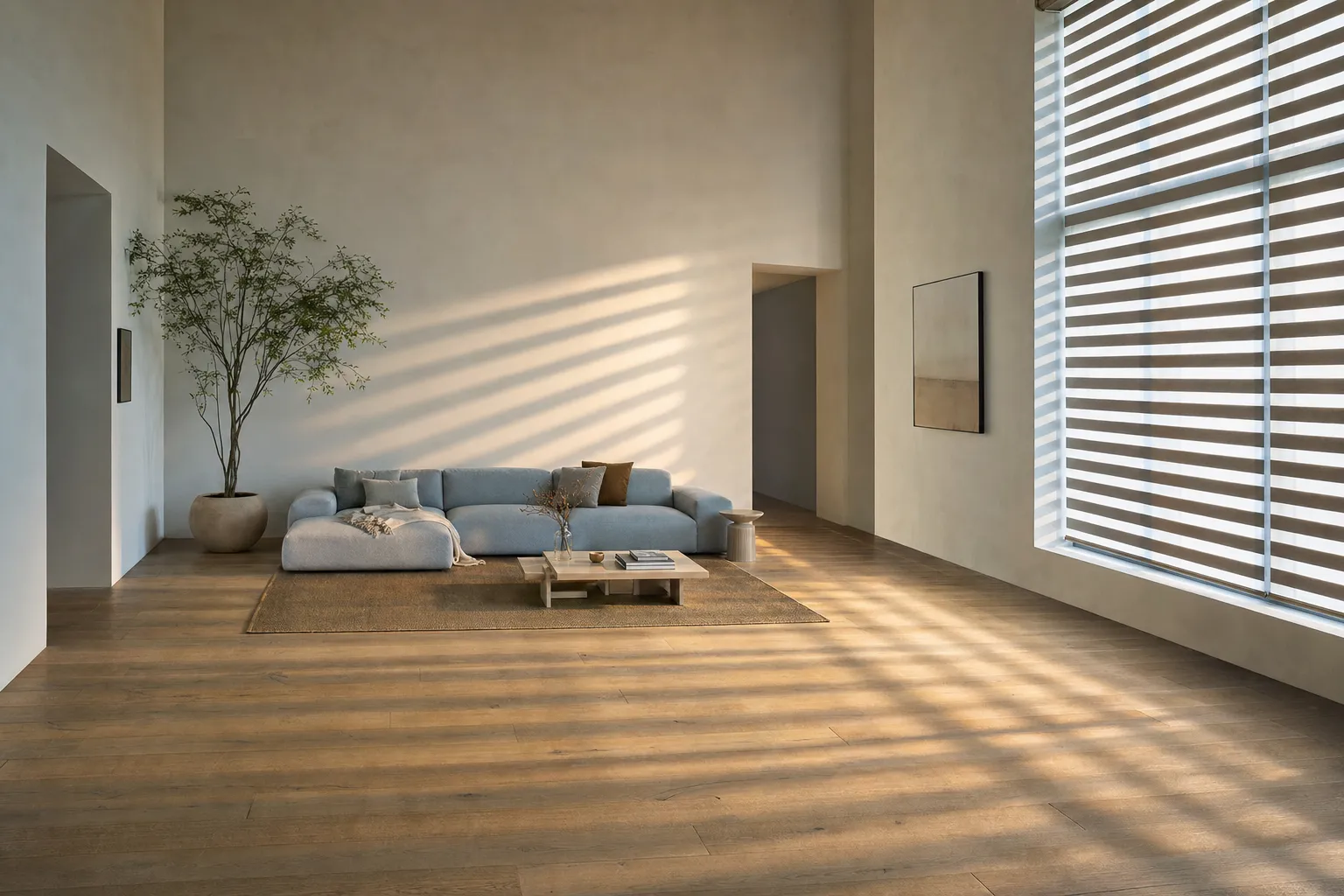
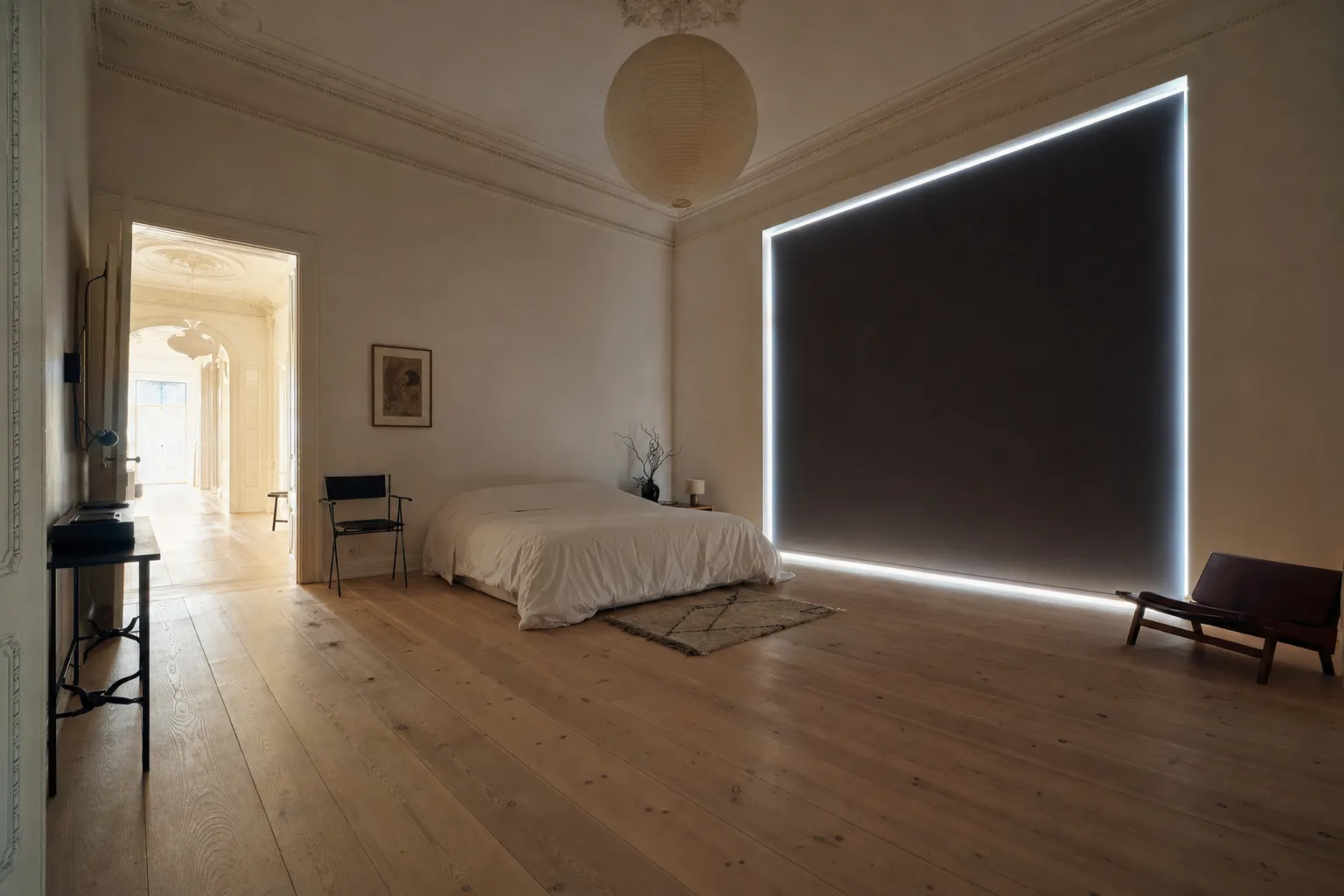
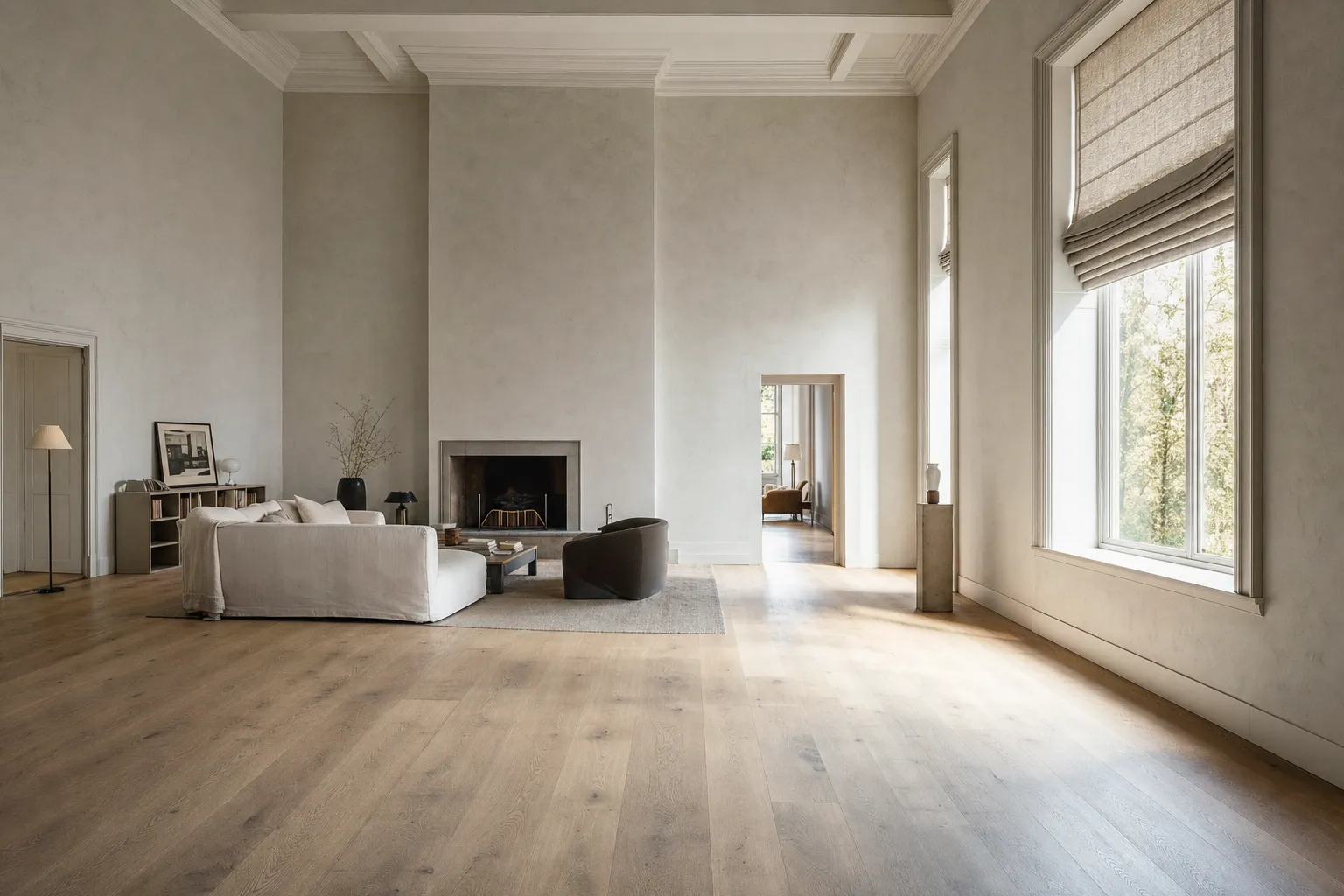
If somebody has quoted real timber for a window above a hob, ring before you accept it. Steam is a slow argument and the wood loses.