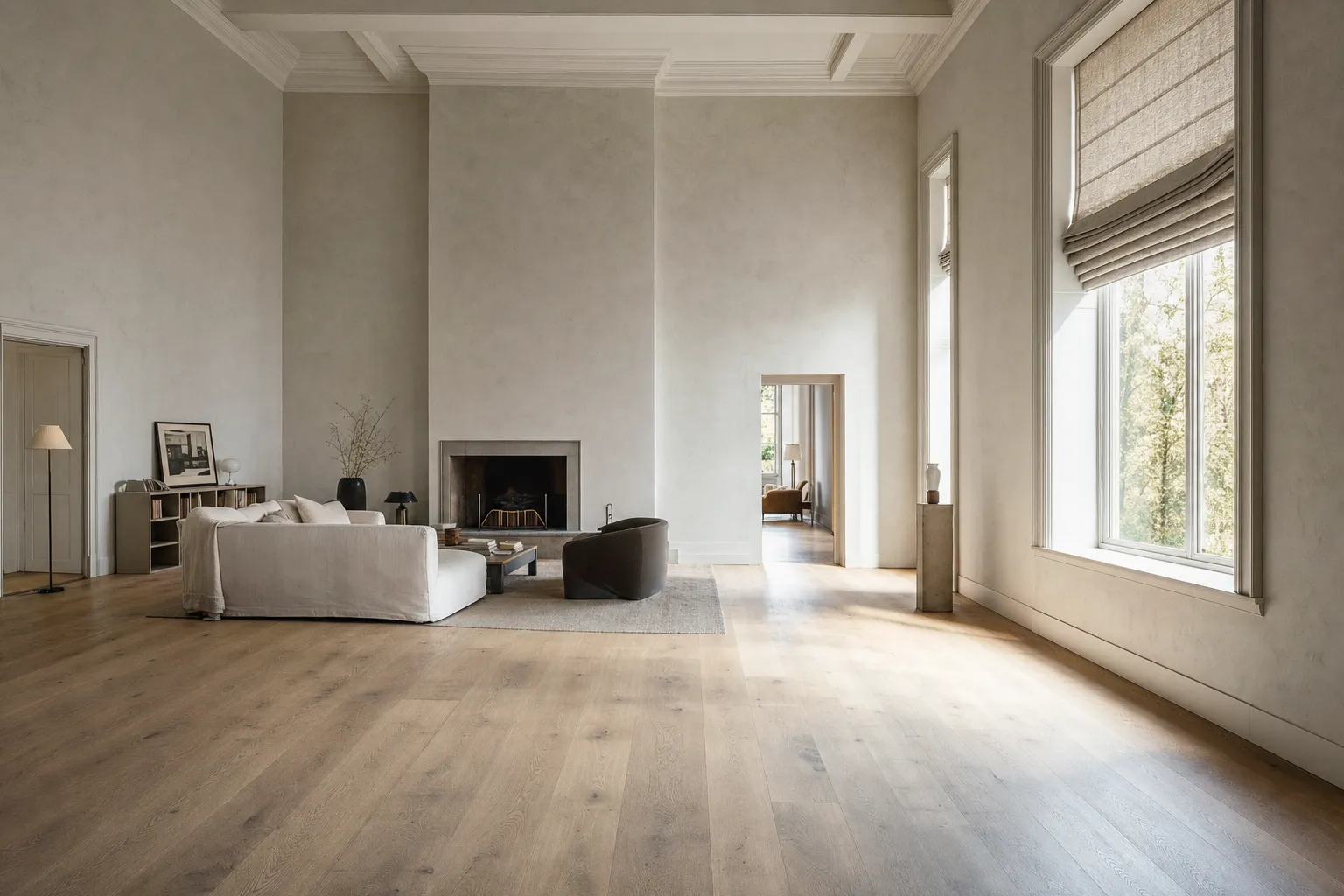
Roman shades
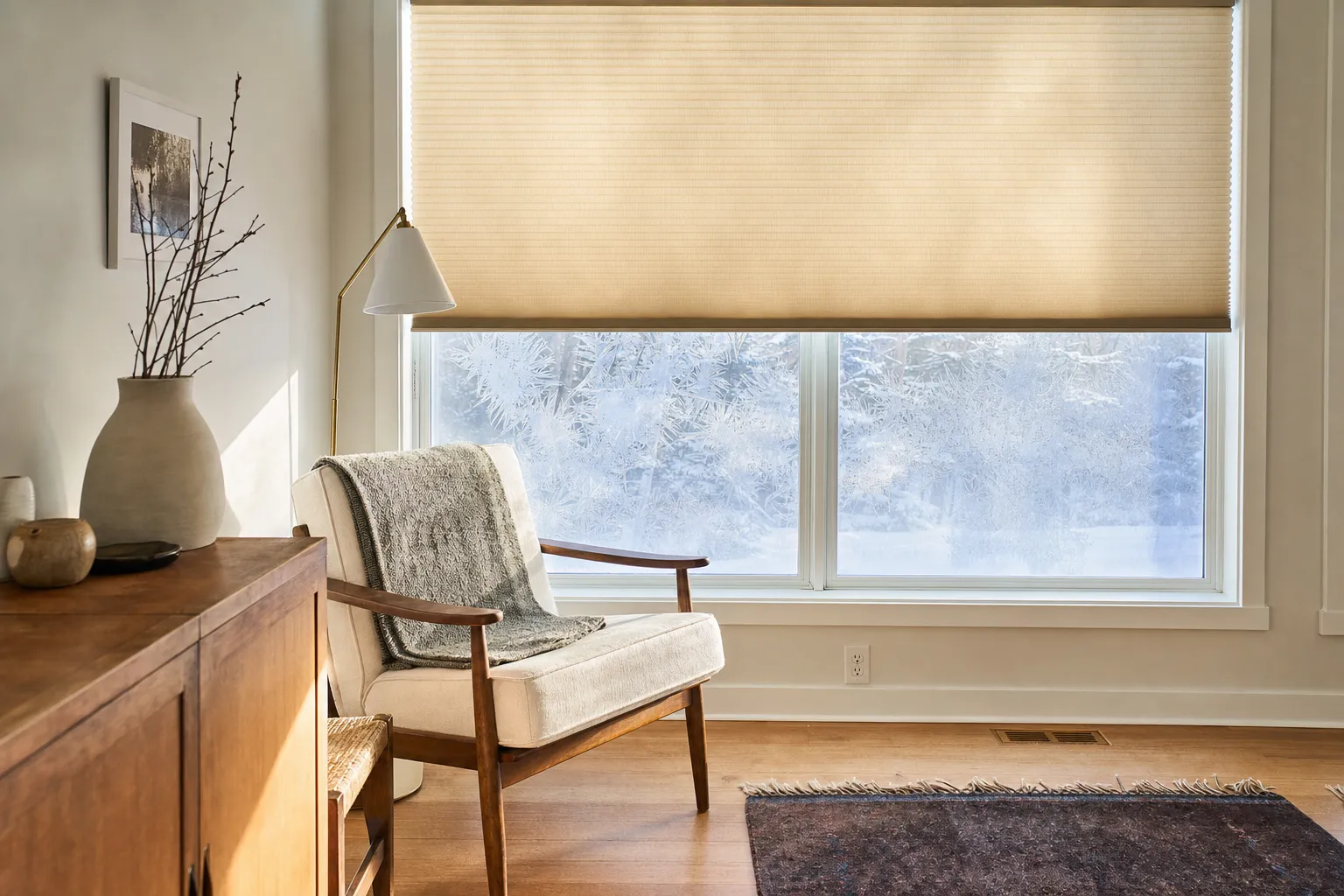
Fabric that gathers into horizontal folds as it rises. The only thing in the range that makes a window read as furnished rather than fitted, and the only one where the cloth is chosen the way you would choose upholstery.
Blinds Company · Rated 4.8 out of 5 on Google
Free in-home measure · open 8am–9pm, 7 days
In short
Roman shades are made to your exact opening and installed across Toronto and the GTA. They suit dining rooms and bedrooms, where a flat panel reads cold. The in-home measure is free and carries no obligation.
Book
Let's measure your light.
We come to you, measure at your own windows, and go through fabrics and fits together. The visit costs nothing.
$99 off when you order three or more blindsApplied to your written quote at the measure.
Rather just talk?(437) 782-5452Open 8am–9pm, 7 days
The short version
Is this right for your window?
Yes — if the room is one of these.
- Dining rooms and bedrooms, where a flat panel reads cold
- Windows seen from a seated position, where the folds are at eye level
- Rooms that already have textiles and need the window to join in
Where it is wrong is below, and that half is the useful one.
And this is what you would be getting.
- 01
- Flat or hobbled fold, lined or unlined
- 02
- Blackout lining available behind any face fabric
- 03
- Cordless as standard, motorized on request
- 04
- Made to your opening from a single cut of cloth
In a room
What roman shades look like once they are up.
The product, not our installations — a gallery of rooms we did not fit would be somebody else's portfolio with our name on it.
What you are actually buying
A roman shade is a piece of cloth with battens sewn across it at intervals, on cords that gather it upward into folds. Mechanically it is the least clever product in the range. Visually it is the one that changes a room the most, because it puts a soft, three-dimensional object where every other blind puts a flat plane.
That is the whole case for it, and it is a good one. It is also why the fabric decision here is different in kind from the others. On a roller you choose an openness factor, which is a technical number. On a roman you choose a cloth the way you choose a sofa.
Flat or hobbled
Flat fold hangs smooth when lowered and gathers into clean horizontal folds when raised. It is the quieter of the two and suits a plain fabric, a modern room, and anywhere you want the shade to read as architecture.
Hobbled keeps a permanent soft loop between each batten, so the folds are visible even when the shade is fully down. It uses noticeably more fabric, reads as more traditional, and looks better in a room with mouldings than in one without.
Neither is better. The wrong one in a room is very obvious and the right one disappears.
The stack, and why it decides the answer
When a roman is raised, the folds pile up above the glass. That stack is not small — allow roughly a fifth of the drop, more with a hobbled fold — and it never goes away.
On a tall window in a room you sit in, that band across the top costs nothing. On a short, wide window that you look through while standing at a sink, it costs most of the view. This is the single most common reason we talk somebody out of a roman, and it takes ten seconds to spot when we are standing in the room.
Where it beats everything else
A dining room. A principal bedroom. A window seen from a chair rather than walked past. Anywhere the room already has curtains, cushions and rugs, and a flat vinyl plane at the window would be the one hard, cold surface in it.
They also layer well. A roman over a blackout roller gives you a window that is soft by day and genuinely dark at night, on two independent brackets in the same opening — which is usually a better answer than asking one product to do both.
How we build them
Cut from a single piece of cloth to the measurement taken in your home, so the pattern runs true across the width and there is no join where the eye lands. Battens spaced to the drop rather than to a standard, because evenly spaced folds on a short window and on a tall one are not the same spacing.
Manufactured under our own name, cordless by default in any room a child uses, and installed by the same crew that measured. The visit is free, and if the room you are asking about is a kitchen, we will tell you to put something else in it.
Lining, and the decision people skip
A roman is two decisions, not one: the cloth you see and the lining behind it. Most quotes name only the first.
Unlined lets the weave glow when the sun is behind it, which on a linen in a dining room is the whole reason to buy the thing. It also lets light through at night in both directions, gives no thermal help, and lets the sun reach the face fabric directly — which is what actually fades a shade.
Standard lining is a plain cotton or poly backing. It steadies the hang, protects the face cloth, and takes the glow off without killing it.
Blackout lining blocks the light through the cloth entirely. It does not block the light around it: the folds still sit inside a window with clearance at the sides, so a lined roman in a bedroom is a dark room with two soft edges, not a dark room. If the brief is genuinely blackout, the roman goes over a blackout roller rather than trying to be one.
Interlining is a soft layer between face and lining. It is the expensive option and it is bought for hang, not for light: the folds become fuller and heavier, and the shade stops looking like cloth on a stick.
The one that matters most for how long the shade lasts is the middle one. A south or west window with no lining will show fading along the bottom fold first, because that fold is the one that is out in the sun in every position.
What it does to a window that is not square
Older Toronto houses are not square, and a roman is the product that hides that best.
A roller or a venetian is a straight horizontal line moving down a wall, so a sill that falls half an inch across its width shows as a widening wedge of light. A roman ends in a soft fold rather than a rigid bar, and that fold sits into a gap far more forgivingly. It is not magic — a badly out-of-true opening is still badly out of true — but on the half-inch of movement that is ordinary in a century semi, a roman is the one you do not notice.
Where it is less forgiving is depth. The folds need somewhere to stack, so a shallow reveal pushes the whole shade forward or outside the opening. We measure the reveal before anything else on this product.
Living with one
Cleaning. Vacuum on low with a brush head, along the folds. Fabric shades are not washable in place and most face cloths are not washable at all — a wet clean shrinks the cloth against the battens and the folds stop lining up. Spot marks come out with as little water as will do it, blotted, never rubbed.
Cats. A roman is a ladder. If you have a cat that climbs, the cords and the cloth are both at risk, and cordless does not help with the cloth. This is worth saying out loud before rather than after.
Steam. A kitchen or a bathroom will age fabric faster than a living room will, and no lining changes that. In those rooms we would rather sell you a faux wood venetian and keep the roman for somewhere it will last.
Re-hanging. Because the shade is one piece of cloth on a batten frame, it comes off its brackets and goes back on in a minute. If you move house and the new window is close in size, it is often worth taking them with you and having them altered rather than starting again.
What a roman does to a room that no other blind does
Worth stating directly, because it is the reason to accept every compromise on this page rather than buy something more practical.
Every other product here is a flat plane. A roller is one surface; a venetian is a stack of straight lines; a vertical is a set of straight lines turned ninety degrees. They are all, visually, architecture — they read as part of the building.
A roman is the only thing in the range that reads as furnishing. It has depth, because the folds catch light differently on the top and the underside of each one. It has weight, because cloth hangs. And it has a hand — a linen behaves differently from a cotton, which behaves differently from a wool blend, in a way no vinyl or aluminium ever does.
The practical consequence is that a roman is chosen against the room’s soft things rather than against the window. A sofa, a rug, curtains elsewhere, the tone of the timber. Held up against the glass alone it will look wrong as often as right, because the glass is not what it has to agree with.
It also means the room decides the fold. In a room with mouldings, panelling and pattern, a hobbled fold with its permanent soft loops belongs; a flat fold in the same room reads as underdressed. In a plain modern room the reverse is true, and a hobbled shade looks like it was borrowed from somewhere else.
The one room where all of this is beside the point is a room you are trying to make dark, or wipe clean, or look through constantly. There the roman is the wrong answer whatever it does for the atmosphere, and the rest of this page is about knowing which room you are in.
Over a radiator, and over a deep sill
Two situations that come up constantly on the older housing this product suits, and both change the drop rather than the fabric.
A radiator under the window. Very common in pre-war houses, and a roman is the worst product in the range to hang in front of one. Fabric in dry rising heat stiffens and discolours, and it does it fastest at the bottom fold, which is the one sitting directly in the current. Worse, a heavy cloth hanging in front of a convector traps the warm air against the coldest surface in the house — the glass — where the room gets no benefit from it at all.
The answer is to stop the shade at the sill above the radiator rather than run it past. That means accepting a shade that does not reach the floor in a room where the proportions might have wanted it to, and it is the right trade. Where the radiator sits proud of the wall, an outside mount that stands clear of it is the alternative.
A deep sill nose. A generous sill is a lovely thing and it interferes with an inside-mounted roman in a way it does not with a roller. The bottom of the shade needs somewhere to sit, and if the sill projects into the reveal the lowest fold lands on it and stops folding cleanly — you get one squashed fold at the bottom that never looks right.
Either the shade finishes above the sill, which on a short window loses more of the glass than people expect, or it mounts outside and comes down in front of the nose. On a window with trim worth seeing, that is a genuine trade and it gets made at the measure with a tape rather than at a desk.
The headrail, which is a real choice
The top of a roman is not one thing, and what holds it up changes both the look and how it behaves.
A batten. The traditional answer: a timber batten, the cloth stapled or hooked to it, the whole thing screwed to the reveal or the wall. It is simple, it is what makes a shade easy to take down and re-hang, and it leaves the mechanism visible from below if you are looking up at it.
A cassette or headbox. An enclosed head that hides the lift mechanism and the top of the cloth. It looks finished from every angle, it closes the light path over the top of the shade — worth having behind a blackout lining — and it needs more depth than a batten does.
A track. Used where the shade is very wide or very heavy, where the extra structure keeps the lift running evenly across the span. It is the answer for a shade over about two and a half metres, and it is the reason a wide roman is not simply a narrow one with more cloth.
The point of raising it is that a quote for “a roman shade” can mean any of the three, and they are not the same money or the same product. Asking which one is in the price is one of the three questions in the next section.
If you are comparing quotes
Ask what the lining is, ask how deep the stack will be at that drop, and ask whether the cloth is cut from one piece across the width. Those three answers explain most of the spread between two prices for what looks like the same shade, and none of them appear on a quote that gives one number per window.
Last updated .
Cloth is chosen the way a sofa is. Hold it against your own window, in your own light.
Our commitment
We cut it from one piece to your measurement, so folds that do not sit level are ours.
If it does not fit, we remake it
You never held the tape.
Nothing owed before you agree
No deposit, no card.
Licensed and insured
Both, before we come in.
Your date, in writing
Set at the quote. It does not move.
We will tell you not to buy
If a stock size does it, you hear so.
Cordless where a child sleeps
Standard, at no extra charge.
Reviews on Google
What people said afterwards.
Rated 4.8 out of 5 — the ones below are quoted in full, with a link to check each on Google.
Nick has delivered the greatest service as I recently moved in to my new townhome and needed to have blinds for all three floor windows. Not only the price was the best, but he accommodated all my requests in the process. Definitely worth every penny
Anton KovunovI was blown away by the exceptional customer service from Blinds Company! Their staff was knowledgeable, friendly, and helped me find the perfect blinds for my living room. The installation was quick and flawless. I highly recommend them!
Merdan Berdiyev
Real names, real dates, and a link to all of them — including the ones we would not have picked.
Read them on GoogleQuestions
Before you book
Can a roman shade be taken down and re-hung later?
Easily, and it is one of the quiet advantages of the product. The shade hangs from a batten or a headrail on brackets, so it lifts off in a minute for decorating and goes back the same way. If you move house and a window is close in size, a roman is one of the few blinds genuinely worth taking with you and having altered rather than replacing.
Can a roman shade be cleaned or does it have to be replaced?
Vacuumed, yes; washed, no. The battens are sewn into pockets and the cloth is cut to a measured size, so a wet clean shrinks the fabric against the battens and the folds stop lining up afterwards. Specialist dry cleaning exists and is worth it on an expensive cloth. Day to day, a brush head on low along the folds does almost everything.
How much of the window does a raised roman cover?
More than people expect. The folds stack on top of each other above the glass, and that stack is roughly a fifth of the drop — so a tall window loses a band of view at the top even when the shade is fully up. On a window you look through constantly, that is an argument for a roller.
Can a roman shade black out a room?
With a blackout lining behind the face fabric, close to it. The fabric itself will stop the light; what remains is the gap at the sides, which is the same problem every blind has. A roman cannot take side channels, so for a room that must be properly dark it is usually mounted outside the opening with a generous overlap.
Lined or unlined?
An unlined roman glows when the sun is behind it, and the fold lines show as bands of light. Some people buy it for exactly that. A lining kills the glow, protects the face cloth from fading, and adds enough weight that the folds hang more evenly.
Are they suitable for a kitchen or bathroom?
Not really. Fabric that hangs in steam and cooking grease ages quickly and cannot be wiped. A faux wood venetian or a PVC roller will outlive a roman by years in those rooms, and we will say so rather than sell you one.
Not this one?
The rest of the range.
Each of these is the wrong answer somewhere, and its page says where. That is usually the faster way to find the right one.
If the room you are asking about is a kitchen or a bathroom, we will tell you to put something else in it. That answer costs nothing on the phone.