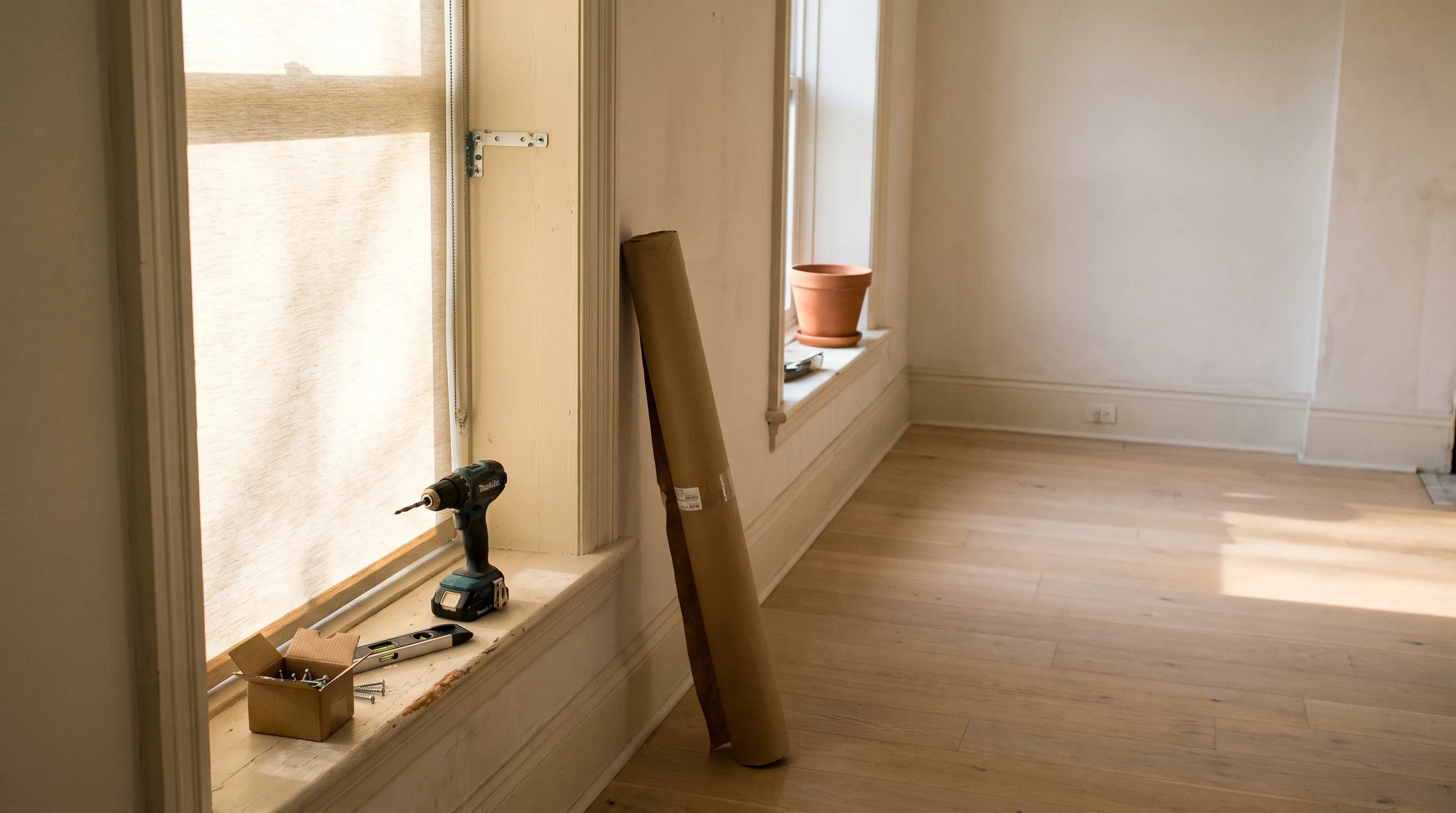
Blind installation
Fitting, by the same people who took the numbers. Not a separate trade booked afterwards — the person who decided the mount is the person holding the drill, which is the only arrangement where a measuring mistake cannot become somebody else's problem.
Blinds Company · Rated 4.8 out of 5 on Google
Free in-home measure · open 8am–9pm, 7 days
In short
We install what we make, with the crew that measured it. That matters more than it sounds: a blind arrives correct from the workshop and becomes good or bad in the ten minutes it takes to fix two brackets. Level, packing, and what the wall is actually made of decide whether it still runs sweetly in year five. Installation is included in the quote, and there is no separate fitting charge.
Book
Let's measure your light.
We come to you, measure at your own windows, and go through fabrics and fits together. The visit costs nothing.
$99 off when you order three or more blindsApplied to your written quote at the measure.
Rather just talk?(437) 782-5452Open 8am–9pm, 7 days
The short version
Is this right for your window?
Yes — if the room is one of these.
- Whole-house jobs where consistency between rooms matters
- Old openings where the head is not level
- Condominiums needing insurance and elevator paperwork
Where it is wrong is below, and that half is the useful one.
And this is what you would be getting.
- 01
- Fitted by the crew that measured
- 02
- Fixings specified for the actual wall
- 03
- Level set to a line, not to the window head
- 04
- Included in the quote, no separate charge
In a room
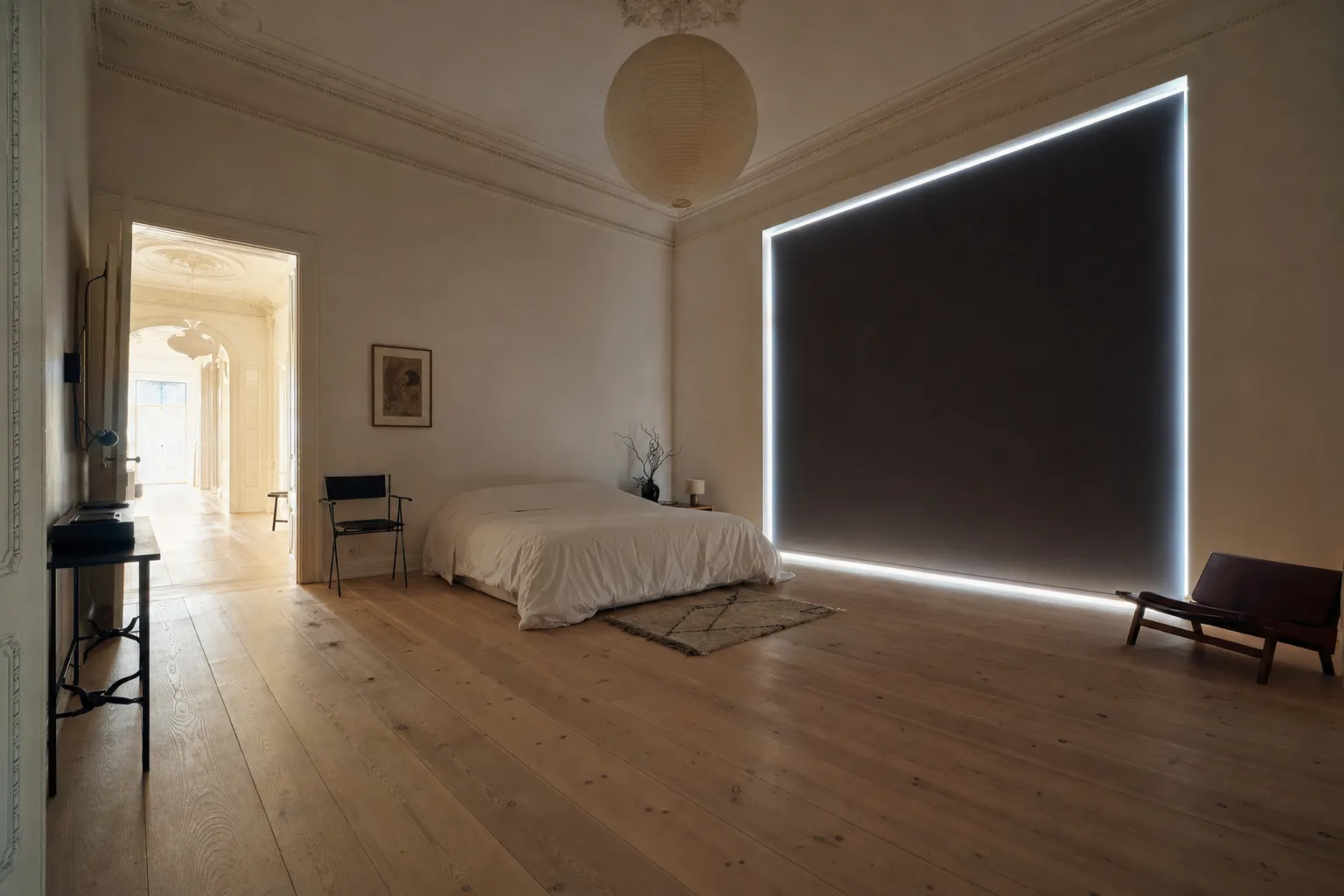
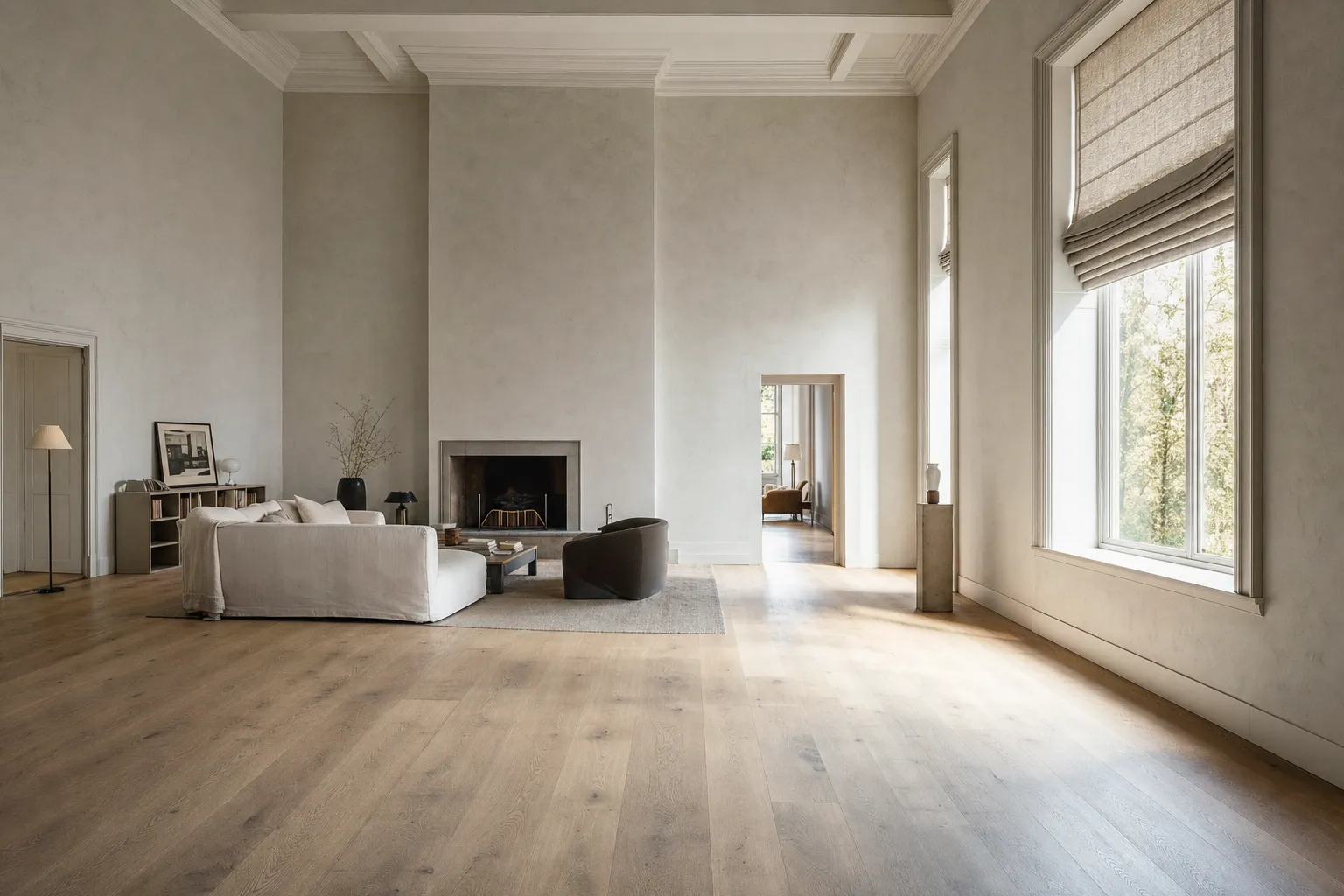
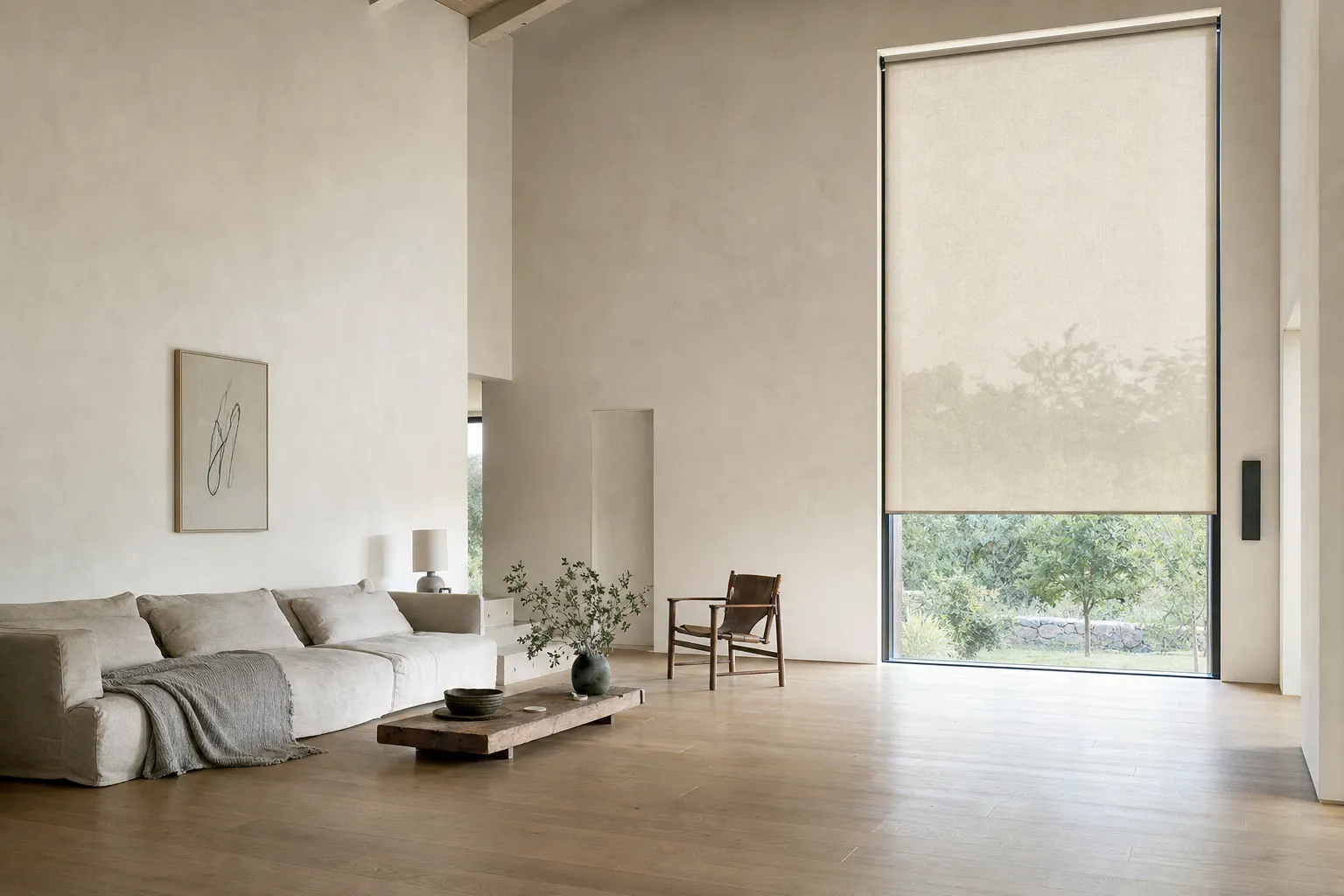
What blind installation look like once they are up.
The product, not our installations — a gallery of rooms we did not fit would be somebody else's portfolio with our name on it.
Why the same crew
This is the plainest argument on the site and it is worth stating without decoration.
Almost every problem with a finished blind traces back to a number. A width taken at the widest point instead of the tightest. A reveal depth measured to the plaster instead of to the glass. A handle nobody wrote down. When the person who took those numbers is also the person standing there with the drill, those mistakes get caught in the room — because they are visible the moment the blind comes out of the box, and because the person looking at it knows what they wrote.
When measuring and fitting are two companies, or two crews, the same mistake becomes a conversation about whose fault it is. That conversation is why fitting charges and remake disputes exist in this trade at all.
So: we measure, we make, we fit. There is nobody to point at.
What actually happens in those ten minutes
A blind arrives from the workshop correct. It becomes good or bad during installation, and here is what decides which.
Where the brackets go. Inside the opening, on the face of the wall, or on the ceiling. This was decided at the measure and written down, because it is the one choice that cannot be changed afterwards without leaving holes.
Level, set to a line. Not to the window head. In older housing the head is very often not level, and a blind fixed parallel to it inherits the error — which reads as a bottom bar that is not parallel to the sill, the most visible fault a blind can have. A level line takes the same ten minutes.
Packing. Where a reveal is deeper on one side than the other — extremely common where a replacement window sits in an original opening — one bracket needs a shim so the tube runs true. Skipping it gives a blind that binds slightly at one end, which nobody can see and everybody feels, every single time they use it.
Fixing into the right thing. Covered below, and the difference between a bracket that is tight today and one that is tight in five years.
Setting the limits. On a motorized blind, the exact top and bottom stop, matched across a group so a wall of blinds lands together.
None of that is skilled work in the sense of being difficult. All of it is the difference between a blind you stop noticing and a blind that irritates you twice a day.
What the wall is made of
The single most common cause of a bracket that works loose, and it is decided in about four seconds if somebody is paying attention.
Solid timber — the window frame or a sound reveal lining. The best case. A screw straight into wood, no plug, holds indefinitely.
Drywall with a stud behind it. Fine, if you find the stud. Above a window there is usually a header, so a face-mounted blind above the opening is often fixing into something solid whether it knows it or not.
Drywall with nothing behind it. Needs a proper anchor sized to the load, not a plastic plug. A wide blackout blind hangs a real weight off two points, and the failure mode is not dramatic — it is the bracket slowly pulling out over a year until the blind starts binding.
Old plaster over lath. Toronto’s pre-war housing. Plaster is brittle and lath is thin, so the fixing has to reach past both into a stud or the frame. A plug in plaster alone will let go.
Concrete or block. Condominium ceilings and some reveals. Routine with the right bit, and it is worth knowing in advance because it is a different drill.
Steel lintel. Occasionally above an opening in a newer build. It stops a wood screw dead, and it needs either a self-tapping fixing or a different bracket position. Discovering it mid-installation is how a job runs long.
We check what we are fixing into at the measure and bring what that wall needs.
The openings that take longer
Said in advance because it changes what a day looks like, not what it costs.
Bays. Three or five blinds meeting at angles, and the corners are where the millimetres are. A bay is not one window and it is not three ordinary windows either.
Anything on a stair. There is no floor to stand on where you need to stand. Access is planned rather than improvised, and a very tall blind may not go up a staircase with a turn — which we check at the measure.
Channelled blackouts. The channels are fitted first, plumb, and the blind is set into them. Slower, and where most of the benefit of the product comes from.
Skylights. Overhead work, tracked to the frame, and the reach question decided before anybody arrives.
Motorized anything. Fitting is the same; commissioning is not. Limits, pairing, groups, and showing you how to reset it — because in ten years something will need re-pairing and it is thirty seconds if you know the sequence.
What to do before we arrive
Very little, and all of it saves time rather than being required.
Clear about a metre in front of each window. Not the room — just the working space. A ladder needs a footprint and a bay needs a bit more.
Take anything fragile off the sill. Drilling shakes a wall slightly and a sill is the shelf directly beneath the work.
Say if a room cannot be entered. A baby sleeping, someone working from home on calls, a dog that should not meet a stranger. We sequence around it if we know at the door; we cannot if we find out at the door.
Have a decision ready on anything you were unsure about. Occasionally a measure ends with a room where the choice was left open. If that is still open on installation day, that window waits for another visit.
Nothing else. Furniture stays where it is, floors get covered by us, and the packaging leaves with us.
If you will not be in, tell us at the quote rather than the morning of — installing in an empty house is normal and it changes what we confirm in advance, because nobody will be there to say “actually, higher”.
The five faults we find on other people’s blinds
Worth listing because four of the five are fixable without a new blind, and people usually assume the opposite.
The bottom bar is not parallel to the sill. Brackets set to a window head that is not level. The blind is correct; the fixing is not. It is a re-drill, and on plaster it needs the old holes made good.
The blind binds slightly at one end. Brackets not in the same plane — one deeper than the other, usually where a reveal is not consistent. A shim behind one bracket fixes it, and it is the single most common cause of a blind that “was fine at first”.
The blind tracks off to one side. The roll has telescoped along the tube, from being pulled down by a corner. Often recoverable: roll it fully up, draw it down square from the centre, repeat a few times.
The blind creeps down. A tired spring or a slipping clutch. On a decent mechanism it is a re-tension or a part. On a boxed blind it usually is not worth it.
The gaps are too wide. This is the one that is not fixable. A blind sized for a different opening — a stock blind trimmed to fit, or a measurement taken at the widest point — will always have wider clearances than a made blind. No fitting corrects it, and we will say so at the door rather than take the money.
The useful thing to know is that the first four are installation faults, not manufacturing ones, which is the whole argument of this page.
Buildings, in one paragraph
Condominium work needs a certificate of insurance and a booked service elevator before anybody arrives with tools, plus whatever the building says about load-in hours. It all starts when the quote is agreed rather than the week of the fit — the full version is on the Mississauga page, where most of that work happens. Practically, it is why an installation is booked as a time rather than a four-hour range.
Blinds bought elsewhere — we do not fit them
Worth saying plainly, because people ask and the answer is no.
We make blinds under our own name, measure them in your rooms and fit what we made. Installation is not a separate trade we sell; it is the last step of the thing we built, and it is the reason the promise on this site works — if it does not fit, we remake it at our cost, because the numbers were ours.
That promise cannot be extended to somebody else’s product. If a boxed blind arrives cut narrow, no amount of careful fitting makes it right, and there is nobody to carry it: not us, because we did not measure it, and usually not the supplier, because the size came off a form somebody filled in themselves.
Taking that job would mean charging for an afternoon and handing back a window that is still wrong. We would rather say no at the phone call.
What we will do instead, at no cost and with nothing owed: come and measure the openings properly and tell you where the blinds you have already bought actually stand. Sometimes two of six are usable and four are not, and knowing which is which is worth having whether you order from us or not.
After we leave
The blind should run sweetly from the first pull. If it does not — if it feels snatchy, or slow, or stops short — say so in the first weeks rather than living with it. On a spring blind that is nearly always tension and it is a two-minute adjustment; on a bracket it is four screws.
That offer is not a warranty clause, it is the point of doing the whole job ourselves. A blind that annoys somebody daily is a job we did badly, whatever the paperwork says.
Last updated .
One crew from the tape to the level. That is the whole argument on this page.
Our commitment
We measured it and we fitted it, so there is nobody to point at but us.
If it does not fit, we remake it
You never held the tape.
Nothing owed before you agree
No deposit, no card.
Licensed and insured
Both, before we come in.
Your date, in writing
Set at the quote. It does not move.
We will tell you not to buy
If a stock size does it, you hear so.
Cordless where a child sleeps
Standard, at no extra charge.
Reviews on Google
What people said afterwards.
Rated 4.8 out of 5 — the ones below are quoted in full, with a link to check each on Google.
I'm thoroughly impressed with Blinds Company. From the initial consultation to the final installation, their team delivered exceptional service, expertise, and quality.
Oleksandr StakhurskyiHighly recommend Nick and his team. They installed blinds in my house. Looks wonderful, cheers
Timur Shafikov
Real names, real dates, and a link to all of them — including the ones we would not have picked.
Read them on GoogleQuestions
Before you book
Do you fix the holes if a blind has to be moved?
We make good the fixings we made — filled and sanded, ready for the wall's own paint, which we do not carry because matching somebody's colour from a tin is a worse result than leaving it flat. Where a previous blind left holes we are not covering, tell us at the measure and we will fill those too while we are there rather than leaving a wall half done.
Is installation extra?
No. It is in the quote and there is no separate fitting line, because we do not treat it as a separate job. A blind we made and did not fit is a blind where a fit problem becomes an argument, and we would rather not have that conversation with you.
How long does fitting take?
Roughly ten to twenty minutes a blind for ordinary windows, so a full house of twenty openings is most of a day. Awkward ones take longer: a bay, anything on a stair, anything needing channels, anything above reach. We book a time rather than a window, and we tell you at the quote which of your openings are the slow ones.
Will it make a mess?
Two small holes per bracket and dust from those holes, which we catch. Floors get covered where we are working and the packaging leaves with us. Nothing about a blind installation involves the room being emptied.
What if the window is not level?
Very few older ones are, and that is why brackets are set to a level line and packed rather than fixed to the window head. A blind fixed parallel to a head that drops six millimetres inherits the drop, and the bottom bar then shows it against the sill. Setting it level is the same ten minutes; getting it wrong is permanent.
Can you fit blinds I bought elsewhere?
No. We fit what we make, and that is not a policy for its own sake — the remake promise on this site only works because we took the measurements. On somebody else's blind there is nobody to carry a bad fit. What we will do is come and measure your openings for nothing and tell you honestly where the blinds you already have stand, which is useful whether you order from us or not.
Do you fit in condominiums?
Regularly. Most buildings want a certificate of insurance naming the corporation and a booked service elevator, and we start that when the quote is agreed rather than the week of the fit. Tell us the building name at the measure and it is dealt with before we come back.
Not this one?
The rest of the range.
Each of these is the wrong answer somewhere, and its page says where. That is usually the faster way to find the right one.



If a blind somebody else fitted has never run properly, that is often brackets rather than the blind. Worth a phone call before you replace anything.