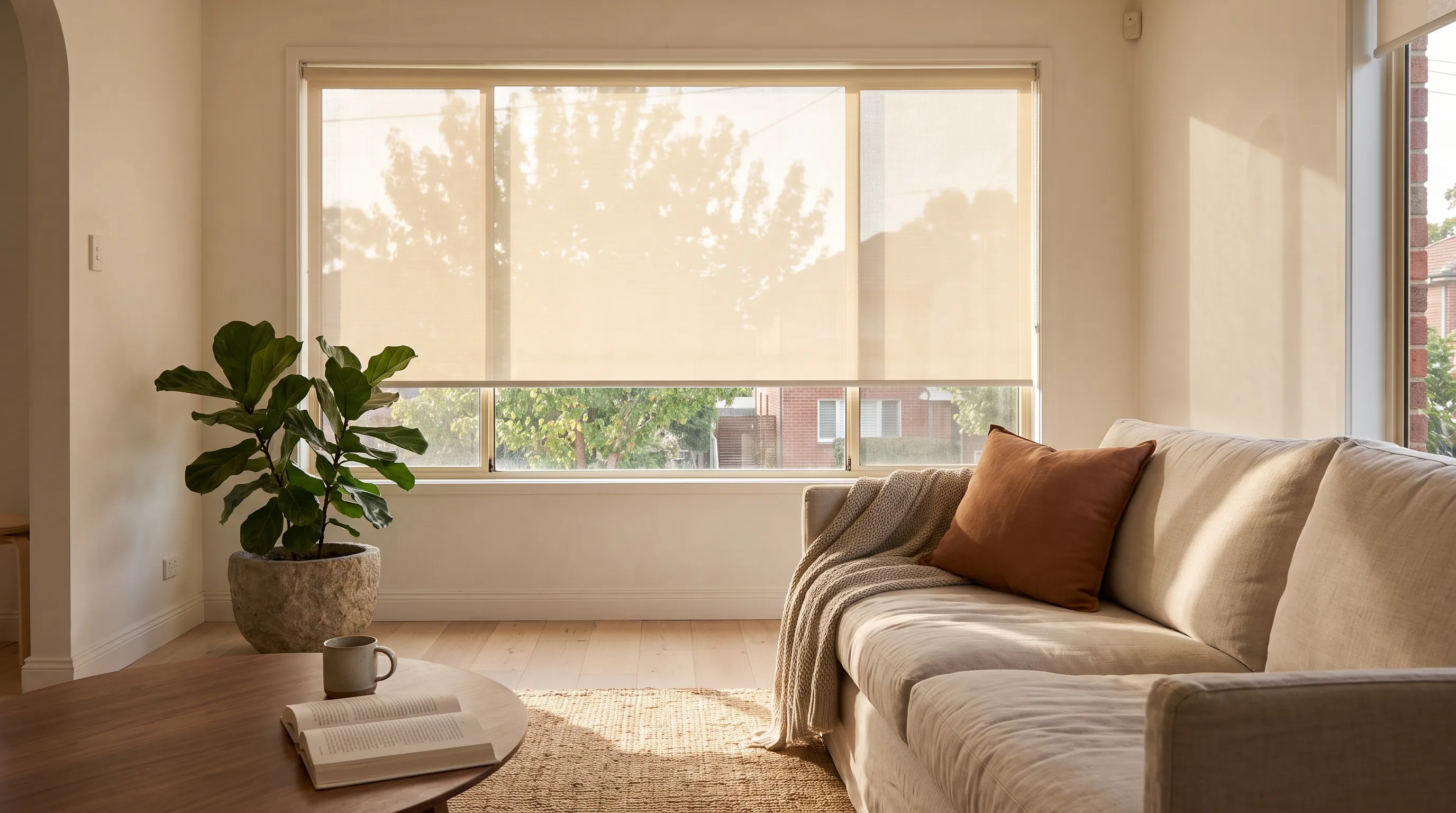
Living room blinds and curtains
A living room is the only room in the house that has to be two rooms. By day it wants the view and as much light as it can get; after dark it wants to be closed, private and smaller than it is. One window covering has to do both.
Blinds Company · Rated 4.8 out of 5 on Google
Free in-home measure · open 8am–9pm, 7 days
In short
Living room blinds and curtains are made to your exact opening and installed across Toronto and the GTA. They suit south and west rooms where the afternoon sun lands on a screen. The in-home measure is free and carries no obligation.
Book
Let's measure your light.
We come to you, measure at your own windows, and go through fabrics and fits together. The visit costs nothing.
$99 off when you order three or more blindsApplied to your written quote at the measure.
Rather just talk?(437) 782-5452Open 8am–9pm, 7 days
The short version
Is this right for your window?
Yes — if the room is one of these.
- South and west rooms where the afternoon sun lands on a screen
- Rooms with windows on two walls facing different directions
- Open-plan spaces where the living end is seen from the kitchen
Where it is wrong is below, and that half is the useful one.
And this is what you would be getting.
- 01
- Specified for the evening as well as the afternoon
- 02
- Glare judged from where you sit, not where you stand
- 03
- The screen wall accounted for before anything is ordered
- 04
- Several windows made to agree without being identical
In a room
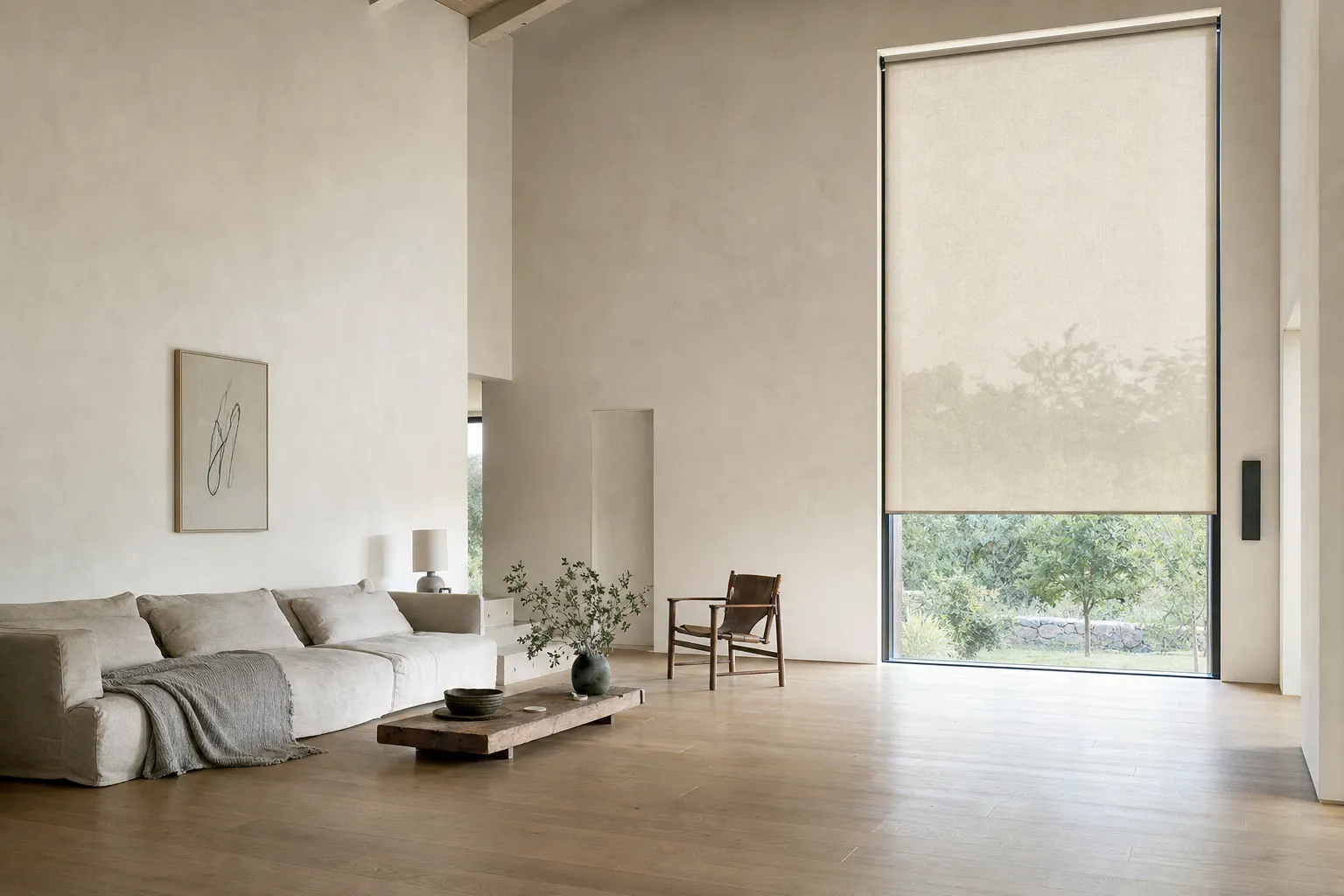
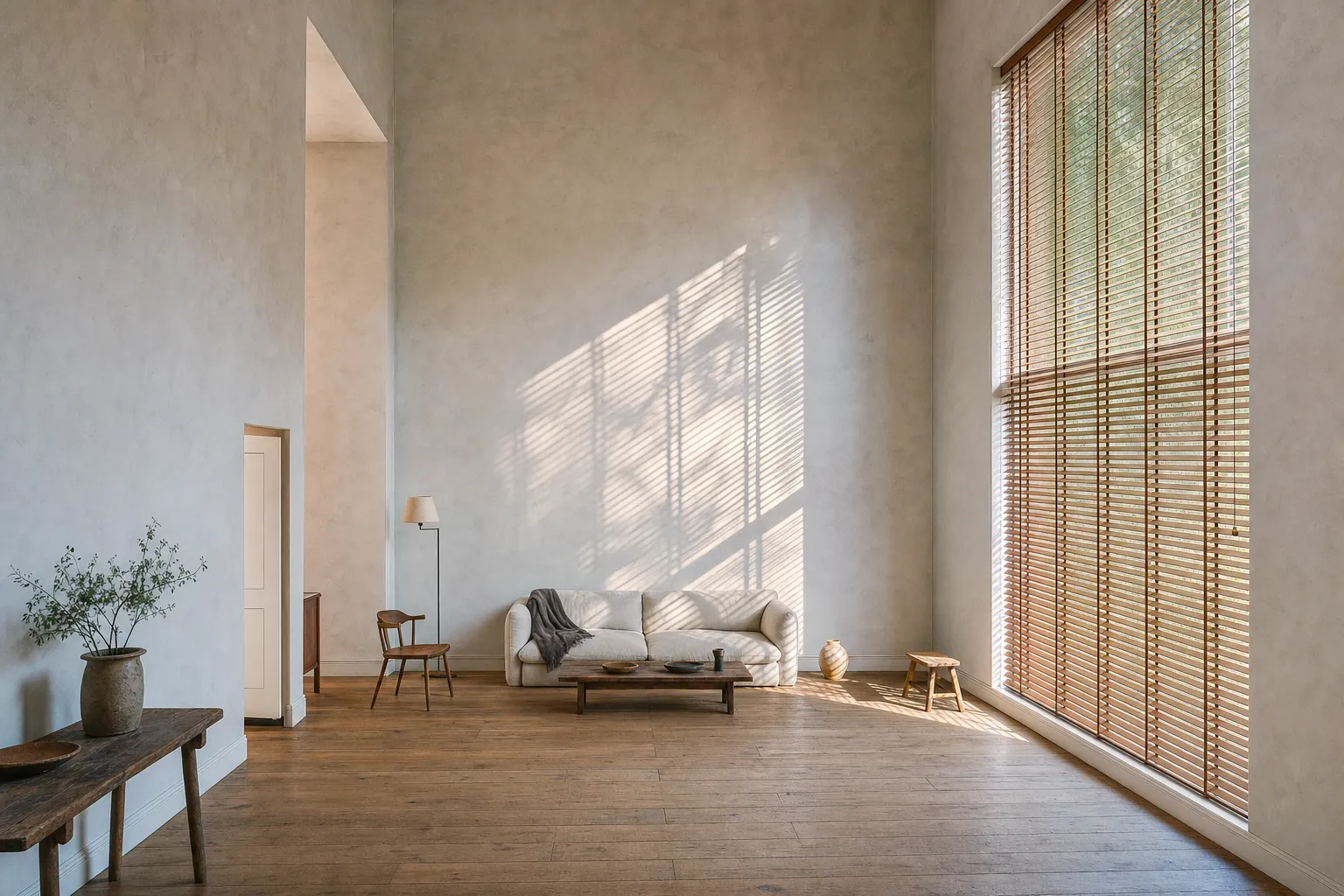
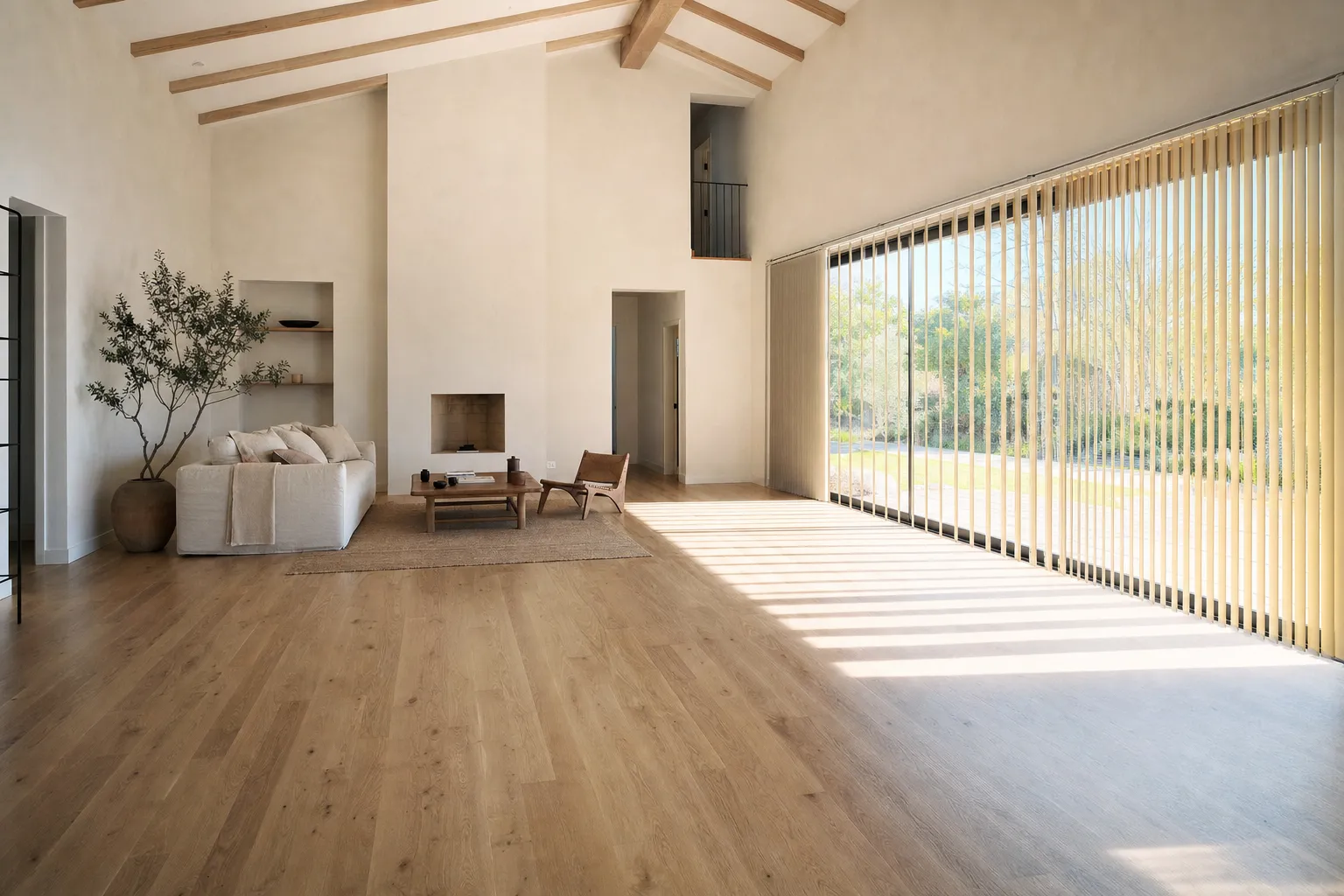
What living room blinds and curtains look like once they are up.
The product, not our installations — a gallery of rooms we did not fit would be somebody else's portfolio with our name on it.
Two rooms, one window
Every other room in the house has a single mode. A bedroom needs to be dark. A kitchen needs to be workable. A living room changes character halfway through the day, and the covering on its window has to change with it.
By day it is an outward-facing room. The window is the best thing in it. People sit facing the light, the view is worth having, and anything that removes daylight from a Canadian room between November and March is doing harm.
After dark it turns inward. The glass becomes a black mirror, the room is lit from inside, and anyone outside can see in with perfect clarity while you can see nothing out. The same window that was the room’s best feature is now a hole in the wall that needs covering.
Those two states want opposite things, and that is the whole design problem. A covering that only answers one of them is the reason living rooms end up with something that is permanently half-lowered — a compromise nobody chose, arrived at by leaving the blind wherever it was least annoying.
The way out is not a cleverer fabric. It is deciding, before anything is ordered, which of the two states is the one you actually have a complaint about.
Glare is measured from where you sit
This is the most common specification error in a living room and it is a matter of geometry rather than taste.
Sun is judged standing up, at the window, by somebody holding a sample book. It is suffered sitting down, four metres away, looking back toward the glass. Those are different sightlines, and the second one is lower — a seated eye is roughly a metre above the floor against about a metre and a half standing.
A lower eye sees the sun at a shallower angle, which means low sun gets under anything that is partly lowered. Half-lowering a blind, which feels like the obvious compromise, is precisely the arrangement that leaves the beam coming in under the hem and straight into a seated face. It works standing up and fails in the chair.
Two consequences worth building into the specification.
Where the seating is matters as much as where the window is. We ask, and it is on the quote. A sofa facing the window has a different problem from a sofa with its back to it, and the second one is about reflections rather than about the sun in your eyes.
The useful product is one that works at full drop. A screen fabric lowered all the way still gives you the view and the daylight, so it solves glare without the half-mast compromise. A venetian solves it by angle instead of height, which is the same idea by a different route. Those two are the reason a living room usually gets one of them.
The screen wall
Almost every living room now has a television or a monitor on a wall, and it is frequently the wall opposite the window, because that is where the seating faces. That arrangement is the single most specific problem this room has.
Worth being precise about what the problem is, because it is narrower than people expect.
A reflection on a screen is not caused by a bright room. It is caused by a bright object at a particular angle relative to the screen and your eye. That angle occurs for a limited part of the day and it moves through the year. In practice most households can name it exactly: a window’s worth of sun crosses the screen for somewhere around an hour and a half on clear afternoons in a particular season.
That specificity is good news, because it means you are buying a temporary intervention rather than a permanent condition. What you want is something that can be deployed for ninety minutes and undone, not something that changes the room all day.
A screen roller at full drop. The view stays, the room stays lit, and the direct beam becomes diffuse light that no longer forms an image on the glass.
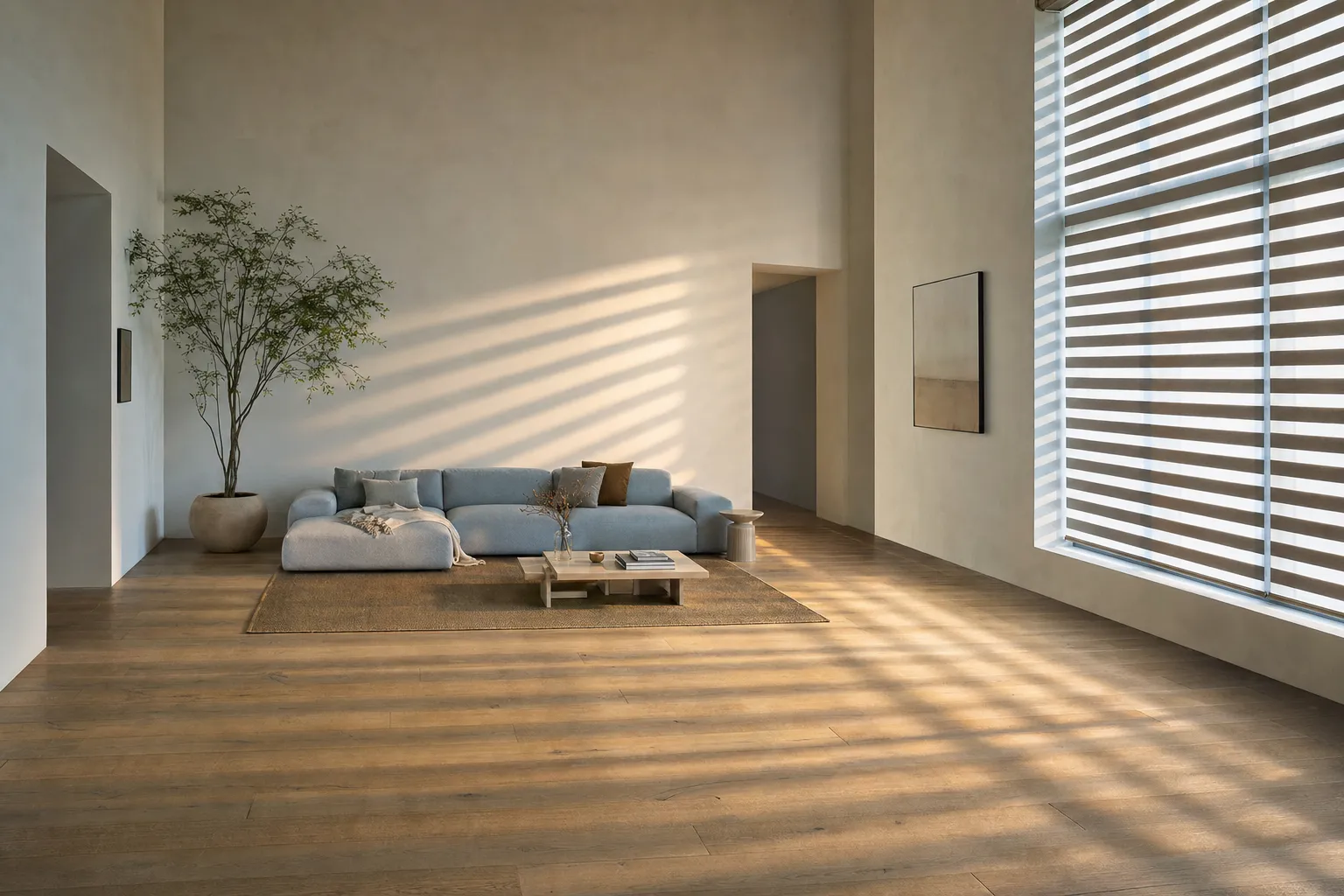
A venetian tilted. Same result by aiming rather than filtering, and it is the better answer where the room is short of daylight to begin with.
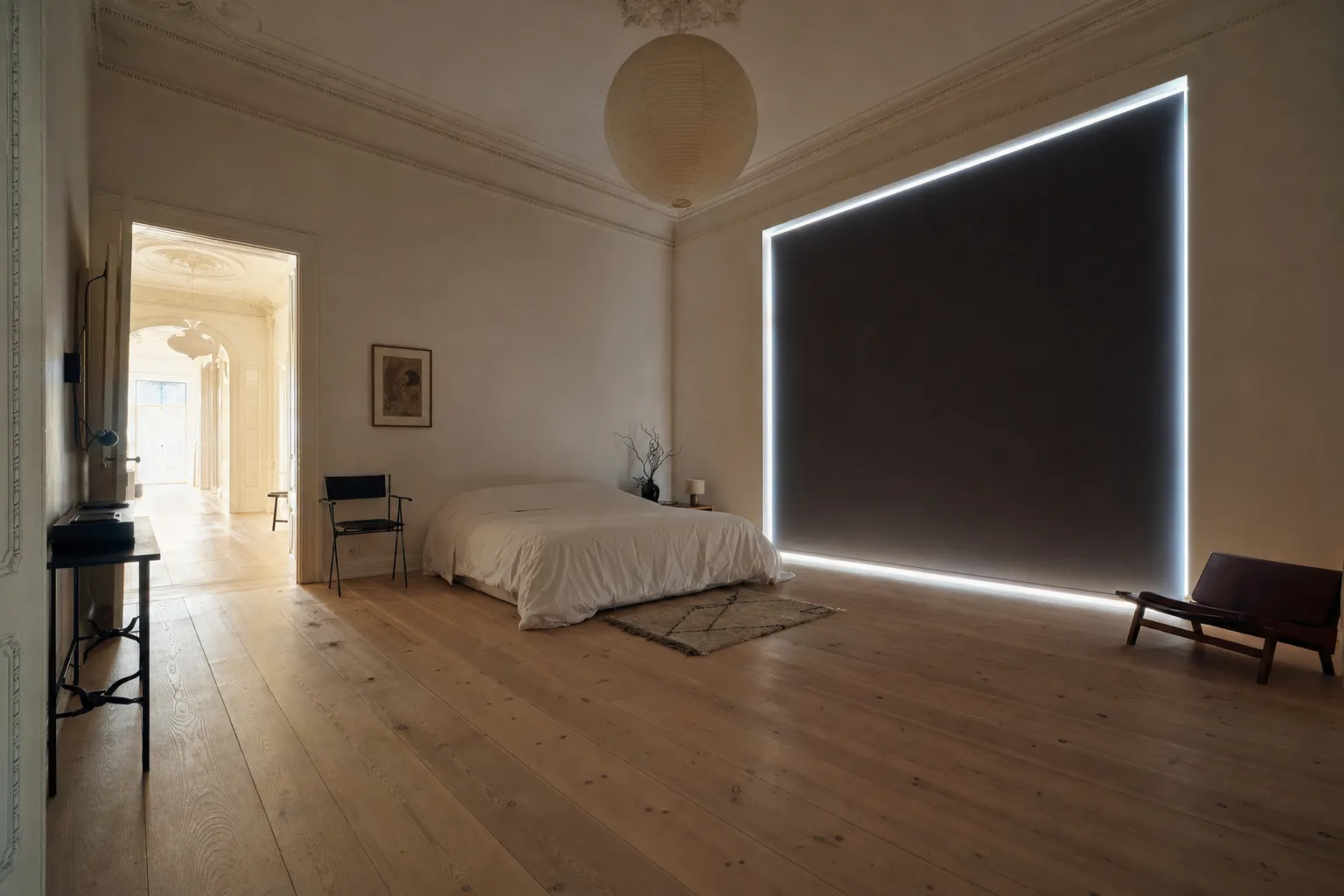
A blackout blind. Solves the reflection and creates a cave. We will fit one if you want it, having said this first.
The one thing we will ask that nobody expects: whether the screen is matte or glossy, because a glossy panel mirrors the whole window and a matte one mostly scatters it. It changes how tight a fabric needs to be, and it is a two-second question at the measure that avoids a whole grade of fabric.
Windows on two walls, facing two directions
A corner living room is common in GTA housing and it creates a problem that looks like a matching question and is actually a physics question.
Two windows on different walls do not receive the same sun. A south window takes strong high light for most of the day; a west window takes weaker light for fewer hours and then a period of very low, very intense sun before sunset; a north window takes almost no direct sun and its complaint is that the room is dim. Specify one fabric for all of them and at least one window is wrong.
But a room with three different-looking window treatments in it looks unplanned, and that is a real cost too.
The resolution is the same one that works between a kitchen and a sitting area, and it is worth stating plainly: agree on colour and on mount height, differ on product and on fabric openness.
Colour. One tone across the room. This does more work than anything else, because from across a room colour is what registers first.
Mount height. All the headrails at the same distance from the floor, even when the windows are different sizes and set at different heights. A common line across the wall is what makes a room look designed; matching products at mismatched heights do not.
Product and openness, per window. The south one can take a tighter screen. The north one should have the most open fabric in the house, or a venetian so the light can be aimed rather than reduced. Nobody standing in the room notices that the fabrics differ. Everybody notices when the lines do not line up.
The biggest window in the house, and what half-mast costs
Living rooms tend to have the largest glazed area in the house, which makes two things bigger than they are elsewhere: the amount of light involved, and the consequence of covering it badly.
Some arithmetic that is worth having before choosing.
A blind lowered halfway does not remove half the light. It removes the top half of the window, and the top half is where most of the useful daylight comes from — light arriving high and reflecting off the ceiling is what makes a room feel bright several metres from the glass. The bottom half mostly delivers view and glare.
So the instinctive compromise gives away the good half and keeps the problem half. A screen fabric at full drop is the opposite trade: it keeps the light coming from the top of the window and takes the sting out of the beam at the bottom.
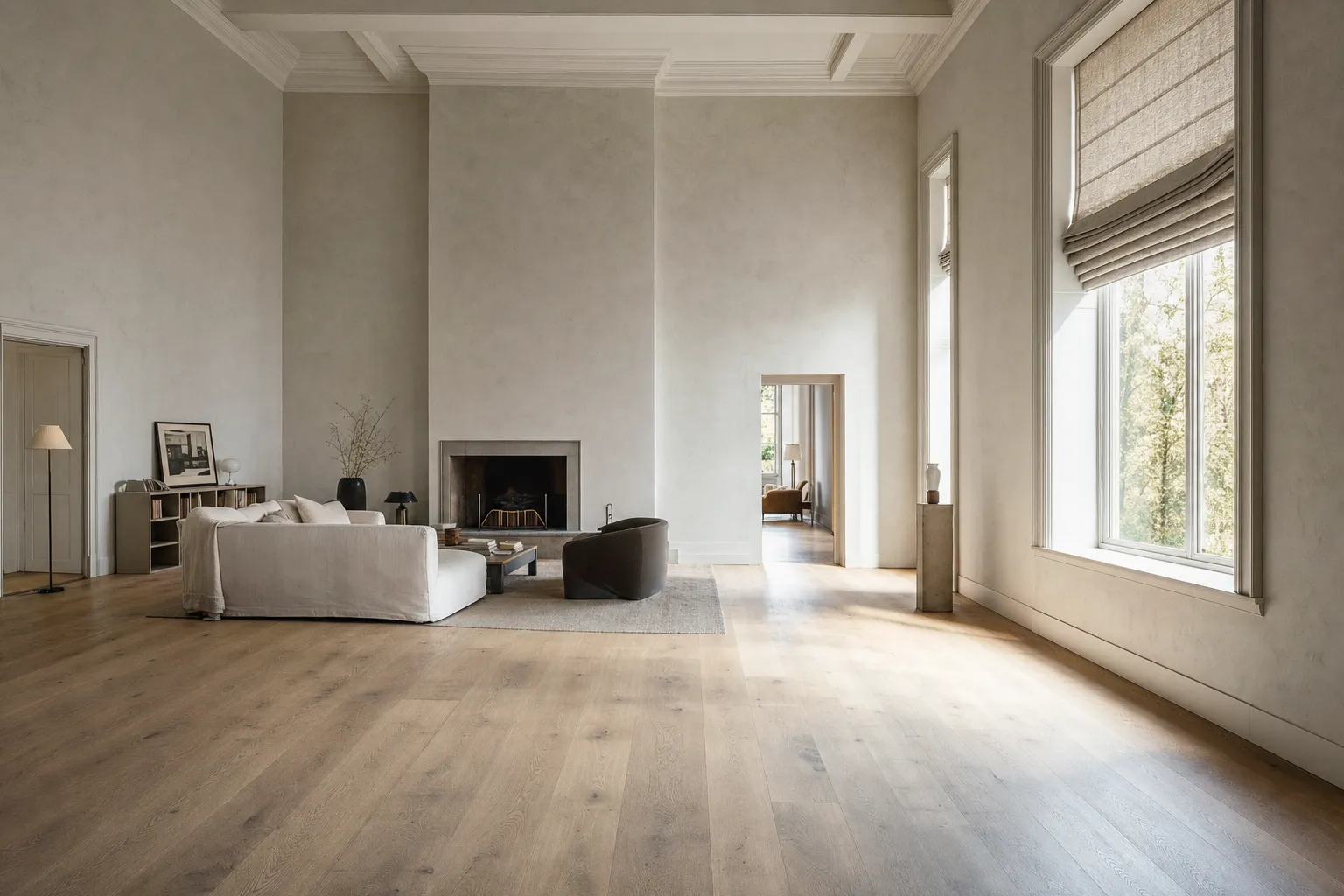
There is a second cost that only shows up in a big window: stack. Anything that gathers — a roman, a cellular, a curtain heading — parks a band of material across the top of the glass when it is open, and on a wide window that band is wide too. On a three-metre opening a roman’s stack is a substantial horizontal bar of fabric sitting exactly where the best daylight enters. A roller stacks to a tube. That is not an argument that rollers are better; it is an argument that on the biggest window in the house the stack is worth knowing before you choose.
Where curtains earn their place in this room
A living room is the one room where curtains do something a blind genuinely cannot, and it is not about light at all.
After dark the room’s job changes to enclosure. A blind covers the glass; a curtain covers the wall. It puts a tall soft vertical mass either side of the window, which is what makes a room read as furnished rather than as a box with holes in it. It also covers the frame, the reveal, and the blind’s own hardware — three hard rectangles that a lit room at night makes more prominent than daylight does.
There is a practical dimension as well. A living room is a hard room acoustically: glass, plaster, a floor, a screen. Cloth in quantity is the only soft thing usually available at a window.
What we would say before you spend on both: the blind is the half that solves a complaint you can name, and the curtain is the half that changes how the room feels. If there is a specific problem — glare on the screen, a neighbour’s window opposite, heat in August — start with the blind. If the room is comfortable and simply looks unfinished after dark, start with the curtains.
How the two layer, what the lining decides, and where the track wants to go are on the curtains page, because those are properties of the curtain rather than of this room.
What the visit involves
The windows measured, and then a conversation about the two states, because a living room specified for only one of them is the thing we get called back to.
Which way each window faces and what happens at its worst hour. Where the seating is and which way it points. Whether there is a screen, and whether it is glossy. What the room is like at nine in the evening with the lights on — which is the state nobody thinks to describe and the one that decides whether curtains are part of the answer.
Then the room as a whole: whether the windows are different sizes, whether their tops already line up or whether a common mount height has to create that line, and whether the space runs into a kitchen or a dining area whose windows also have to agree with these.
If your complaint is glare at a specific hour, we would rather come at that hour than have it described to us. It is the one condition a sample held up at midday cannot show, and it takes one visit to settle instead of one order to regret.
You keep a written quote with a line per opening, the fabric and its openness named, the mount height stated as a measurement from the floor, and the colour the same across the room unless you have asked otherwise. No deposit, no card, nothing owed either way.
Last updated .
Want your living room seen at the hour the sun is a problem? The measure is free and we can come then.
Our commitment
We measured it in daylight and specified for the evening, so a room that only works once is ours to fix.
If it does not fit, we remake it
You never held the tape.
Nothing owed before you agree
No deposit, no card.
Licensed and insured
Both, before we come in.
Your date, in writing
Set at the quote. It does not move.
We will tell you not to buy
If a stock size does it, you hear so.
Cordless where a child sleeps
Standard, at no extra charge.
Reviews on Google
What people said afterwards.
Rated 4.8 out of 5 — the ones below are quoted in full, with a link to check each on Google.
I'm thoroughly impressed with Blinds Company. From the initial consultation to the final installation, their team delivered exceptional service, expertise, and quality.
Oleksandr StakhurskyiHighly recommend Nick and his team. They installed blinds in my house. Looks wonderful, cheers
Timur Shafikov
Real names, real dates, and a link to all of them — including the ones we would not have picked.
Read them on GoogleQuestions
Before you book
What is the best blind for a living room?
The one that solves your worst hour without ruining the rest. In a bright south or west room that is usually a screen roller, which cuts glare while keeping the view readable through the weave. In a room that is dark to start with it is a venetian, because tilting aims daylight at the ceiling instead of removing it. In a room that is mainly used in the evening it is often a roman or curtains, because the job there is enclosure rather than light control.
How do I stop the sun landing on the television?
Measure the problem before solving it. The reflection on a screen comes from a narrow band of sun angles and it lasts a predictable part of the afternoon — commonly under two hours. That means you are looking for something you can put in place for those two hours and take away again, not something that darkens the room all day. A screen roller lowered part way, or a venetian tilted, both do that. A blackout blind solves it by making the room unusable, which is not solving it.
Should I have blinds or curtains in a living room?
Blinds do the light and curtains do the room. If the problem you can name is glare, heat or a neighbour looking in, start with a blind. If the problem is that the room feels hard, bare or too big after dark, start with curtains. Many living rooms end up with both, and there is a longer argument about how they layer on the curtains page.
The room has windows on two different walls. Do they have to match?
They have to agree, which is not the same thing. Windows facing different directions get different amounts of sun and honestly need different fabrics, so forcing one product onto both means one of them is wrong. What makes a room look considered is a common colour and a common mount height, not a common product — the same principle we apply between a kitchen and a sitting area in an open-plan room.
Will a blind make the room dark?
Only if you buy one designed to. Screen fabrics are rated by openness — a more open weave keeps more of the view and cuts less glare, a tighter one does the reverse — and in a living room the useful range is at the open end. The mistake we are called to fix most often is a living room specified with bedroom fabric, where the only two states are bright and gloomy.
What about the heat coming through a big window?
A large window gains a lot of heat in summer and loses a lot in winter, and the covering can help with both, but not with the same product. Anything light-coloured facing the glass reflects summer gain before it becomes room heat. Winter loss is about trapped air rather than colour, which is a cellular shade's argument rather than a roller's. Which one matters more depends on the room, and it is a question we would rather ask than assume.
Not this one?
The rest of the range.
Each of these is the wrong answer somewhere, and its page says where. That is usually the faster way to find the right one.
If you are choosing between two fabrics and cannot decide, the deciding question is what the room does after dark. Ring and describe the evening.