Blinds in Thornhill
Custom blinds, shades and curtains in Thornhill, chosen with the room finishes and daily use in view. The home measure is free, and a matching appearance can still allow different fabrics where the light changes.
Blinds Company · Rated 4.8 out of 5 on Google
Free in-home measure · open 8am–9pm, 7 days
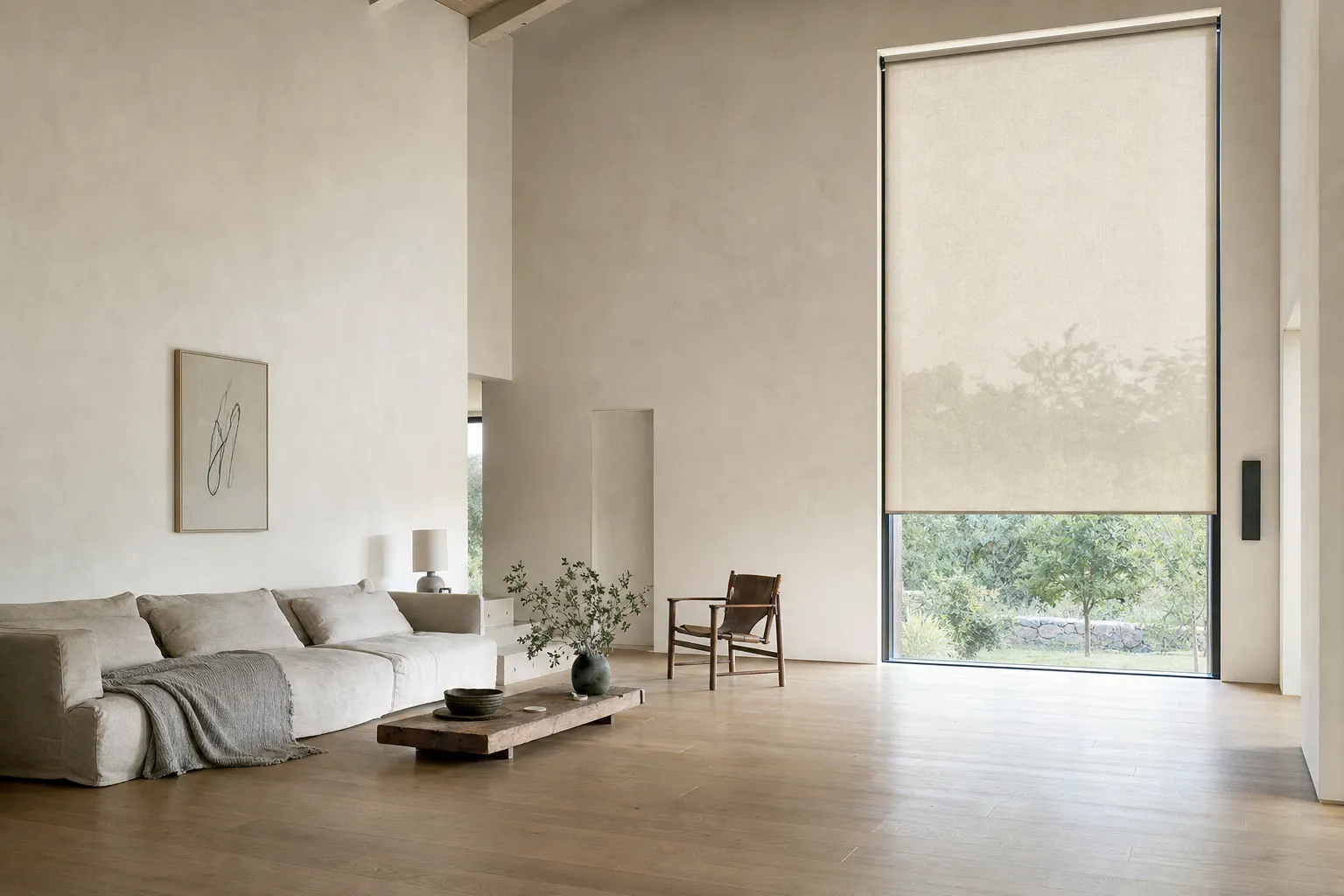
Illustrative room photograph; not a local installation.
In short
Thornhill is included in our home-measuring service. We measure in your home and compare fabrics and fit at the openings. A shared colour does not require a sleeping room and a bright work area to use the same covering.
Book
Let's measure your light.
We come to you, measure at your own windows, and go through fabrics and fits together. The visit costs nothing.
$99 off when you order three or more blindsApplied to your written quote at the measure.
Rather just talk?(437) 782-5452Open 8am–9pm, 7 days
Begin with what the rooms share
If several Thornhill rooms need new coverings, the strongest starting point is often the part of the home that should stay visually connected. It could be pale trim, a timber floor, a warm wall colour or a line of windows visible from one sitting position. Describe that connection before deciding that every room must have the same blind. A coherent home can use more than one mechanism without feeling pieced together.
Then separate the functions. A study might need daylight softened across a screen, while a bedroom needs more complete privacy. A dining space used mainly at night has another light pattern. Write those uses beside the rooms on your list. They explain where matching appearance can be shared and where opacity, movement or clearance should be allowed to change.
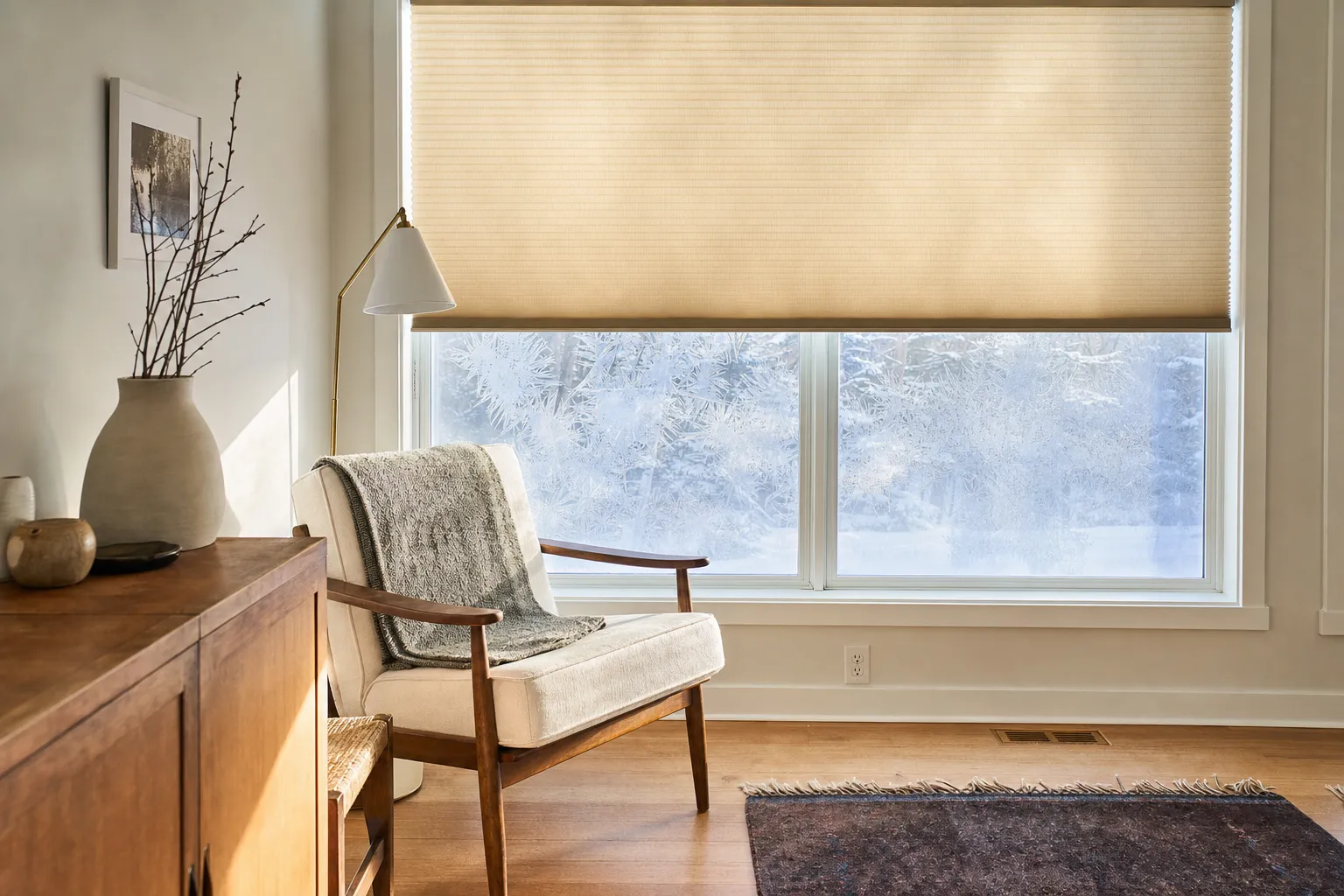
Blinds Company offers home measuring in Thornhill. The free in-home measure is a chance to compare the openings and talk about fabrics beside your own finishes. Bring the colours and finishes you plan to keep into the comparison. The room image is an illustration of a cellular shade, chosen to show a covering clearly rather than to imply that the pictured interior belongs to a Thornhill customer.
Colour is only one part of a fabric match
Two samples labelled with similar colours can behave differently when light passes through them. An open weave shows more of what is outside, while a more opaque surface can appear solid against the glass. A textured material can also cast small shadows that change the impression of its colour. Put the samples in the same light before treating them as a coordinated pair.
The surrounding finish matters as well. A creamy fabric beside a cool white frame can look warmer than it did on a neutral background. Timber flooring may bring out another tone. If the room has a finish you plan to keep for years, use that stable element as a reference. A temporary cushion or a screen image is a less reliable basis for a large surface at the window.
Matching across an open room should include the raised position. A roller tube and a stack of roman folds create different shapes above the glass even when their materials belong to the same colour family. If both can be seen at once, ask whether you want the top lines aligned, the mechanisms hidden similarly or simply a related texture. Name the feature that makes the rooms feel connected rather than pursuing an identical product label.
Fit follows the finished opening
During decorating or renovation, a window can look almost complete while its final fitting surface is still changing. Replaced trim, an altered sill or a new handle can affect the space available for a covering. Tell us which parts are final and which are planned. That lets the conversation distinguish a fabric choice that can be discussed now from a measurement that should be confirmed later.
Do not assume that a replacement frame has kept the dimensions of the previous one. The glass may appear similar while the recess depth or surrounding edges differ. If an old blind is still in place, it can help show what you liked and what interfered with the window, but its old width is not an instruction for the next product. The new arrangement should be assessed against the opening that will remain.
Also show how the pane opens. A handle can project farther than expected into the space where a bottom bar would sit. A tilting section may travel through the area a shade occupies when lowered. These are ordinary geometric questions, and they become clearer when the window is demonstrated at the measure. They should not be reduced to a guess about which material is usually used in a particular city.
Give the quiet room its own standard
A sleeping room should be judged by the amount of light and privacy you need there, not by the appearance of the neighbouring living room. If light at the edges wakes you, explain where the bright lines appear. A fabric may be opaque while the arrangement around the frame still allows light through. The fit and the surface both contribute to the result.
Cellular shades can provide a compact pleated appearance and a structure of air pockets. That is a material characteristic, not a promise of an exact change in energy use. No percentage saving is claimed for a Thornhill home. If the window itself is damaged or draughty, separate that condition from what you want the covering to do. A shade can be discussed for comfort and light control without being presented as a window repair.
For reading beside a bedroom window, full darkness may not be the only useful setting. You may want gentle light for part of the day and more closure later. Consider which adjustments you would actually use. The cellular-shades guide and the blackout-blinds page introduce different material questions; neither replaces checking the clearances of your actual frame.
Compare texture with the space it needs
Roman shades and curtains can both bring a softer fabric surface into a room, but the fabric moves to different places. A roman shade gathers over the opening, while open curtains occupy wall space beside it. Before preferring one silhouette, look at the space each would claim. A cabinet close to the frame or a low ceiling can make that practical question more decisive than a photograph.
See the raised material from the furnished room
If the room has little spare wall area, consider whether a side stack would narrow a passage or sit over a feature you want to keep visible. If the glass is tall, look at the folds or rail from your normal sitting position. A covering is not experienced only from the straight-on viewpoint used in a catalogue. The sofa, doorway and dining table can each reveal a different part of it.
Curtains, drapery and roman shades are all within the confirmed range of services. Ask to compare their roles rather than assuming one is outside the conversation. You might want a fabric layer for the evening and a simpler blind for daily glare, or one covering that handles both adequately. Extra layers should be justified by how you will use them, not added solely because a staged room contains them.
A workspace can share the palette without sharing the opacity
For a desk near the window, first notice the reflection on the equipment you use. A computer, tablet and glossy work surface can react differently to the same bright opening. Sit in the chair and identify the section of glass producing the problem. A covering that looks calm from the doorway can leave a narrow strip of glare exactly where you need to see.
If you work on video calls, also consider the light behind and beside you. Closing the whole window may remove glare but leave the room unnecessarily dark. Partial control or a different fabric may offer a useful compromise. Explain the hours you use the space, because an occasional afternoon task and a full working day place different demands on adjustment.
The operating position should remain accessible after the desk is in place. A control squeezed behind shelves can become annoying even if the fabric is right. Mention furniture that will stay and the side from which you naturally approach the window. A motorized option is available to discuss, but its power, access and compatibility must be considered for the chosen system instead of assumed from the word smart.
Prepare a short brief for the measure
Use a room list with three notes per opening: the problem, the look you want to keep and any planned change. This is enough to start a useful discussion without measuring everything yourself. If one window is hard to reach, a photograph including its surrounding surfaces can explain the access. If you are considering coordinated colours, bring the samples or finish references you already have.
Blinds Company has 5+ years in business and is licensed and insured. The visit to measure and discuss fabrics and fits costs nothing. Discuss the selected materials and the work in your proposal together. The written quote is where the agreed installation date belongs. A room photograph is guidance for a conversation, never a substitute for those details.
You can request the in-home measure while the product choice is still open. Start with the Thornhill room where the current covering causes the most inconvenience, then explain how it relates to the spaces around it. The aim is to make the home feel consistent while giving each window the movement, privacy and light control its room actually needs.
Last updated .
Everything we make
The rest of the range, in Thornhill.
Each is wrong somewhere. Its page says where.
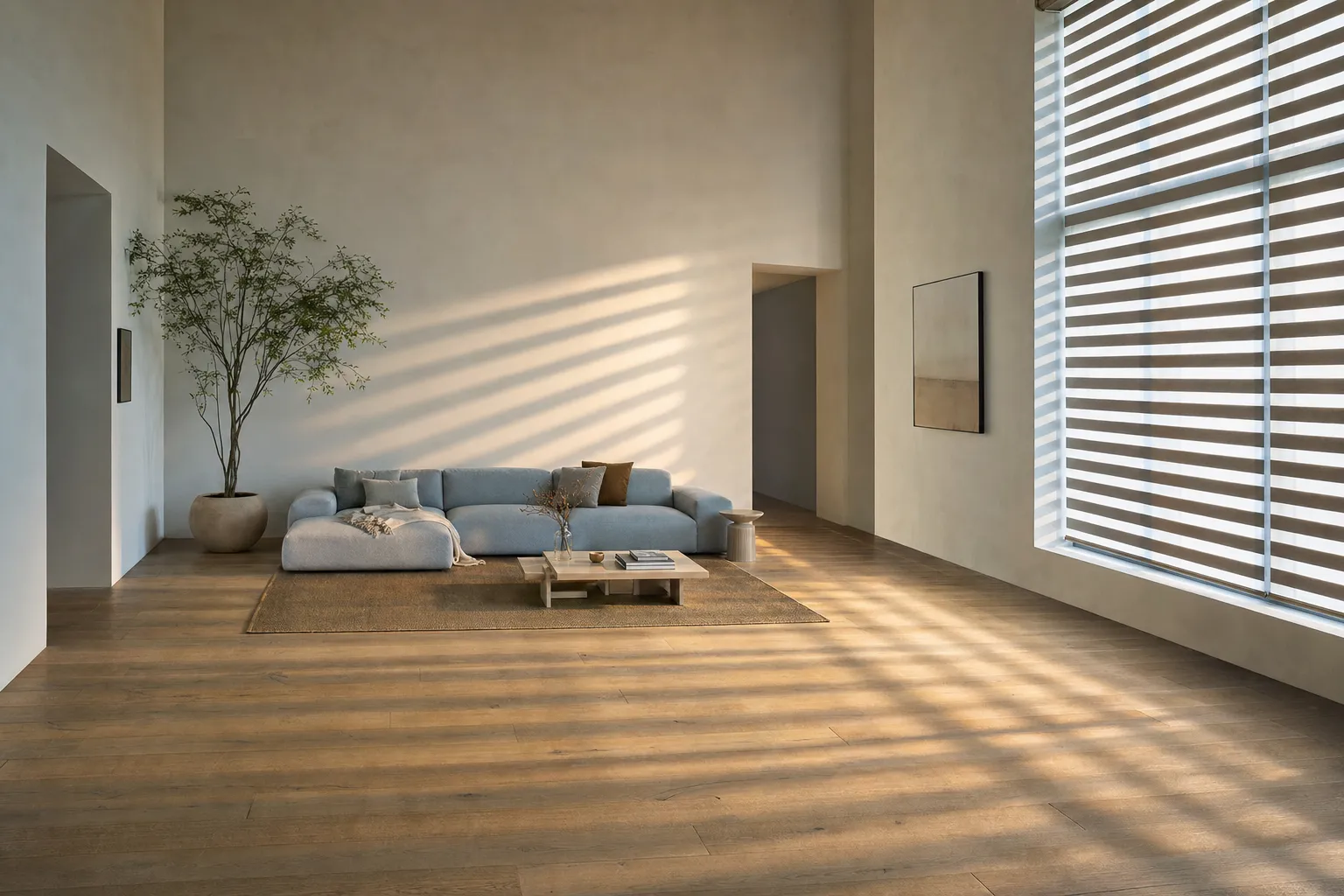
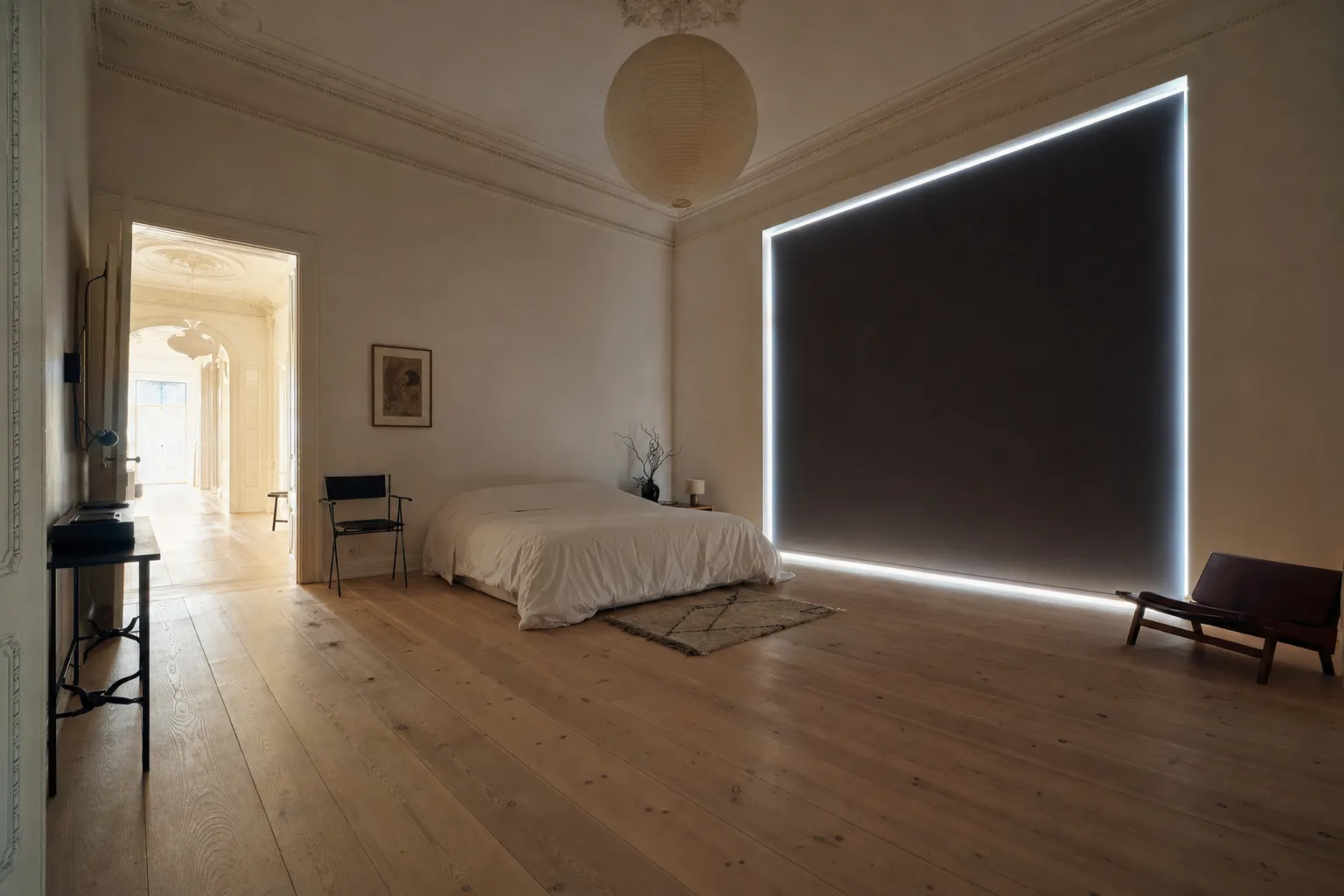
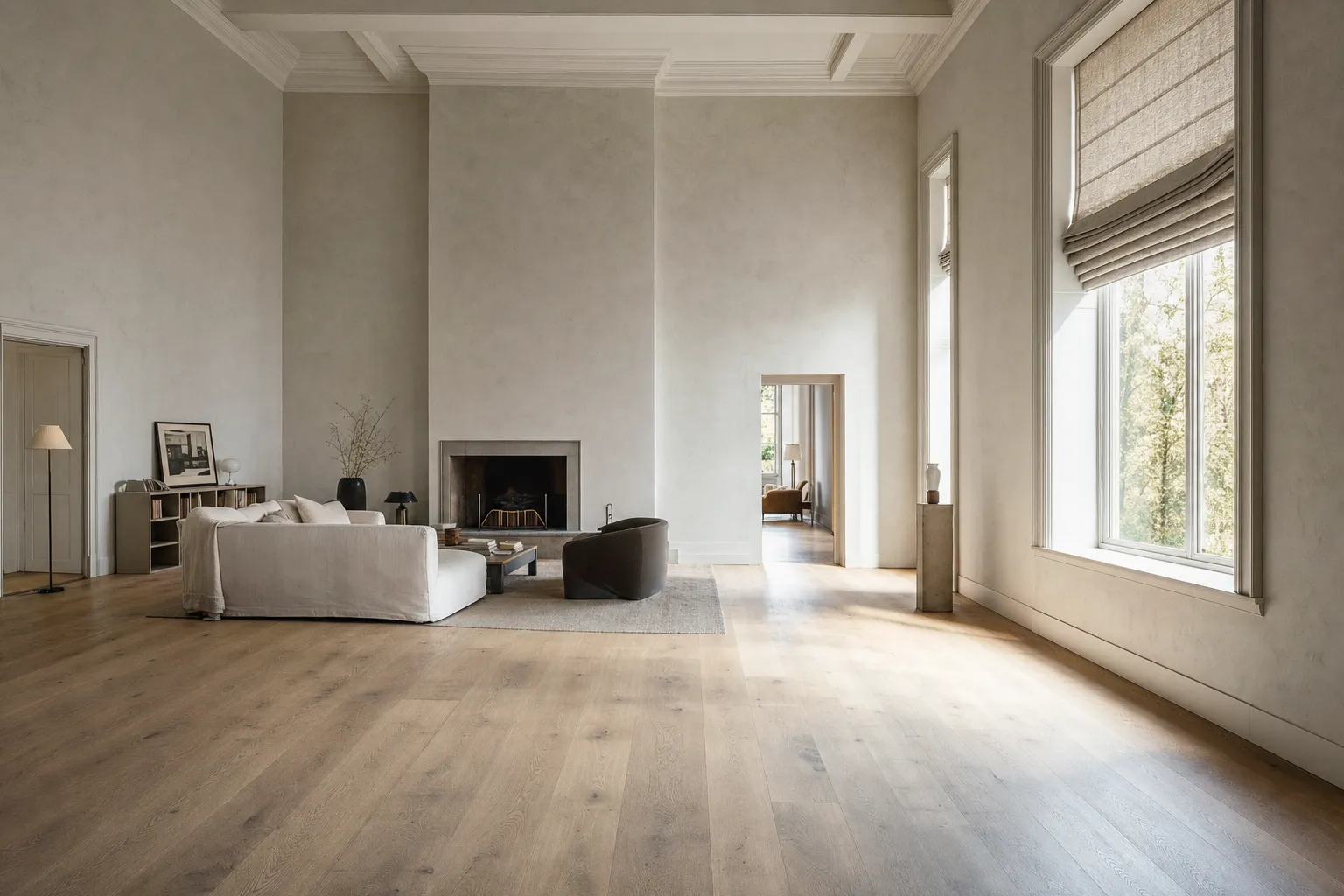
Bring the room you are keeping, not just the colour you saw online.
Questions
Before you book
Can two rooms share a colour but use different fabrics?
They can be planned that way, but compare the actual materials together. Different weaves and backings can make a similar colour read differently in daylight. Start with the visible relationship you want, then check privacy and light control separately. Matching the name on two samples is less useful than seeing whether the samples sit comfortably beside the finishes in the rooms where they will be used.
What if the new trim is not installed yet?
Tell us what will change before relying on the present opening. New trim, a different sill or a replacement frame can alter clearance and fixing space. It may be sensible to discuss the covering now and confirm the final measurement after the relevant work is complete. The sequence should be clear instead of treating a provisional dimension as a finished specification.
Are cellular shades a substitute for fixing a draughty window?
No covering repairs a damaged seal or frame. Cellular shades have a structure that holds pockets of air, but that does not establish a particular saving for your home or remove the need to address a window defect. If draughts are the main complaint, distinguish the condition of the opening from the comfort and light-control role of the shade.
How do I compare a roman shade with curtains?
Think about where the fabric goes when open. A roman shade forms folds above the glass, while curtains gather beside it. Either can add texture, but their space requirements differ. Check the ceiling, wall and adjacent furniture before deciding which silhouette suits the room. A material you like must still have a practical place to sit in both positions.
Tell us what should look consistent across your Thornhill rooms.