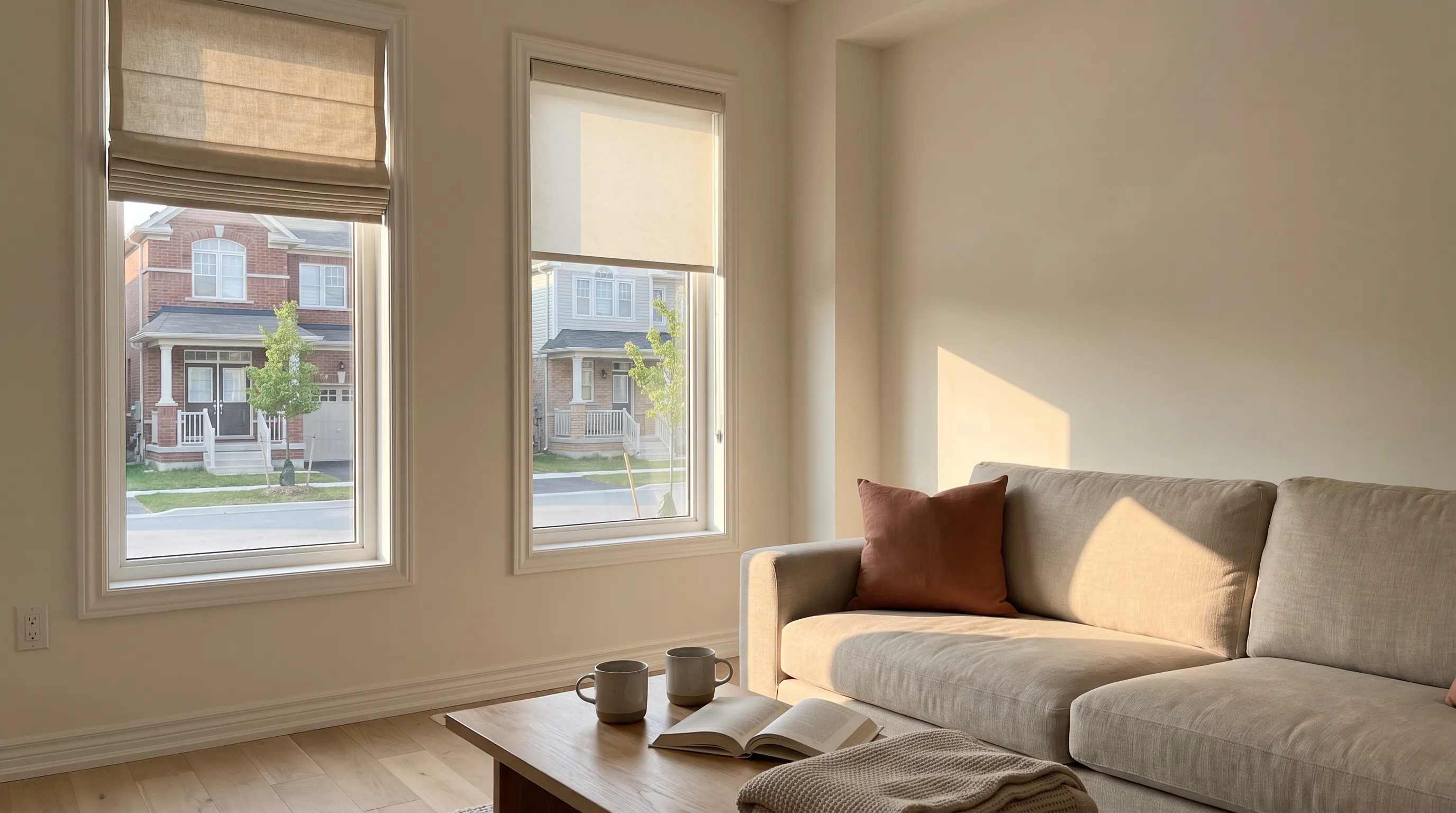
Blinds in Markham
Made-to-measure blinds and shades across Markham, from the heritage frontages on Main Street Unionville to the new-build estates north of Major Mackenzie. Measured in your own rooms, fitted by the crew that took the numbers.
Blinds Company · Rated 4.8 out of 5 on Google
Free in-home measure · open 8am–9pm, 7 days
In short
Markham asks two questions that most of the GTA does not. In the heritage streets — Unionville, Markham Village — what goes on the window has to respect a frontage that is protected and a sash that is original, which usually means an inside mount and a light hand. In the new estates north of Highway 7 the question is the opposite: tall glass, shallow reveals, and rooms open to the floor above, where reach and depth decide before fabric is discussed. The measure is free either way.
Book
Let's measure your light.
We come to you, measure at your own windows, and go through fabrics and fits together. The visit costs nothing.
$99 off when you order three or more blindsApplied to your written quote at the measure.
Rather just talk?(437) 782-5452Open 8am–9pm, 7 days
A town with two centuries in it
Markham is the only place we work where a job can involve an 1880s sash window in the morning and a two-storey wall of glass in the afternoon, four kilometres apart.
The old core — Main Street Unionville, Markham Village, the streets immediately around them — is protected frontage. The houses are frame and brick, the windows are tall and narrow with divided panes, and the reveals are deep because the walls are thick. Everything about the specification there is about restraint.
North and east of that, from Berczy Village through Cathedraltown, Angus Glen and Greensborough, is subdivision built mostly since the late nineties, much of it in the last fifteen years. Big rooms, tall openings, shallow reveals, and a great deal of double-height volume at the front of the house.
Cornell is a third thing again, and worth naming separately: a planned community built to a New Urbanist pattern, which means houses close to the street, porches, garages at the rear off a lane, and — the part that matters here — front windows that face a sidewalk about six metres away.
Heritage frontages, and what “protected” actually touches
The first thing worth clearing up, because it worries people more than it should: heritage designation governs the outside of the building. It is not a rule about what you may hang inside your own room.
But a window covering is visible through glass, and on a designated frontage the glass is part of the elevation. So the practical guidance is narrow and easy to follow. Keep the backing pale, so what the street sees is consistent with the rest of the row. Mount inside the opening where the reveal allows, so the sash and the muntin bars stay readable from outside rather than being hidden behind a headrail sitting across the top of the glass. And keep the product simple, because a divided window is already a pattern and a second pattern in front of it fights.
None of that costs anything. It is the same money for a fabric with an off-white reverse as for one without, and inside mounting is usually the easier fit anyway.
What we would not do on those houses is fix anything to the sash. Brackets go to the frame or to the wall. A sash on a nineteenth-century window is the part with the value in it, and it is the part that will one day need to come out.
The hundred-year-old opening, measured honestly
An original opening in Markham Village is rarely a rectangle any more, and the two diagonals tell us that in half a minute.
The consequence is specific. A roller and a venetian both end in a rigid horizontal, so a sill that has dropped six millimetres across its width shows as a widening wedge of daylight along the bottom. A roman ends in a soft fold that settles into an uneven gap far more forgivingly, which is one of the few situations where the product with the most fabric is the practical answer rather than the decorative one.
Where the opening is genuinely out of true and the room needs a hard-edged product anyway, the blind mounts outside with an overlap and the wall takes the error. That covers some of the casing, and on a heritage window that is a real loss — so it is a conversation to have at the measure rather than a decision to discover afterwards.
The other thing sixty to a hundred and forty years does is make every opening individual. In a new house you can measure one window in a row of three and be right about the other two. In Markham Village you cannot, and we do not.
The new estates: height first, everything else after
North of Highway 7 the problem reverses. The openings are square, the frames are new, and none of the heritage caution applies.
What does apply is height. A great room open to the second floor, a front hall with a window following the stair, a primary bedroom with glass reaching to a vaulted ceiling — all of these put the bottom bar of a blind well beyond arm’s reach.
A blind that cannot be reached is a blind that lives in one position for years. So on those windows the specification is a motor, and the reason to say it plainly at the measure is that it is the single biggest line on the quote and people should be choosing it deliberately rather than discovering it. Battery tube motors have made this far less of a project than it was: no wiring, a charge two or three times a year, and a remote or a wall switch.
Depth is the second constraint, because modern framing gives a shallower reveal than the walls of an older house. Where a zebra will not fit inside the opening, mounting to the face of the wall or to the ceiling is not a compromise — at ceiling height the blind covers the head of the glass and removes the band of sky that sits above a blind mounted inside.
The third thing about these houses is simply the count. Twenty-plus openings is normal, so the quote is itemised per window and most people do the house in two or three passes. Bedrooms and whatever faces west first; the formal rooms nobody sits in last.
Cornell, and the six metres to the sidewalk
Cornell deserves its own paragraph because its street pattern creates a problem the rest of Markham does not have.
Houses sit close to the sidewalk with living space at the front and generous glazing. By day that is pleasant. After dark, with the room lit, it is a lit stage viewed from a footpath two car-lengths away — and the usual advice about screens does not help, because a screen works by there being more light outside than in. After sunset that reverses and a screen shows silhouettes.
So on a Cornell front room the honest options are an opaque fabric, a zebra whose solid bands can be closed fully in the evening, or a layered arrangement where a sheer handles the day and something solid handles the night. Which one depends on whether the room is used after dark, and that is a question rather than a preference — we ask it before recommending anything.
The lane-access garages have a second, smaller effect: the rear of a Cornell house often faces a lane rather than a garden, and rear-facing bedrooms can be overlooked from across it. That is a room-by-room check rather than a rule.
Townhouses, and the stacked-window problem
Markham has a great deal of townhouse stock, freehold and condominium, and it brings a pattern that detached housing does not: windows stacked vertically on a narrow frontage, often three storeys of them, with the living floor in the middle.
Two things follow. Sightlines between facing rows are close and level, so the middle floor of one house looks directly into the middle floor of the other. That is the floor people actually live on, and it is why zebra fabrics sell so well in these communities — one product handles a bright day and a lit evening without a second layer.
And the ground floor is frequently a garage plus a small room, with the top floor bedrooms. Which means the three floors want three different answers, and buying one fabric for the whole house — the instinct, because it looks tidy — usually serves the middle floor and fails the top.
Freehold townhouse communities here often carry rules through the subdivision agreement about what the street sees. It is generally a backing-colour rule, it is generally easy to satisfy, and it is generally in a document nobody has read since closing. We ask.
Angus Glen, and rear glass facing an open fairway
The estate streets around Angus Glen have a condition that is unusual in the GTA: a large number of houses whose back elevation looks out over open, unshaded ground rather than at a neighbour’s fence forty feet away.
That is a lovely thing to own and a genuinely awkward thing to specify for, because it removes the two things that normally moderate an afternoon. There is no building opposite throwing shade after four, and there is no mature canopy filtering anything. From about three o’clock until sunset the back of the house takes the sun at full strength across a wide expanse of glass.
Two consequences follow, and only one of them is about comfort.
The first is that a fabric chosen by eye in the morning will be a stop too open. On rear glass with a clear western exposure we usually end up a full step tighter than the sample somebody arrived liking — and the way to settle that argument is not a discussion, it is holding two candidates up at half past four.
The second is fade. Unfiltered afternoon sun over years does measurable damage to floor finishes, to leather, and to anything hanging on the wall opposite the glass. In those rooms the blind is doing a preservation job as well as a comfort one, which changes the calculation about whether it is worth motorizing: a blind that closes itself at three in the afternoon while nobody is home is protecting the room on exactly the days nobody would have closed it by hand.
Milliken Mills and the eighties stock
The southern part of Markham — Milliken Mills and the streets around it — was built mostly between the mid-seventies and the late eighties, and it is a third housing type that gets forgotten between the heritage core and the new estates.
The signature there is the aluminium slider: a horizontal sliding window, often wide and not very tall, set in a shallow frame. They are perfectly serviceable windows and they create two specific issues.
The first is that the frame is shallow, so an inside mount frequently has nowhere to go. The blind ends up on the face of the wall, and because these windows are usually wider than they are tall, an outside mount can look heavy unless the blind is sized to the wall rather than to the glass.
The second is condensation. A single-glazed or early double-glazed aluminium frame is a thermal bridge — the metal conducts cold straight through — and in January the frame runs several degrees below the room. A blind sealed tightly against that window overnight traps moist air where it will condense, and the sill takes the damage over successive winters.
The fix is not a different fabric. It is leaving the blind standing slightly off the glass and being honest that a tight blackout with side channels on those particular windows is a trade, not a free upgrade.
What we would say to somebody on Main Street
Do not let anybody talk you into treating the old windows the way the new subdivisions are treated.
The reflex answer in this industry to a small, divided, slightly out-of-true window is to mount something big outside it and make the problem go away. It does make the problem go away, and it also removes the reason anybody bought a house on that street. A deep reveal, a light hand and the willingness to accept that a hundred-year-old opening is not a rectangle will get you a window that still looks like the house it is in.
And if the honest answer for one of those windows is that it is better left uncovered — which on a north-facing divided window with good proportions it sometimes is — you will hear that too.
Last updated .
Everything we make
The rest of the range, in Markham.
Each is wrong somewhere. Its page says where.
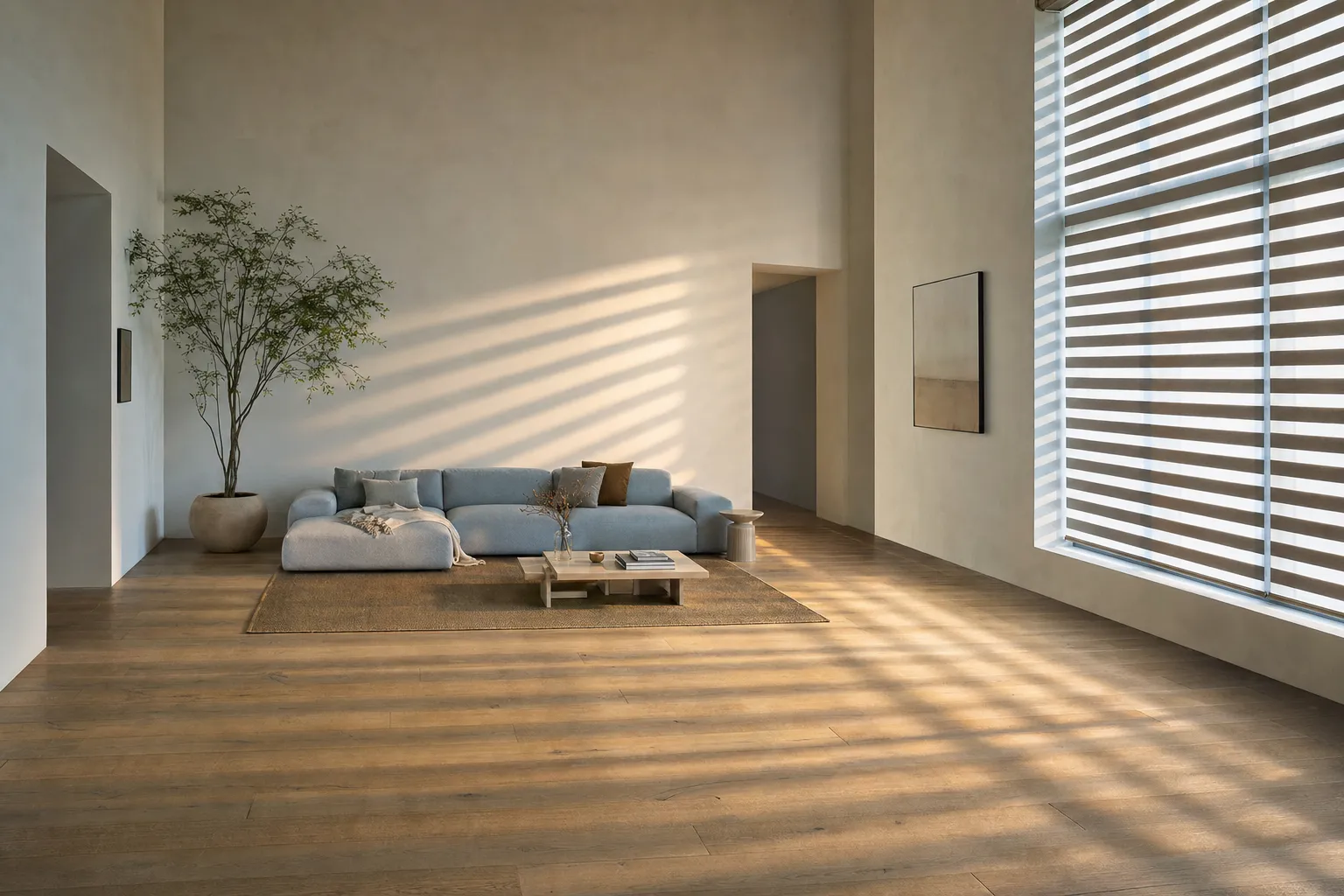
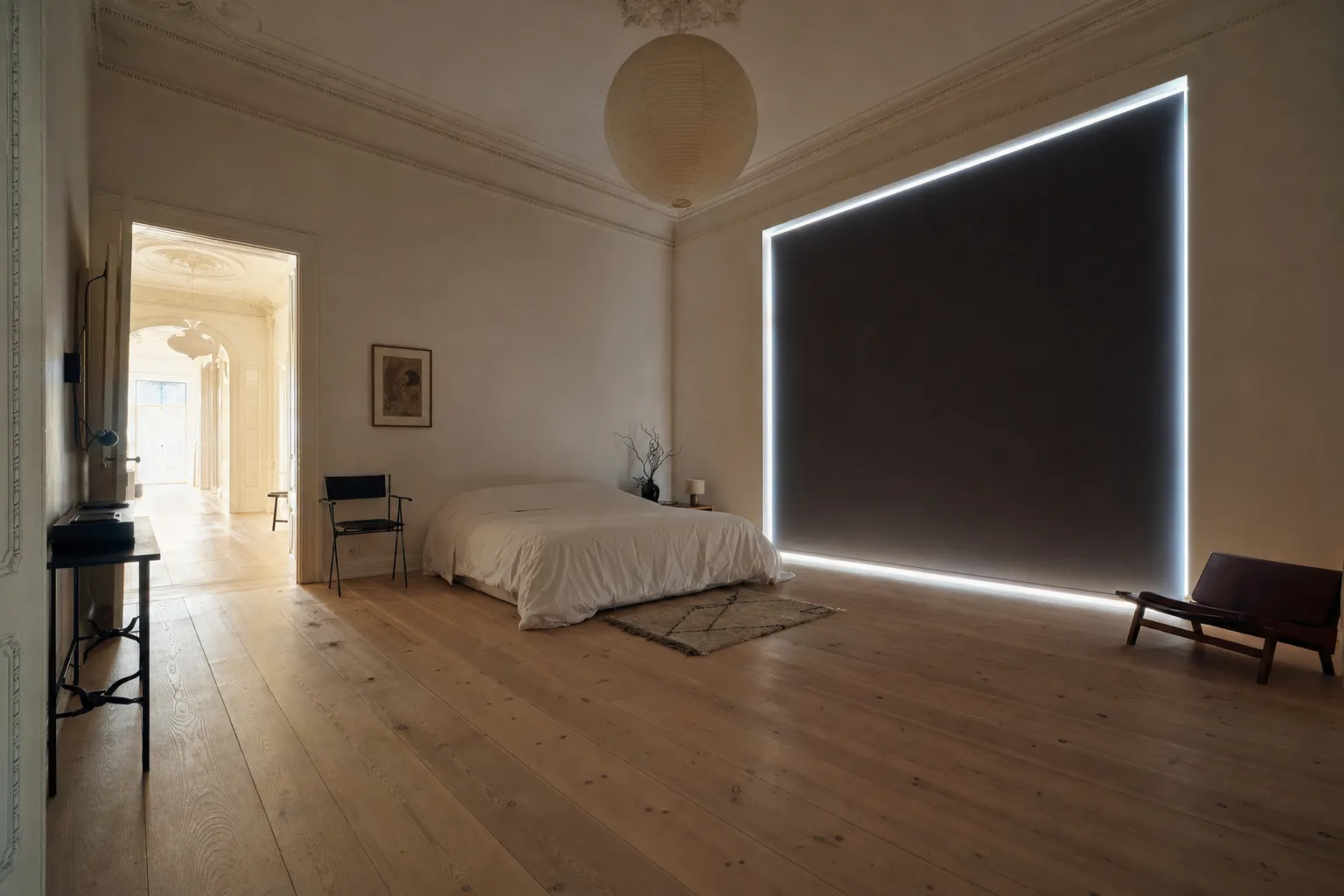
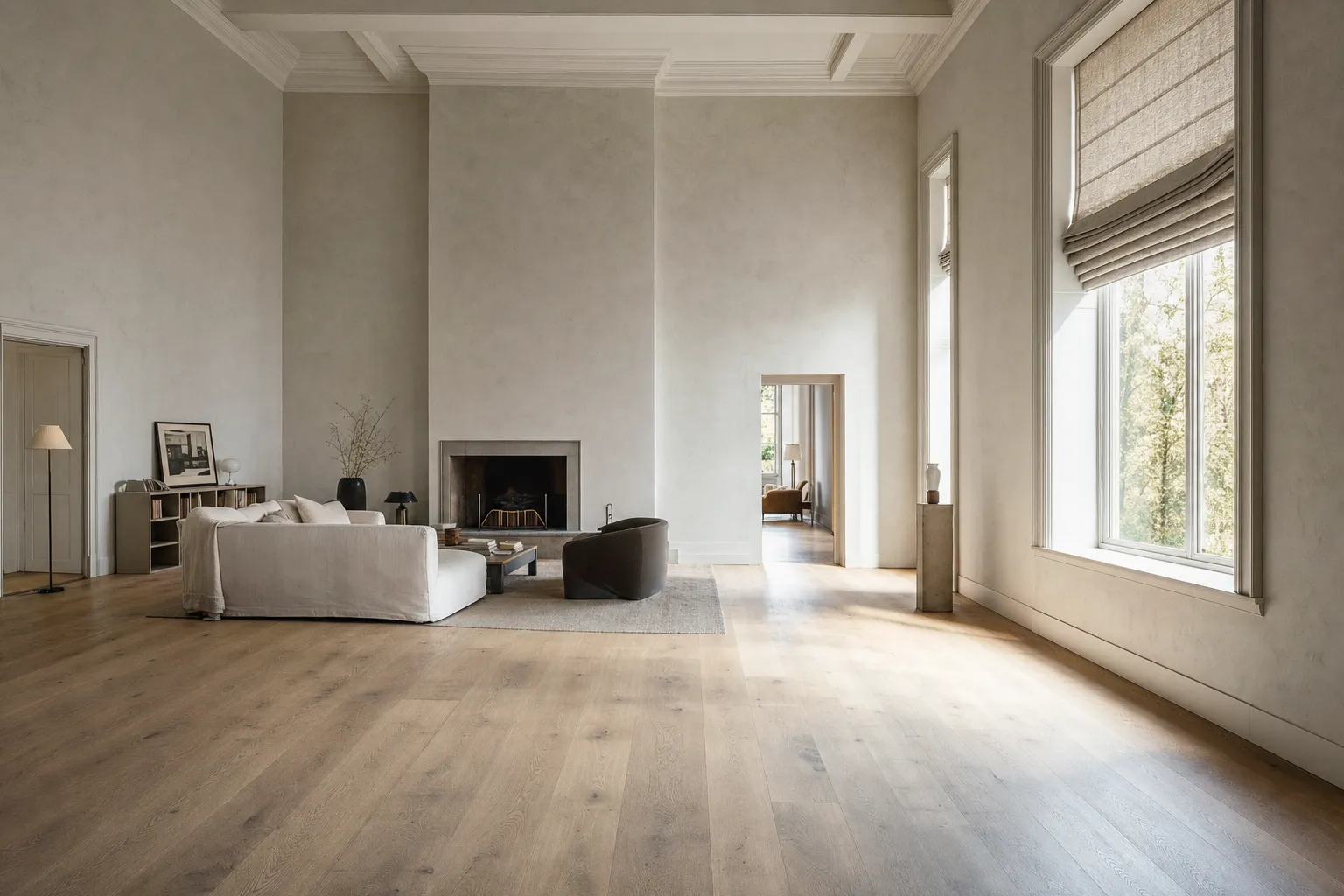
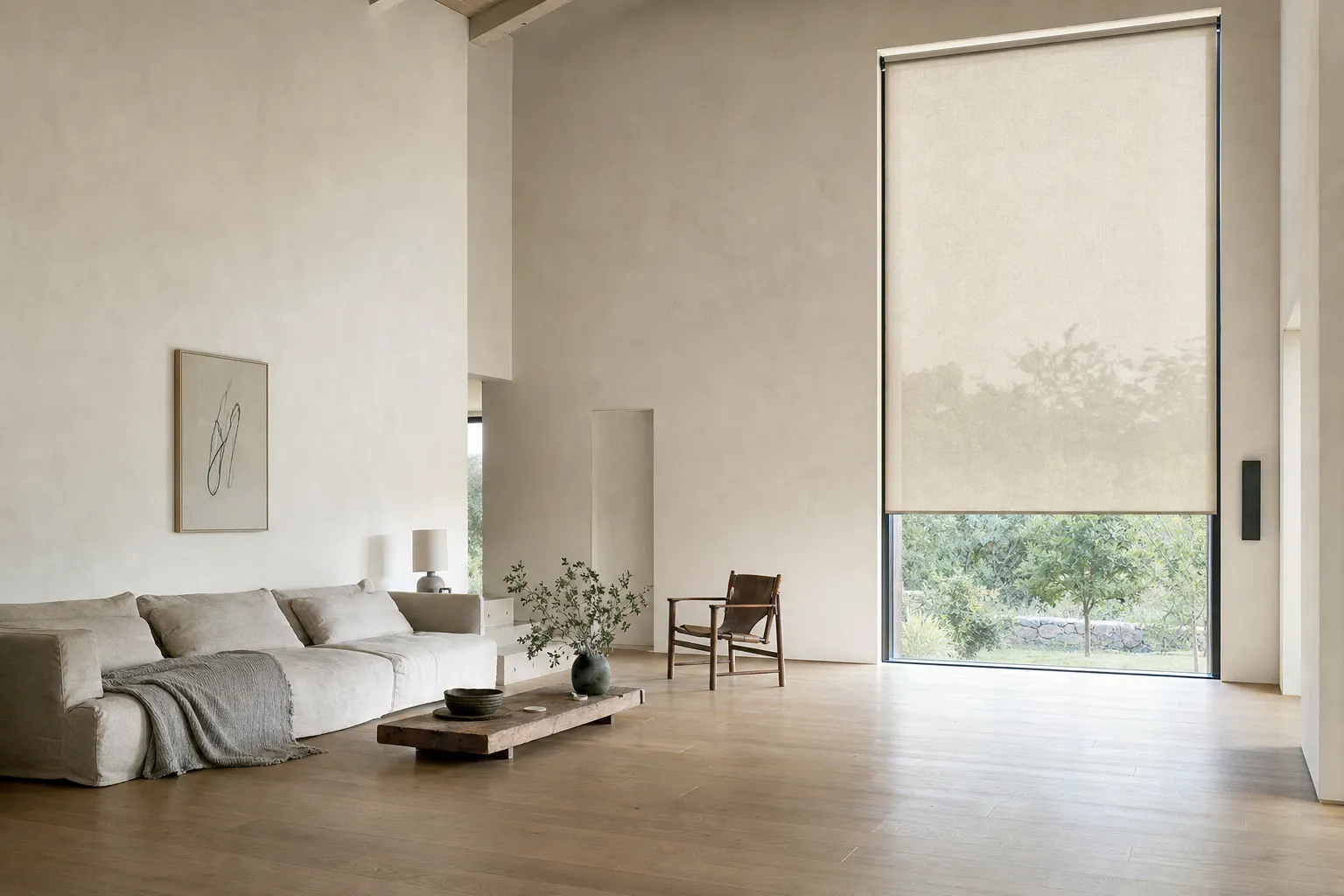
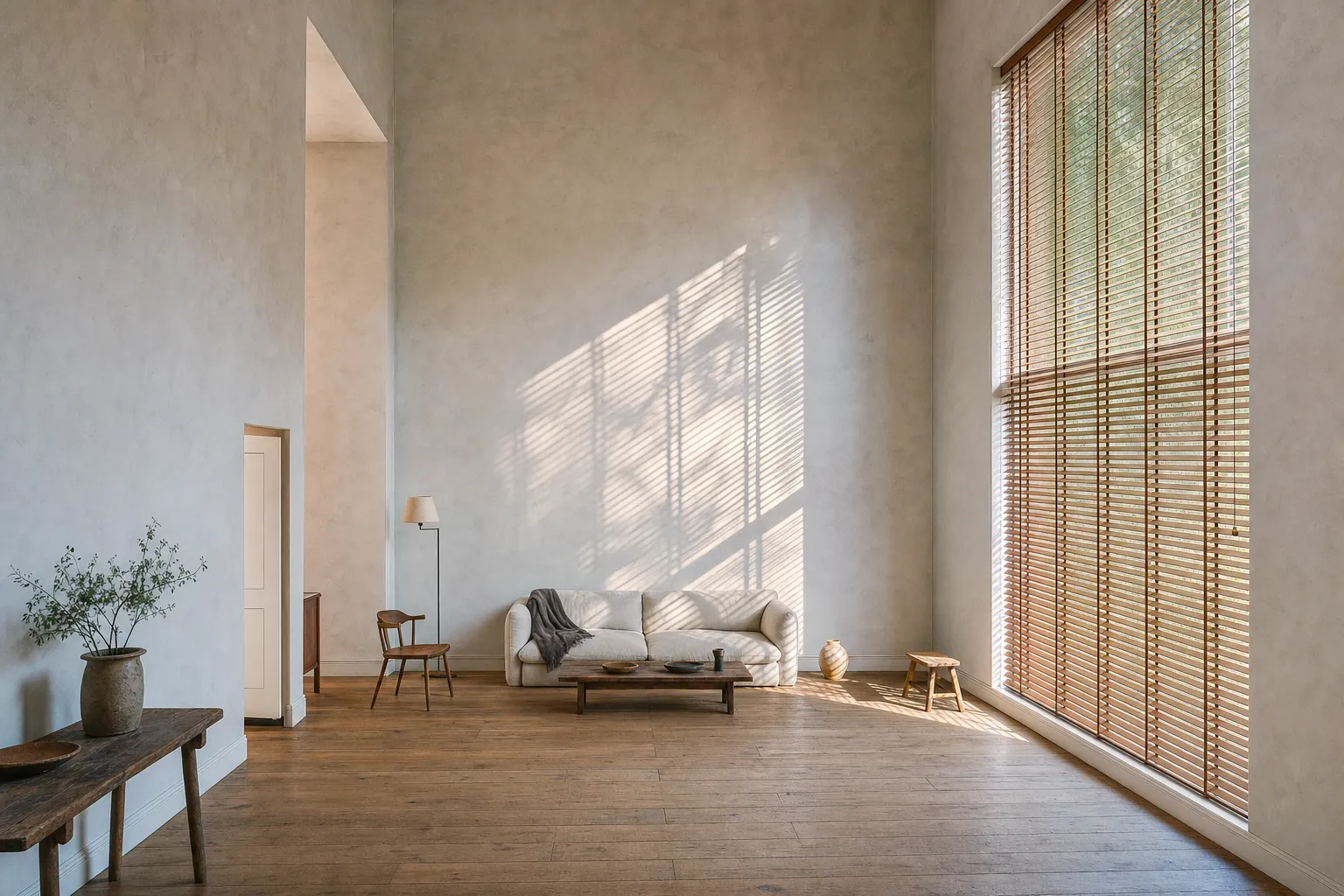
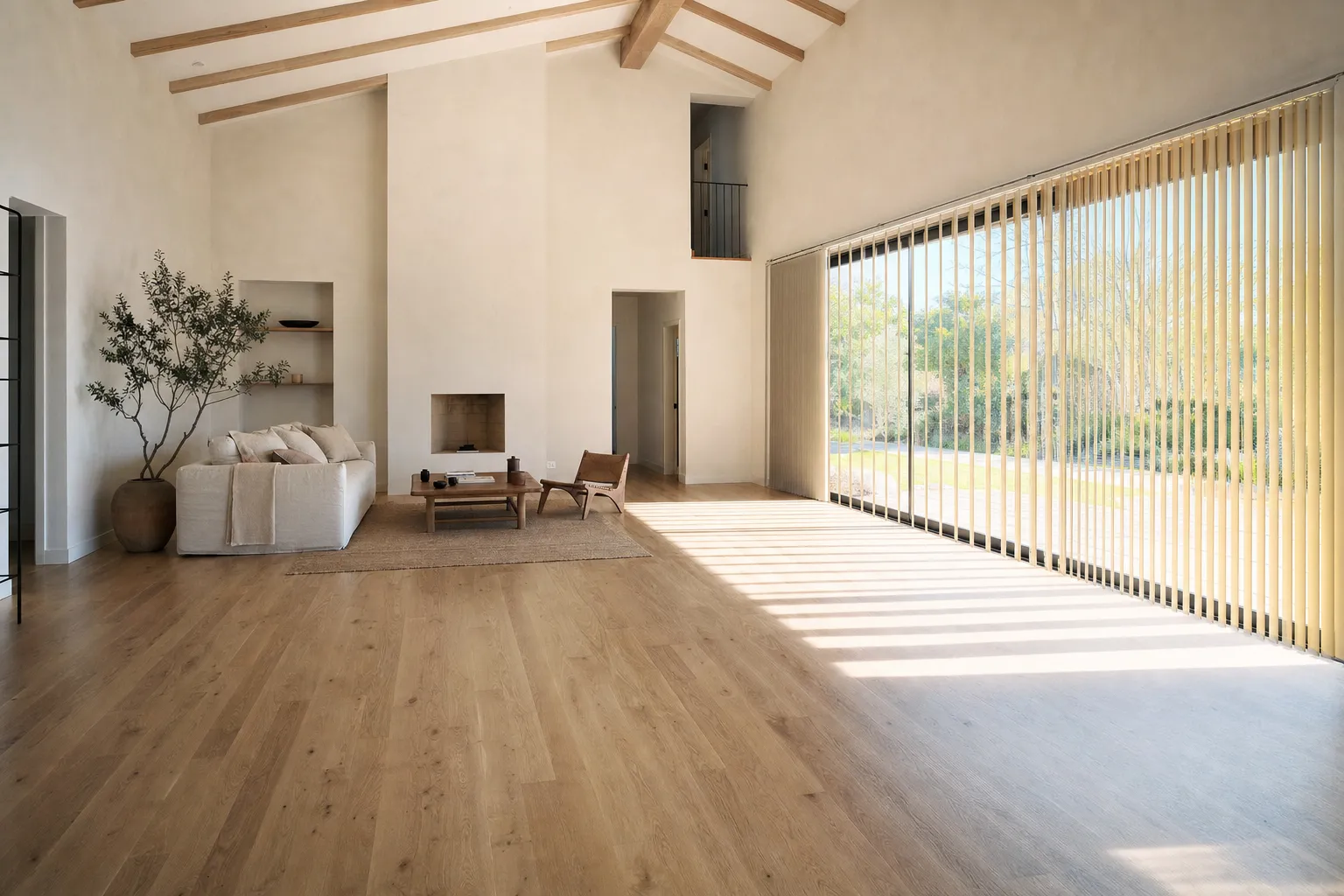
Heritage sash or two-storey glass, we would rather see it than be told about it.
Our commitment
We measured your opening, so an opening that argues back is our problem.
If it does not fit, we remake it
You never held the tape.
Nothing owed before you agree
No deposit, no card.
Licensed and insured
Both, before we come in.
Your date, in writing
Set at the quote. It does not move.
We will tell you not to buy
If a stock size does it, you hear so.
Cordless where a child sleeps
Standard, at no extra charge.
Reviews on Google
What people said afterwards.
Rated 4.8 out of 5 — the ones below are quoted in full, with a link to check each on Google.
Nick has delivered the greatest service as I recently moved in to my new townhome and needed to have blinds for all three floor windows. Not only the price was the best, but he accommodated all my requests in the process. Definitely worth every penny
Anton KovunovI was blown away by the exceptional customer service from Blinds Company! Their staff was knowledgeable, friendly, and helped me find the perfect blinds for my living room. The installation was quick and flawless. I highly recommend them!
Merdan Berdiyev
Real names, real dates, and a link to all of them — including the ones we would not have picked.
Read them on GoogleQuestions
Before you book
Our house is in the Unionville heritage area. Does that restrict blinds?
Heritage designation governs the exterior, so what it touches is what the street can see — and a blind is visible through the glass. In practice that almost never blocks a choice, but it does argue for a pale backing and for mounting inside the opening so the sash and the muntins stay legible from outside. We look at the frontage before recommending anything.
What is different about the new estates north of Major Mackenzie?
Scale and height. The houses run to tall windows, two-storey front halls and family rooms open to the floor above, so the constraints become reach and depth rather than squareness. On glass whose bottom bar would sit nine feet up, a motor is not an upgrade — it is the thing that makes the blind usable at all.
Can you work on original sash windows?
Yes, and the mount is the whole decision. An original sash usually sits in a deep reveal that will hide a headrail completely, which keeps the window's proportions intact. What we avoid is fixing anything to the sash itself, and what we check is whether the opening is still square — a hundred-year-old frame rarely is.
Do the townhouse developments have rules about window coverings?
Freehold townhouses in the newer communities often do, usually through the subdivision agreement rather than a condominium declaration, and usually about the colour visible from the street. It is a rule about the backing rather than the room-side fabric. We read it rather than assume.
The formal living room is never used. Does it need blinds at all?
It needs something, but rarely the same thing as the rooms you live in. A front room that is looked at rather than sat in has no glare problem and no real privacy problem during the day, so the job is to match the elevation and to stop the sun bleaching whatever is in there. That is a plain fabric in a colour taken from the wall, not the most capable product on the sample board. Spending the difference on the family room is almost always the better move.
Will afternoon sun actually damage the floor?
Over years, yes, and it is one of the few blind decisions with a preservation argument behind it rather than a comfort one. Unfiltered western sun fades wood finishes, leather and textiles, and it does it in a band that follows the light across the room. On rear glass with an open western exposure — common on the Angus Glen side — that is a reason to consider a blind that can close itself in the afternoon while the house is empty, which is exactly when nobody would have closed it by hand.
Do you charge to come out to Markham?
No. The visit, the samples held against your own glass, the advice and the written quote cost nothing, wherever in the GTA you are, and there is no deposit or card taken at the door.
If your window is a shape rather than a rectangle, describing it on the phone is hard and showing us is easy. Ring, and we will come and look at it.