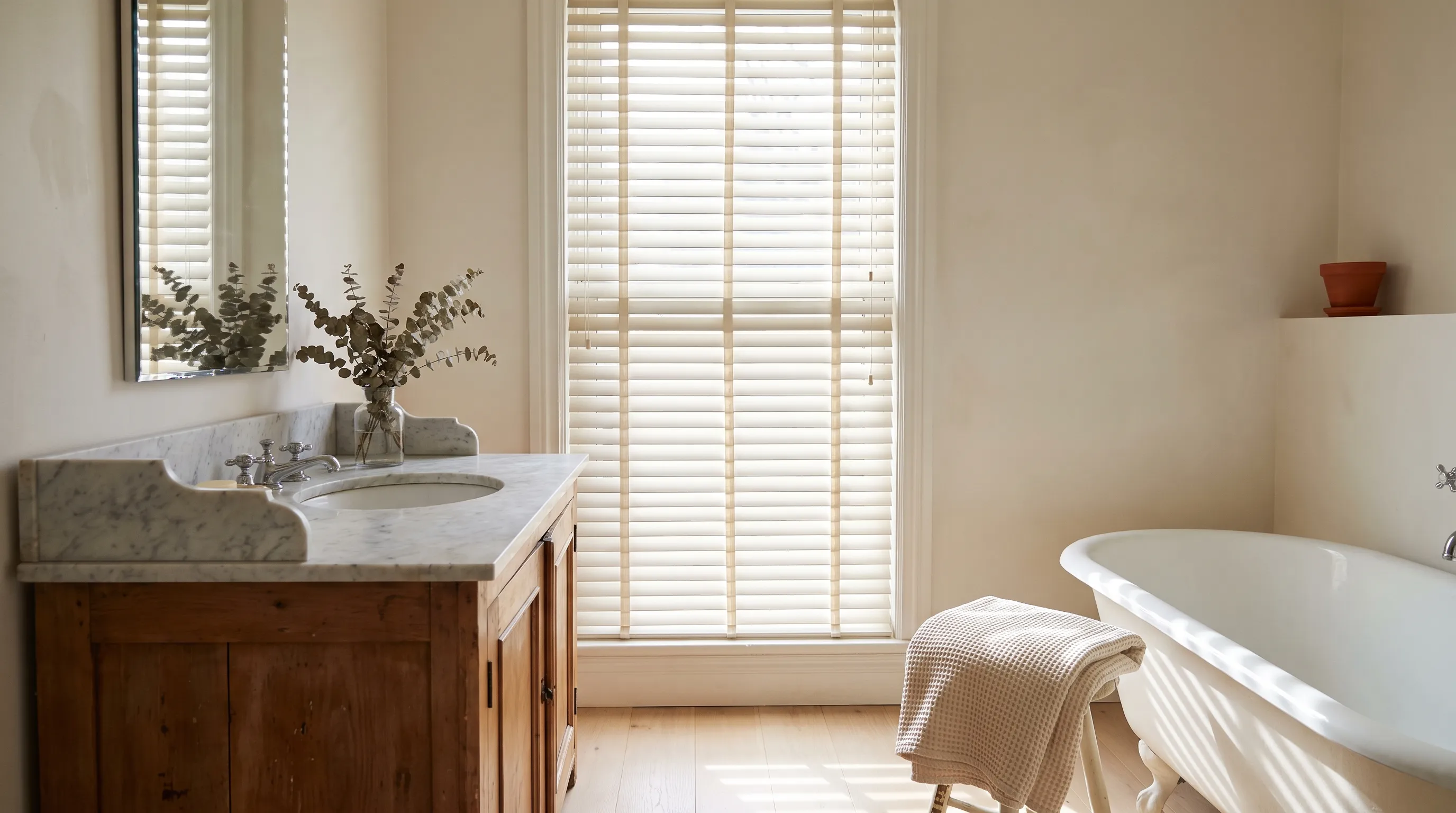
Faux wood blinds
PVC composite slats in wood finishes, on the same tilting mechanism as a timber venetian. Bought for a specific reason rather than as a cheaper substitute: they are the only slatted blind that survives a bathroom, and the only one that can be wiped.
Blinds Company · Rated 4.8 out of 5 on Google
Free in-home measure · open 8am–9pm, 7 days
In short
Faux wood is a PVC composite slat made to look like painted or stained timber. It does not warp, does not swell in damp, and wipes with a cloth — which is why it belongs in kitchens, bathrooms, laundries and basements where real wood fails. What you trade is weight: a faux slat is roughly twice as heavy as basswood, so a wide blind gets heavy enough to change how it is built and how it is lifted.
Book
Let's measure your light.
We come to you, measure at your own windows, and go through fabrics and fits together. The visit costs nothing.
$99 off when you order three or more blindsApplied to your written quote at the measure.
Rather just talk?(437) 782-5452Open 8am–9pm, 7 days
The short version
Is this right for your window?
Yes — if the room is one of these.
- Kitchens, bathrooms, laundries and basements
- Rented properties and anywhere durability beats refinement
- Rooms where a timber blind would be the right look and the wrong material
Where it is wrong is below, and that half is the useful one.
And this is what you would be getting.
- 01
- PVC composite slats, 50mm and 63mm
- 02
- Wipes clean; will not warp, swell or split
- 03
- Painted and woodgrain finishes
- 04
- Cordless as standard, wand tilt
In a room
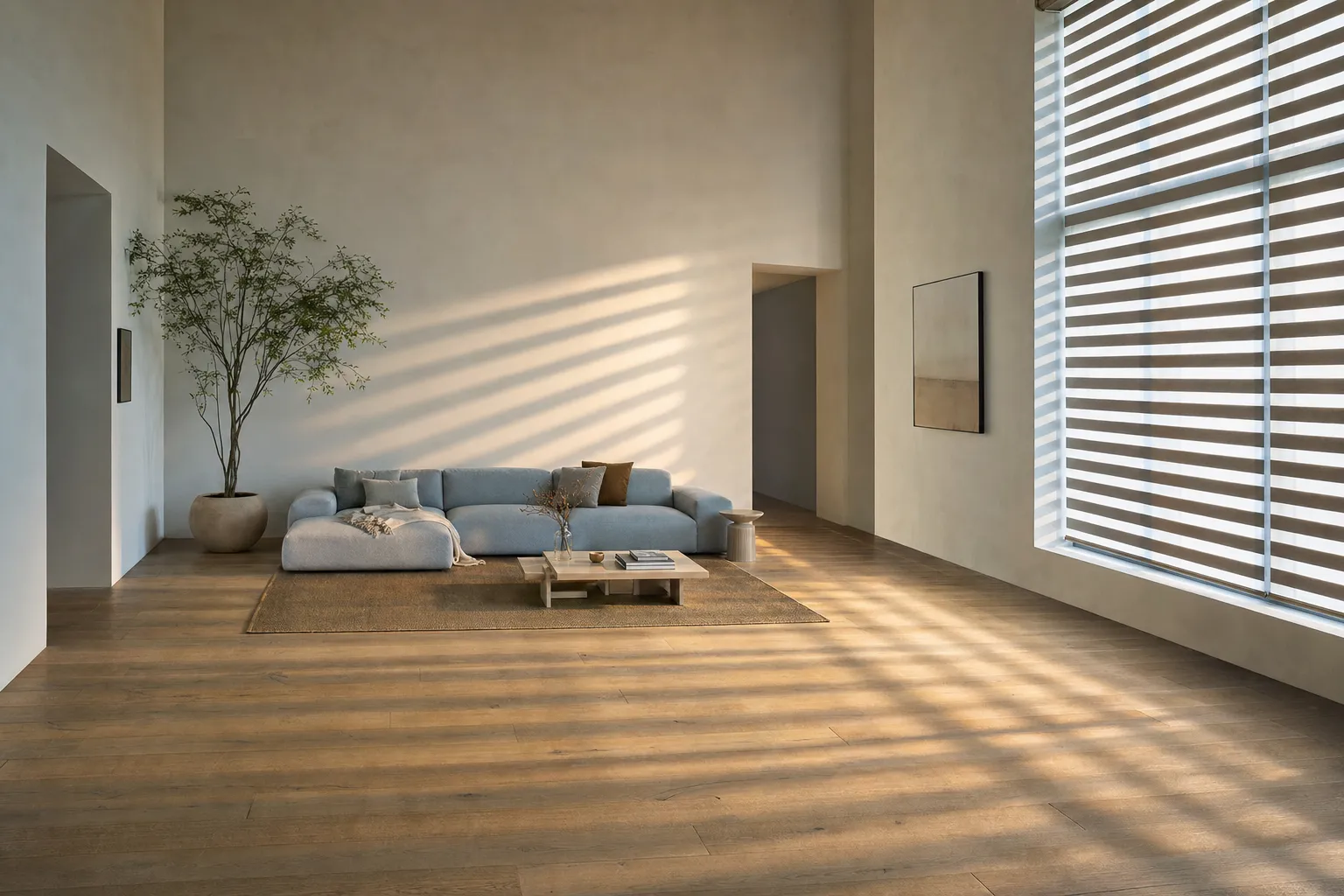
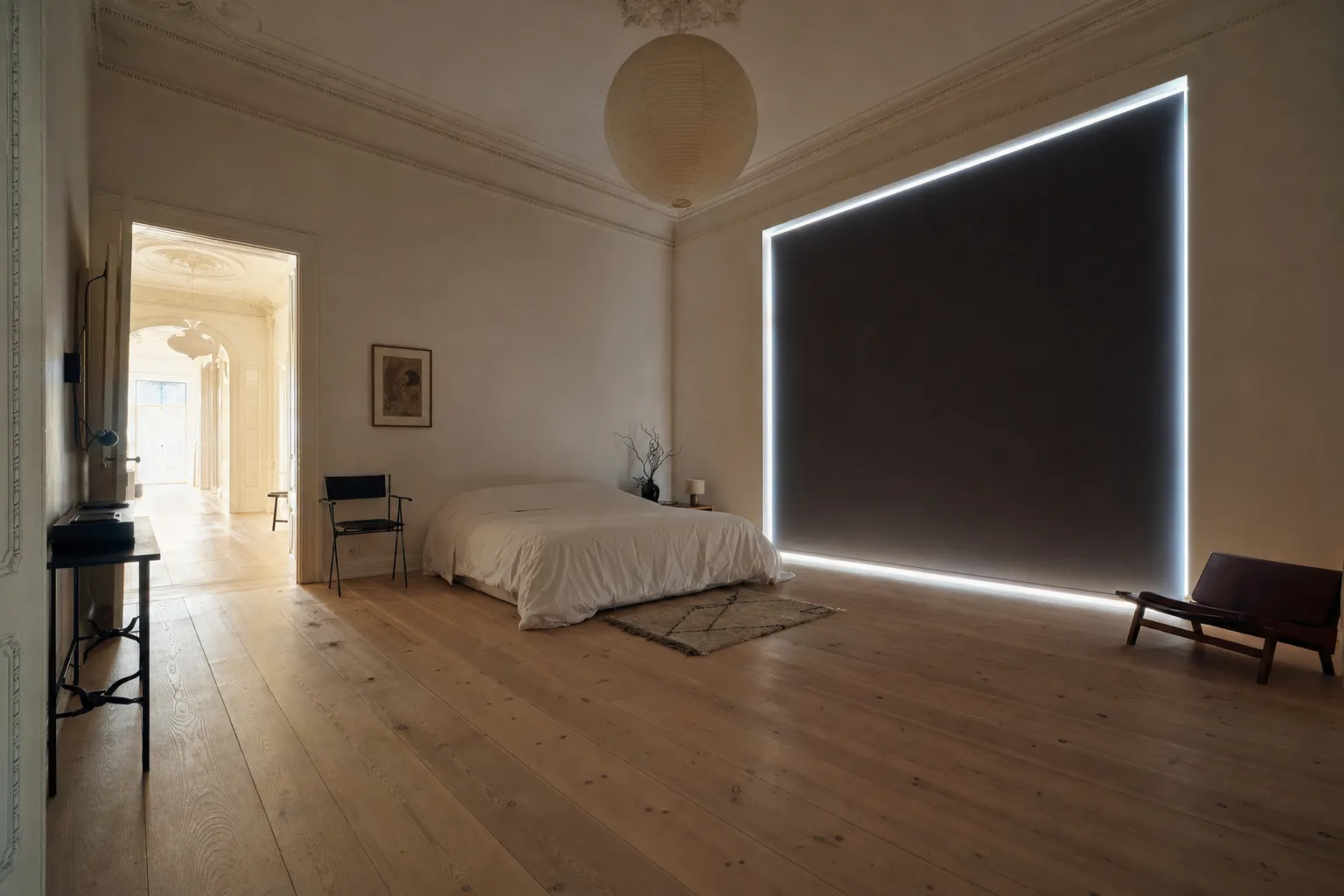
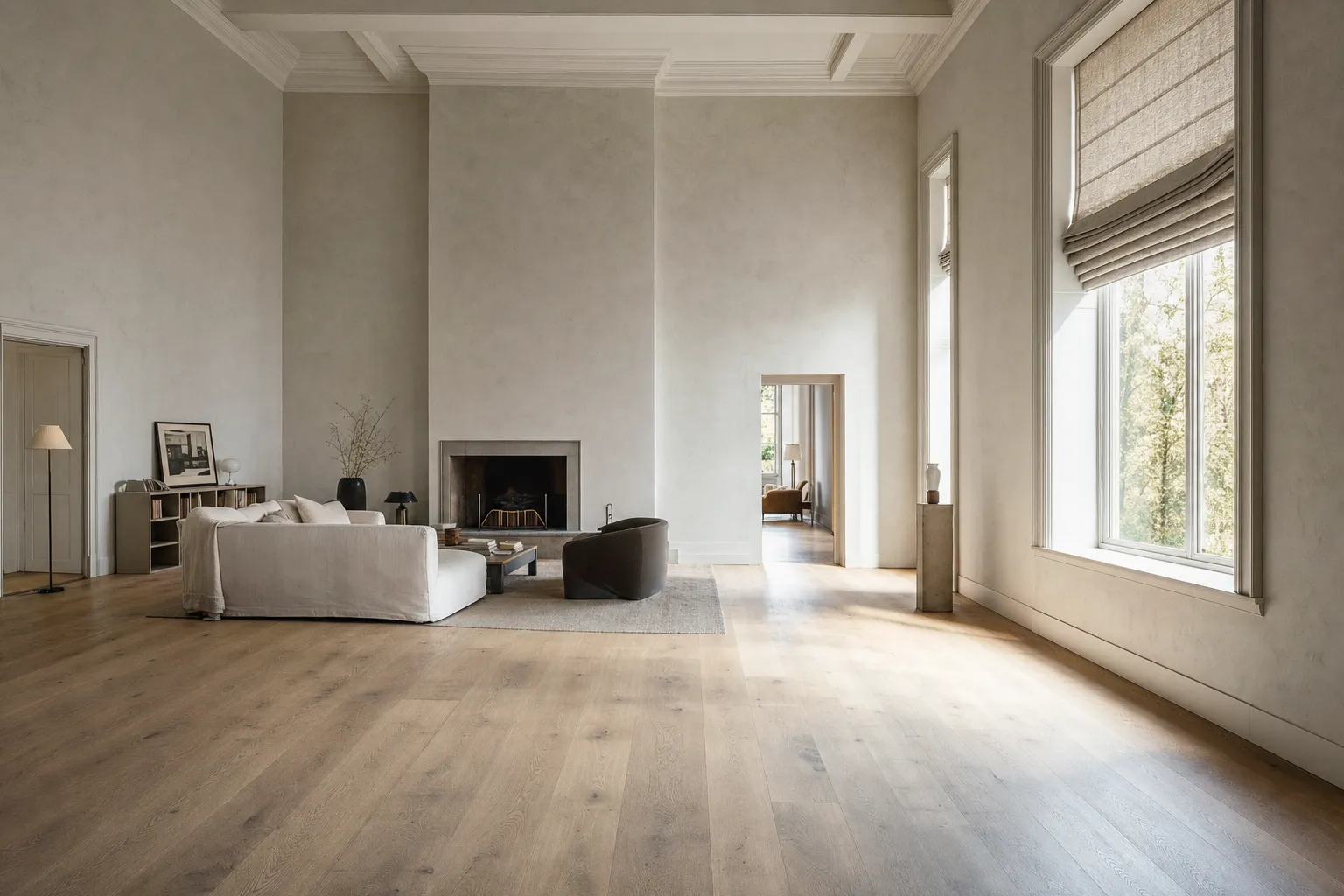
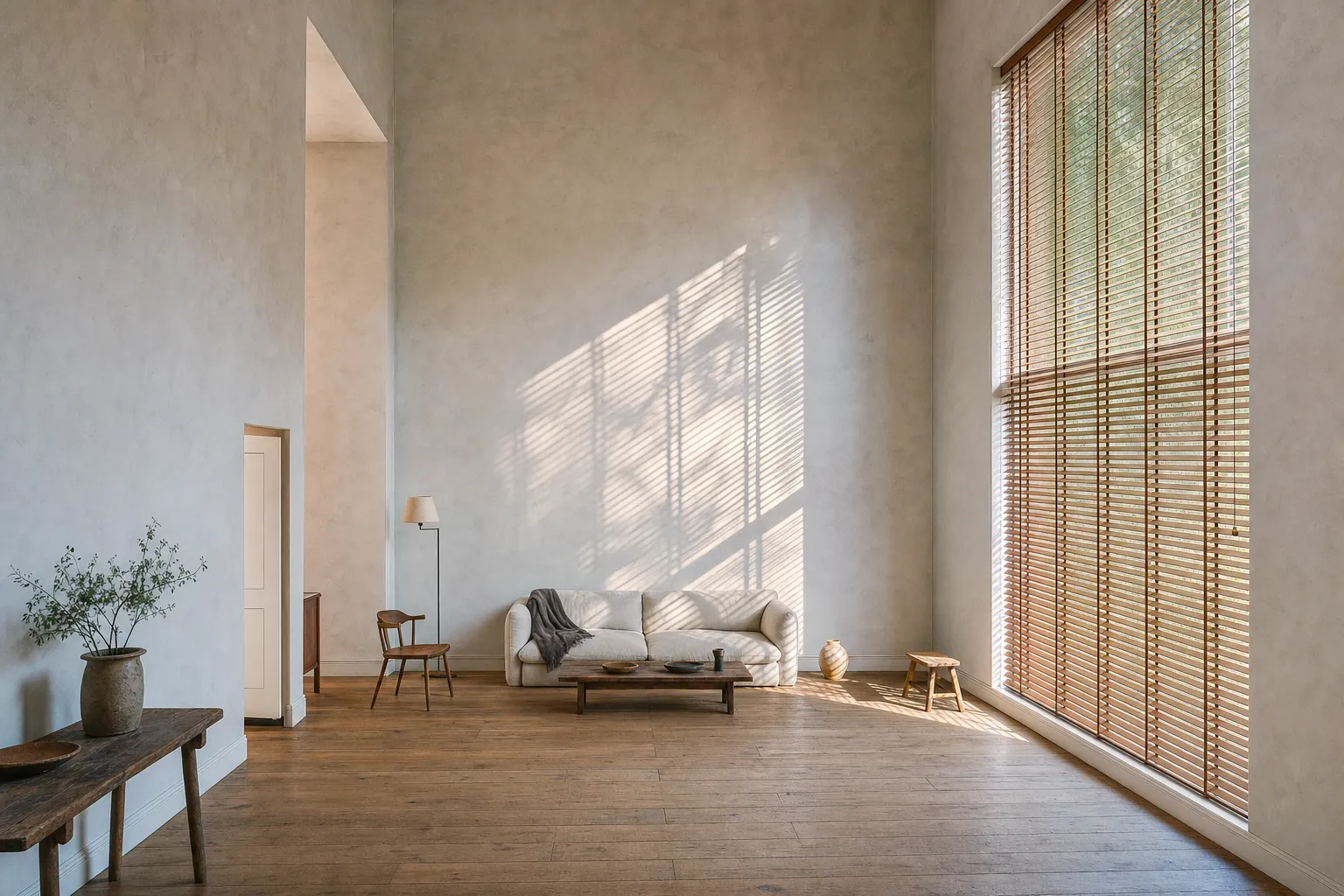
What faux wood blinds look like once they are up.
The product, not our installations — a gallery of rooms we did not fit would be somebody else's portfolio with our name on it.
What it actually is
A faux wood slat is a PVC composite — polyvinyl chloride with fillers, extruded or moulded into a slat and given a painted or printed woodgrain finish. It runs on exactly the same mechanism as a timber venetian: a headrail, ladder cords holding the slats, and a tilt that rotates them.
So this is not a different product from a venetian. It is a venetian in a different material, and everything about how it works — how it tilts, where the light gets through, how it is measured and mounted — is on the venetian blinds page. This page is about the material, because the material is the entire reason to choose it.
It is worth killing one idea straight away: faux wood is not “the cheap version”. It is usually less expensive than a good basswood blind, and that is not why we fit it. We fit it because in four or five rooms in a typical house, real timber is a material that will fail, and this one will not.
Where it wins, specifically
Bathrooms. The clearest case. A bathroom cycles between humid and dry several times a day, and timber takes up moisture unevenly across a thin slat. The slat cups — curves along its length — and once one slat has cupped it fouls the one below and the blind stops closing cleanly. It is gradual, it is not repairable, and it is why we will not sell a wood blind for a bathroom.
Over a kitchen sink. Same moisture problem plus a second one: cooking grease combines with dust into a film that dry dusting will not shift. A composite slat takes a warm damp cloth. A painted or stained timber slat does not, repeatedly, without the finish suffering.
Laundries and basements. Damp, sometimes cold, and often a window nobody looks at closely. Durability is the only requirement and this is the durable one.
Rented property. Not a comment about tenants — a comment about turnover. A material that wipes and does not mark is worth more over ten years and three tenancies than one that looks better in year one.
A house with a dog. Slat height at nose level, near a door, on a window a dog watches the street through. Timber marks; composite does not.
The weight, which is the real trade
This is the specification most often left out of a quote and the one that decides whether a wide faux wood blind is pleasant to live with.
A composite slat is around twice the mass of basswood for the same size. On a bedroom window that is invisible. On a wide living-room window it changes three things.
The lift gets heavy. A cordless mechanism has to be balanced against real weight, and a wide faux wood blind is one of the heaviest things we make. It is liftable, and it is not a blind somebody raises casually while walking past.
The headrail needs support. Past about 2.2 metres a centre bracket is required so the rail does not bow under the stacked slats. That bracket is visible from below, which on a window seen from a seating position is worth knowing in advance.
The stack gets deep. Twice the mass in the same number of slats means the same stack height, but the whole assembly is heavier at the top of the window, which is why the fixings matter more here than on a roller of the same size.
Our practical rule: over about 2.2 metres wide, either split the opening into two blinds on one bracket line, or motorise. If a quote for a three-metre faux wood blind mentions neither, it is worth asking how it is expected to lift.
Finishes, and the one that gives it away
Three families, and the difference matters more than the colour name.
Flat painted. White, off-white, grey. The most convincing at any distance, because a painted timber blind would also have no visible grain. If you want the faux to be invisible, this is how — a painted composite slat and a painted timber slat look identical.
Printed woodgrain. A grain pattern applied to the slat. Convincing at two metres, obvious up close, and the giveaway is repetition: the grain repeats along the length and across the slats, where real timber never does.
Embossed woodgrain. Texture pressed into the slat as well as printed. Better under raking light than a flat print, because the light catches the texture. Still repeats.
The honest guidance: if the room wants painted slats, faux wood is indistinguishable and you should not pay more for timber. If the room wants stained wood and the window is at close quarters, you will see the repetition — and if the room is dry, timber is the better object.
Where it is the wrong answer
A formal room with the window at close quarters. Where the blind is furniture rather than equipment, and the room is dry, real timber is the nicer thing and the extra cost is buying something you will actually notice.
Very wide windows, without planning. Covered above. It can be done and it has to be designed.
A window that has to go dark. This is a venetian and a venetian does not seal. Closed slats overlap along a curve rather than meeting flat, so a fine line of light passes at each overlap, and the side gaps are wider than on a roller because the slats must clear the reveal to tilt. In a bedroom that must be dark, no slatted blind is the answer whatever the slats are made of.
Anywhere the look of plastic would bother you daily. Some people see it and some do not. Holding a sample in the actual room, in the actual light, settles it in about four seconds, and that is what the visit is for.
The valance, and what the top of the blind looks like
A venetian has a headrail — a metal channel holding the tilt mechanism and the lift — and on a faux wood blind it is nearly always covered by a valance: a decorative strip in the same finish as the slats, clipped across the front.
Worth raising because it is usually treated as an accessory and it is doing two jobs.
It hides the mechanism. A bare headrail on a wood-look blind is the one part that reads as equipment, and it is the difference between a blind that looks fitted and one that looks bought.
It sets the height. The valance adds thirty to fifty millimetres above the opening. On an outside mount that is free. On an inside mount in a shallow reveal it can be the difference between the blind fitting and not, and it is measured at the visit rather than assumed.
There are two profiles, and the choice is not cosmetic on every window. A flat valance is a plain strip and sits closest to the wall. A shaped or “crown” valance returns at the ends, wrapping the sides of the headrail, which looks more finished on an outside mount and needs more clearance on an inside one.
On a run of several windows in one room, the valance is also what makes them read as a set — same profile, same height above the glass, even where the openings differ. That is a decision made once for the room rather than per window.
What a faux wood blind costs you in stack
The one dimension people forget when comparing a venetian to a roller.
Raised, a venetian does not disappear. The slats gather into a stack under the headrail, and that stack is real: for a typical 63mm slat on a two-metre drop it is roughly 150 to 200 millimetres of solid blind sitting across the top of the glass, and a composite slat stacks slightly taller than the same number of timber ones because the slats are thicker.
Two consequences.
On a short window — a basement opening, a small bathroom window — the stack can eat a fifth of the glass and never give it back. That is the single most common reason we suggest a roller instead in those rooms, and it has nothing to do with material.
On a tall window the stack is proportionally invisible and irrelevant.
Where a venetian is right but the stack is a problem, mounting the blind above the opening rather than inside it moves the stack onto the wall and gives the glass back. It costs you the trim, which is the same trade as everywhere else on this site.
Living with them
Cleaning. The reason you bought them. Close the slats one way, wipe with a warm damp cloth and almost no detergent, then close them the other way and repeat. Ten minutes for a whole blind, twice a year, and a kitchen blind that would otherwise be slowly ruined stays as it was.
A bent slat. Composite slats bend rather than snap, and a bent one usually straightens if you close the blind and leave it. A hard crease is permanent, and individual slats can be replaced on a good blind rather than replacing the whole thing.
Static and dust. PVC holds a slight static charge, so faux wood attracts dust a little more readily than timber. An anti-static cloth is worth using; a damp one works fine.
Lifespan. Long, and the limit is usually the ladder cords rather than the slats. The slats themselves in an ordinary room outlast the room’s decoration by some margin, which is a large part of why the product exists.
Last updated .
Steam, grease or damp in the room? That is the question this product answers.
Our commitment
We specified the slat for the room, so a blind that warps or sags is ours to remake.
If it does not fit, we remake it
You never held the tape.
Nothing owed before you agree
No deposit, no card.
Licensed and insured
Both, before we come in.
Your date, in writing
Set at the quote. It does not move.
We will tell you not to buy
If a stock size does it, you hear so.
Cordless where a child sleeps
Standard, at no extra charge.
Reviews on Google
What people said afterwards.
Rated 4.8 out of 5 — the ones below are quoted in full, with a link to check each on Google.
I was blown away by the exceptional customer service from Blinds Company! Their staff was knowledgeable, friendly, and helped me find the perfect blinds for my living room. The installation was quick and flawless. I highly recommend them!
Merdan BerdiyevI'm thoroughly impressed with Blinds Company. From the initial consultation to the final installation, their team delivered exceptional service, expertise, and quality.
Oleksandr Stakhurskyi
Real names, real dates, and a link to all of them — including the ones we would not have picked.
Read them on GoogleQuestions
Before you book
Can you tell faux wood from real wood?
At two metres, mostly not. Up close, always. Real timber has grain that runs differently on every slat and colour that varies along its length; a moulded slat repeats its grain pattern and its colour is uniform. Neither is a defect. If the window is one you stand right beside every day and the room is one where wood would survive, timber is the nicer object. In a bathroom the question does not arise, because timber will not last.
How much heavier is it?
Roughly twice the weight of basswood for the same slat size. That does not matter on a bedroom window and it matters a great deal on a wide one: past about 2.2 metres a faux wood blind needs a centre support in the headrail, and raising it by hand stops being pleasant. Above that we either split the opening into two blinds or specify a motor, and a quote for a very wide faux wood blind that mentions neither is worth questioning.
Will it warp over a radiator or in direct sun?
Good composite will not warp with humidity, which is the failure that ends timber. Sustained direct heat is the one thing to watch: a slat left closed against south-facing glass with a radiator directly beneath it can bow very slightly over years. It is uncommon, it is slow, and it is the reason we ask what is under the window rather than only what is in it.
50mm or 63mm slats?
63mm on larger windows and where you want the fewest lines across the glass; 50mm on smaller windows and where the room is busy already. The wider slat also stacks a little shorter at the top for the same drop, because there are fewer of them. Neither is more durable than the other.
Can they go in a shower room?
In a bathroom, yes, including one with a bath and a shower over it. Directly inside a wet shower enclosure, no — nothing we make belongs there, because standing water gets into the headrail and the tilt mechanism whatever the slats are made of.
Are the cords a problem with children?
They would be, which is why we do not fit them. Cordless lift and a rigid wand for the tilt is the standard build in any room a child uses, at no extra charge. That removes both the lift cords and the tilt cords, which on a venetian are two separate systems.
Not this one?
The rest of the range.
Each of these is the wrong answer somewhere, and its page says where. That is usually the faster way to find the right one.
If somebody has quoted faux wood for a wide window without mentioning the weight, that is worth one phone call before you order it.