
Zebra blinds
Alternating sheer and solid bands on one roller, so you change how much light comes in by sliding the bands past each other rather than by choosing between open and shut.
Blinds Company · Rated 4.8 out of 5 on Google
Free in-home measure · open 8am–9pm, 7 days
In short
Zebra blinds are made to your exact opening and installed across Toronto and the GTA. They suit living rooms that need daytime privacy without losing the street. The in-home measure is free and carries no obligation.
Book
Let's measure your light.
We come to you, measure at your own windows, and go through fabrics and fits together. The visit costs nothing.
$99 off when you order three or more blindsApplied to your written quote at the measure.
Rather just talk?(437) 782-5452Open 8am–9pm, 7 days
The short version
Is this right for your window?
Yes — if the room is one of these.
- Living rooms that need daytime privacy without losing the street
- Home offices where the glare lands on a screen at a set hour
- Condos with wide glass and shallow reveals
Where it is wrong is below, and that half is the useful one.
And this is what you would be getting.
- 01
- Sheer and solid bands on a single roller
- 02
- Infinite positions between clear view and full privacy
- 03
- Cordless as standard, motorized on request
- 04
- Made to your opening, not trimmed to fit
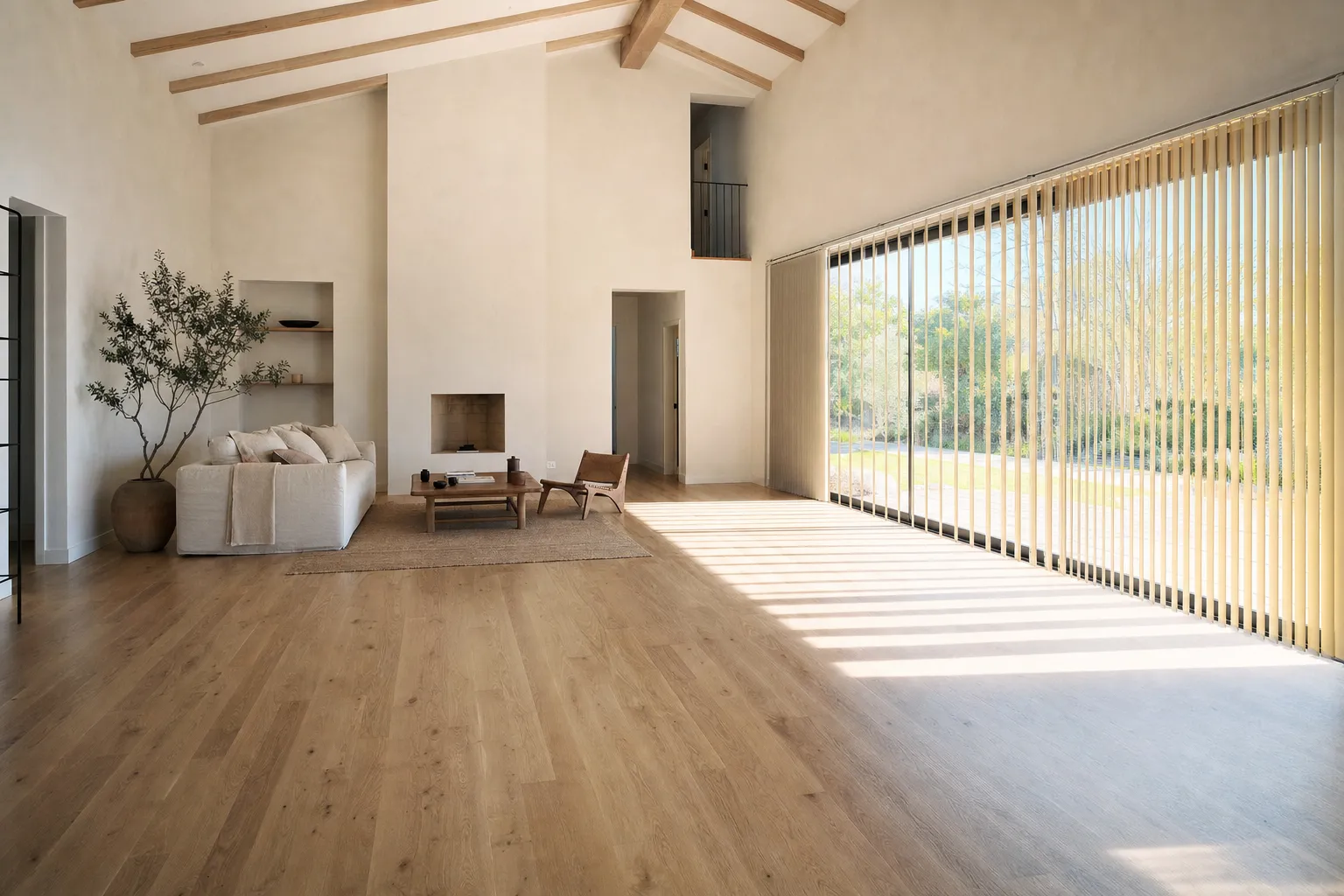
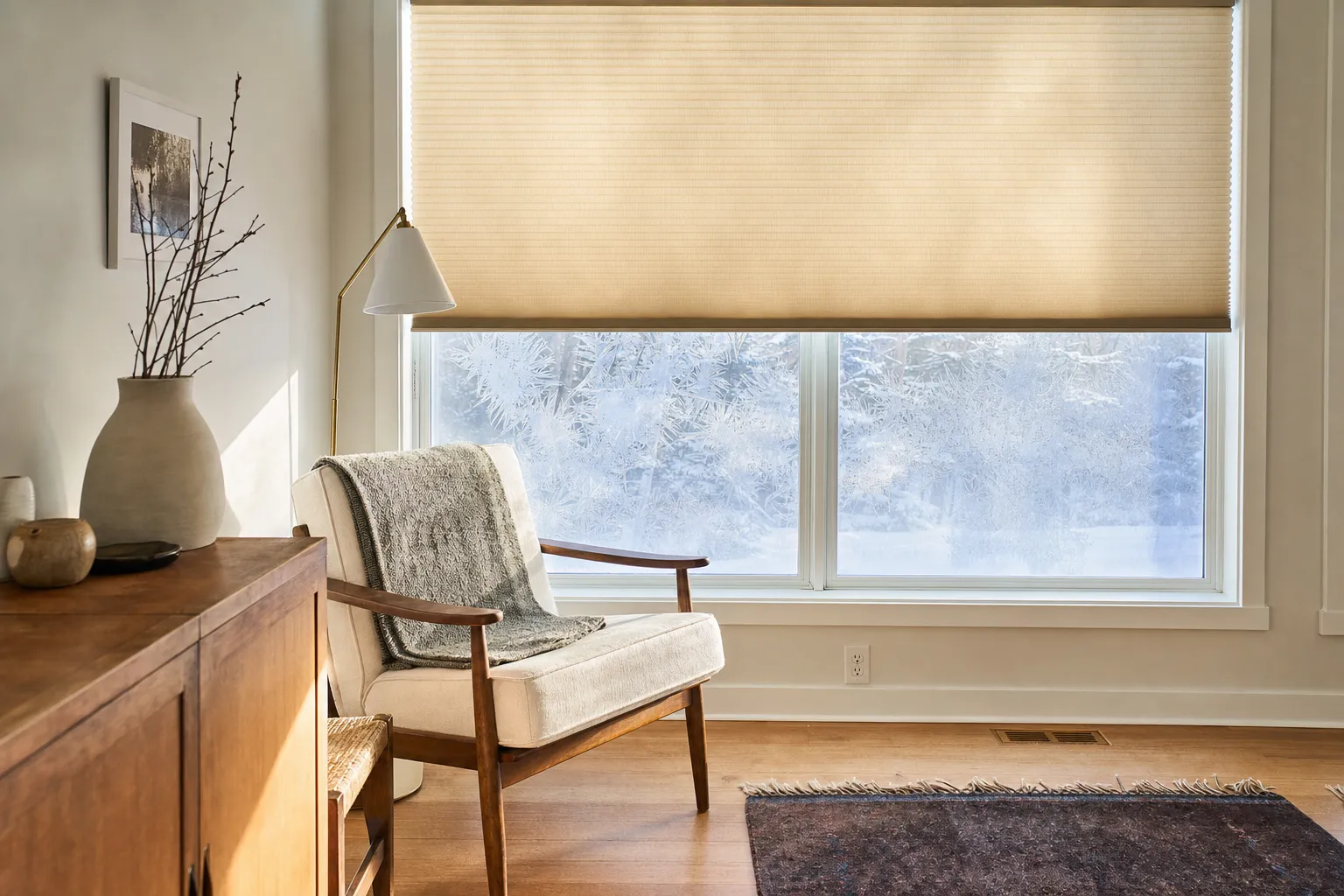
In a room
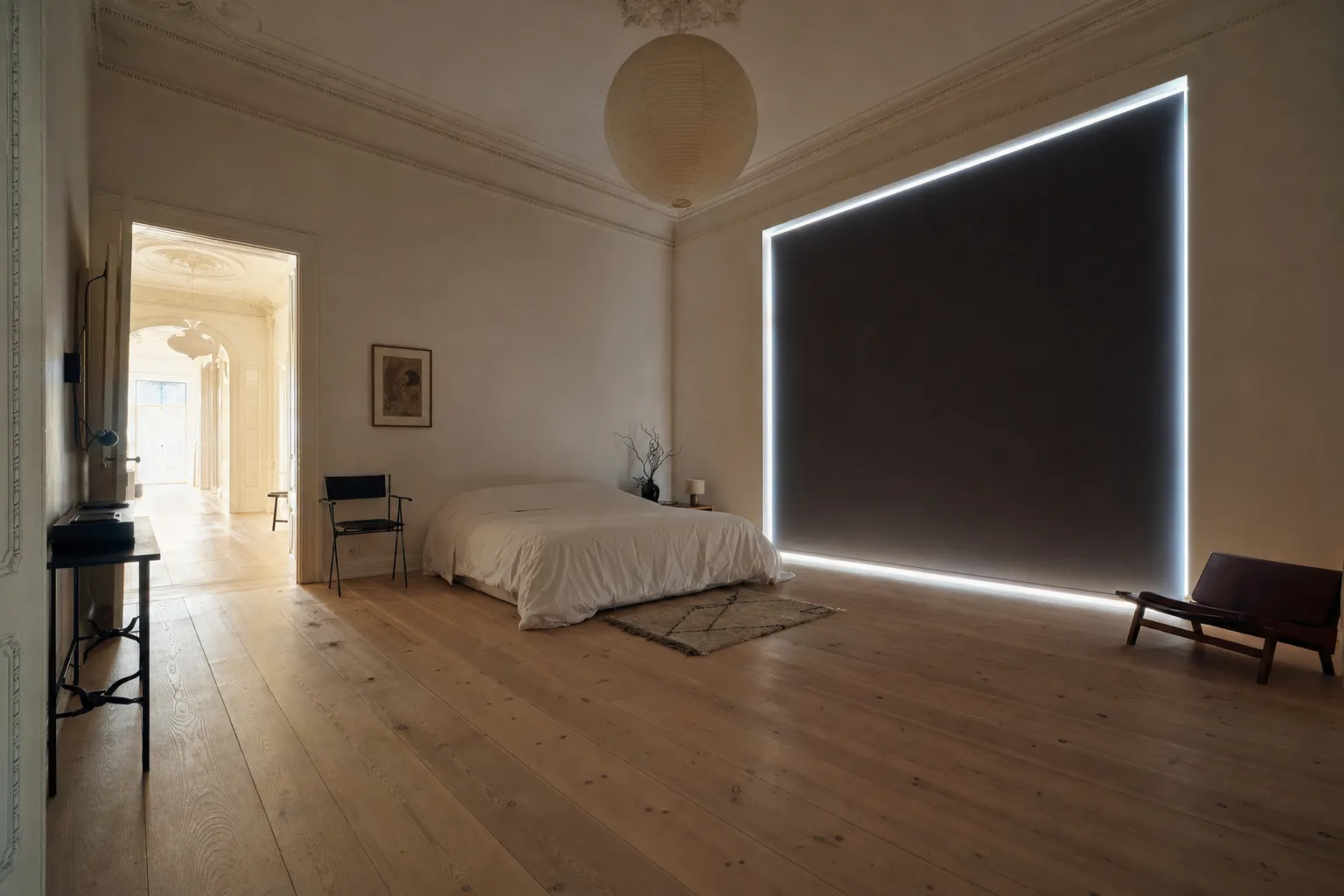
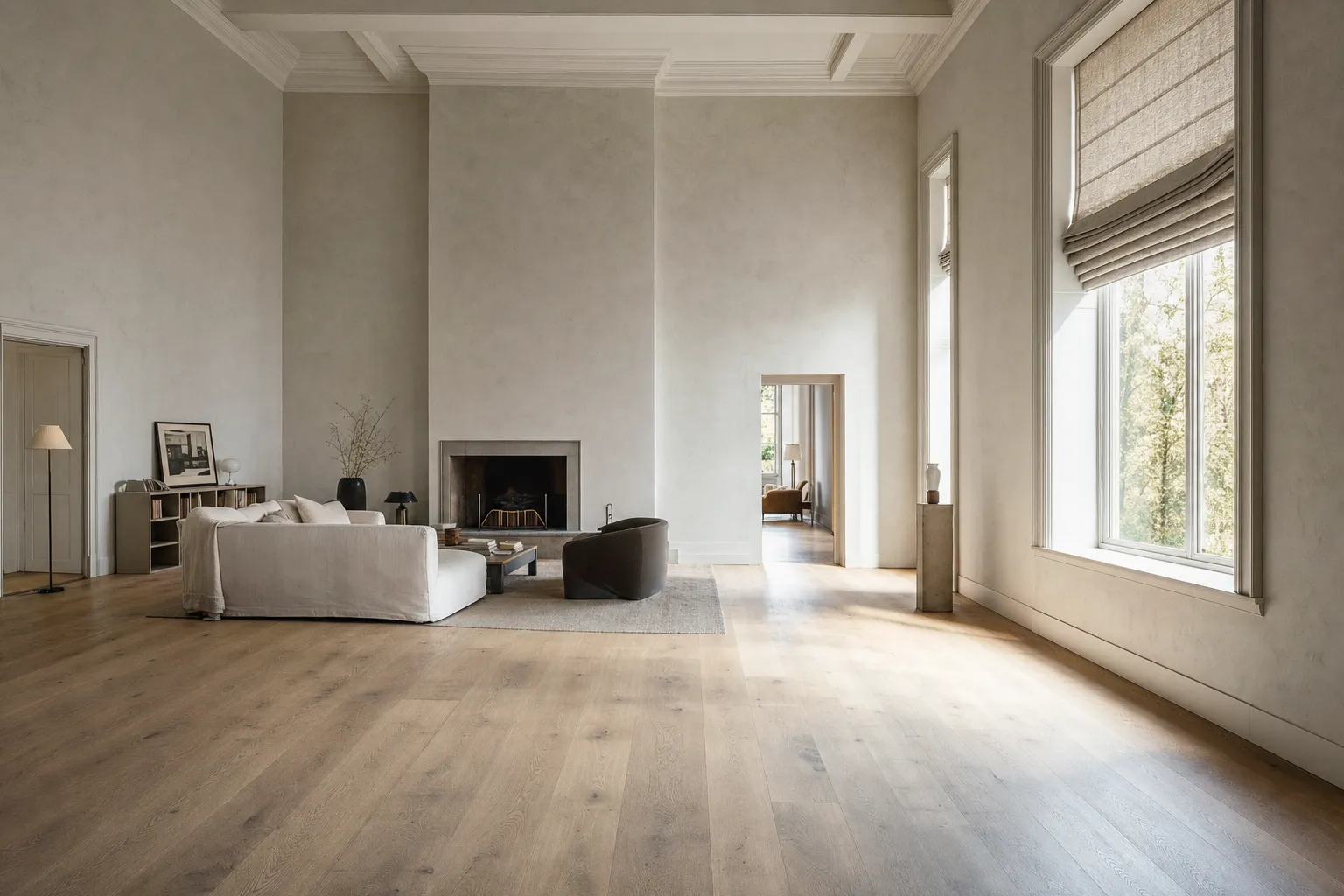
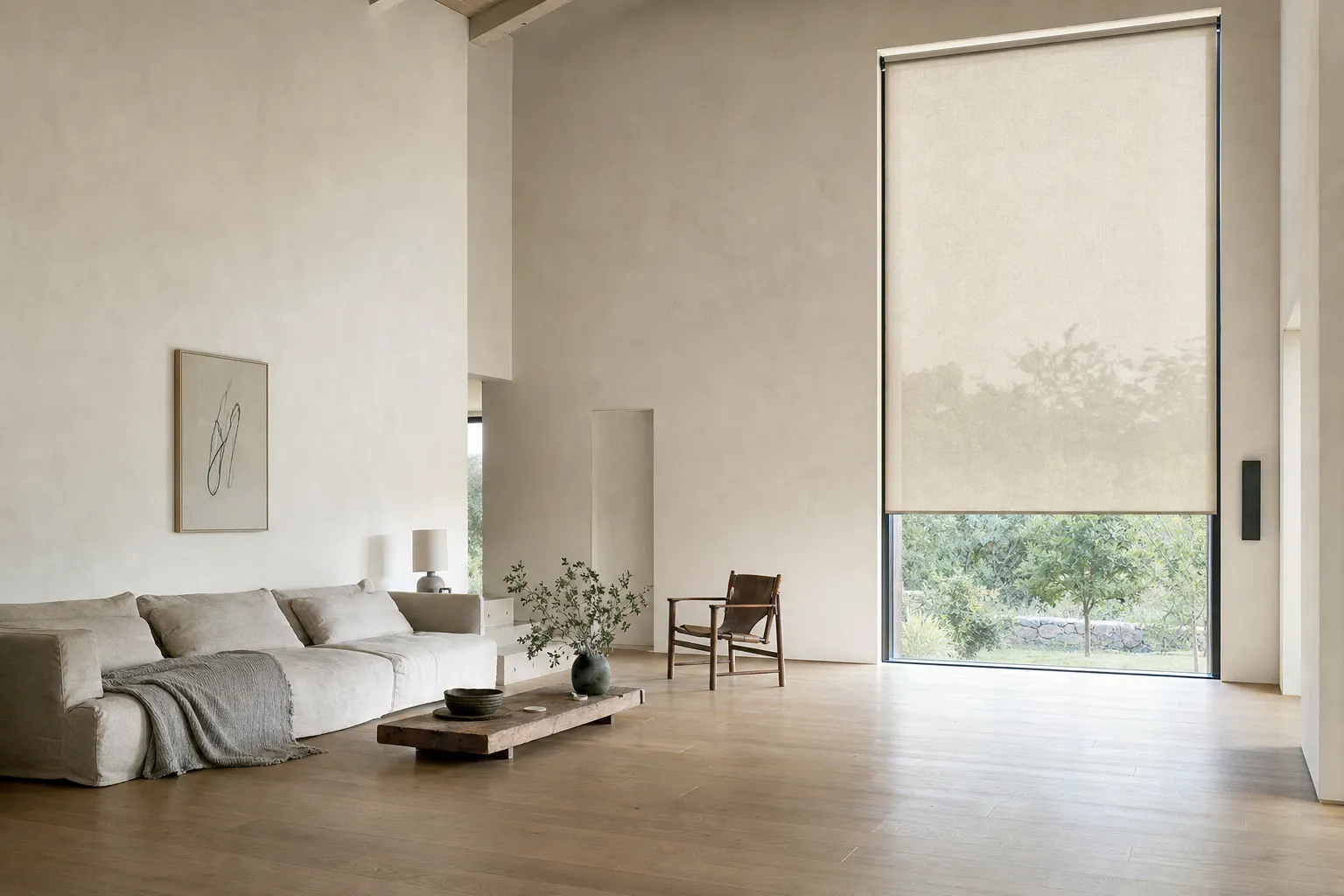
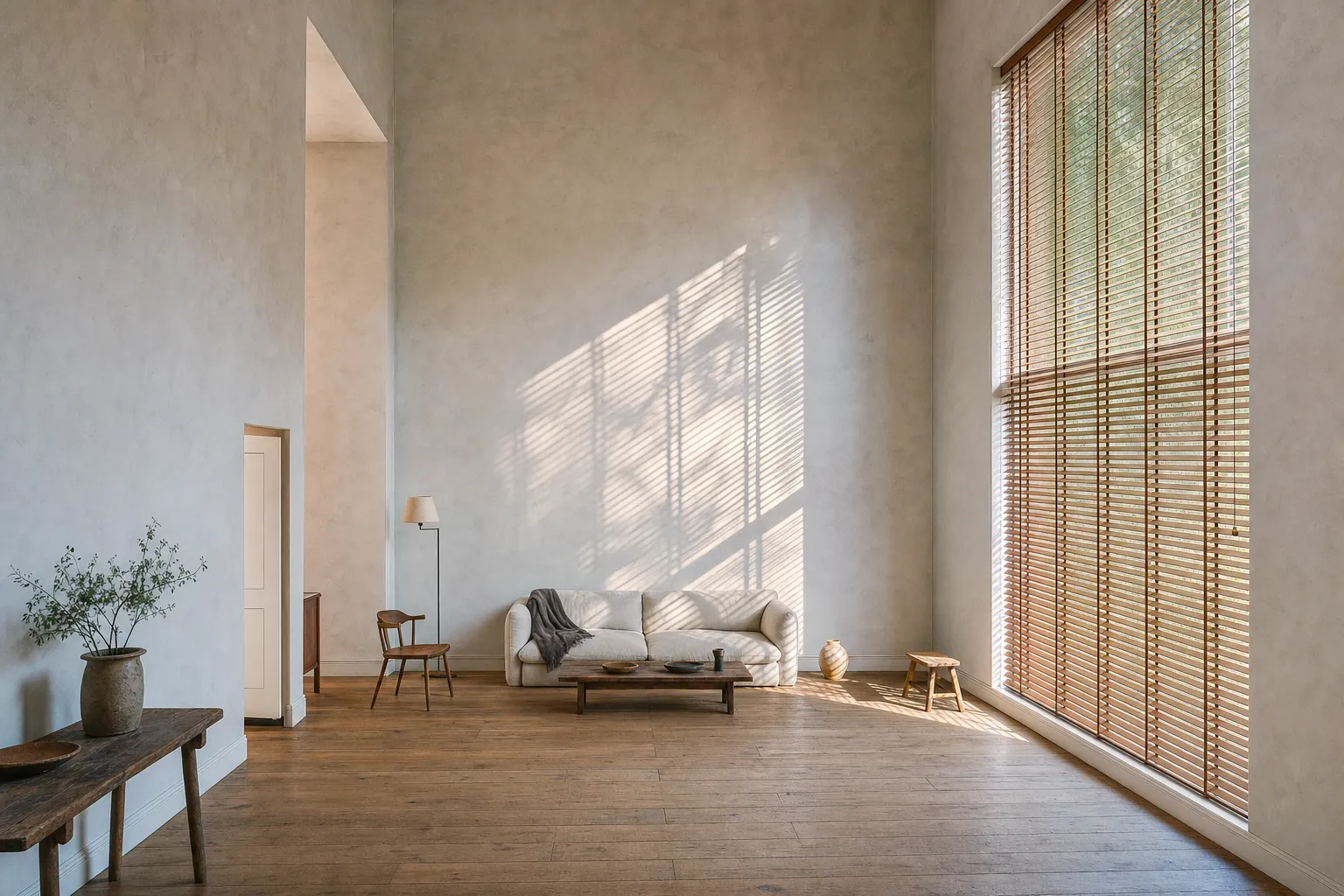
What zebra blinds look like once they are up.
The product, not our installations — a gallery of rooms we did not fit would be somebody else's portfolio with our name on it.
What a zebra blind actually does
A conventional roller has two states. It is down, or it is up. A zebra blind replaces that binary with a continuous adjustment, because the fabric is made of alternating horizontal bands — one sheer, one opaque — wrapped around the roller twice over.
Lower it and the two layers slide relative to each other. When the solid bands line up with the sheer ones you have a clear view out. When they line up with each other you have a solid panel.
Everything between those two extremes is available, and that middle is the reason people buy them. A living room at four in the afternoon does not need the window covered; it needs about a third of the light removed and the sightline from the sidewalk broken. That is a position, not a state, and a roller cannot hold it.
Where they belong, and where they do not
They are at their best on a window you look through often and cover rarely. Street-facing living rooms, dining rooms, home offices with a screen in them. Anywhere the complaint is “I can see fine but I feel watched” or “the sun hits the monitor between two and four”.
They are the wrong answer for a bedroom you sleep in during daylight. The sheer bands pass light even when closed, and no amount of specifying will change that — it is what the fabric is. For a room that has to go dark we build a blackout roller, and if you want the zebra look in the same window, the two run on separate brackets in the same opening.
They are also worth thinking about twice in a bathroom. The mechanism copes, but a fabric that hangs in steam every day ages faster than the same fabric in a living room. A faux wood venetian or a PVC roller usually outlives it there.
How we build them
Every blind is made to the measurement we take in your home. That means width and drop measured three times each — top, middle and bottom, then left, centre and right — because houses move and it is normal to find half an inch of difference between the top and bottom of the same window in an older Toronto home. The blind is cut to the tightest of those numbers, not to the average.
We manufacture under our own name rather than reselling a brand, which is why there is no third-party badge on the headrail and no brand markup in the price. The trade-off is honest: you are buying the fit and the fabric, not a label.
Choosing the fabric
The general trade-offs behind an open weave — view against glare against daytime privacy, and what fabric colour does to heat — are the same here as on any screen and are set out in full on the roller blinds page. What is particular to a zebra is the relationship between its two bands, and that is a different decision.
The ratio. Bands are not always equal. A fabric with a wider solid band and a narrower sheer gives a better closed state and less light in the open one; the reverse gives a brighter room and a weaker close. Ranges differ, it is rarely mentioned, and it is the single most consequential difference between two zebra fabrics that look identical on a sample card.
The contrast between them. A fabric where the sheer and solid are close in colour reads as one surface with a texture. One with strong contrast reads as stripes. Both are legitimate; the striped version is much more assertive in a room and much less forgiving next to pattern.
The opacity of the solid. This decides how good the closed state actually is, and it varies far more than people expect — some solids are genuinely opaque, others are simply a denser weave that still passes light. If the closed state matters to you, this is the specification to ask about by name.
Whether the sheer is bright white. A brilliant white sheer glows when the sun is behind it, which some people love and which in a north-facing room looks cold. An off-white or a warm grey sheer is quieter.
Samples come to the house and get held against your own glass at the hour the problem happens, in the open position and the closed one, because on this product those are two different fabrics as far as your eye is concerned.
Inside the opening, or over it
Every blind gets mounted one of two ways, and on a zebra the choice has a consequence people do not anticipate.
Inside mount sits the blind within the window reveal. It looks built in, it keeps the sill clear, and it is what most people picture. The cost is a gap down each side — the blind has to be cut narrower than the opening or it would bind on the frame every time it moved. That gap is usually somewhere between three and six millimetres a side, and on a zebra it is more visible than on a plain roller, because the light coming through it lands beside a fabric that is itself striped. You notice a bright line next to a pattern more than you notice one next to a flat panel.
Outside mount hangs the blind on the wall above the opening and past it on both sides. It kills the side gap, it makes a small window look larger, and it covers a reveal that is out of square — which in a Toronto semi built before the war is most of them. The cost is that it projects into the room and sits over the trim, so on a window with mouldings worth looking at, it hides them.
There is a third case specific to condos: a reveal too shallow to hold the roller at all. A zebra needs more depth than a roller because the fabric wraps the tube twice. If the reveal is under about 65mm we say so at the measure and mount outside, rather than fitting something that rubs the glass.
The chain, and what the law says about it
The only cord on a standard zebra is the operating chain, and we default to cordless — spring or motor — in any room a child uses. That is not a house style. Canada’s Corded Window Coverings Regulations came into force on 1 May 2021, and they set hard numbers: a reachable cord with a free end must not exceed 22cm when pulled, and no reachable loop may exceed 44cm around. A continuous chain loop long enough to reach a nine-foot header fails both by a wide margin unless it is tensioned to the wall or removed from the design.
So a corded zebra is legal only with the chain anchored, and an anchor is a bracket somebody can unscrew. A spring or a motor removes the question instead of managing it. The guide to cords and the regulation sets out what changed and what it means for a blind you already own.
The bottom bar on a zebra is not the same part
Small detail, and it explains two things people ask about.
On a roller the bottom bar hangs at the end of a single sheet of cloth. On a zebra the fabric is a loop, so the bar sits inside it — the front layer comes down, passes under the bar, and the rear layer goes back up. The bar is enclosed by the fabric rather than attached to the bottom of it.
Two consequences follow.
The bar is what sets the alignment. Because both layers wrap the same bar, the relationship between the sheer and solid bands is fixed by how the fabric sits on it. A bar that is not perfectly parallel to the tube shows as bands that align at one end of the window and not the other. That is a manufacturing tolerance rather than something you can adjust at home, and it is the clearest difference between a carefully made zebra and a cheap one.
The bar is heavier than it looks. It has to tension two layers instead of one, and it has to hold them apart so they do not rub. That extra mass is part of why a zebra needs a stronger spring than a roller of the same size — and why on a wide zebra we reach for a motor sooner than we would on a plain roller.
There is a third, practical point. Because the bar is enclosed, you grip fabric rather than metal when you pull it down. Over years, on a blind used several times a day, that is where a zebra shows wear first — so on a window operated constantly it is worth asking whether the range has a bar with an exposed grip.
On a door, and on a very wide opening
Two situations where people ask for a zebra and where the answer needs qualifying rather than a straight yes.
A patio or sliding door. Mechanically possible and usually a mistake. A zebra is a top-down product: to walk through the door you have to raise the whole blind, and on a two-metre-wide door that is a real operation performed several times an evening. Within a fortnight it lives permanently rolled up, which means you paid for a blind and got a bare door. Where a door genuinely needs the day-and-night behaviour a zebra gives, the honest answer is a panel-track system with alternating sheer and solid panels — the same idea, stacking sideways.
A window wider than about two and a half metres. Here the constraint is the fabric rather than the tube. A zebra’s cloth is a loop passing itself, and across a wide span the two layers have to stay in register — if one edge creeps a few millimetres relative to the other, the bands no longer line up across the whole width and the blind shows a wedge of misalignment. Weight makes it worse, and a wide zebra is heavy.
Past that width the answers are a heavier tube, or splitting the opening into two blinds. Splitting has a second advantage particular to this product: on a wide window you very often want half the room shaded and half open, and two blinds give you that where one cannot.
The related question we get asked: can two zebra blinds side by side be made to align their bands? Approximately, at the moment of installation, if both are set together. Not permanently — they are independent mechanisms and they will drift relative to each other. Anybody promising otherwise has not lived with a pair.
Zebra against a plain screen, decided properly
These two products get compared constantly and the comparison is usually made on looks, which is the least useful axis. Mechanically they solve different problems.
A screen roller is one fabric with a fixed openness. Whatever you chose is what you get, all day, every day. Its virtue is that it is completely predictable: the view, the glare cut and the daytime privacy are the same at nine in the morning and five in the afternoon, and there is nothing to adjust or get wrong.
A zebra is two states in one blind. Aligned, the sheer bands line up and you have something close to a very open screen. Offset, the solid bands close over the sheer and you have something close to an opaque blind. You move between them by sliding, and the whole point is that the same window can be two different things four hours apart.
So the question is not which is nicer. It is whether your room’s requirement changes during the day.
A room whose problem is constant — a north-facing office that simply needs the glare off a monitor, a hallway, a window overlooking nothing — is better served by a screen. It is simpler, it costs less, it needs less depth, and there is no adjustment to think about.
A room whose problem moves — a front living room that wants light and a view at eleven and wants covering when the street lights come on, a family room that faces west — is what a zebra is for.
There is one honest caveat that decides it for some people. A zebra’s fully-closed state is not a blackout. The solid bands overlap the sheer ones, but light passes at the join and at the edges, and in a dark room at night with a lit street outside you will see the banding. In a bedroom that needs to be dark, a zebra is the wrong tool no matter how good it looks in the day.
Depth, and why a zebra sometimes cannot go where a roller can
This is the single most common reason we say no to a zebra, and it is worth understanding before you fall for one.
The trick that makes a zebra work is that the fabric passes itself. The sheer and solid bands are a continuous loop that wraps the tube, comes down the front, goes under the bottom bar and back up the rear — which means at every point there are two thicknesses of cloth with a gap between them, and the tube has to carry both.
The result is that a zebra needs meaningfully more room front to back than a plain roller. A roller needs a tube and a bracket. A zebra needs a tube, a bracket, and clearance for the fabric to pass without touching itself or the glass. Add a cassette and it needs more again.
Three consequences you will meet in a real house:
Shallow reveals. Common in newer construction and in condominiums, where the window frame sits almost flush with the wall. A plain roller will often fit inside where a zebra will not, and the honest answer is either a roller inside or a zebra mounted on the wall face.
Handles and cranks. A casement window with a crank projects into exactly the space a zebra needs. Sometimes the handle folds; sometimes the blind has to come forward far enough that it looks applied rather than fitted.
Deep sills. A generous sill nose narrows the usable depth at the bottom even where the head has room, and a zebra brushing a sill will mark the sheer bands within weeks.
None of this is a reason to avoid the product. It is a reason to measure the depth before the fabric conversation rather than after, which is what we do.
The cassette, and light over the top
Where a zebra is mounted, the fabric wraps a visible tube unless something covers it, and on this product the cover does more than tidy.
A bare roll leaves the tube and the wrapped fabric visible at the head. On a deep reveal you are looking at it from below and it disappears; on a face-mounted blind it is the first thing you see.
A fascia is a flat panel across the front of the tube. It hides the roll and gives a clean line, and it adds a couple of centimetres of depth to a product that already wants depth.
A cassette wraps the tube on three sides. Beyond looks, it does something measurable: it closes the gap over the top of the blind where light spills down between the fabric and the glass. On a zebra that gap is more visible than on a roller, because when the bands are closed the eye has adapted to a darker window and the strip of light at the head is the brightest thing in it.
If the reveal will take a cassette, it is usually worth it on this product specifically. If it will not, mounting the blind higher — above the opening rather than inside it — achieves much of the same thing by putting the head of the blind above the head of the glass.
What goes wrong over time, and what does not
The failure people expect is the fabric fading, and on a north or east window it mostly does not happen in any timeframe worth planning for. The failures that do happen are two.
The first is band drift on a wide blind. Past a certain width the tube flexes slightly under the weight of a double layer of fabric, and the bands stop lining up perfectly from one end to the other — you close it and there is a hairline of light at one side that is not at the other. This is why we split a very wide opening into two blinds rather than building one heroic one.
The second is the bottom bar going out of level, which is almost never the blind. It is the bracket line, and it is a ten-minute fix.
Cleaning is a vacuum brush on low, along the bands rather than across them. Zebra fabric is not woven like a curtain; the sheer sections are held by the weave of the solid ones, and scrubbing across the bands is what separates them. Nothing wet, and nothing on a steam setting.
Do the privacy check after dark
A daytime sample answers the colour question, but it cannot answer the night-time privacy question. When the room is brighter than the street, the direction of the view reverses: a fabric that obscured the pavement at noon may show silhouettes and movement from outside after the lamps come on.
The useful test is simple. Close the zebra so the solid bands cover the sheer bands, switch on the lights normally used in that room, and look back at the window from the sidewalk, balcony or opposite part of the property. Check the edges as well as the middle; the fabric may be closed while a mounting gap still exposes the room.
If that view is too clear, the answer is not a darker colour selected from the same open weave. It is a more opaque specification, a second layer for evening, or a different blind. That decision belongs in the quote, before the window is made.
Last updated .
The bands only work if the depth is there. Thirty seconds with a tape settles it.
Our commitment
We checked the reveal before promising the product, so a zebra that binds is ours.
If it does not fit, we remake it
You never held the tape.
Nothing owed before you agree
No deposit, no card.
Licensed and insured
Both, before we come in.
Your date, in writing
Set at the quote. It does not move.
We will tell you not to buy
If a stock size does it, you hear so.
Cordless where a child sleeps
Standard, at no extra charge.
Reviews on Google
What people said afterwards.
Rated 4.8 out of 5 — the ones below are quoted in full, with a link to check each on Google.
Highly recommend Nick and his team. They installed blinds in my house. Looks wonderful, cheers
Timur ShafikovNick has delivered the greatest service as I recently moved in to my new townhome and needed to have blinds for all three floor windows. Not only the price was the best, but he accommodated all my requests in the process. Definitely worth every penny
Anton Kovunov
Real names, real dates, and a link to all of them — including the ones we would not have picked.
Read them on GoogleQuestions
Before you book
Do zebra blinds give privacy at night?
Not on their own. With a light on inside, the sheer bands reverse and silhouettes show through. If night privacy matters in that room, we either specify a blackout roller behind the zebra or steer you to a different product entirely. It is the first thing we raise at the measure, because it is the most common regret with this product.
What is the difference between zebra and day-night blinds?
They are the same mechanism under two names. Some suppliers say zebra, some say day-night, some say dual or transitional. If you have been quoted for one and are comparing it to the other, you are comparing the same thing.
Can zebra blinds be cordless?
Yes, and that is how we build them by default in any room a child uses. A spring mechanism or a motor replaces the chain entirely.
How wide can a single zebra blind go?
There is a point where the tube starts to deflect and the bands stop aligning across the width. Past it we split the opening into two blinds on one bracket line, positioned so the join falls where you will not read it. We work that out at the measure, from your actual width.
Not this one?
The rest of the range.
Each of these is the wrong answer somewhere, and its page says where. That is usually the faster way to find the right one.
If somebody has told you a zebra gives privacy at night, they are wrong and it is worth five minutes on the phone before you order.