
Commercial blinds
Blinds for offices, clinics, schools and multi-unit buildings. A different job from a house in almost every respect: the requirement is written down, the quantity is the constraint, and somebody other than the occupant is paying.
Blinds Company · Rated 4.8 out of 5 on Google
Free in-home measure · open 8am–9pm, 7 days
In short
Commercial work is specified rather than chosen. What matters is consistency across many identical openings, a fabric that meets whatever the building requires, mechanisms that survive people who did not select them, and a schedule that fits around a working floor. We quote from a takeoff, fit outside business hours where needed, and can hold a spec so future phases match.
Book
Let's measure your light.
We come to you, measure at your own windows, and go through fabrics and fits together. The visit costs nothing.
$99 off when you order three or more blindsApplied to your written quote at the measure.
Rather just talk?(437) 782-5452Open 8am–9pm, 7 days
The short version
Is this right for your window?
Yes — if the room is one of these.
- Offices and clinics with many identical windows
- Multi-unit residential where every suite must match
- Fit-outs where the blind schedule is part of the drawings
Where it is wrong is below, and that half is the useful one.
And this is what you would be getting.
- 01
- Quoted from drawings or a window schedule
- 02
- Contract fabrics and durable mechanisms
- 03
- Out-of-hours and phased installation
- 04
- Specs held so later phases match
In a room
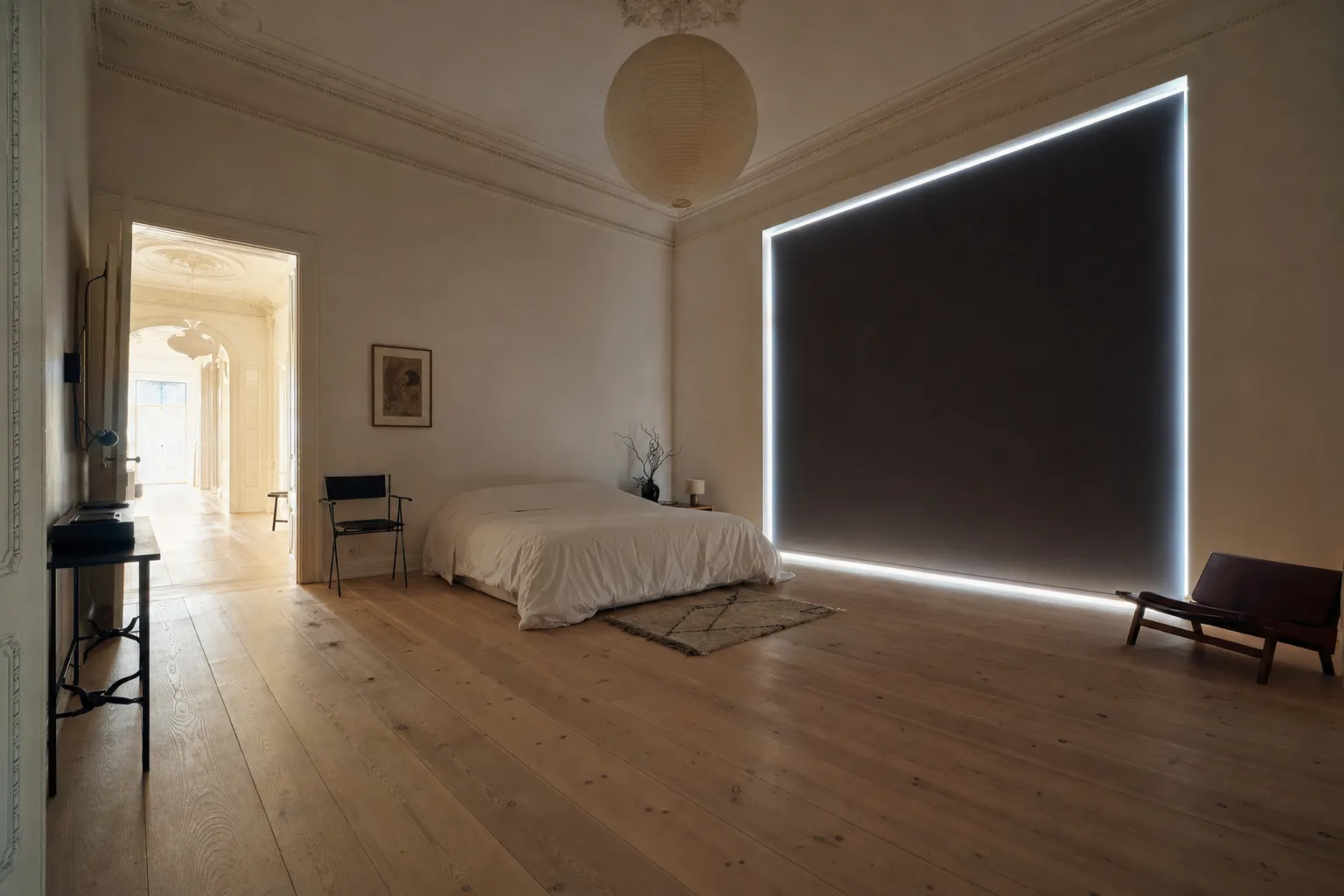
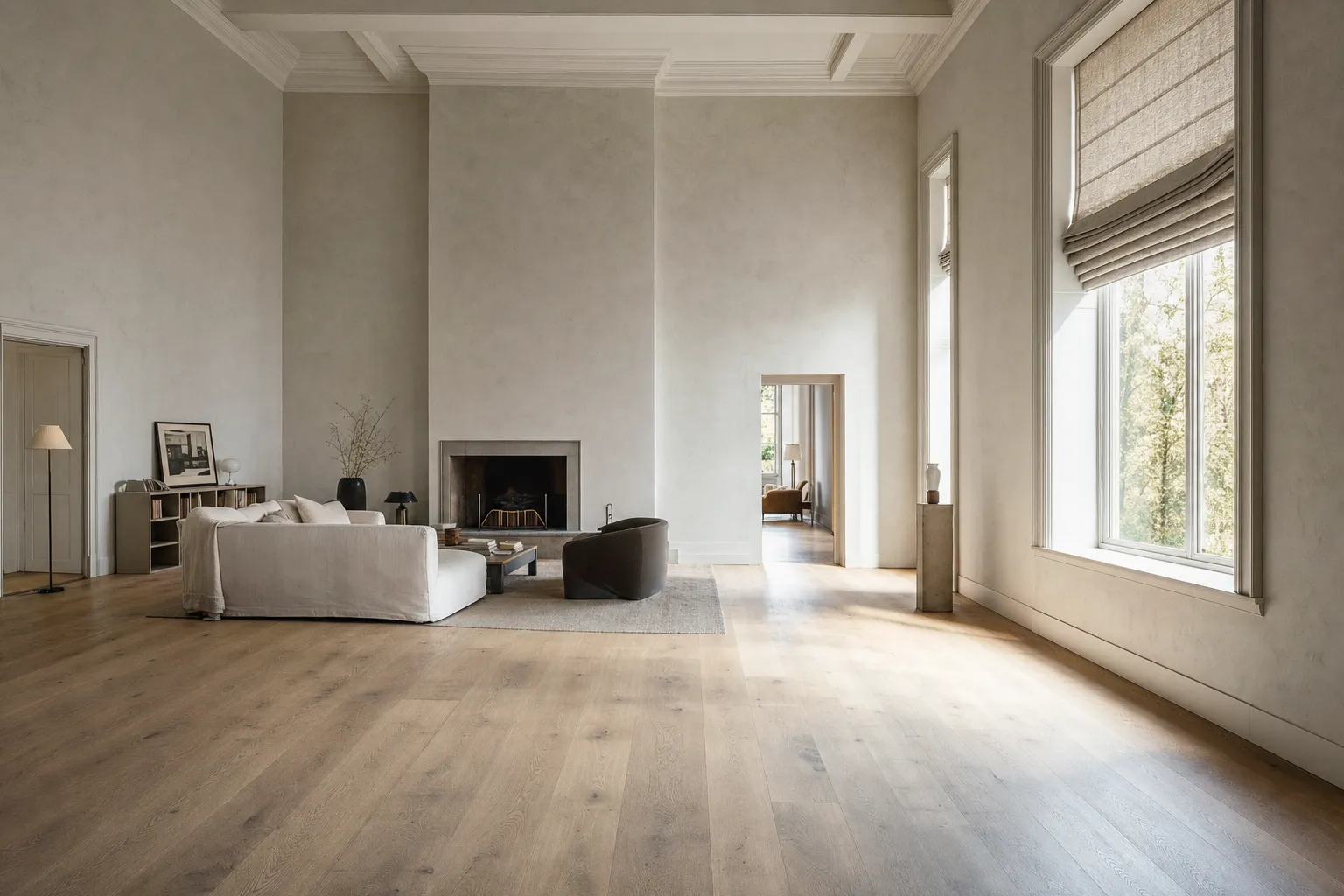
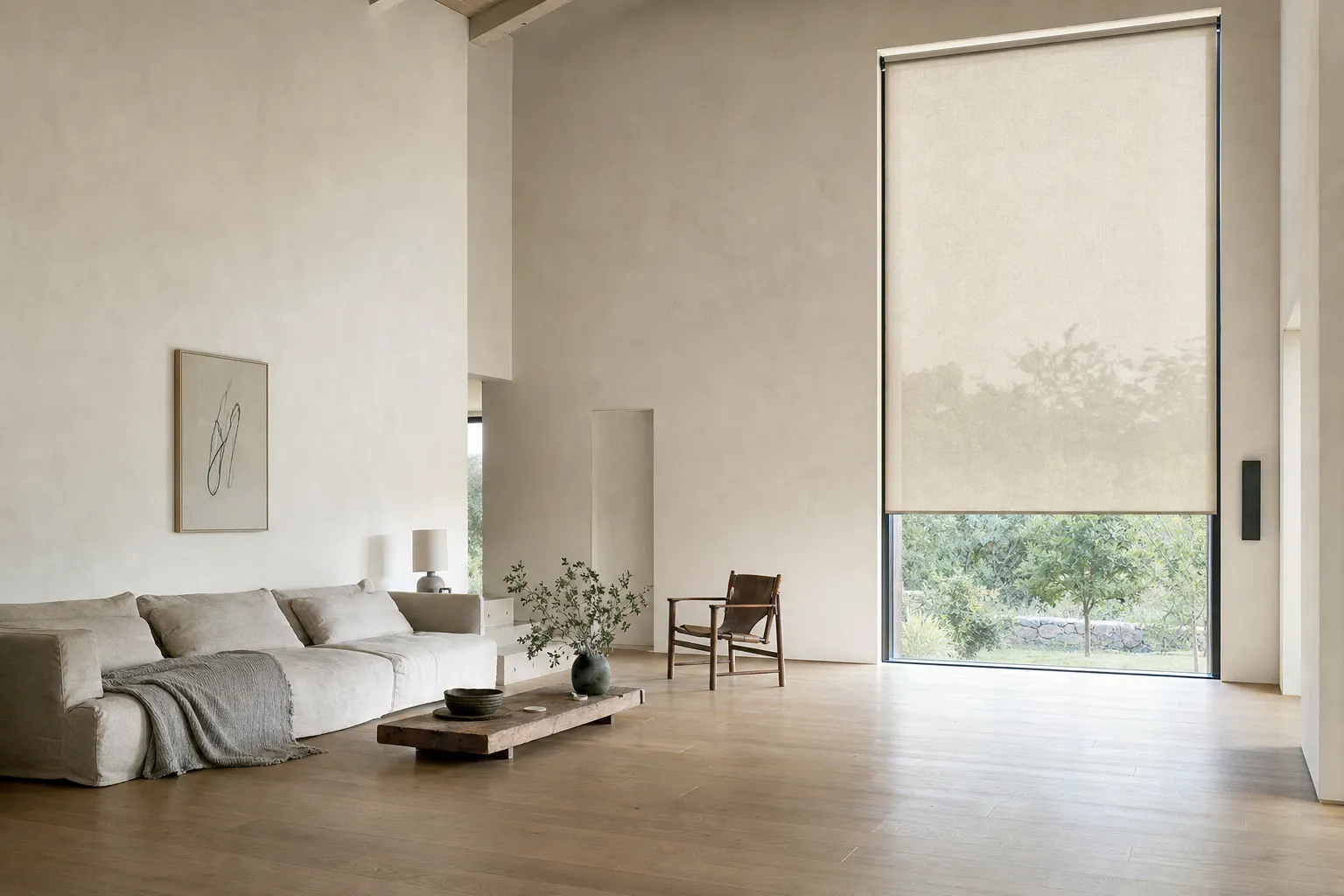
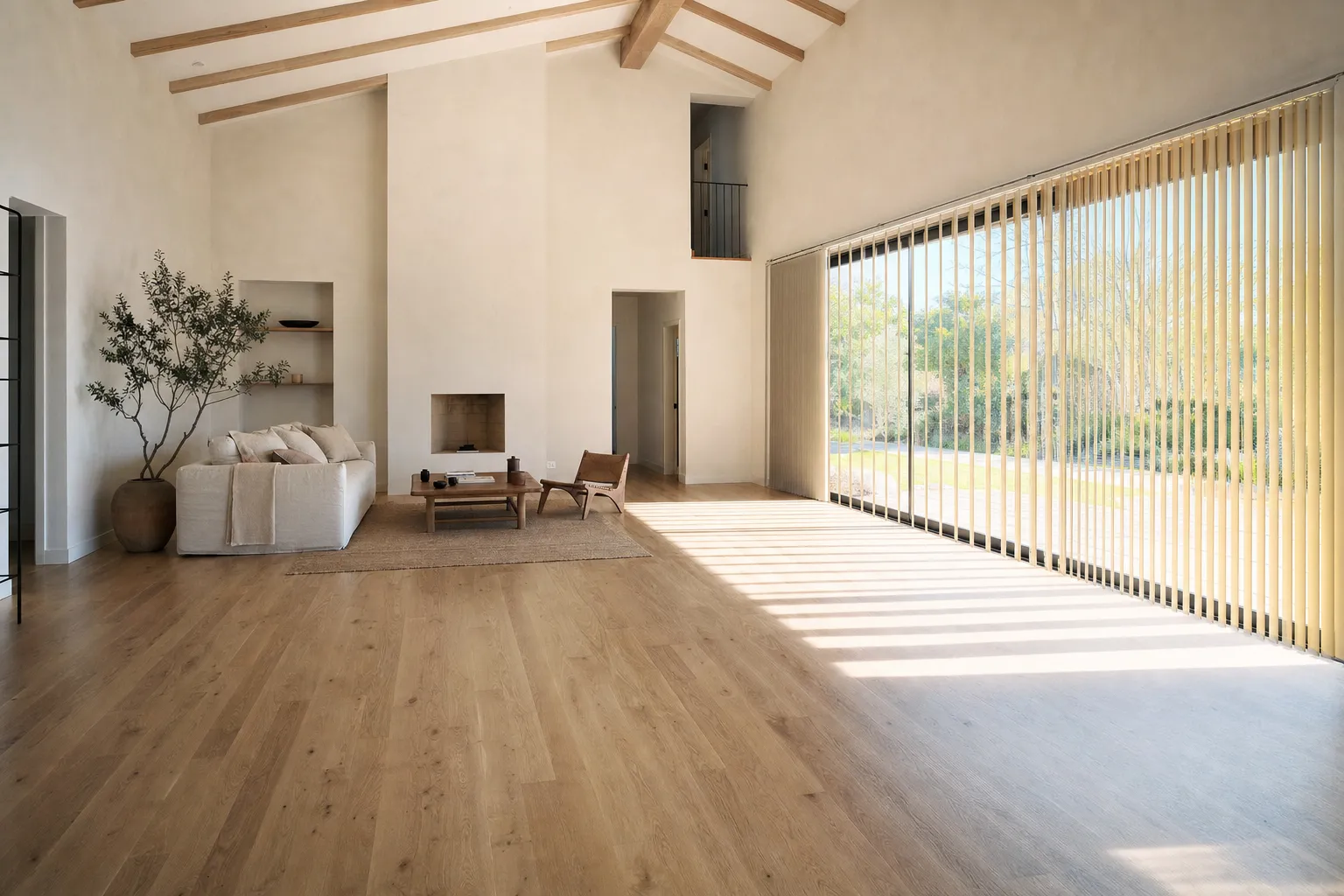
What commercial blinds look like once they are up.
The product, not our installations — a gallery of rooms we did not fit would be somebody else's portfolio with our name on it.
A different problem from a house
Everything else on this site is written for somebody choosing for a room they live in. Commercial work inverts almost every assumption in that sentence.
The requirement is written down rather than felt. In a house the brief is “this room is unusable at four o’clock”. In a building it is a line on a drawing, a property manager’s rule about what the façade may look like, or a tenant fit-out standard. The useful conversation is about that document, not about fabric.
The quantity is the constraint. One window is a decision. Ninety identical windows is a logistics problem: the count, the delivery, the access, the sequence, and what happens to the schedule if six of them turn out to be a different size.
The person choosing is not the person living with it. A facilities manager, a designer, a landlord. That changes what “good” means — durability and consistency matter far more than they do in a house, and taste matters far less.
Downtime costs more than the blinds. On an occupied floor, an installation that disrupts a working day can cost the tenant more than the whole order. That is why scheduling is a first-class part of the quote rather than an afterthought.
Quoting from a takeoff
A house is quoted by measuring. A building is quoted from drawings and then verified, and the difference matters.
The takeoff. Window schedule or floor plans in, a count and a price out. That is enough to budget with, enough to compare against another quote, and enough to plan a phasing around.
The verification. Before anything is ordered, the openings are measured on site. This is not a formality: drawn and built openings differ, usually by ten to thirty millimetres, and on one window that is a tolerance while on ninety it is a systematic error repeated ninety times. Every commercial job we have done has found at least one type of opening that was not what the drawing said.
What that protects. A fixed price that does not move at installation, and an order that does not arrive wrong in bulk. It is the single biggest difference between a commercial supplier and a domestic one quoting a big job.
What “contract” means in a fabric
Domestic ranges are chosen for how they look. Contract ranges are chosen for what they can prove, and there are three things a specification usually asks for.
Flammability testing. Some occupancies and many property managers require fabrics tested to a recognised flammability standard, and increasingly they want the certificate rather than the assurance. This is the requirement most often discovered late, and it is the one that can force a whole order to be re-specified. Ask the property manager before choosing anything.
Durability and cleanability. A fabric in an office is handled by people who did not choose it and will not baby it. Contract cloths are heavier, more abrasion resistant, and generally wipeable, which is why they feel less refined than a domestic equivalent — that is deliberate.
Consistency of supply. A domestic range can be discontinued between phase one and phase two of a fit-out. Contract ranges are supported for longer, and where a building will be finished over years that is worth more than the appearance of any individual cloth.
Uniformity from outside is the fourth requirement and it is usually a rule rather than a preference: the façade has to read as one building, so the backing colour is specified and the room-side colour is free. That is the same rule domestic condominiums have, applied at scale.
Mechanisms that survive a building
The specification changes for the same reason the fabric does.
Chain over spring, usually. The opposite of our domestic advice, and for a concrete reason: a spring is balanced to a specific blind and a building is full of people who will yank one. A chain clutch is more forgiving of misuse and is a replaceable part rather than a rebuild.
Replaceable components. Clutches, carriers, vanes and brackets that can be swapped by a maintenance person with a box of spares. Ordering a small spares holding with the job is far cheaper than sourcing obsolete parts in year four, and it is the recommendation most often ignored and most often regretted.
Verticals hold up well here. The product’s domestic reputation is dated, and in a building the thing that matters is that a single damaged vane is a two-minute replacement rather than a new blind. On a wide commercial opening that is a real operating advantage.
Motorization, selectively. Atrium glass, high-level windows, and anything on a scheduled solar-control strategy. Not floor-wide, unless there is a building management system to integrate with — in which case that integration is the project and the blinds are a component of it.
Fitting around an occupied building
The part that decides whether a job goes well.
Out of hours where the floor is working. Drilling over desks at eleven on a Tuesday is a false economy for everyone. Evenings and weekends are normal for us.
Phased by area. A floor at a time, or a wing, so the disruption is bounded and predictable and the building always knows which spaces are affected.
Access arranged in advance. Loading bay, service lift booking, security passes, certificates of insurance. On a large building this is genuinely the long pole, and we start it when the order is placed rather than the week before.
Waste taken away. Packaging from a hundred blinds is a real volume and it does not become the building’s problem.
Lead time, and why the building’s schedule is the real constraint
The question every fit-out asks first, and the answer is rarely about manufacturing.
Making the blinds is the predictable part. What moves a commercial date is everything around it: when the glazing is actually finished, when the floor is clear enough to work on, when the service lift can be booked, and whether the space is occupied. On a domestic job those are all one afternoon. On a building they are four separate dependencies owned by four different people.
So the way we quote a date is backwards from the building rather than forwards from the workshop.
Verification cannot happen until the openings exist. Measuring from drawings is for budgeting; ordering happens after site verification, and site verification needs finished reveals. A fit-out that wants blinds on the day the glazing goes in is a fit-out that will get blinds measured from a drawing, which is how a hundred windows come out systematically wrong.
Phasing beats a single date. On a large floor plate we would rather deliver and fit in areas as they are released than hold everything for one handover. It gets spaces usable sooner and it removes the risk of one late trade blocking the whole order.
Occupied space is slower than empty space, and cheaper to do at night. An occupied floor is not a smaller job; it is the same job with access windows.
The practical guidance for a programme: put the blind takeoff in early, put the site verification after the reveals are finished, and treat installation as an area-by-area activity rather than a milestone.
Who signs it off, and what they actually check
Useful to know because it tells you what to put in the specification.
The property manager cares about the façade and the paperwork. What the window looks like from outside, the certificate of insurance, and whether the fabric documentation exists. They rarely have an opinion about the room side.
The designer or architect cares about the specification being met — the named fabric, the openness, the head detail — and about consistency with the rest of the scheme. This is who to ask about anything that would be visible as an inconsistency.
The facilities manager cares about what happens in year three. Can a part be replaced, is there a spares holding, and who do they ring. They are the person whose question is most often not asked at specification time and most often decides whether the installation is judged a success two years later.
The tenant cares about glare on screens and the room being usable. They are frequently not consulted until after installation, which is how a floor ends up with a fabric that satisfies the drawing and not the people at the desks by the west glass.
Where those four disagree — and on a large fit-out they will — the useful move is to get it settled before the order rather than at handover. We are happy to be in that conversation with a sample and a straight answer about what each option actually does.
Where a building is really just a big house
Worth saying because it saves people money.
Below roughly ten openings, the commercial apparatus — takeoff quoting, held specs, phasing, spares — costs more than it returns, and the job is a normal job priced normally. A small clinic, a two-room office suite, a shop front: measure, fit, done.
The point at which the commercial approach starts paying is when consistency and scheduling become the actual problems rather than the product. That is usually somewhere between ten and twenty openings, and it depends more on whether the space is occupied than on the count.
If you are not sure which side of that line you are on, the drawings or a photograph of the space answers it in about a minute on the phone.
Last updated .
Send the drawings or the window schedule and we will come and count.
Our commitment
We did the takeoff, so a count that comes up short is ours to make good.
If it does not fit, we remake it
You never held the tape.
Nothing owed before you agree
No deposit, no card.
Licensed and insured
Both, before we come in.
Your date, in writing
Set at the quote. It does not move.
We will tell you not to buy
If a stock size does it, you hear so.
Cordless where a child sleeps
Standard, at no extra charge.
Reviews on Google
What people said afterwards.
Rated 4.8 out of 5 — the ones below are quoted in full, with a link to check each on Google.
Highly recommend Nick and his team. They installed blinds in my house. Looks wonderful, cheers
Timur ShafikovNick has delivered the greatest service as I recently moved in to my new townhome and needed to have blinds for all three floor windows. Not only the price was the best, but he accommodated all my requests in the process. Definitely worth every penny
Anton Kovunov
Real names, real dates, and a link to all of them — including the ones we would not have picked.
Read them on GoogleQuestions
Before you book
How do you quote a building?
From a takeoff. Give us the drawings or a window schedule and we produce a count and a price against it, then verify on site before anything is ordered — because drawn openings and built openings differ, and on a hundred windows a systematic difference is expensive. The site verification is the part that protects the number.
Can you match what is already in the building?
Usually, and it is worth doing even when it costs a little more. Buildings get fitted out in phases over years, and a floor that does not match the one below it is visible from the street. Tell us what is there, and if the original range is discontinued we will find the closest current equivalent and say honestly how close it is.
Do you work outside business hours?
Yes, and on an occupied floor it is usually the sensible arrangement. Drilling over desks during trading hours costs the tenant more than the blinds do. We schedule around the building rather than around us, including evenings and weekends.
What about fire ratings and building requirements?
Some buildings and some occupancies require fabrics tested to a flammability standard, and property managers increasingly ask for the certificate rather than the claim. We supply contract fabrics with their documentation. Tell us what the specification or the property manager requires and we quote against it rather than against a domestic range.
Who maintains them afterwards?
Whoever you want to. Commercial mechanisms are chosen partly because their parts are replaceable — a clutch, a carrier, a vane — so a building's own maintenance staff can handle most of it with a small spares holding. We can also come back; either way it is worth ordering spares with the job rather than sourcing them in three years.
Is there a minimum?
No, and the honest guidance is that below about ten openings this is just a normal job and priced like one. The commercial approach — takeoff, held specs, phased fitting, spares — starts paying for itself when the count is large enough that consistency and scheduling are the actual problems.
Not this one?
The rest of the range.
Each of these is the wrong answer somewhere, and its page says where. That is usually the faster way to find the right one.


If you are specifying for a building rather than a room, the useful first conversation is about the schedule and the spec, not the fabric.