Blinds in Burlington
Made-to-measure blinds and shades across Burlington, from the lakeshore streets downtown to the newer communities north of Dundas. Measured in your own rooms, and specified so you can still operate them in ten years.
Blinds Company · Rated 4.8 out of 5 on Google
Free in-home measure · open 8am–9pm, 7 days
In short
Burlington asks one question more often than any other place we work: not what the blind looks like, but whether it will still be easy to use. A great many households here are staying put rather than moving on, so a blind bought today is one somebody may be operating twice a day for fifteen years. That pushes the decision toward light action, cordless mechanisms and, on the awkward windows, a motor — and it changes what we recommend. The visit costs nothing.
Book
Let's measure your light.
We come to you, measure at your own windows, and go through fabrics and fits together. The visit costs nothing.
$99 off when you order three or more blindsApplied to your written quote at the measure.
Rather just talk?(437) 782-5452Open 8am–9pm, 7 days
The question that gets asked here more than anywhere
In most of the GTA the first question at a measure is about how a blind looks or how dark it will make the room. In Burlington it is remarkably often about whether it will be easy to use — and not easy today, easy in a decade.
That is a reasonable thing to ask and almost nobody in this trade brings it up unprompted. A blind is one of the few things in a house that is operated by hand every day, sometimes twice, for as long as it hangs there. If it takes two hands, a firm grip and a pull from shoulder height, it will be used less each year, and eventually it will be left in one position and stop being a blind at all.
So on a large share of the work here the specification is driven by operation rather than by appearance, and that changes real decisions.
What actually makes a blind easy to work
Three things decide it, and the fabric is not one of them.
The mechanism. A continuous chain pulled hand over hand is the hardest of the common options and the most likely to be replaced later. A well-balanced spring inside the tube lifts with a light touch and stops where you leave it. A motor removes the question altogether.
The weight. This is the one people underestimate. Force needed to start a blind moving scales with its width and the weight of the cloth, so a wide living-room blind in a heavy blackout fabric can be genuinely hard to lift even on a good mechanism — harder than a small window at an awkward height. Where a room needs a wide, heavy blind, that is an argument for a motor at ordinary height, which is not where most people expect the argument to be.
Where the control is. A wand at chest height can be used standing or sitting. A cord ending near the floor cannot be used comfortably from a chair, and a remote left on a side table is easier than either — until it is not where you left it, which is why a wall switch beside the light switch is usually the better answer on a window used daily.
None of these are expensive choices. They are choices somebody has to actually make, and they get made by default if nobody raises them.
Cordless, and why it is not only about children
Cordless is what we fit as standard in any room a child uses, at no extra charge, and the regulatory background is straightforward: since 1 May 2021, a corded window covering sold in Canada has had to meet limits on the length of a reachable cord and the size of any loop it can form.
But in this town the more common reason for cordless is not children. It is that a cordless mechanism is simply easier to operate for anyone, and it removes the part of the assembly most likely to become awkward — a long chain that tangles, catches on a plant, and needs a two-handed pull.
The exception worth knowing: a spring mechanism is harder to balance on a very large or very heavy blind, and an under-balanced spring is worse than a chain. On those windows we would rather specify a motor than a heavier spring, and we will say so rather than fitting something that technically qualifies as cordless and is unpleasant to use.
Buying blinds one room at a time over fifteen years
Most houses we walk into here have not been done all at once. They have been done in instalments — a bedroom in 2014, the family room when the sofa was replaced, the kitchen after a renovation — and that is a perfectly sensible way to spend money.
It creates one specific problem, and it is worth planning around rather than discovering.
Fabric ranges do not stay still. A cloth bought eight years ago is frequently discontinued, and the nearest current equivalent is a shade off. That is manageable between rooms and obvious within one: two blinds on the same wall bought four years apart will not match, even when the colour name is identical, because the older one has been in the sun.
Mechanisms drift too, and that matters more day to day. A house where the bedroom blind lifts with a spring, the living room has a chain and the kitchen has a wand is a house where nobody remembers which window works which way. It sounds like a small thing. It is the most common complaint we hear about blinds accumulated over years.
There are two practical answers and they are not expensive.
Where a room has more than one window, do the whole room at once even if the rest of the house waits. Matching within a room is what the eye actually checks; matching between rooms is what nobody notices.
And pick a mechanism and keep it. If the next blind you buy uses the same action as the last one, the house stays operable by anybody in it, including whoever is house-sitting.
The third thing, which costs nothing: keep the quote. It lists the fabric, the mechanism and the size for every opening, which makes matching a window in four years a phone call rather than an investigation.
The lakeshore streets
Close to the water the light behaves differently, and it is worth one paragraph rather than a section: reflection off the surface adds a second dose of afternoon light arriving from a low angle, so a fabric chosen by openness for an inland street usually reads a stop too open once it is near the shore, and glare peaks later in the day than people expect. The practical upshot for the theme of this page is that a blind near the water gets adjusted more often than one inland — which puts even more weight on the mechanism being easy.
Roseland, Aldershot and the older streets
The 1940s to 1960s housing through Roseland, Aldershot and the streets near downtown is the other half of the work here, and it is a pleasure to fit.
The reveals are deep enough to take an inside mount and hide a headrail completely, which keeps the trim visible and leaves the window looking like part of the house. In Aldershot in particular the lots are mature and heavily treed, so the rooms at the back often need far less than people assume in summer — and considerably more in February, when the leaves have gone and the low sun arrives at eye height under the branches.
The thing to check on any of these is whether the frame is still square. Seventy years of settlement is enough to move a sill by several millimetres across its width, and any product ending in a rigid bar shows that as a widening wedge of daylight. We take both diagonals before promising anything with a hard bottom edge; where the opening has gone, the blind mounts outside with an overlap and the trade — a covered casing for a clean line — gets said out loud.
Millcroft, Alton Village and the newer north
North of Dundas the housing is recent, and it behaves like the newer parts of Halton generally: square openings, shallow reveals, tall glass, and frequently a room open to the storey above.
Depth becomes the constraint. There is often not enough room inside the opening for a product whose cloth wraps a tube twice, so the blind sits on the wall face or on the ceiling — and at ceiling height it covers the head of the glass, removing the strip of sky that sits above a blind mounted inside a reveal.
Reach becomes the other one, and here it links straight back to the theme of this page. A bottom bar at nine or ten feet cannot be operated from the floor by anybody, of any age. Those windows want a motor and it is worth choosing it deliberately.
Alton Village and The Orchard also carry a lot of townhouse stock, where the middle floor of one row looks level into the middle floor of another. That floor wants something that handles both a bright afternoon and a lit evening without hanging two separate products.
Windows in a house somebody intends to stay in
There is a practical consequence of specifying for the long term that is worth stating plainly, because it cuts the other way from what a salesperson would normally say.
It argues for fewer, better blinds rather than a house full of adequate ones. A mechanism that will still be smooth in twelve years costs more than one that will not, and paying for it on every one of twenty openings is a large number. Paying for it on the six windows that get used daily is a small one, and the fourteen that are adjusted twice a year can have something simple.
It also argues for standardising the mechanism across the rooms you use most, so operating them does not require remembering which window works which way. That sounds trivial and it is the single most common complaint we hear about blinds fitted piecemeal over the years.
Tyandaga, Brant Hills, and living against the slope
The western edge of the town runs up against the escarpment, and the streets on that side behave unlike anything closer to the water.
The slope itself is the first thing. A house set into rising ground has windows at different heights relative to the outside on each elevation — a lower level that is below grade at the front and at grade at the back, a rear window that looks straight into a bank, a side window that a neighbour’s garden sits above. None of that shows on a floor plan and all of it changes what a room needs. A window with a slope four metres behind it gets very little direct sun and a great deal of reflected green in summer, and it is one of the rooms where somebody usually asks for a screen and does not need one.
The second thing is that the escarpment cuts the evening early on the streets closest to it. West-facing glass there stops being a problem an hour or more before the same elevation would downtown. That is worth knowing before specifying, because it is the difference between a room that needs a tight screen and one that needs almost nothing.
The third is temperature. Air moves down a slope at night, and the lower rooms of a house built into one run measurably colder than the upper ones in winter. That is the one situation in this town where a honeycomb blind is worth the premium over a roller — the trapped air in the cells is doing real thermal work rather than being a marketing line, and the room it matters in is the one people describe as always chilly.
The older houses on that side, many from the sixties and seventies, also tend to have generous reveals, which makes an inside mount straightforward and keeps the wood visible.
We ring back and ask which rooms, what is wrong with them, and — here more than elsewhere — who uses them and how. A window operated daily by somebody who would rather not reach above their shoulder is a different brief from the same window in an empty spare room.
At the visit each opening gets its own numbers, depth is taken before fabric is discussed, and anything awkward gets written down while we are standing in front of it. On the older houses the diagonals get checked.
Samples come out at the window in the room’s own light. Near the lake we will suggest late afternoon for that, because the sample tells the truth then and flatters everything at eleven in the morning.
You keep a written quote with a line for every opening. No deposit, no card, no obligation, and it stays valid long enough to think about.
Last updated .
Everything we make
The rest of the range, in Burlington.
Each is wrong somewhere. Its page says where.
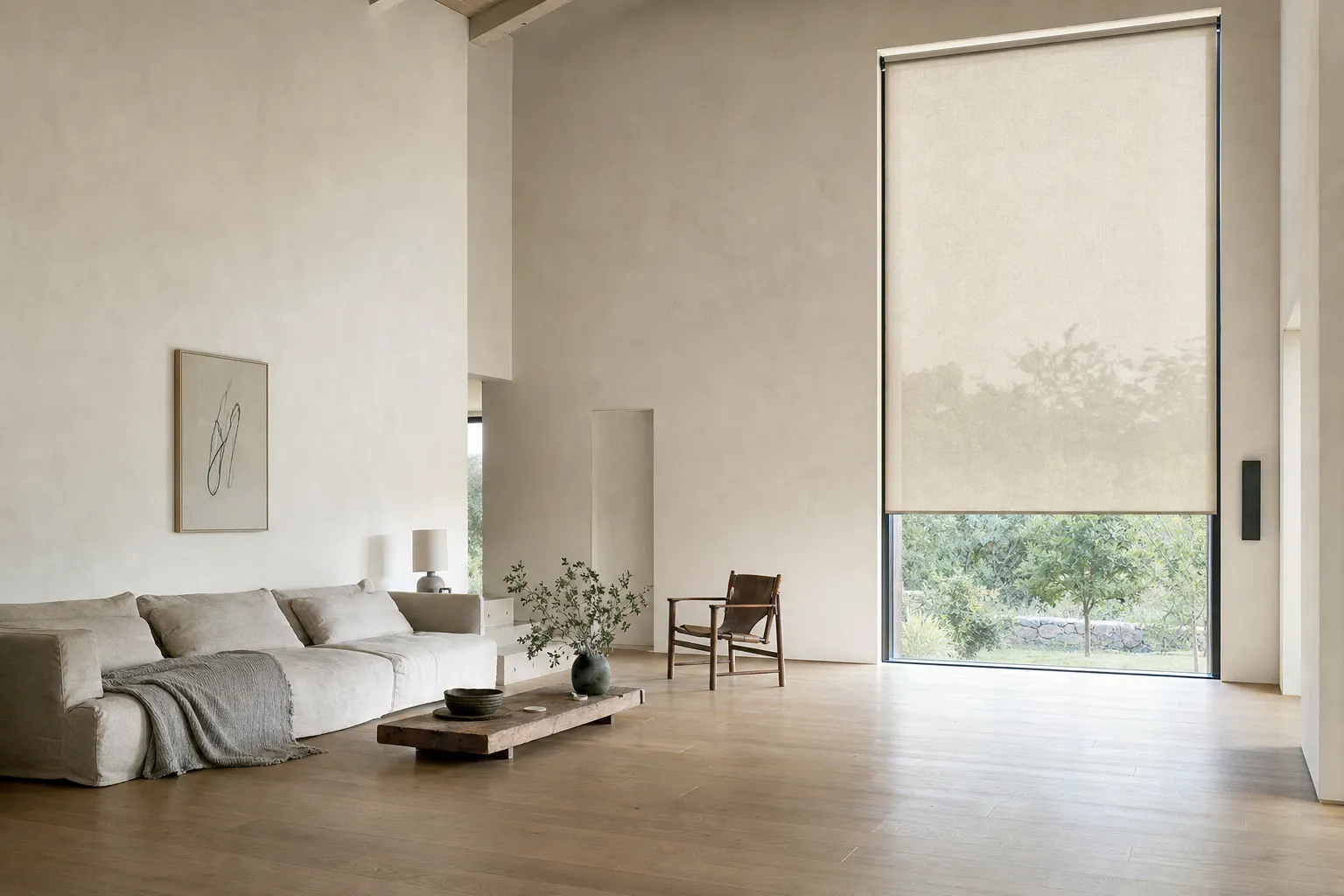
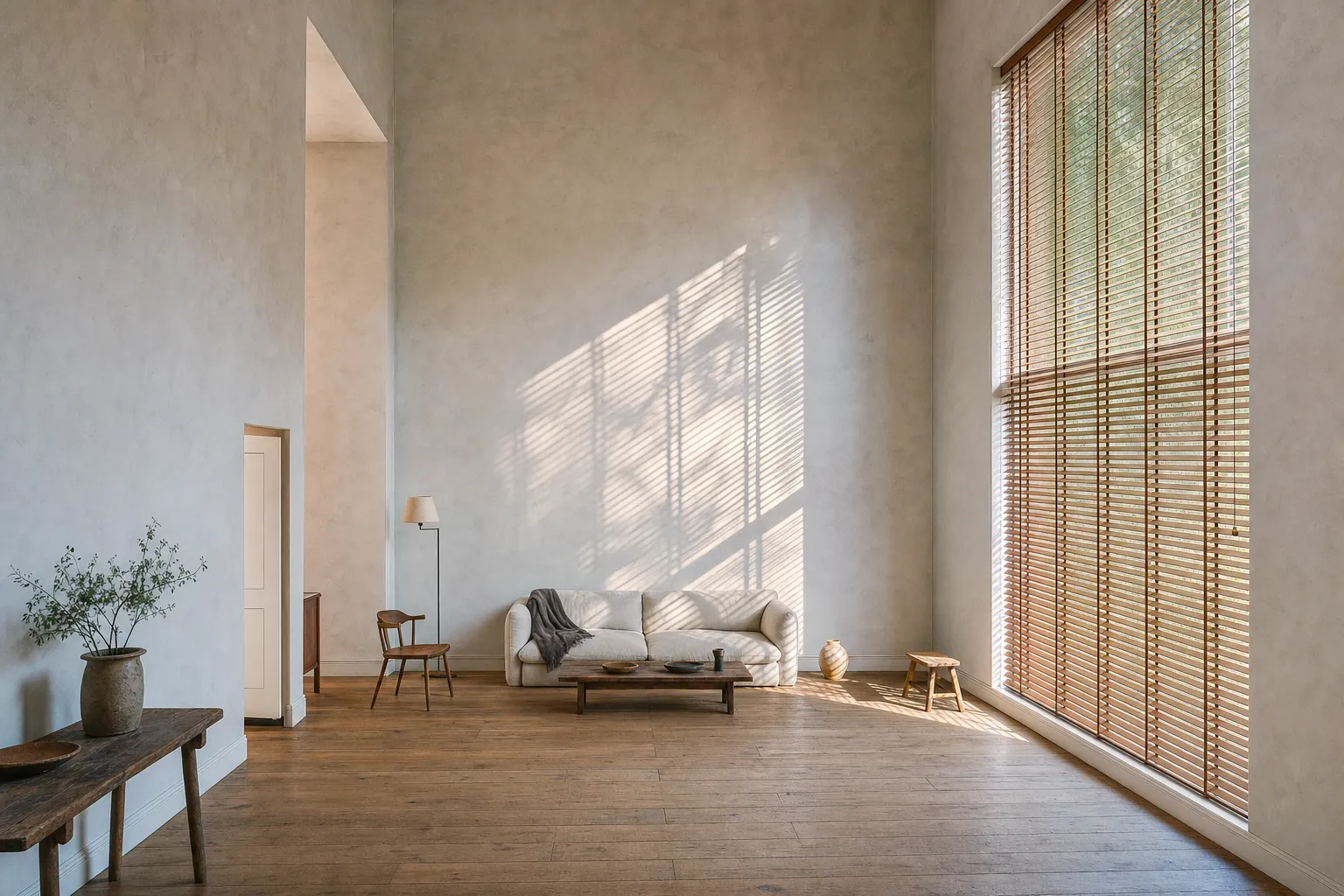
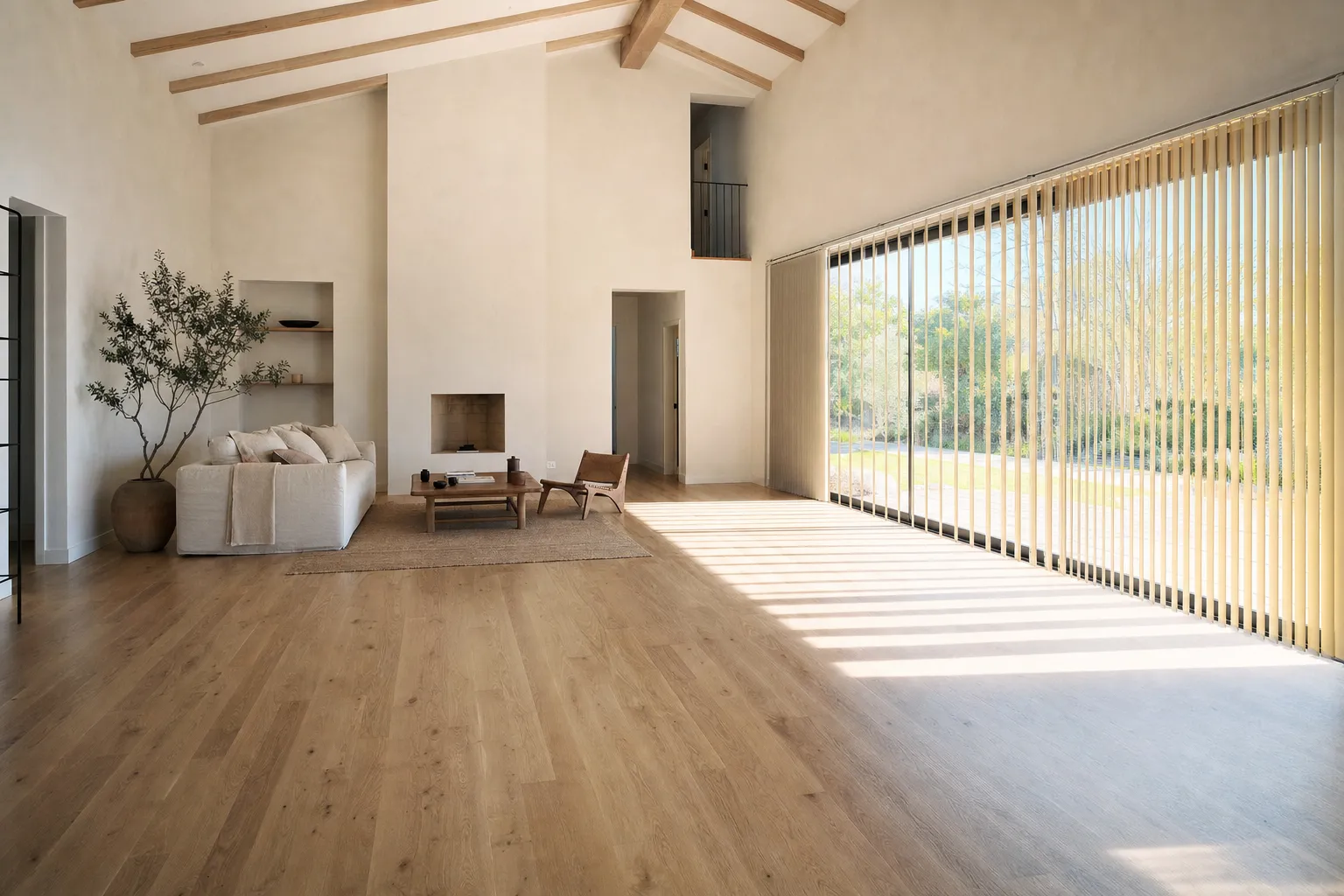
A blind you can work with one hand, from a chair, in ten years. That is the brief.
Our commitment
We fitted it, so if it ever stops running easily that is our call to answer.
If it does not fit, we remake it
You never held the tape.
Nothing owed before you agree
No deposit, no card.
Licensed and insured
Both, before we come in.
Your date, in writing
Set at the quote. It does not move.
We will tell you not to buy
If a stock size does it, you hear so.
Cordless where a child sleeps
Standard, at no extra charge.
Reviews on Google
What people said afterwards.
Rated 4.8 out of 5 — the ones below are quoted in full, with a link to check each on Google.
Highly recommend Nick and his team. They installed blinds in my house. Looks wonderful, cheers
Timur ShafikovNick has delivered the greatest service as I recently moved in to my new townhome and needed to have blinds for all three floor windows. Not only the price was the best, but he accommodated all my requests in the process. Definitely worth every penny
Anton Kovunov
Real names, real dates, and a link to all of them — including the ones we would not have picked.
Read them on GoogleQuestions
Before you book
Do you take the old blinds away?
Yes, and they leave with us on the day unless you want to keep them. Where a unit is rented and the original has to go back at the end of a tenancy, say so and we will leave them boxed with the brackets taped inside — that is the thing people wish they had done two years later.
My blinds were fitted over fifteen years by different people. Can that be tidied?
Partly, and the useful thing is rarely replacing all of them. Standardising the mechanism across the rooms you use daily fixes the complaint people actually have — that nobody remembers which window works which way. Fabric matching between rooms is far less noticeable than people fear, and matching within a single room is what the eye actually checks.
Which is the first window to do if I can only do one?
The one you operate most often, not the one that looks worst. A blind adjusted twice a day is where a poor mechanism costs you something every single day, and it is the window where the difference is felt immediately. The one that looks worst is usually a room nobody sits in.
What makes a blind easy to operate years from now?
Three things, and none of them is the fabric. The mechanism — a well-balanced spring or a motor rather than a chain that has to be pulled hand over hand. The weight, because a wide blind in a heavy cloth needs real force to start moving whatever the mechanism is. And where the control sits: a wand or a switch at chest height is usable from a chair, and a cord that ends at knee level is not.
Is motorization only for tall windows?
No, and that is the assumption worth correcting. Height is the obvious reason, but weight and grip matter just as much. A wide, heavy blind at ordinary height can be harder to operate than a small one twelve feet up, and a motor removes the force from the equation entirely. On a window used every single day, that is a better argument than reach.
Does the lake actually change the light?
Yes, on the streets close to it. Water reflects, so a south-facing room near the shore gets a second dose of afternoon light bouncing up off the surface — arriving from below the horizon line, which is exactly where a half-lowered blind is not covering. A screen chosen for an inland street is often a stop too open once it is close to the water.
We are in a 1950s house in Roseland. What usually works?
An inside mount, most of the time, because those houses have reveals deep enough to swallow a headrail and trim worth keeping visible. The thing to check first is whether the opening is still square — seventy years of settlement is enough to show as a wedge of light under anything with a rigid bottom bar.
Do you work on the condominiums along Lakeshore?
Regularly. Those buildings generally want a certificate of insurance naming the corporation and a booked service elevator before anyone arrives with tools, and many have a rule about what the window looks like from outside. We start the paperwork when the quote is agreed rather than the week of the installation.
Is a honeycomb blind actually warmer, or is that marketing?
It is real, and it is also oversold. The cells trap a layer of still air between the room and the glass, which does reduce heat loss — but the effect depends almost entirely on how well the blind seals at the edges. Hanging loose inside a reveal, most of the benefit escapes around the sides. Fitted with side channels, or mounted outside the opening with an overlap, it is worth having. The room where it earns its money is a cold one you sit in, not a whole house.
Is the measure free in Burlington?
Yes, and there is no travel charge on the quote. The visit, the samples held against your own glass and the written quote cost nothing, with no deposit taken at the door.
If a blind in your house is already hard to operate, say which one on the phone. That is usually a five-minute diagnosis rather than a new blind.