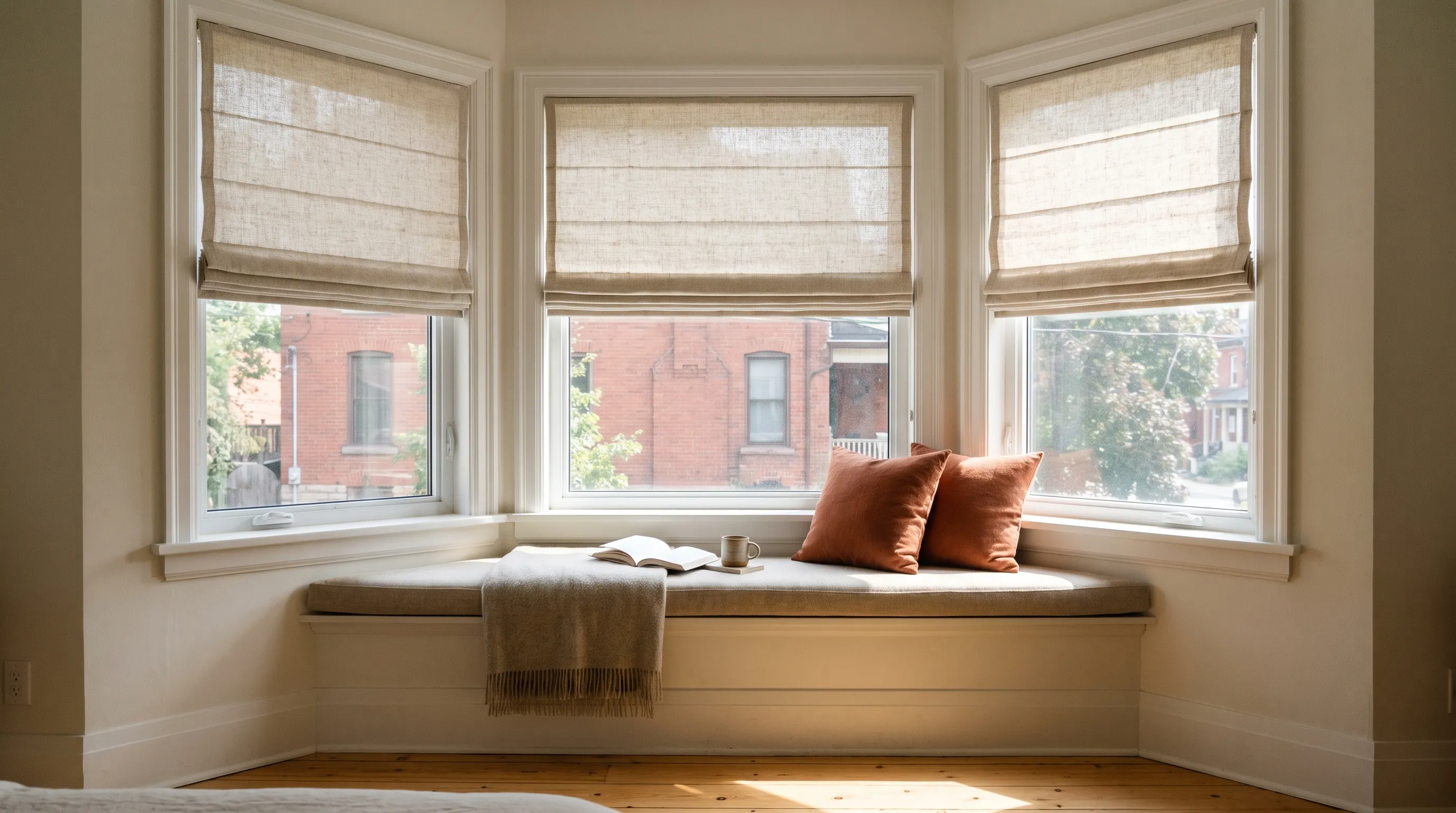
Bay window blinds
A bay is not one wide window. It is three or five separate openings meeting at angles, and almost everything that goes wrong with one comes from treating it as a single opening because that is what a form asks for.
Blinds Company · Rated 4.8 out of 5 on Google
Free in-home measure · open 8am–9pm, 7 days
In short
Bay window blinds are made to your exact opening and installed across Toronto and the GTA. They suit victorian and edwardian bays in the old city. The in-home measure is free and carries no obligation.
Book
Let's measure your light.
We come to you, measure at your own windows, and go through fabrics and fits together. The visit costs nothing.
$99 off when you order three or more blindsApplied to your written quote at the measure.
Rather just talk?(437) 782-5452Open 8am–9pm, 7 days
The short version
Is this right for your window?
Yes — if the room is one of these.
- Victorian and Edwardian bays in the old city
- Modern box bays and bow windows in newer housing
- Any opening where two blinds have to meet at an angle
Where it is wrong is below, and that half is the useful one.
And this is what you would be getting.
- 01
- One blind per facet, measured separately
- 02
- Angles taken in the room, not assumed
- 03
- Corners set so the ends meet cleanly
- 04
- Bent track where the covering has to be continuous
In a room
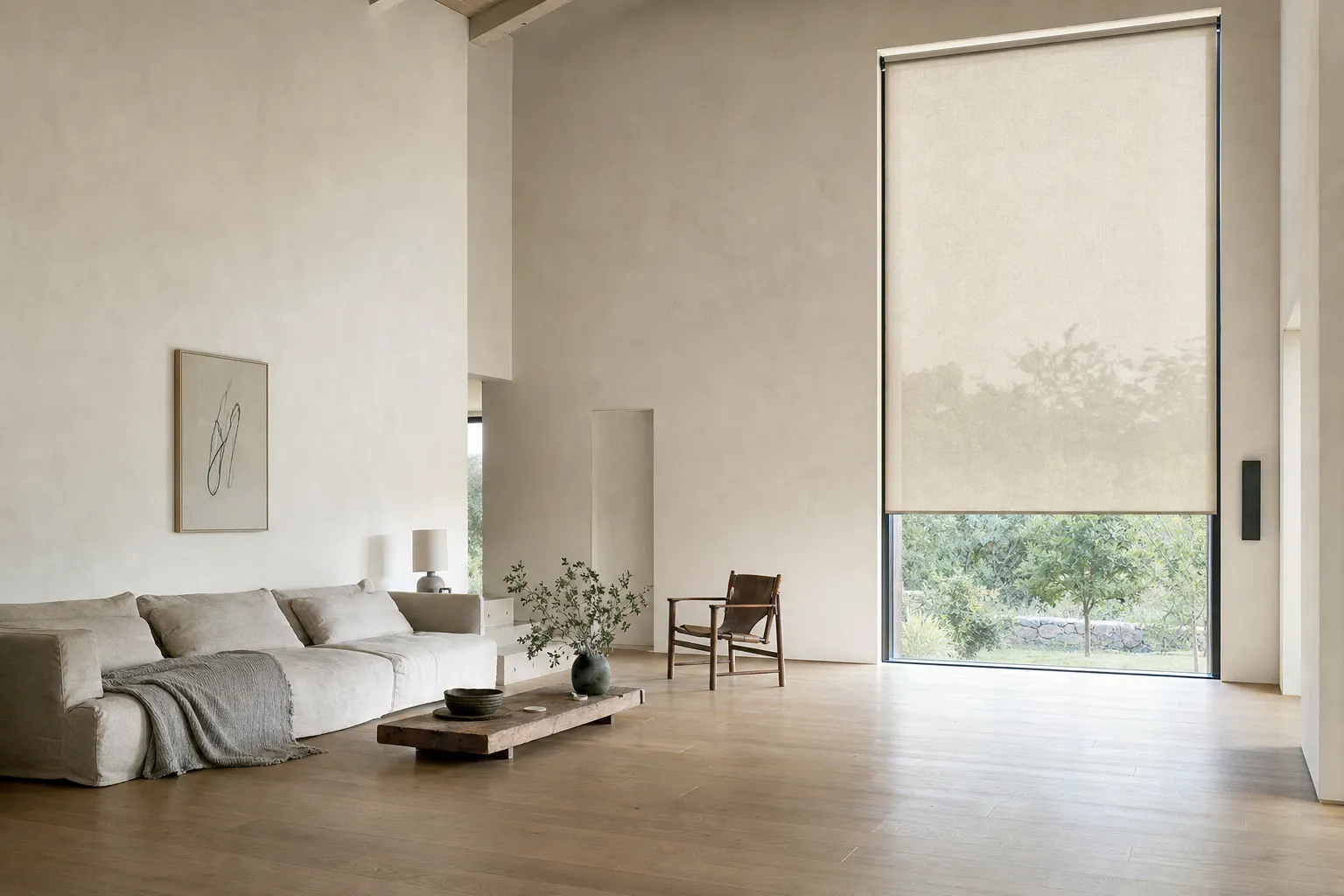
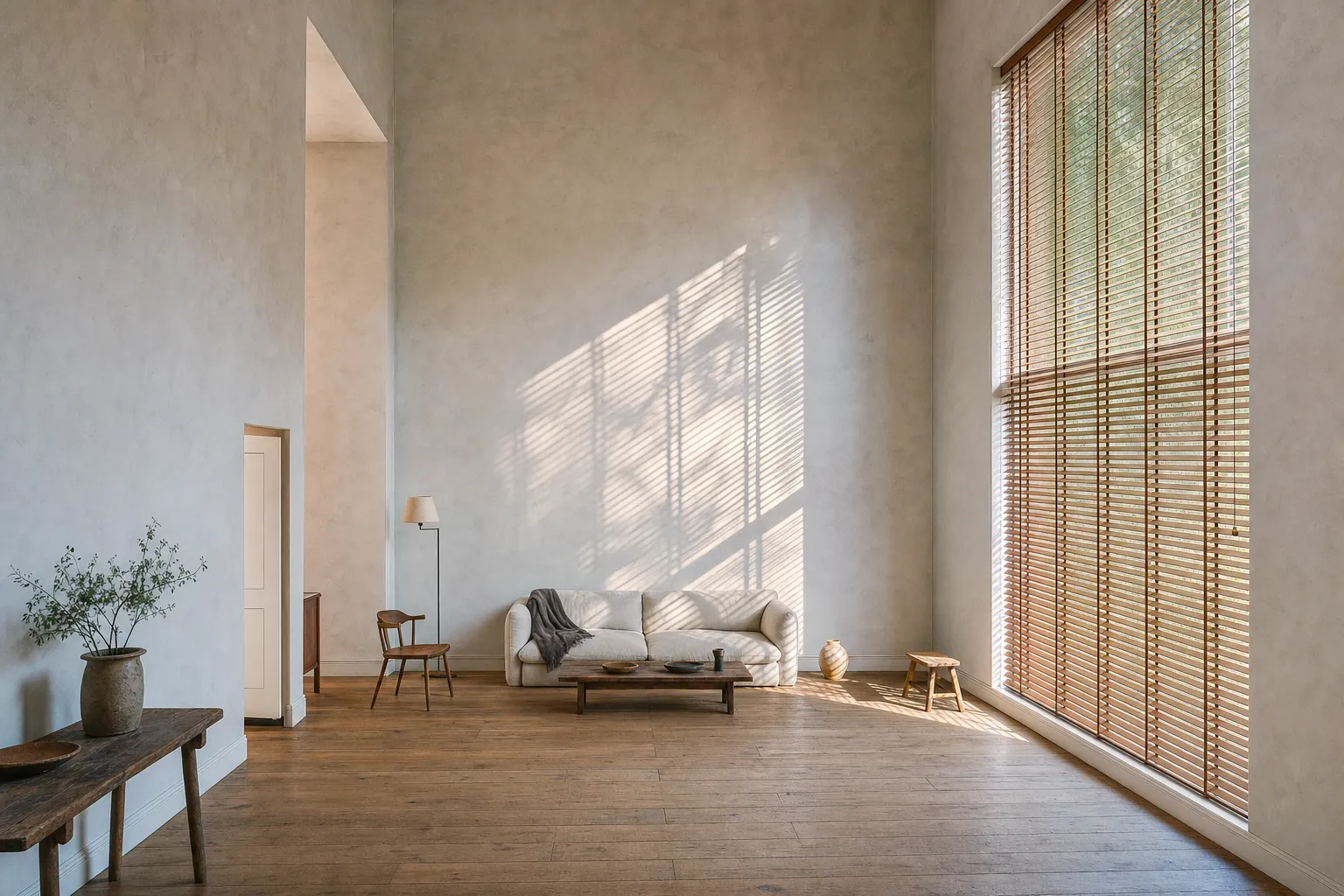
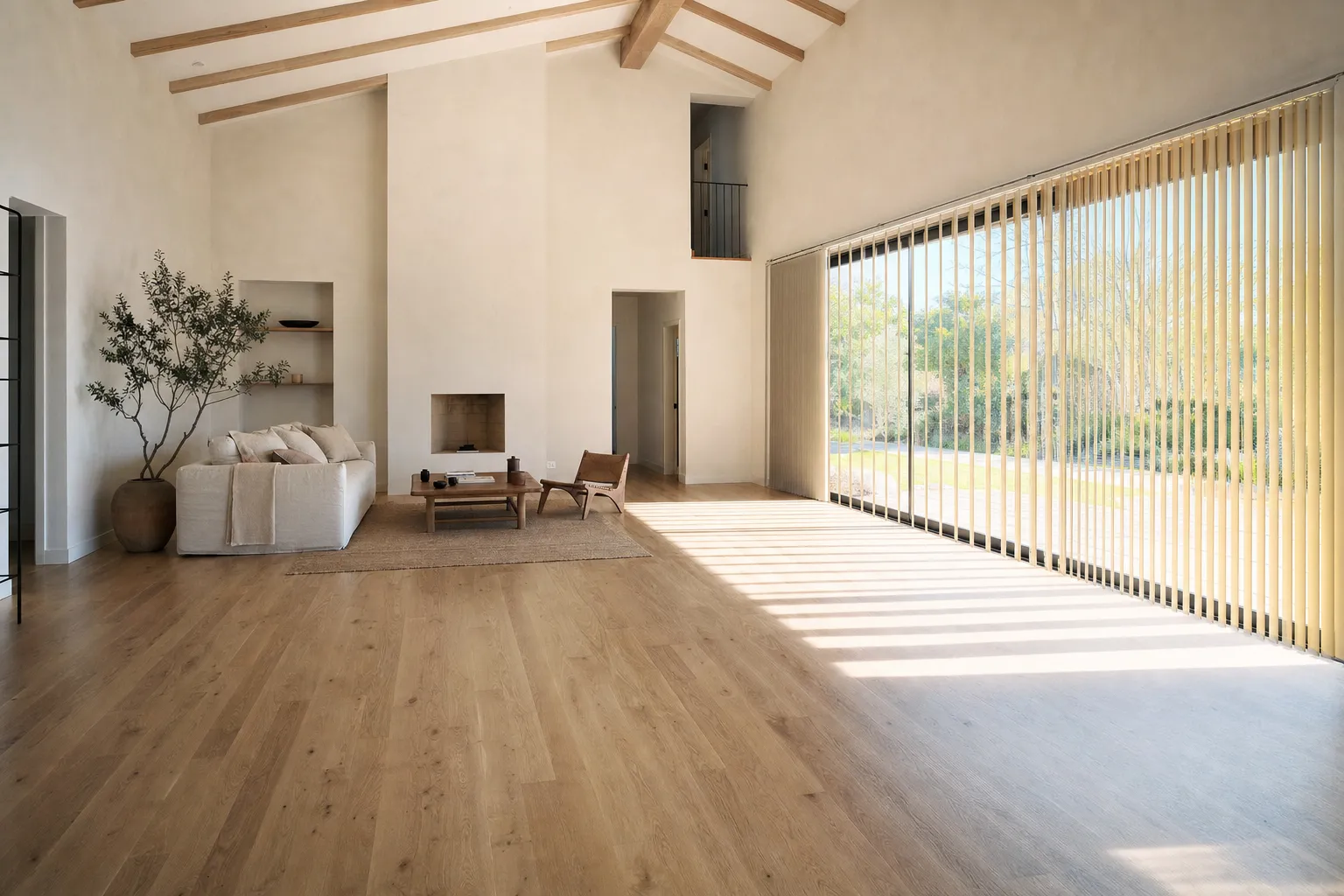
What bay window blinds look like once they are up.
The product, not our installations — a gallery of rooms we did not fit would be somebody else's portfolio with our name on it.
A bay is three windows, not one
Everything that goes wrong with a bay comes from the same place: somebody wrote a width and a drop on a form, because that is what the form asked for.
A bay is a projection with three facets — a wide front and two shorter returns — or, in a bow, four to six narrower ones on a curve. Each facet is its own opening, at its own angle, frequently a slightly different width from its neighbour, and often facing a different direction.
Treated as one opening it gets one wide blind on a straight line across the front of the whole projection. When that blind is down you have a flat wall of fabric where the bay used to be — and the bay was the reason somebody wanted the room. When it is up, the headbox still runs straight across and the shape is still interrupted.
Treated correctly it gets one blind per facet, each measured on its own, with the angles taken so the ends meet at the corners. That keeps the geometry, and it has a practical benefit nobody mentions: each section can be set differently, which on a bay whose facets face different ways is what you actually want.
This is the single most common thing we are called in to put right after somebody else has been, and it is never a fabric problem.
The corners, where the millimetres are
Two blinds meeting at an angle either look deliberate or look like an accident, and the whole difference is a few millimetres decided before anything is made.
The near edges have to clear each other. Each blind travels in its own plane. At an internal corner those planes converge, so the two blinds are closest exactly where they are both hanging. Too tight and one fouls the other or its bracket; too generous and a wedge of daylight opens at the corner that is visible from across the room and impossible to close.
One runs in, one runs over. The blind on the facet you see least runs into the corner; the one on the facet you look at from the doorway runs over it. That way the visible line is a clean edge rather than a butt joint with a gap behind it. Which facet is which depends on where the room is entered from, so it gets decided standing in the room rather than on a drawing.
The bracket has to fit in the corner. On a shallow reveal, the two brackets can physically collide before the blinds do. Where that happens the answer is a smaller bracket, a different mount, or accepting a wider gap — and knowing which at the measure rather than at the installation.
None of this is difficult. All of it is invisible on a quote that lists three widths and three drops.
The angles are not what the drawing says
Bays are drawn at 45 or 30 degrees. Real ones are whatever the bricklayer set out and whatever a century has done to it since.
On a Victorian or Edwardian bay in the old city, the two returns are frequently a degree or two different from each other, and the facets are rarely the same width to the millimetre. That is not a defect; it is a building that was made by hand and has moved.
So the angles get measured. Where they are close to standard we say so and the job is straightforward. Where they are not, the corner overlaps are set to the angles we found rather than the ones the catalogue assumes, and that is the whole reason a bay cannot be quoted accurately over the phone.
Modern box bays are a different case: square corners, three facets at right angles, and everything true because it went in recently. Those are the easy ones, and the constraint moves to depth, because newer construction gives a shallower reveal and the corner brackets have less room to live in.
Which products suit a bay, and which do not
Rollers. The most common answer and usually the right one. Minimal stack, a slim headbox that does not dominate the corners, and one per facet keeps each section independent. The thing to specify deliberately is the roll direction — all three rolling the same way, so the fabric sits at a consistent distance from the glass around the bay.
Venetians and faux wood. Work well, and the tilt is genuinely useful in a bay whose facets face different ways. Heavier at the corners, so bracket space matters more.
Cellular shades. Compact, good in a bay that is cold — and a bay is almost always the coldest part of a room, being glass on three sides with little insulation behind the sills.
Romans. Possible, and the stack is the problem. Three romans raised in a bay put three piles of fabric across the top of the projection, which on a shallow bay is most of what you see. Better in a tall Victorian bay than a modern one.
Verticals and curtains. Both need a bent track following the bay’s actual shape, templated in the room. They are the two products that genuinely want to be continuous rather than split, because both are meant to close as one surface. The decision to settle first is where the stack lands when they are open — bay returns are short, so the stack goes either across part of the glass or onto the flanking wall.
One wide blind across the front. The thing to avoid, for every reason on this page.
The facets do not face the same way
Worth its own section because it changes the fabric decision, and because people assume a bay is one light condition.
On a bay projecting from a front elevation, the two returns face roughly ninety degrees away from the front facet. On a corner lot or an angled street that can mean one return in shade all afternoon while the front is in full sun.
Two consequences.
Specify for the worst facet, adjust the others. Choosing a fabric for the average of the three gives you one section too dark and one still glaring. Choose for the facet with the real problem, and accept that the shaded return will be a little tighter than it strictly needs.
Use the same fabric throughout anyway. From outside, and from across the room, a bay reads as one feature. Three different fabrics in it reads as three decisions. The adjustment happens in how each blind is set, not in what each is made of.
The exception is a bay where one facet is a door or an opening casement, which sometimes justifies a different product on that section alone.
Window seats, radiators and deep sills
Bays collect furniture and heating, and all three change the drop rather than the product.
A window seat. The blind finishes at the seat. Running it past means the bottom bar lands on cushions, and a blind that has to be lifted off something every time is a blind that stays up.
A radiator. Extremely common under a Victorian bay, and the one that matters most. A blind hanging in front of a convector traps rising warm air against glass on three sides — the coldest, largest expanse of glass in the room — where the room gets none of it. The blind stops at the sill above it.
A deep sill. Bays usually have generous sills, which is a gift: an inside mount sits comfortably and the sill gives the blind somewhere to finish that looks intended. The catch is that a deep sill nose narrows the usable depth at the bottom, and on a product needing depth that can be the deciding measurement.
Bow windows, which are the same rule with more corners
A bow is the curved cousin: four, five or six narrower facets on a shallow arc rather than three on sharp angles. The geometry rule is identical and everything gets harder by degrees.
More corners, so more places to be wrong. Five facets means four internal corners instead of two, and each one needs its overlap decided. The errors are also more visible, because a bow is read as a curve and the eye follows the line — a single section standing proud interrupts the arc in a way it would not interrupt three flat planes.
Narrower blinds, which changes the product. A bow facet is frequently only 40 to 60 centimetres wide. On a roller that is fine. On a venetian it means a very short slat run that tilts stiffly, and on a vertical it means two or three vanes per section, which looks like an accident. Narrow favours rollers and cellular shades and disfavours anything with a mechanism spread across the width.
The angles are shallower and less forgiving. At 45 degrees a small error in the overlap is absorbed by the corner. At 20 or 30 degrees the two blinds are nearly in the same plane, so the same error shows as a visible step.
The practical upshot: a bow costs more than a bay of the same total width, because it is more pieces and more setting out, and any quote that prices it the same has not looked at it.
The coldest seat in the house
Worth knowing before choosing, because it changes what the blind is being asked to do.
A bay is glass on three sides projecting out of the building envelope, usually with thin or no insulation under the sills and often a radiator underneath doing its best. In January it is measurably the coldest part of the room, and the window seat that looked charming in June is the one nobody sits in.
Two things follow.
A cellular shade earns its premium here more than anywhere else in the house. The trapped air in the honeycomb is doing real thermal work, and a bay is where there is most heat to lose. It is the one room-and-product combination where we raise the upgrade unprompted.
The perimeter matters more than usual. Cold air falling off three planes of glass has three routes into the room. A blind that closes reasonably tight to each facet, with the corners not gaping, makes a difference you can feel at the seat — which is another reason the corner millimetres above are worth caring about beyond how they look.
What will not help: a heavier fabric hanging loose. Thermal performance at a window is about still air and closed edges, not about the weight of the cloth.
What the measure involves
Longer than a flat window, and this is the page where that is most true.
Each facet measured individually — width at three heights, drop at three points — and the widths compared, because facets that look identical are often ten or fifteen millimetres apart.
The angles taken at both corners. On anything irregular, a card template rather than a number.
Then the room: where you enter from, which decides the overlap direction. What is under the sills. Whether any facet opens. Which way each one faces.
Then samples, held in the bay itself rather than at the table, because a bay is lit from three directions and a fabric behaves differently there than anywhere else in the house.
You keep a written quote with a line for each facet, the overlap direction and the mount stated. No deposit, no card, nothing owed either way.
Last updated .
A bay is measured with a tape and the angles taken. Nothing about it comes off a form.
Our commitment
We took your angles, so corners that do not meet cleanly are ours to remake.
If it does not fit, we remake it
You never held the tape.
Nothing owed before you agree
No deposit, no card.
Licensed and insured
Both, before we come in.
Your date, in writing
Set at the quote. It does not move.
We will tell you not to buy
If a stock size does it, you hear so.
Cordless where a child sleeps
Standard, at no extra charge.
Reviews on Google
What people said afterwards.
Rated 4.8 out of 5 — the ones below are quoted in full, with a link to check each on Google.
Nick has delivered the greatest service as I recently moved in to my new townhome and needed to have blinds for all three floor windows. Not only the price was the best, but he accommodated all my requests in the process. Definitely worth every penny
Anton KovunovI was blown away by the exceptional customer service from Blinds Company! Their staff was knowledgeable, friendly, and helped me find the perfect blinds for my living room. The installation was quick and flawless. I highly recommend them!
Merdan Berdiyev
Real names, real dates, and a link to all of them — including the ones we would not have picked.
Read them on GoogleQuestions
Before you book
One blind across the whole bay, or one per section?
One per section, almost always. A single blind spanning the bay has to sit across the front of it on a straight line, which flattens the shape that was the reason for the room — you get a wall of fabric and the bay disappears behind it. One blind per facet keeps the geometry and lets each section be adjusted for the light it actually gets. The exception is a curtain, which wants a continuous bent track precisely because it is meant to close as one.
What happens at the corners?
That is where the job is won or lost, and it is a few millimetres either way. Two blinds meeting at an angle either read as deliberate or read as a mistake. The near edges have to clear each other through their full travel without leaving a visible wedge of daylight, so one overlaps and one runs into the corner, and which is which depends on where you look at the bay from.
My bay angles are not 45 degrees. Does that matter?
Only in that we measure them rather than assume them. A drawing says 45 or 30; a hundred-year-old bay says whatever the bricklayer and a century of settlement left behind, and the two are rarely the same. We take the angles in the room, which is also why a bay cannot be quoted accurately over the phone.
Can I have verticals or a curtain in a bay?
Yes, on a track bent to the bay's actual shape and templated in the room. The question to settle first is where the stack goes when it is open, because on a bay the returns are usually short and the stack has to land either across part of the glass or on the flanking wall. Which you accept changes how the room looks more than the fabric does.
There is a window seat and a radiator in the bay. What then?
Both change the drop rather than the product. A blind stopping at the seat or above the radiator is the right answer, and a floor-length anything in a bay with a radiator in it traps the heat against the coldest glass in the house. We note both at the measure because neither shows up on a width and a drop.
Is a bow window the same thing?
Same principle, more facets. A bow is four, five or six narrower sections on a shallower curve, so there are more corners to get right and each blind is narrower. It is more work and more pieces; the geometry rule is identical.
Not this one?
The rest of the range.
Each of these is the wrong answer somewhere, and its page says where. That is usually the faster way to find the right one.
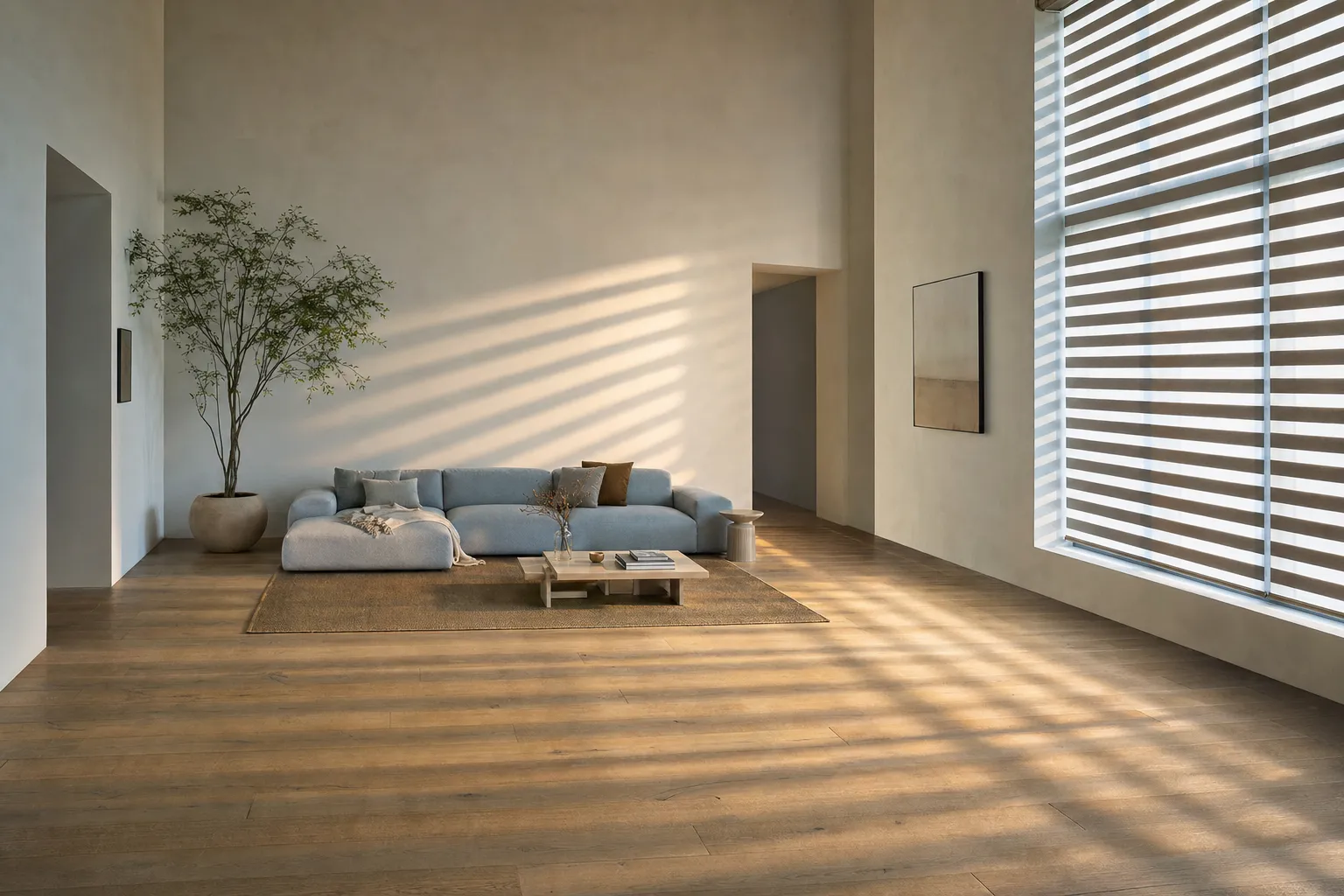
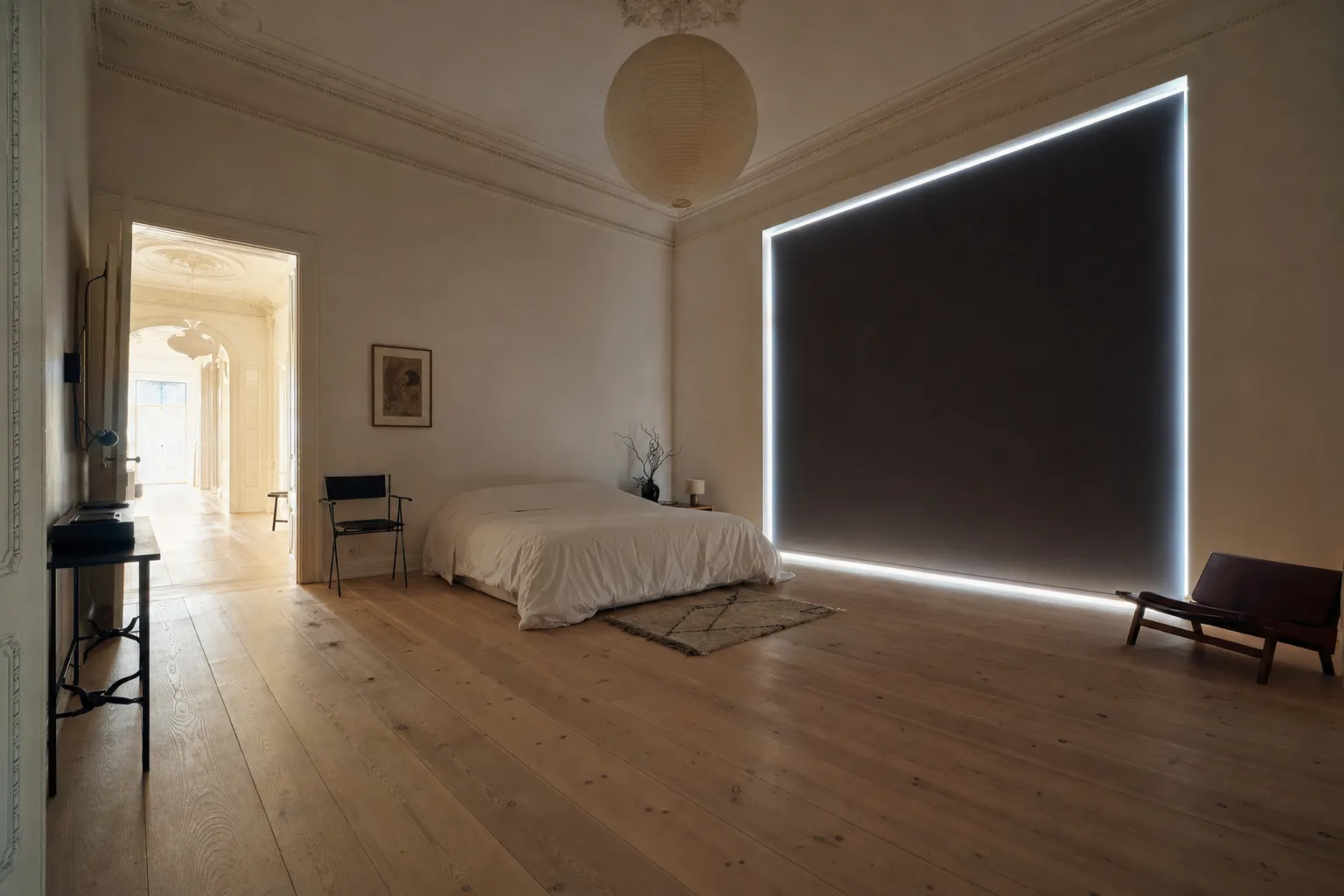
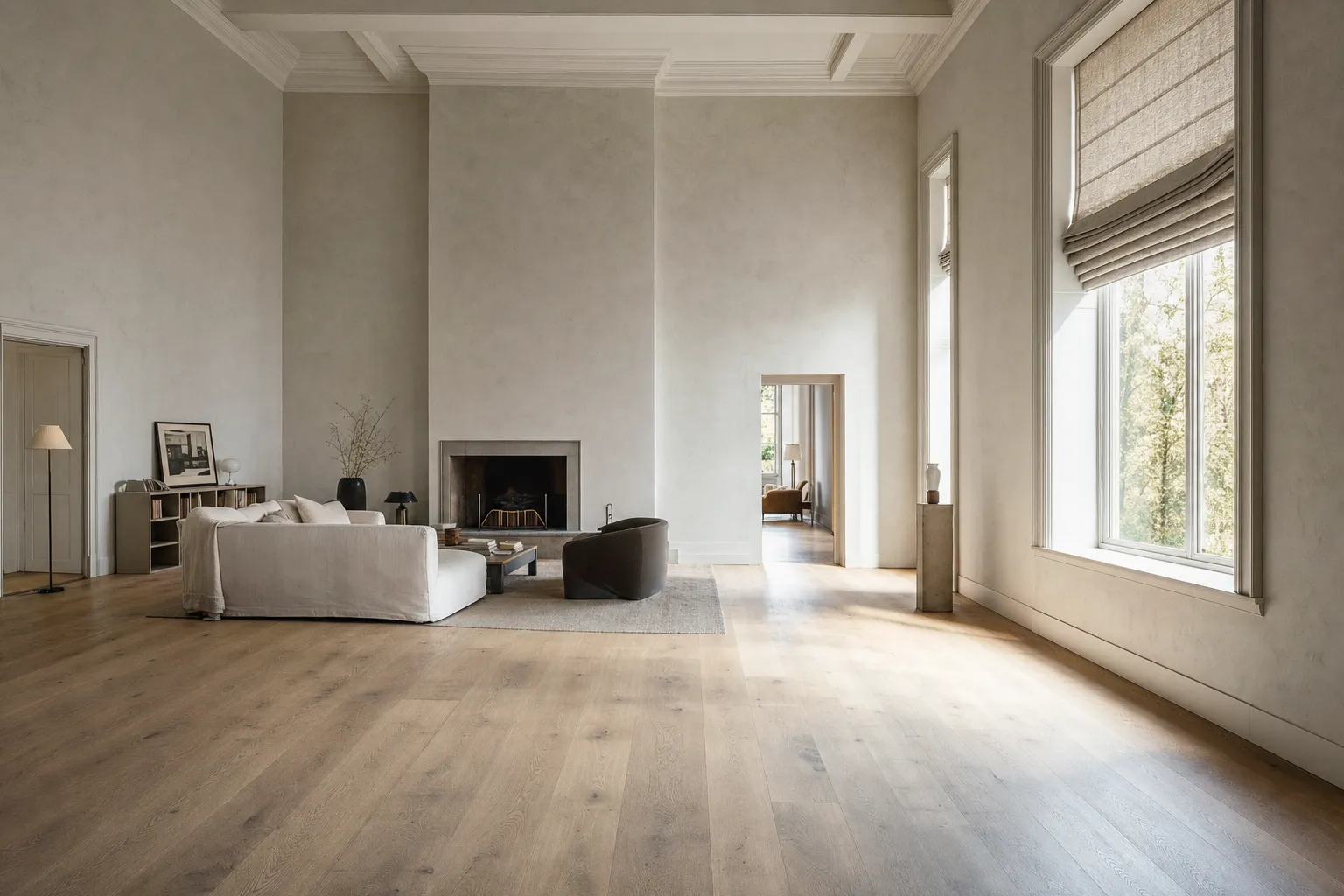
If somebody has quoted one wide blind across your bay, that quote removes the bay. Ring before you accept it.