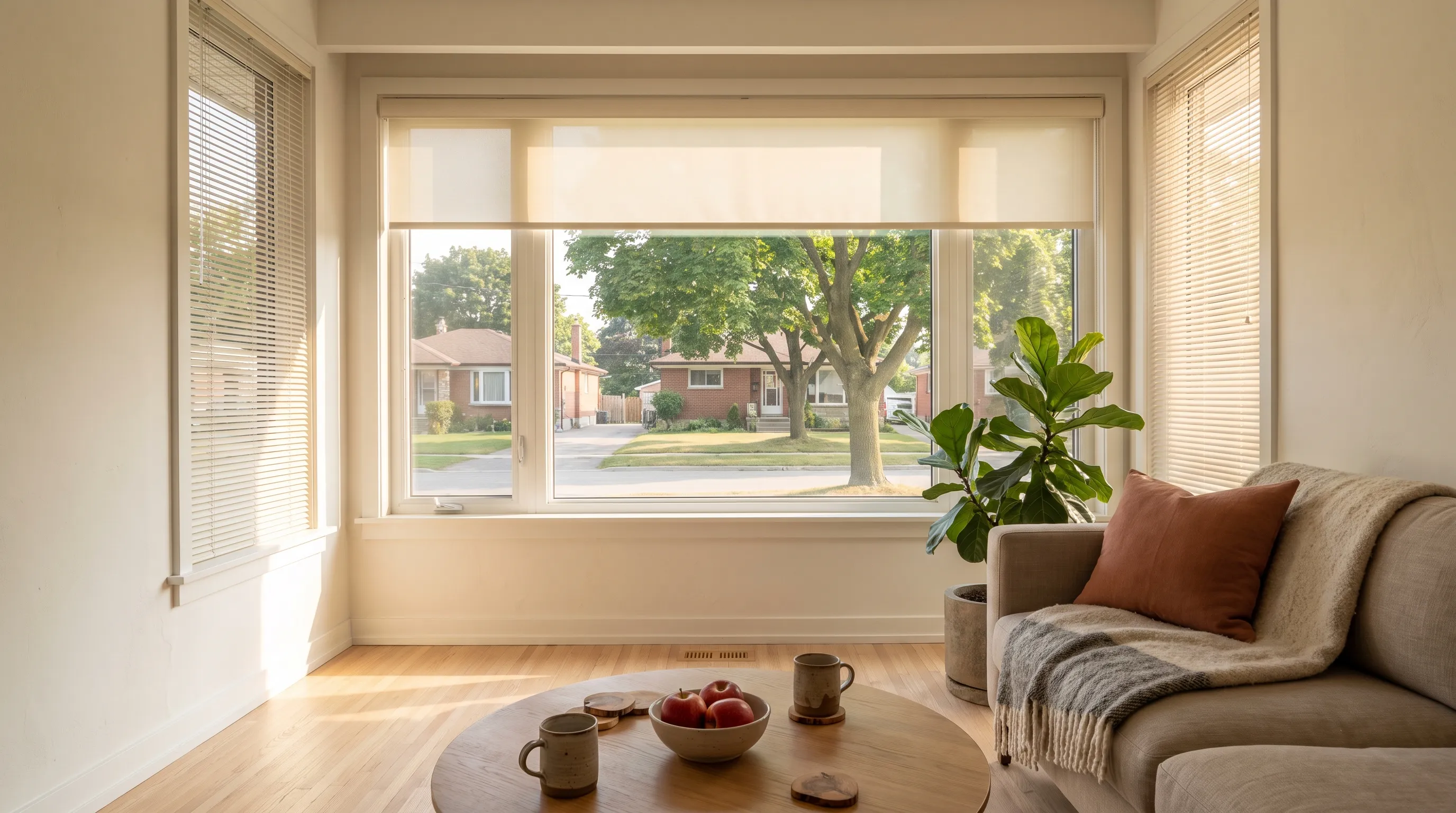
Blinds in Etobicoke
Made-to-measure blinds and shades across Etobicoke, from the post-war bungalows inland to the glass towers on the water. Two kinds of building that want opposite answers, measured in your own rooms either way.
Blinds Company · Rated 4.8 out of 5 on Google
Free in-home measure · open 8am–9pm, 7 days
In short
Etobicoke is two housing stocks pretending to be one place. Inland it is post-war bungalows and split-levels with small openings and deep wooden trim, where the blind is chosen around the woodwork. On the water it is Humber Bay towers with floor-to-ceiling glass and almost no reveal, where depth decides everything before fabric is even discussed. We measure both, the visit is free, and which of the two you live in changes the answer completely.
Book
Let's measure your light.
We come to you, measure at your own windows, and go through fabrics and fits together. The visit costs nothing.
$99 off when you order three or more blindsApplied to your written quote at the measure.
Rather just talk?(437) 782-5452Open 8am–9pm, 7 days
Two Etobicokes, and they want opposite things
There is no single answer to “what should I put on an Etobicoke window”, because the place contains two housing stocks that share nothing but a postcode.
Inland — Alderwood, parts of Rexdale, the streets around Islington — the buildings are post-war. Bungalows and back-splits from the late forties through the sixties, built with modest openings, generous wooden trim and deep reveals. The windows are small by modern standards and the woodwork around them is often the best thing in the room.
On the water — Mimico, Humber Bay Shores, New Toronto — a large share of what we measure was built in the last twenty years and is glass from the floor to the ceiling with a reveal you could not fit a finger into. There is no trim to work around because there is no trim.
The specification that suits one is close to the worst answer for the other, and almost every mistake we are called in to correct comes from applying the habits of one to a room in the other.
The tower window: depth decides before fabric does
In a Humber Bay unit, the first number we take is not the width. It is how deep the opening is front to back, because that number governs what can physically go there and everything else is preference.
The stack varies by product more than people expect. A plain roller needs the least room: a tube, a bracket, and a slim cassette if you want the roll hidden. A zebra needs noticeably more, because its fabric wraps the tube twice — the sheer and the solid pass each other, which is the whole trick, and passing takes space. A honeycomb folds flat and is surprisingly compact. A roman needs somewhere for the folds to pile.
Where the reveal is genuinely nothing — and in a fair number of these buildings it is — the blind does not go in the opening at all. It goes on the ceiling or on the bulkhead above it. That reads as deliberate rather than as a compromise, and it has a side benefit: mounted at the ceiling the blind covers the head of the glass, so the band of sky that would otherwise sit above the blind disappears.
The second constraint is the bulkhead itself. Many of these units have a drop or a duct running along the window wall, and it is rarely a consistent depth from one end to the other. We measure at both ends and in the middle rather than assuming the ceiling is level, because it usually is not by five or six millimetres, and five or six millimetres is a visible wedge of daylight across a wide unit.
What the water does to the light
People who move from an inland street to a unit on the water almost always under-specify the first blind they buy, and it is not their fault. The light is genuinely different and the difference is not obvious until it is your window.
Water reflects. On a clear afternoon, a south or west-facing unit above the fourth or fifth floor is lit twice: once by the sun and once by the surface of the lake throwing it back up. That second dose arrives from below the horizon line, which is exactly where a blind that has been lowered halfway is not covering.
The practical effect is that a screen chosen by openness factor for an inland living room reads as too open once it is in the air over the water. A five per cent screen that would be comfortable on a Kingsway street can be a two or three on the lakeshore. It is one of the few cases where we will tell somebody to go a step tighter than the number they arrived with.
The same reflection is why glare in these units peaks later in the day than people expect, and why a fixed answer — a blind that lives half down — usually fails. The problem moves.
The bungalow: the trim is the point
Inland the conversation reverses completely.
A 1954 bungalow in Alderwood has openings that are small relative to the room and a reveal that is deep because the walls are thick and the frames are wood. That deep reveal is a gift: it takes an inside mount comfortably, hides the headrail entirely, and leaves the woodwork doing what it was put there to do.
So the default here is inside, and it is chosen for the trim rather than for the blind. An outside mount over one of these windows covers the casing, and once the casing is covered the room loses the one detail that says when the house was built.
There are two exceptions and both are worth stating plainly. A bedroom that has to be genuinely dark cannot be done inside the opening — the clearance the blind needs to run is the same clearance the light comes through, and no fabric fixes a gap. In that room the blind comes outside and covers the trim, and the trade is a straight one: a dark room or visible woodwork, not both.
The other is an opening that has moved. Sixty and seventy-year-old houses settle, and on a window where the sill has dropped across its width a rigid bottom bar shows the drop as a widening line of daylight. We take both diagonals on anything that looks suspect, and if the opening is out of true we say so and mount outside, where the overlap hides what an inside mount would frame.
The Kingsway, and houses where the window is architecture
The Kingsway and the older streets near it are their own category. Larger houses, often with leaded or divided-light windows, mouldings that were expensive when they were new, and rooms designed around a particular window rather than the other way about.
The rule here is restraint. A window that is already doing something interesting does not need a blind that also does something interesting; it needs one that disappears when it is up and behaves when it is down. That usually means a plain fabric in a colour taken from the wall rather than from the fabric book, mounted where it interferes least.
It also means measuring the glass pattern before choosing a stack. On a window divided into panes, a roman that stacks over the top third hides one row of the division and looks like a mistake even though it is fitted perfectly. A roller that disappears into a slim cassette does not.
Balcony doors, and wind
A sliding door to a balcony is not a wide window and it should not be specified as one.
Three things separate them. The covering has to clear the opening completely — not mostly, completely — because a door that catches on a blind is a door people stop using properly. It has to survive being pushed past several times a day by people carrying things. And it has to tolerate the door being open, which in a tower on the water means wind.
That last one is the reason a beautiful fabric can be the wrong answer twelve storeys up. Anything loose enough to move will move constantly, and it will make noise doing it. Weighted vanes, a bottom bar with some mass in it, or a product that clears the opening entirely and gets out of the wind’s way are the honest options.
Where there is stack space on one side of the door, a vertical or a wide roller drawn to that side is the neatest result. Where there is not, the blind has to stack above, and that has to be planned rather than discovered.
Storm windows, and the extra sixty millimetres nobody mentions
The pre-war streets in Mimico, New Toronto and Long Branch have a feature that almost never comes up until somebody is standing at the window with a tape: a second layer of glazing on the outside of the original sash.
Some of it is genuine wooden storm sash that comes off in spring. More of it is triple-track aluminium fitted in the sixties and seventies, with a sliding storm pane and an insect screen sharing the same frame. Either way, it sits outboard of the window and it does two things to the specification.
It changes the depth you actually have. The reveal measured from the room looks generous, but the operable part of the window — the sash you need to reach past — may be set further out than you think, and a blind fitted to the full depth can end up in front of a latch you use twice a year and cannot get to.
And it changes what the window does with heat and condensation. A double-glazed unit behaves predictably. An original single pane with a storm outside it has a cold cavity between the two, and in February that cavity condenses. A heavy blind pulled tight against that window overnight traps the moisture rather than letting the room’s air move across the glass, and the sill pays for it over a few winters.
The answer is not a different fabric. It is leaving the blind standing slightly proud of the glass rather than sealed against it, and being honest that on those windows a full blackout with side channels is a trade against the sill rather than a free upgrade. On a bedroom that genuinely has to be dark it is still worth doing; we would just rather you knew which trade you were making.
Getting into a building without losing a fortnight
Most of the tower work here needs the same two pieces of paper before anyone arrives with tools: a certificate of insurance naming the corporation, and a booked service elevator. Neither is hard. Both take longer to arrange than the installation, which is why we begin them when the quote is written rather than the week of the fit.
Buildings on this stretch also tend to have opinions about what the window looks like from outside. White or off-white backing is the usual one, and it is almost never a real constraint because the ranges are built for it — the rule concerns the reverse face, not the side you live with.
Load-in windows are the third thing. On a building with no visitor parking and a single service lift, an arrival time is worth more than a four-hour range, and that is how we book it.
What the visit involves
A call back first, asking which rooms and what is wrong with them. Then a time.
At the window: three widths, three drops, cut to the tightest of the six. Reveal depth before any conversation about fabric. Both diagonals wherever the opening looks like it has moved, which inland is often and on the water is almost never. Obstructions written down — a crank handle, a deep sill, a duct running along the head.
Samples held against your own glass at roughly the hour the room misbehaves. On the lakeshore that means late afternoon, and it is worth arranging, because a fabric that looks right at eleven in the morning can be a stop too open at five.
Then a written quote with a line per opening, no deposit and no card.
The question we get asked most here
It is some version of: the unit came with blinds, are they any good?
In the towers, the answer is usually that they are fine mechanically and wrong specifically. Builder-supplied blinds in a condo are chosen once for every unit in the building, which means the same fabric faces north, south, east and west. The north-facing units got something too tight and the west-facing units got something far too open, and only one of those two groups notices — which is why the people who ring us are almost always on the west side.
In the bungalows, the answer is usually that they are old, corded, and mounted to the opening in a room that needed them mounted to the wall. The cords alone are worth dealing with if a child uses the room, and that is not a sales line: since 1 May 2021 a blind sold in Canada has had to meet limits on reachable cords, but the one already on your wall is exempt by age rather than by being safe.
Last updated .
Everything we make
The rest of the range, in Etobicoke.
Each is wrong somewhere. Its page says where.
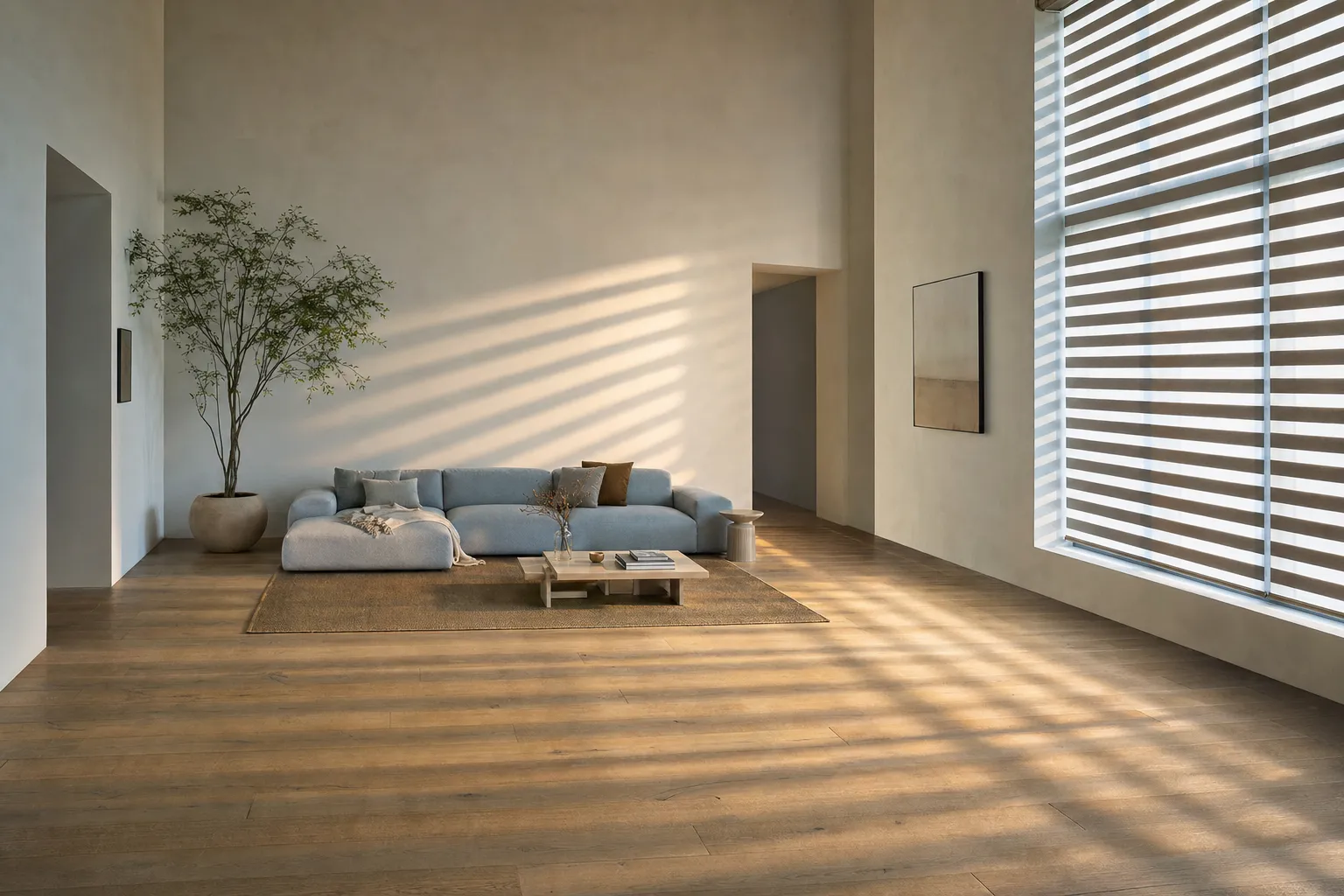
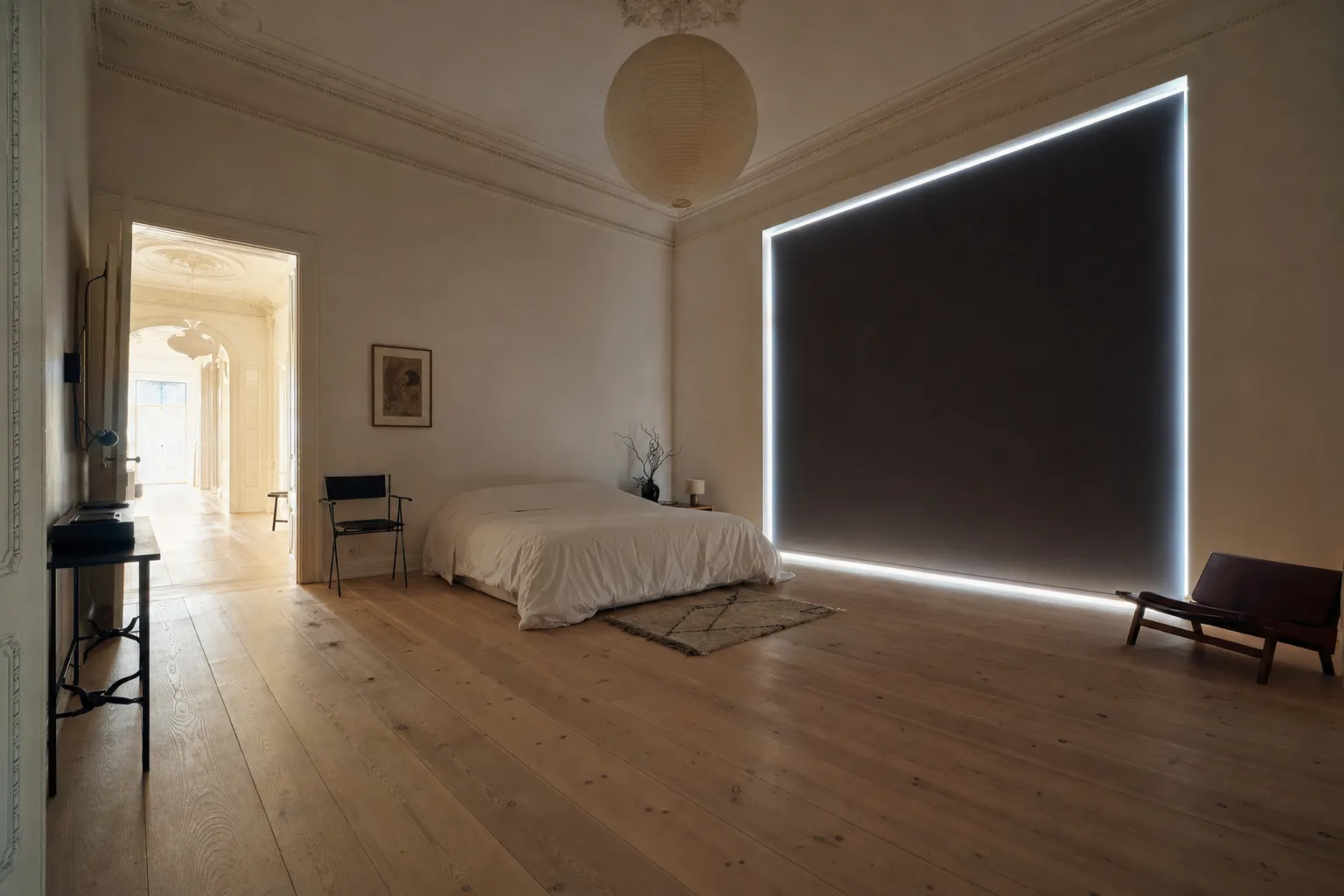
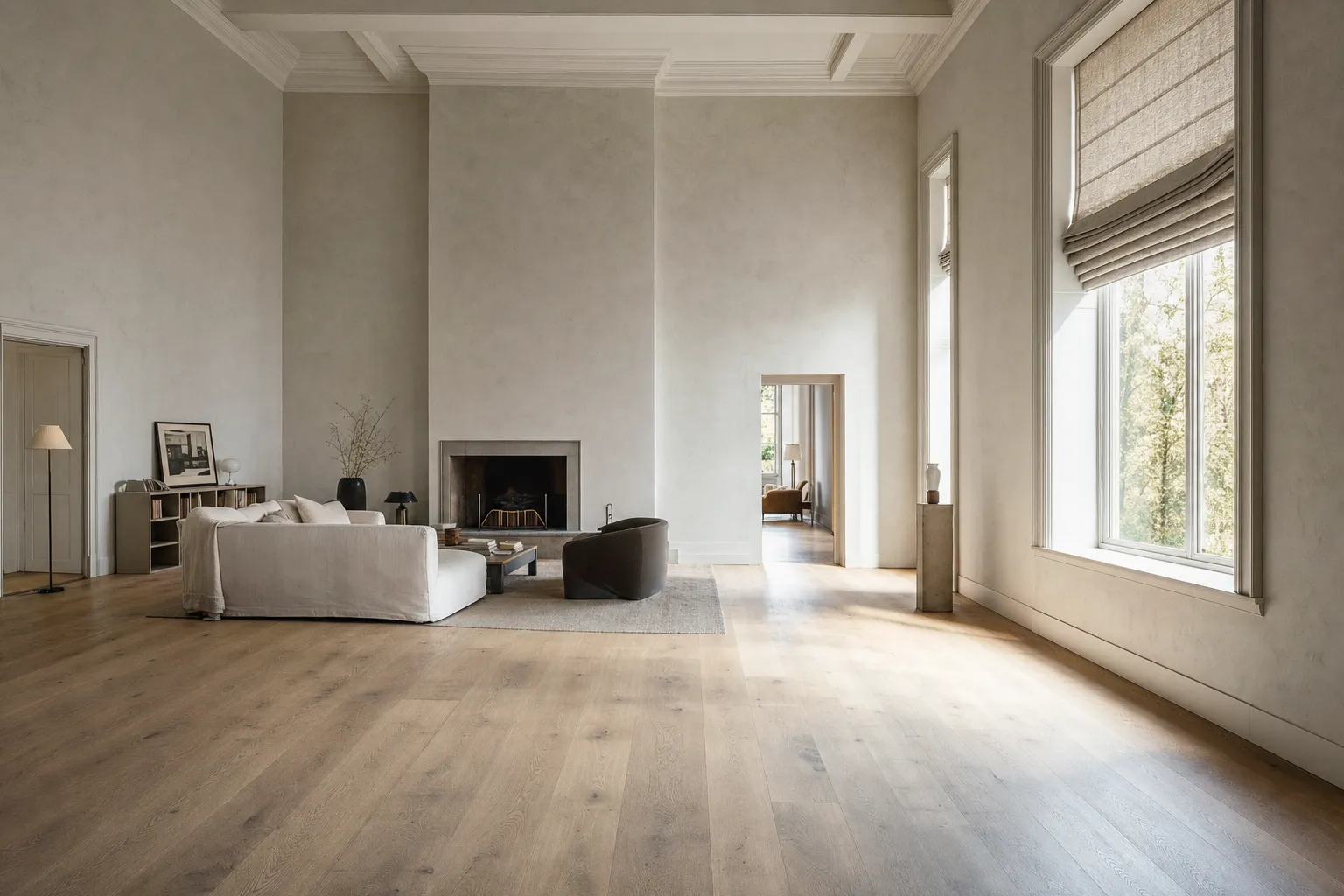
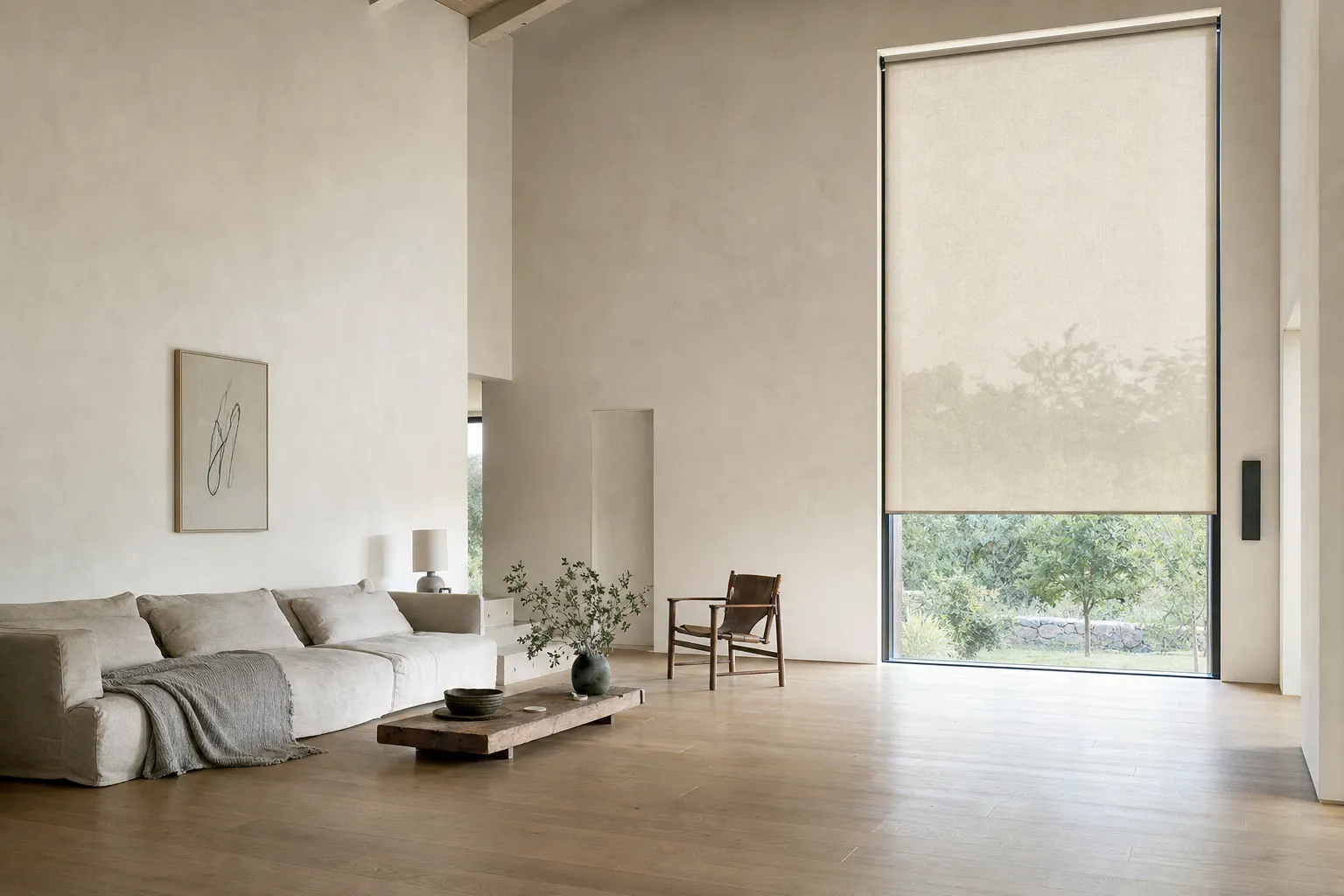
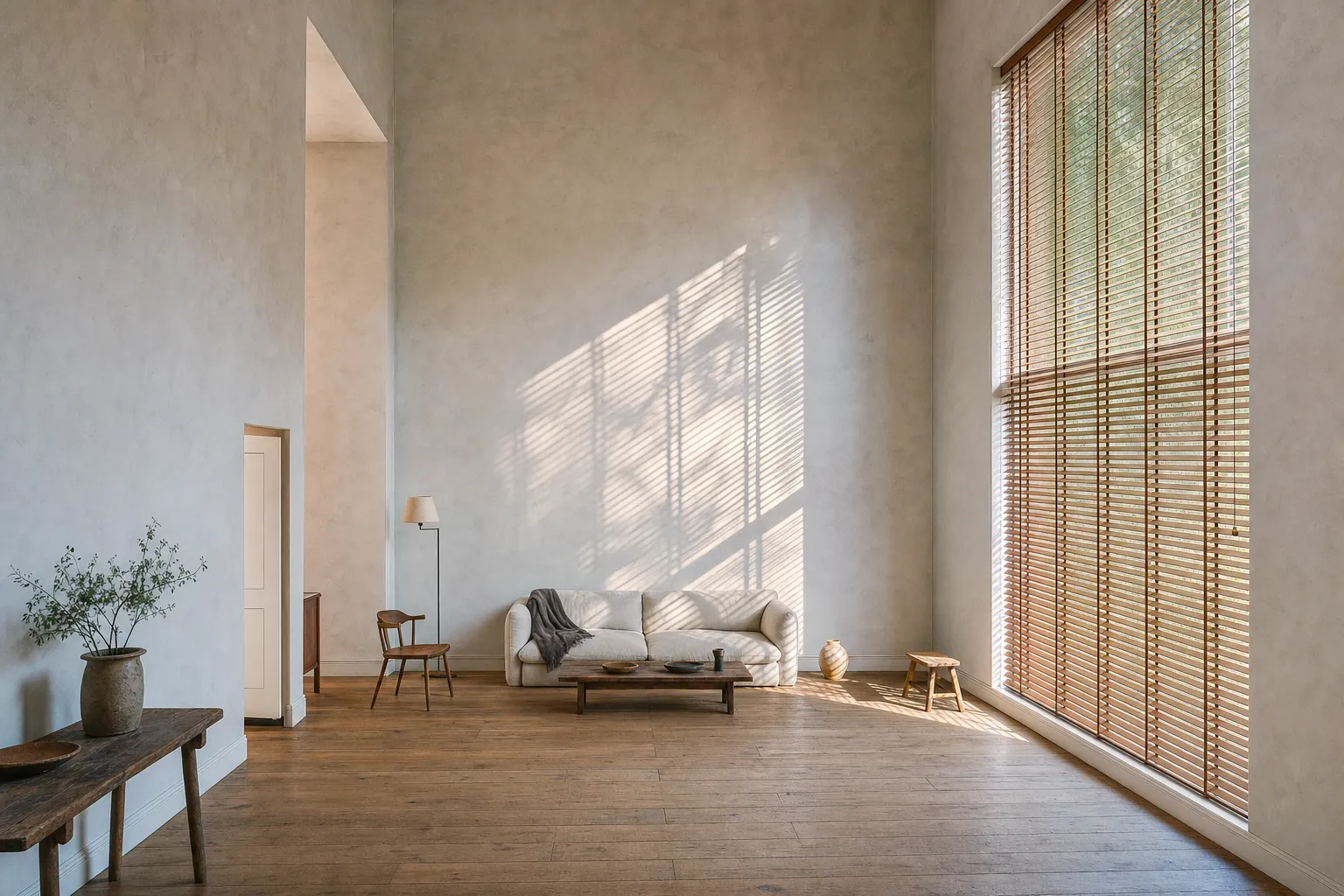
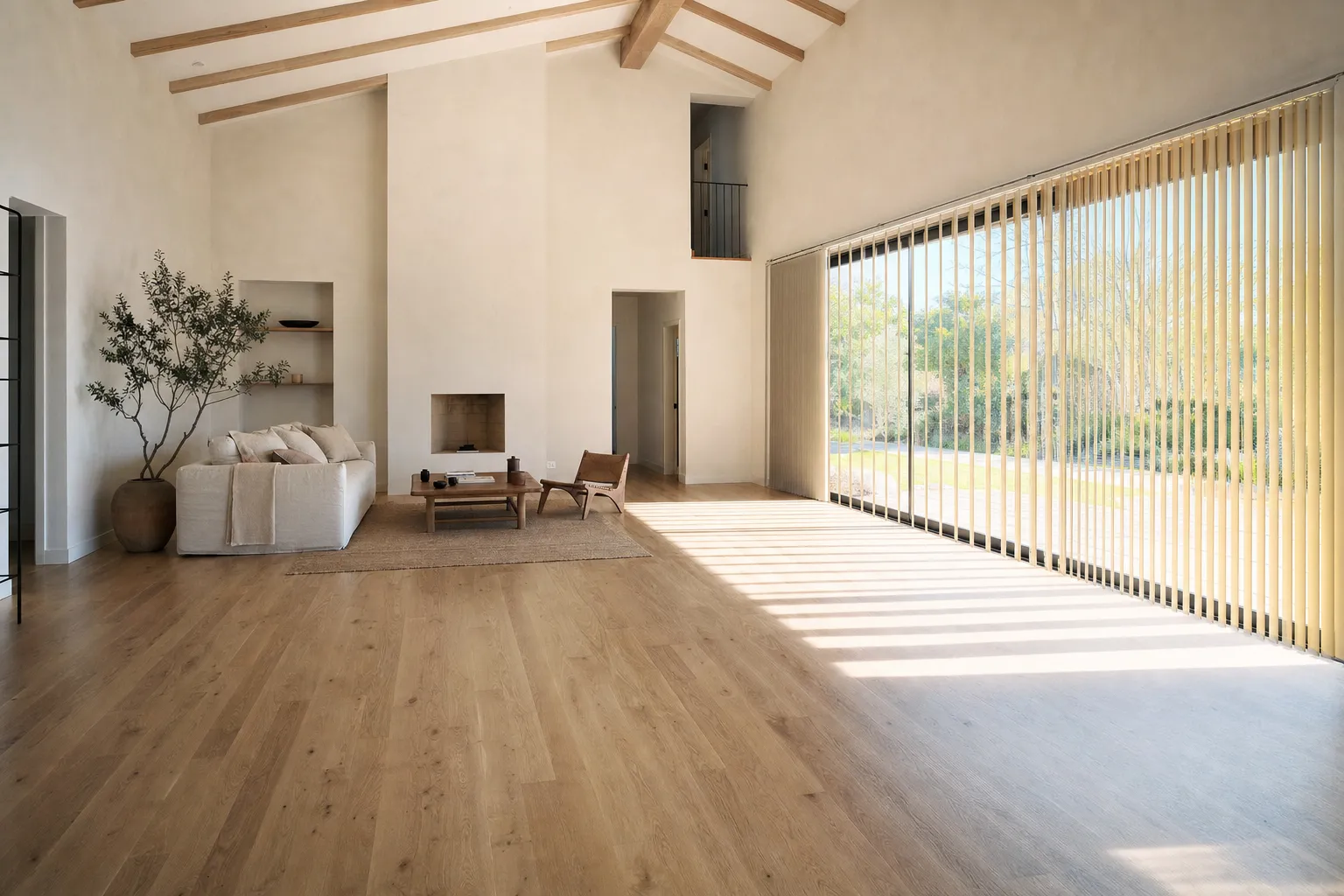
Tower or bungalow, we bring the samples to your own light and hold them up at the hour the room misbehaves.
Our commitment
The depth of your reveal is our number to get right, not yours.
If it does not fit, we remake it
You never held the tape.
Nothing owed before you agree
No deposit, no card.
Licensed and insured
Both, before we come in.
Your date, in writing
Set at the quote. It does not move.
We will tell you not to buy
If a stock size does it, you hear so.
Cordless where a child sleeps
Standard, at no extra charge.
Reviews on Google
What people said afterwards.
Rated 4.8 out of 5 — the ones below are quoted in full, with a link to check each on Google.
Nick has delivered the greatest service as I recently moved in to my new townhome and needed to have blinds for all three floor windows. Not only the price was the best, but he accommodated all my requests in the process. Definitely worth every penny
Anton KovunovI was blown away by the exceptional customer service from Blinds Company! Their staff was knowledgeable, friendly, and helped me find the perfect blinds for my living room. The installation was quick and flawless. I highly recommend them!
Merdan Berdiyev
Real names, real dates, and a link to all of them — including the ones we would not have picked.
Read them on GoogleQuestions
Before you book
Do you work in the Humber Bay towers?
Regularly, and the paperwork is the slow part rather than the fitting. Most buildings on that stretch want a certificate of insurance naming the corporation and a booked service elevator, and some restrict load-in hours. We start that at the quote instead of on the day, so tell us the building name when we measure.
My condo says the blinds have to look white from outside. Does that stop me?
Almost never. That rule is about the backing — the face that the street and the lake see — not the side you look at from the sofa. A dark room-side fabric with a white or off-white reverse satisfies it, and most screen and blackout ranges are built exactly that way because the rule is so common. We read the declaration rather than guess at it.
What works on a bungalow window with deep wooden trim?
Usually an inside mount, precisely because the trim is worth seeing. A deep reveal will swallow a headrail completely and leave the woodwork framing the glass the way the house intended. The exception is a bedroom you want properly dark, where an inside mount cannot beat the clearance gaps and the blind has to come outside and cover the trim.
Is the light near the lake different?
Yes, and people who move from inland notice it within a week. Water reflects, so a south or west unit on the Humber Bay strip gets a second dose of light bouncing up off the surface in the afternoon — the glare arrives from below the horizon as well as above it. A screen chosen for an inland room is often a stop too open once it is up on the water.
There is a radiator right under the window. Does that limit the blind?
It limits the drop rather than the product. A blind that finishes behind a convector traps the rising warm air against the coldest surface in the room, which wastes it, and dry heat rising through fabric ages the fabric quickly. The usual answer is to stop the blind at the sill above the radiator, or to mount outside the opening so it stands clear of it. Both are fine; deciding it on the day is what causes trouble.
Can you do the sliding door to a balcony?
Yes, and it needs its own decision rather than matching the window beside it. Whatever covers a balcony door has to clear the opening completely, has to tolerate wind when the door is open, and cannot be something that swings into the track. Verticals and wide rollers both work; which one depends on the stack space beside the door.
Living on the water changes what a fabric does, and no sample book explains that. Ring, and we will hold two against your own glass at five in the afternoon.