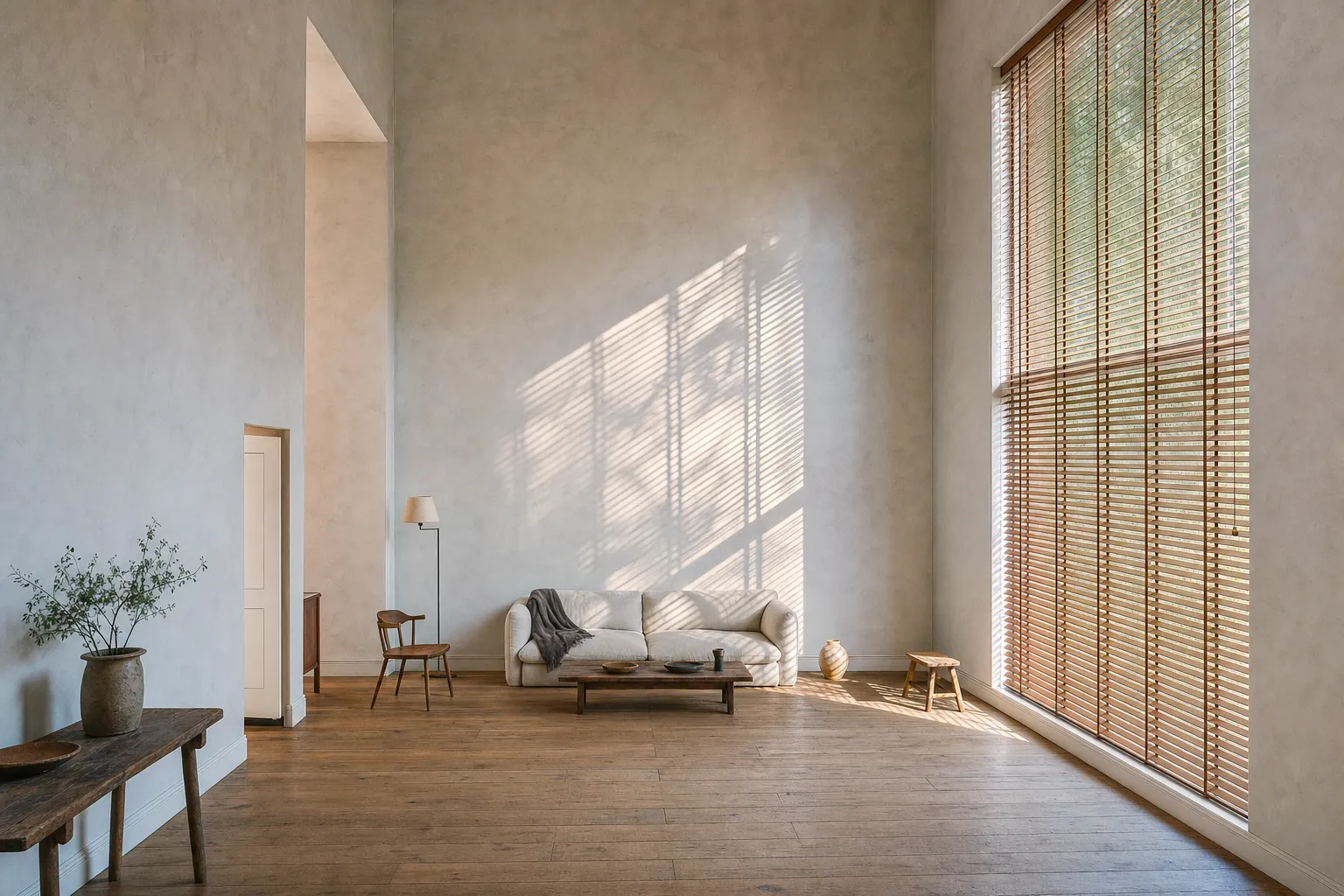
Venetian blinds
Horizontal slats you can tilt as well as raise. The only common product that lets you aim daylight instead of removing it — which is a different capability from everything else in the range, not a variation on it.
Blinds Company · Rated 4.8 out of 5 on Google
Free in-home measure · open 8am–9pm, 7 days
In short
Venetian blinds are made to your exact opening and installed across Toronto and the GTA. They suit north-facing rooms that need every bit of daylight kept. The in-home measure is free and carries no obligation.
Book
Let's measure your light.
We come to you, measure at your own windows, and go through fabrics and fits together. The visit costs nothing.
$99 off when you order three or more blindsApplied to your written quote at the measure.
Rather just talk?(437) 782-5452Open 8am–9pm, 7 days
The short version
Is this right for your window?
Yes — if the room is one of these.
- North-facing rooms that need every bit of daylight kept
- Home offices where the glare is at eye level and the room is not too bright
- Kitchens and bathrooms, in faux wood
Where it is wrong is below, and that half is the useful one.
And this is what you would be getting.
- 01
- 25mm aluminium or 50mm basswood
- 02
- Tilt to bounce light onto the ceiling and keep the room bright
- 03
- Faux wood for kitchens and bathrooms
- 04
- Wand or cordless control, no chain in a child's room
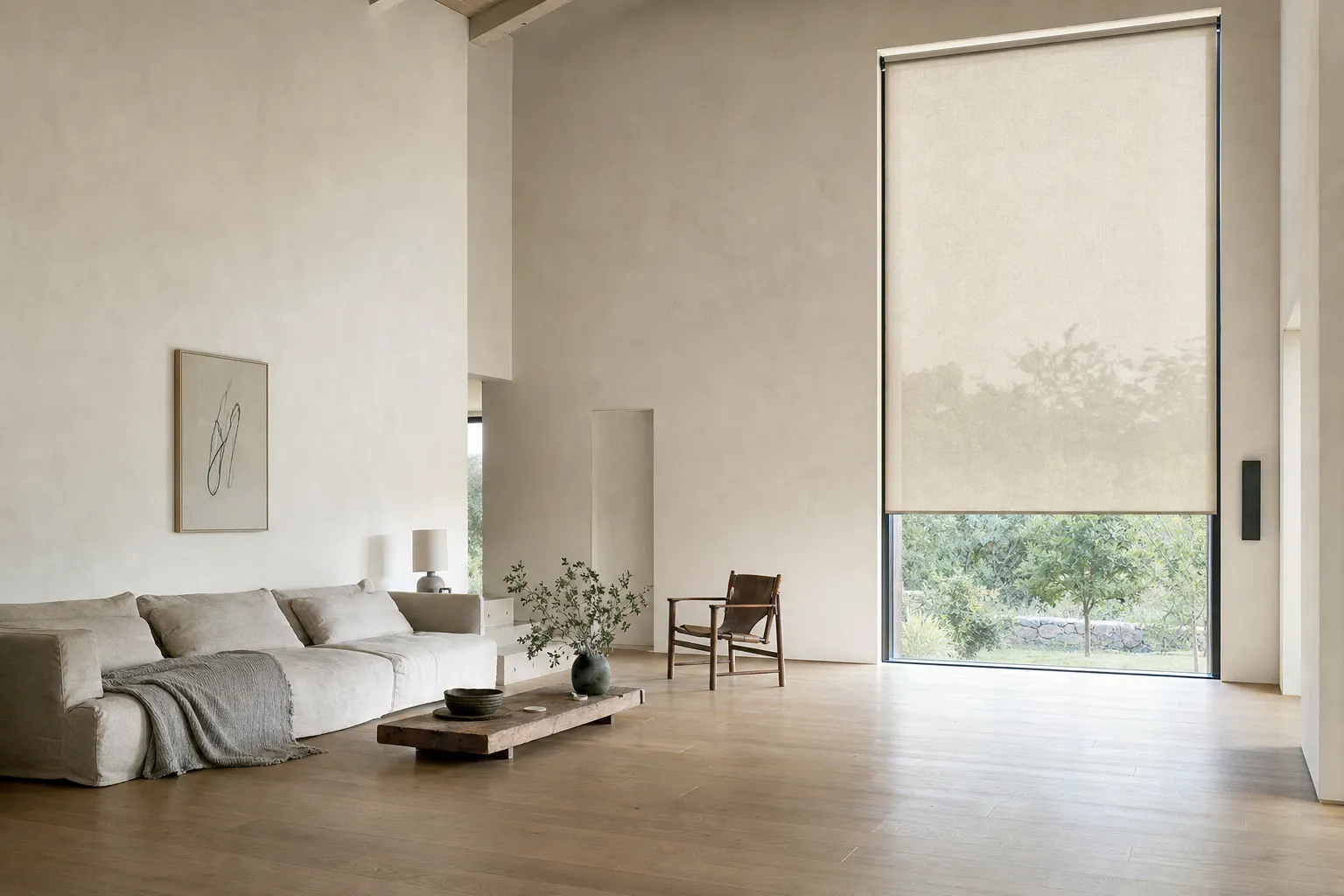
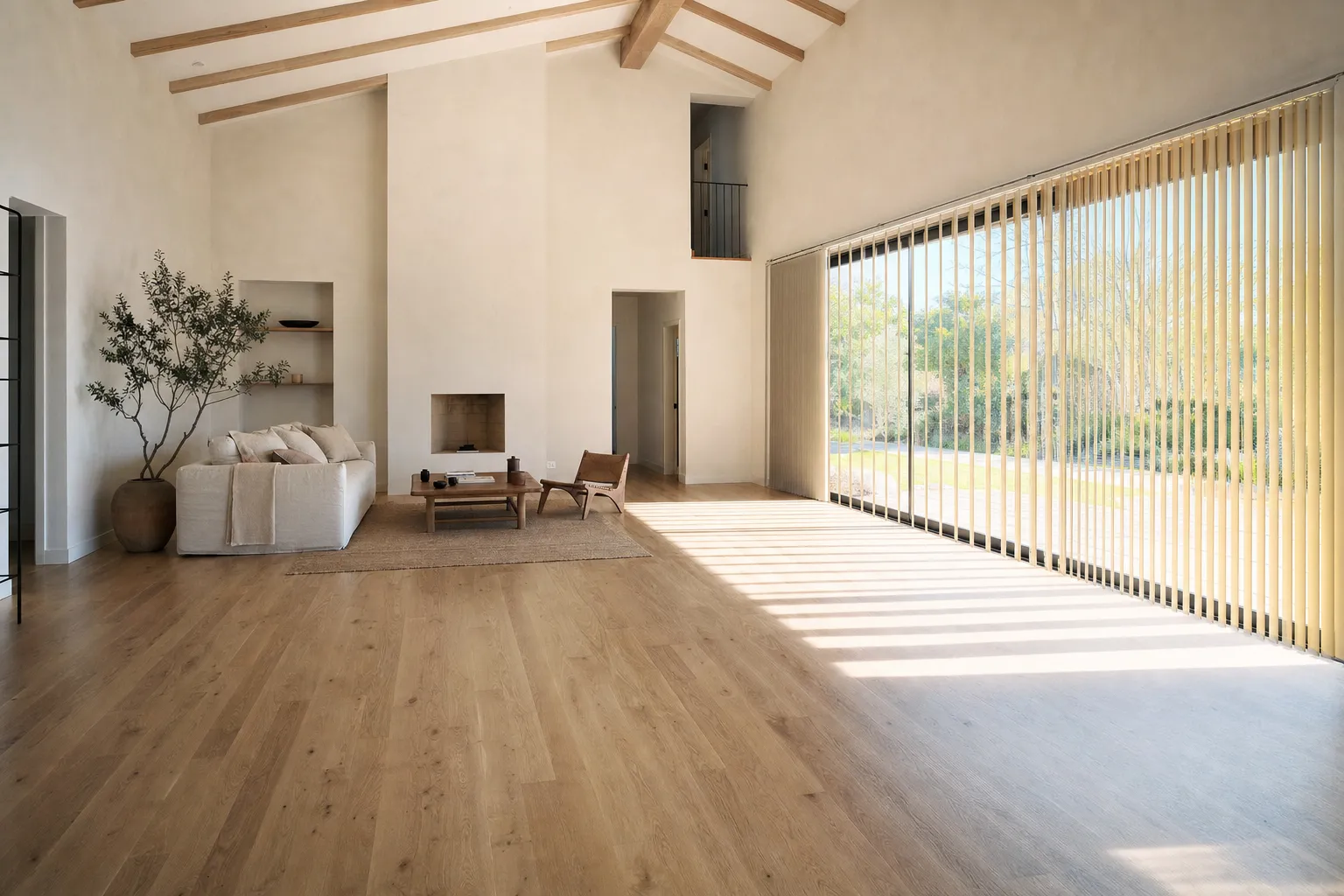
In a room
What venetian blinds look like once they are up.
The product, not our installations — a gallery of rooms we did not fit would be somebody else's portfolio with our name on it.
The capability nothing else has
Every other product in the range answers the question “how much of this window should be covered”. A venetian answers a different one: “where should the light that comes in go”.
Tilt the slats up and daylight is thrown onto the ceiling. The room stays bright — brighter than it would be with a half-raised roller — while the direct beam that was landing in your eyes or on a screen is gone. Tilt them down and the light goes to the floor, which is what you want when the sun is low and the glare is coming off the road.
That is not a nicer version of what a roller does. It is a different thing, and it is the only reason to pick a venetian over something with fewer parts.
Where that matters most
North-facing rooms. The complaint there is rarely too much light; it is that there is never enough. A venetian tilted up keeps essentially all of it and still gives you privacy from the street, because a slat angled upward is opaque from below.
Home offices with a screen. The glare that ruins a monitor arrives at a specific angle for about ninety minutes. Tilting removes that angle without turning the room into a cave for the rest of the day.
Kitchens and bathrooms. Faux wood is the practical answer for any window that sits in steam or cooking grease. It wipes, it does not warp, and it can be taken down and washed properly once a year.
What you are trading
Surfaces. A venetian is fifty or sixty slats, and dust lands on all of them. This is the honest cost of the product and no fabric treatment changes it.
Cords. The traditional tilt-and-lift mechanism uses them. Cordless and wand versions exist and are our default in any room a child uses, at no extra charge — but they cost more than the chain version, and a quote that looks cheap may be quoting the chain.
Real wood near water. Timber and steam are a slow-motion argument that the steam wins. If somebody has quoted you real basswood for a bathroom, that is worth a second question.
Aluminium, and why it is not the cheap option any more
25mm aluminium is thin, it stacks to almost nothing, and in a dark finish it reads as deliberate rather than as budget. On a small window in a modern flat it often looks better than wood does, and it is the only slat that will not care about a wet windowsill.
How we build them
Slats cut to the measurement taken in your home and the ladder tape spaced to the drop, so the stack sits level rather than bunching to one side. Manufactured under our own name, which is why there is no third-party badge on the headrail.
The measure is free and takes under an hour. We will tilt a sample in your actual window, at the hour the light is a problem, because the effect is very hard to imagine and very obvious to see.
Slat width is a decision, not a size
25mm, 50mm and 63mm are not the same product at three scales. Each one changes how much you see, how much stacks, and how the window reads.
25mm gives the most slats and therefore the finest control, stacks to almost nothing at the top, and keeps the least view when closed because there are more edges between you and the glass. It suits small windows and modern rooms.
50mm is the default for wood and faux wood. Fewer slats, a bigger gap between them when open, so more view and more light, and a stack roughly twice as deep. On a normal living-room window it is almost always the right answer.
63mm is a statement and a stack. It reads as shutters, gives the most view of any tilt product, and eats a serious band at the top of the opening when raised. On a tall window it is beautiful. On a standard one it is too much.
The stack is the number people never ask about and always notice afterwards. A 50mm wood venetian on a 1.5m drop parks something like 15cm of slats above the glass when fully raised, and that band is there for good.
Which material, in one paragraph
A venetian is a mechanism, and it comes in three materials that behave completely differently. Basswood is light, takes a stain, and moves with humidity — so it is right in a dry room where the window is furniture and wrong in a bathroom. Composite does not care about damp and wipes clean, at the cost of roughly twice the weight. Aluminium is lighter than both, indifferent to everything, and takes finishes neither of the others can.
Which one belongs in which room, what the weight does to a wide blind, and how to tell a printed grain from a real one are on the faux wood blinds page, because the material is the whole of that decision and none of this one.
Cleaning them without spending a Sunday on it
The reputation for dusting is earned, and it is also overstated by people who clean them the hard way.
Close the slats one way and wipe the whole face in long horizontal passes with a microfibre cloth — not slat by slat. Then close them the other way and do the same. Two passes covers both sides of every slat, and it takes a couple of minutes per blind rather than the twenty minutes people imagine.
Once a year, faux wood can come off its brackets and go in a bath of warm water with a little dish soap, then get dried flat before it goes back up. Real wood cannot, and should not be asked to.
Vacuum with a brush head is fine between times. What ruins slats is spray polish: it leaves a film that attracts more dust than the slat did bare, so the blind gets dirtier faster every time it is cleaned.
How you tilt it, which is three different products
A venetian does two separate things — it raises and it tilts — and the tilt control is the part that decides how the blind feels to live with. It is rarely offered as a choice.
A wand. A rigid rod hanging at one end, turned between finger and thumb. It cannot form a loop, so it satisfies the cord rules without any further engineering, and it is operable one-handed at chest height. On any window used daily, and in any house where somebody would rather not reach up, this is the one to have.
A cord tilt. Two small cords that raise one side of the ladder and lower the other. Traditional, slightly finer in appearance, and the mechanism people are most familiar with. It is also two more cords in a room, which in a house with small children is the reason we would steer you elsewhere.
A motor. Tilt and lift on one control. On a venetian this is more useful than it sounds, because the daily adjustment on this product is the tilt rather than the lift — most people set the height once a season and change the angle several times a day. A motorized tilt is therefore doing the thing you actually do.
There is a fourth arrangement worth knowing about on wide blinds: splitting the control so two halves of a very wide window tilt independently. On a room with a seating area at one end and a desk at the other, that turns one blind into two answers, and it costs almost nothing at the point of manufacture.
Where the light actually gets through
A venetian is the only product in the range whose closed state is not a flat surface, and understanding where it leaks explains what it is good for.
Between the slats. When tilted fully closed, adjacent slats overlap — but they overlap along a curve, and the contact is not a seal. In a bright room you will see a fine line of light at each overlap. That is not a defect; it is the mechanism.
Through the ladder holes. Traditional venetians have the lift cords running through a punched hole in each slat. Each hole is a pinprick of light, and on a sunlit window you get a neat vertical row of them. Ladder tape covers the holes and is the usual answer where they bother somebody.
At the sides. The slats have to be narrower than the opening to tilt without fouling the reveal, so the side gaps on a venetian are wider than on a roller. On an inside mount that is unavoidable.
The consequence is simple and worth stating plainly: a venetian is not a blackout product and cannot be made into one. In a room that must be dark, a venetian is the wrong choice however good it looks, and the honest answer is a different product or a second blind behind it.
Where the leakage is a feature rather than a fault is a room you want to be light but not exposed. Closed venetian slats give near-total privacy while the room still reads as daylit, which no opaque blind does.
Wet rooms, in one paragraph
The material rule is simple and it decides the room: timber cups in steam and never comes back, faux wood and aluminium do not care. Which of the three belongs in a kitchen, why the grease-and-dust film is the thing that actually ruins a venetian there, and how to get it off are on the kitchen page, because they are properties of the room rather than of this product.
The one thing a venetian does that no other slat product does
Worth isolating, because it is the reason to choose this over a roller and it gets lost among the material questions.
A venetian aims light. Everything else only reduces it.
A roller, a roman, a cellular shade and a curtain all work by putting more or less material between you and the window. The only variable is how much light gets past. A venetian introduces a second variable — the angle — and that is a different kind of control.
Three things follow that people rarely connect to the product.
You can light the ceiling. Tilting the slats upward throws a low beam onto the ceiling, which then re-radiates it softly into the room. You get a bright room and no glare, from the same window, at the same hour. Nothing without slats can do this.
You can have privacy and daylight at once. Closed slats angled upward give near total privacy from anyone at or below your level while the room stays daylit. A roller achieves privacy by making the room dark.
You can follow the sun without touching the height. Through an afternoon the useful adjustment is the angle, not the drop — which is why on this product the tilt control is the thing you touch daily and the lift is something you set seasonally.
That is the argument for a venetian, and it is the reason the tilt mechanism deserves more attention than the fabric conversation it usually loses to.
The ladder tape option
The cords holding the slats can be replaced with a fabric tape, wider than the cord and visible on the face of the blind.
It is not decoration only. The tape covers the route holes in each slat, so the pinpricks of light that show through a corded venetian when it is closed are gone. On a bedroom window that is a real difference. It also stiffens the stack so the slats sit squarer when raised.
The cost is that it is a strong visual line down the blind in a colour you have to choose, and on a small window it can be busy. On a wide wood venetian in a room with some formality, it usually looks better than the cord does.
Last updated .
Tilting is the whole point, and the tilt control is chosen at the window. Come and see.
Our commitment
We set the ladder spacing to your drop, so slats that stack unevenly are our problem.
If it does not fit, we remake it
You never held the tape.
Nothing owed before you agree
No deposit, no card.
Licensed and insured
Both, before we come in.
Your date, in writing
Set at the quote. It does not move.
We will tell you not to buy
If a stock size does it, you hear so.
Cordless where a child sleeps
Standard, at no extra charge.
Reviews on Google
What people said afterwards.
Rated 4.8 out of 5 — the ones below are quoted in full, with a link to check each on Google.
I was blown away by the exceptional customer service from Blinds Company! Their staff was knowledgeable, friendly, and helped me find the perfect blinds for my living room. The installation was quick and flawless. I highly recommend them!
Merdan BerdiyevI'm thoroughly impressed with Blinds Company. From the initial consultation to the final installation, their team delivered exceptional service, expertise, and quality.
Oleksandr Stakhurskyi
Real names, real dates, and a link to all of them — including the ones we would not have picked.
Read them on GoogleQuestions
Before you book
How much of the window does a raised venetian cover?
More than a roller and less than a roman. The slats gather under the headrail, and for a 63mm slat on a two-metre drop that stack is roughly 150 to 200 millimetres of solid blind across the top of the glass. On a tall window it is invisible; on a short basement or bathroom window it can take a fifth of the view and never give it back, which is the usual reason we suggest a roller there instead.
What does tilting actually do that raising does not?
Raising a blind trades light for view in a fixed ratio: the part of the window that is covered gives you neither. Tilting changes the direction the light arrives from without covering anything. Angled up, the slats throw daylight onto the ceiling, which lights the room from above while taking the glare out of your eyes. No roller or roman can do that.
25mm or 50mm slats?
Wider slats stack shorter when raised and give a more open view when tilted; narrower ones block more when closed and suit a small window better. It is mostly a proportion decision — a 50mm basswood slat on a narrow bathroom window looks like a fence.
Real wood or faux?
Real timber is lighter, warmer and moves with humidity. Faux wood is heavier, wipes clean and does not care about steam. In a kitchen or a bathroom the answer is faux, every time. Anywhere else it is a look and a budget question.
Are they hard to clean?
They have more surfaces than anything else in the range and they will collect dust. A soft brush attachment twice a year handles it. If nobody in the house is going to do that, we would rather point you at a roller than sell you a blind you will resent.
Not this one?
The rest of the range.
Each of these is the wrong answer somewhere, and its page says where. That is usually the faster way to find the right one.
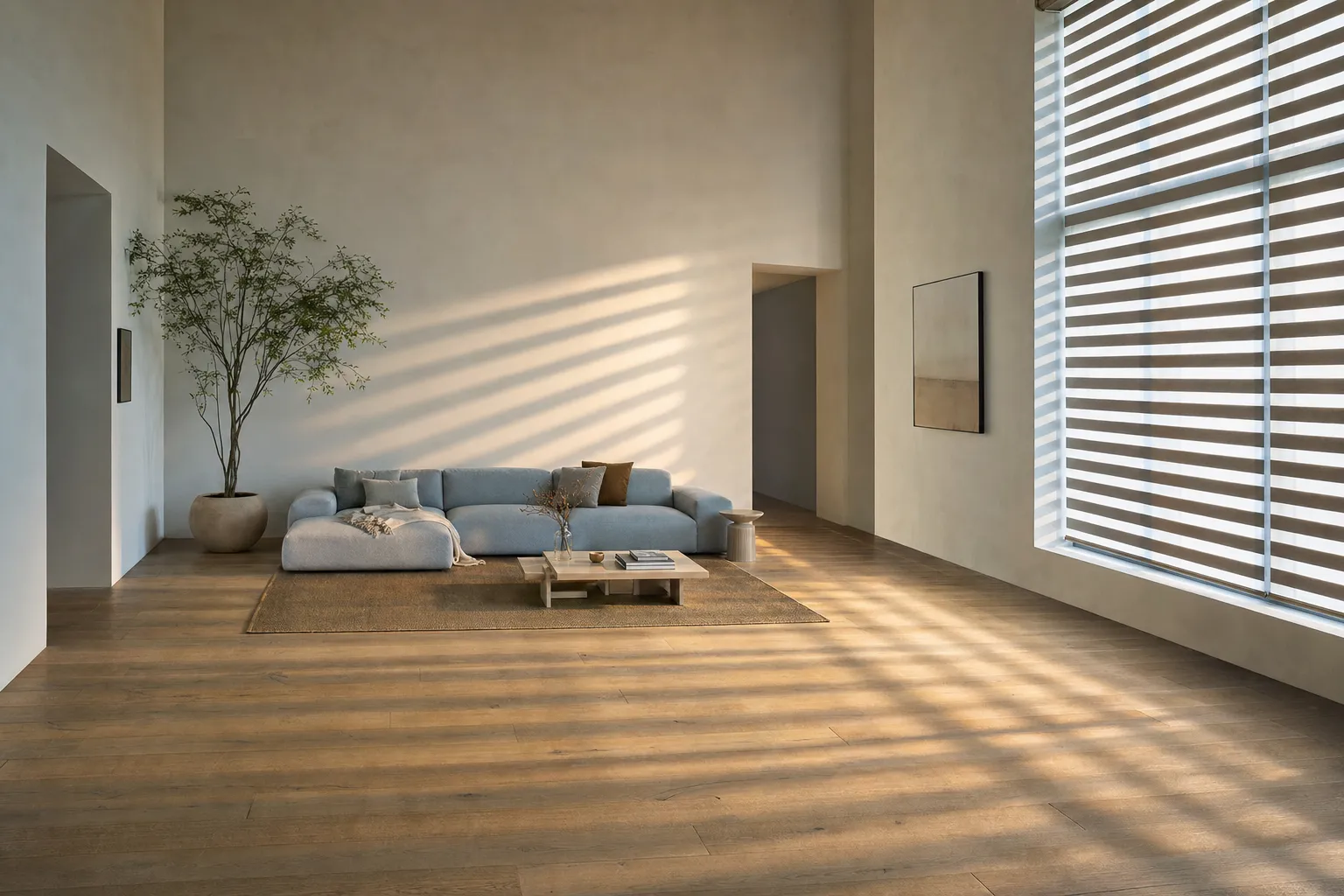
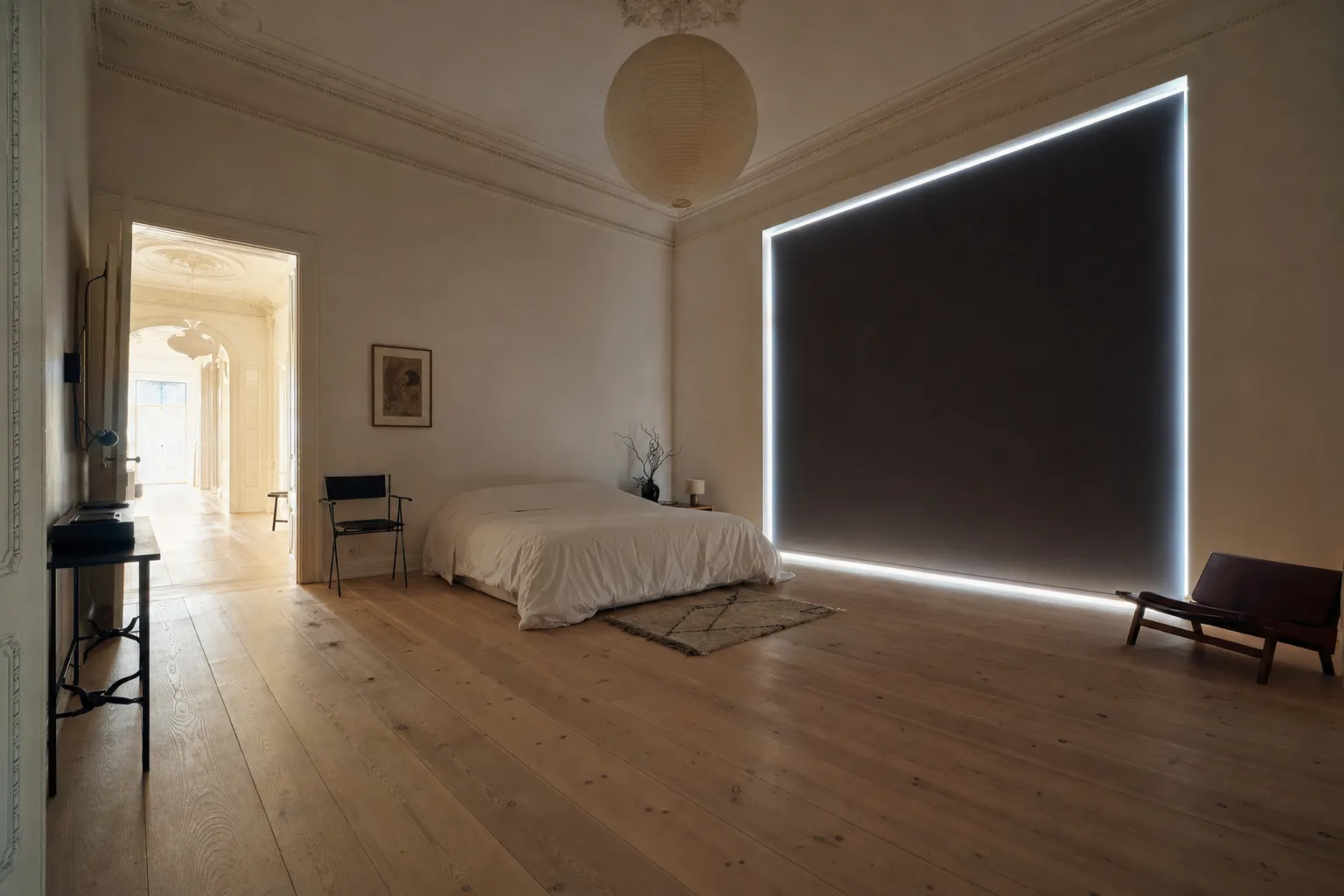
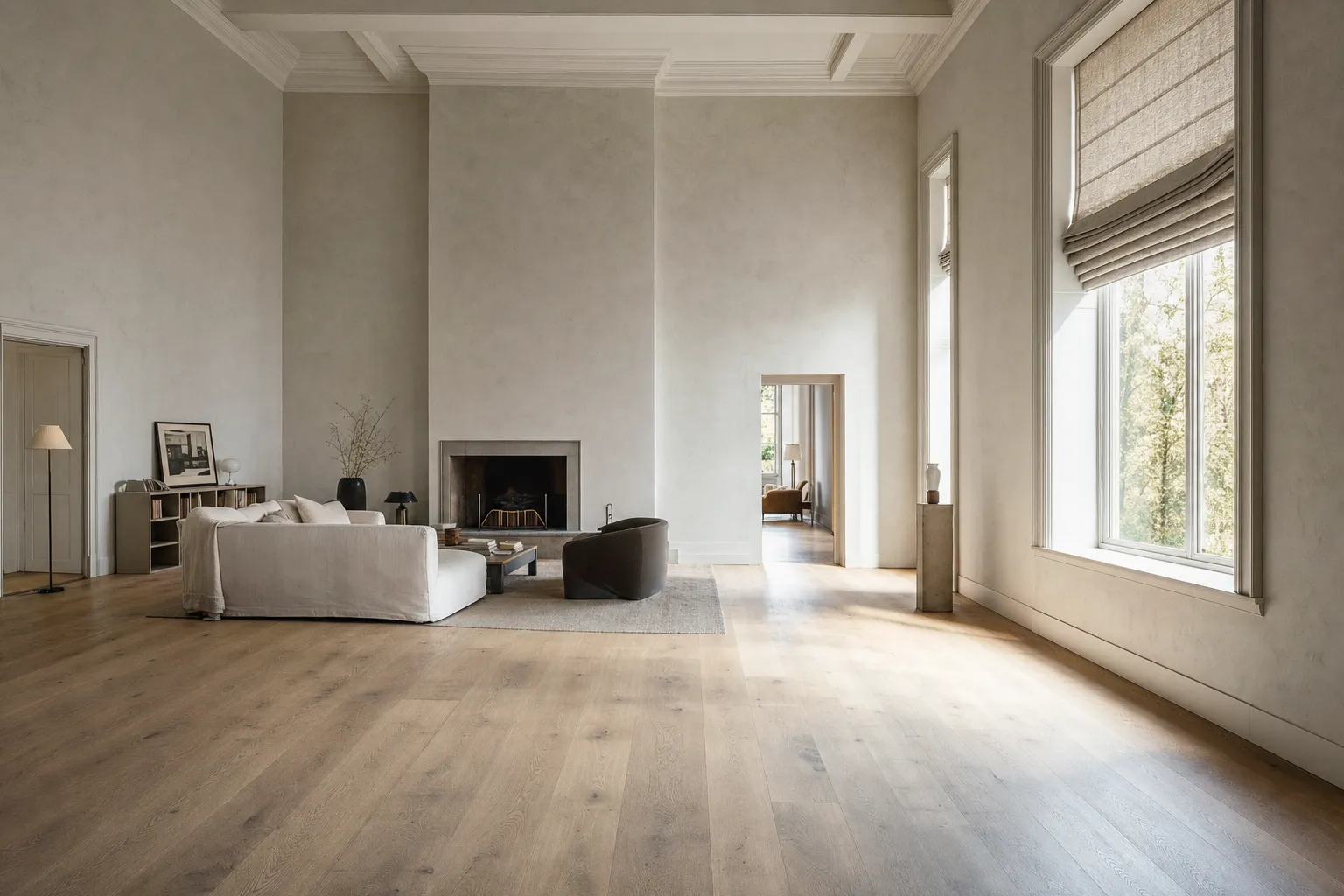

If you are choosing between real wood and faux for a particular room, the room decides it and the answer takes one question. Ring and ask.