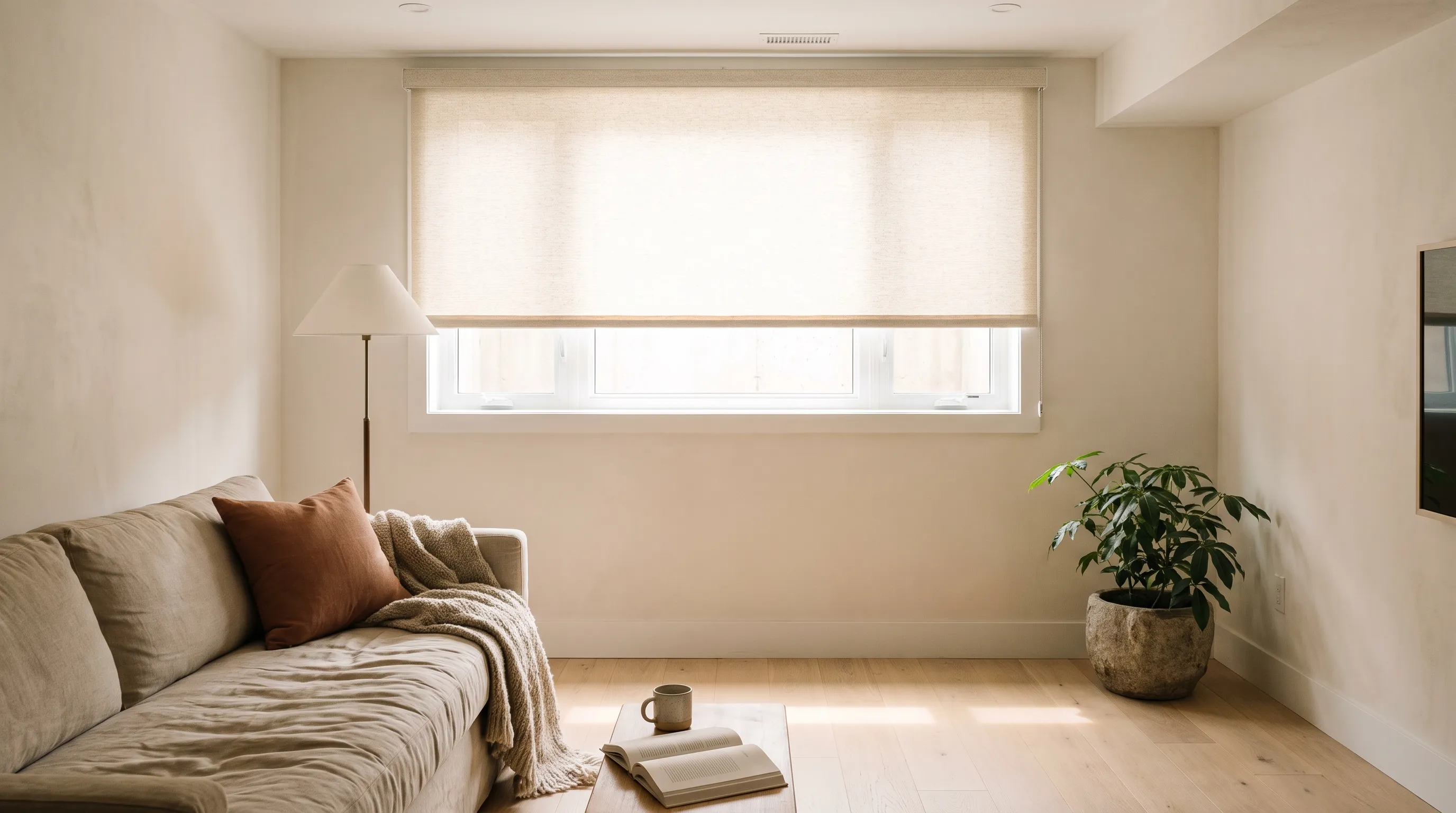
Basement window blinds
A basement window is short, wide, set high on the wall, and usually the last opening in the house anybody thinks about. It is also the one where the standard advice is backwards — the problem down there is rarely too much light.
Blinds Company · Rated 4.8 out of 5 on Google
Free in-home measure · open 8am–9pm, 7 days
In short
Basement window blinds are made to your exact opening and installed across Toronto and the GTA. They suit finished lower levels and basement apartments. The in-home measure is free and carries no obligation.
Book
Let's measure your light.
We come to you, measure at your own windows, and go through fabrics and fits together. The visit costs nothing.
$99 off when you order three or more blindsApplied to your written quote at the measure.
Rather just talk?(437) 782-5452Open 8am–9pm, 7 days
The short version
Is this right for your window?
Yes — if the room is one of these.
- Finished lower levels and basement apartments
- Walkout levels, where the back wall is full-height glass
- Utility and laundry rooms that still want privacy
Where it is wrong is below, and that half is the useful one.
And this is what you would be getting.
- 01
- Sized for a short drop, where stack eats the view
- 02
- Egress clearance checked on any bedroom window
- 03
- Moisture-tolerant materials where the wall is cold
- 04
- Mounted outside the opening where the reveal is shallow
In a room
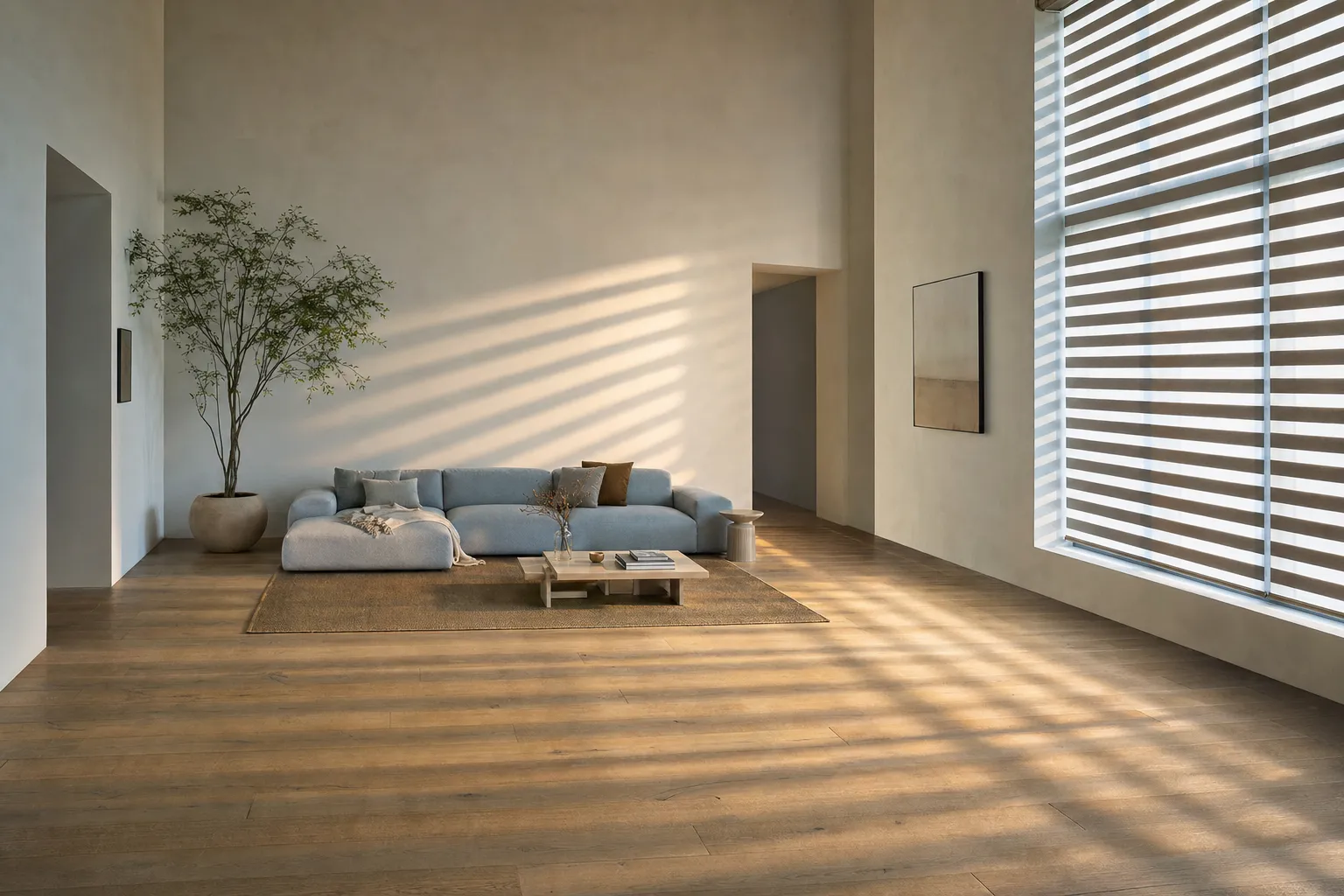
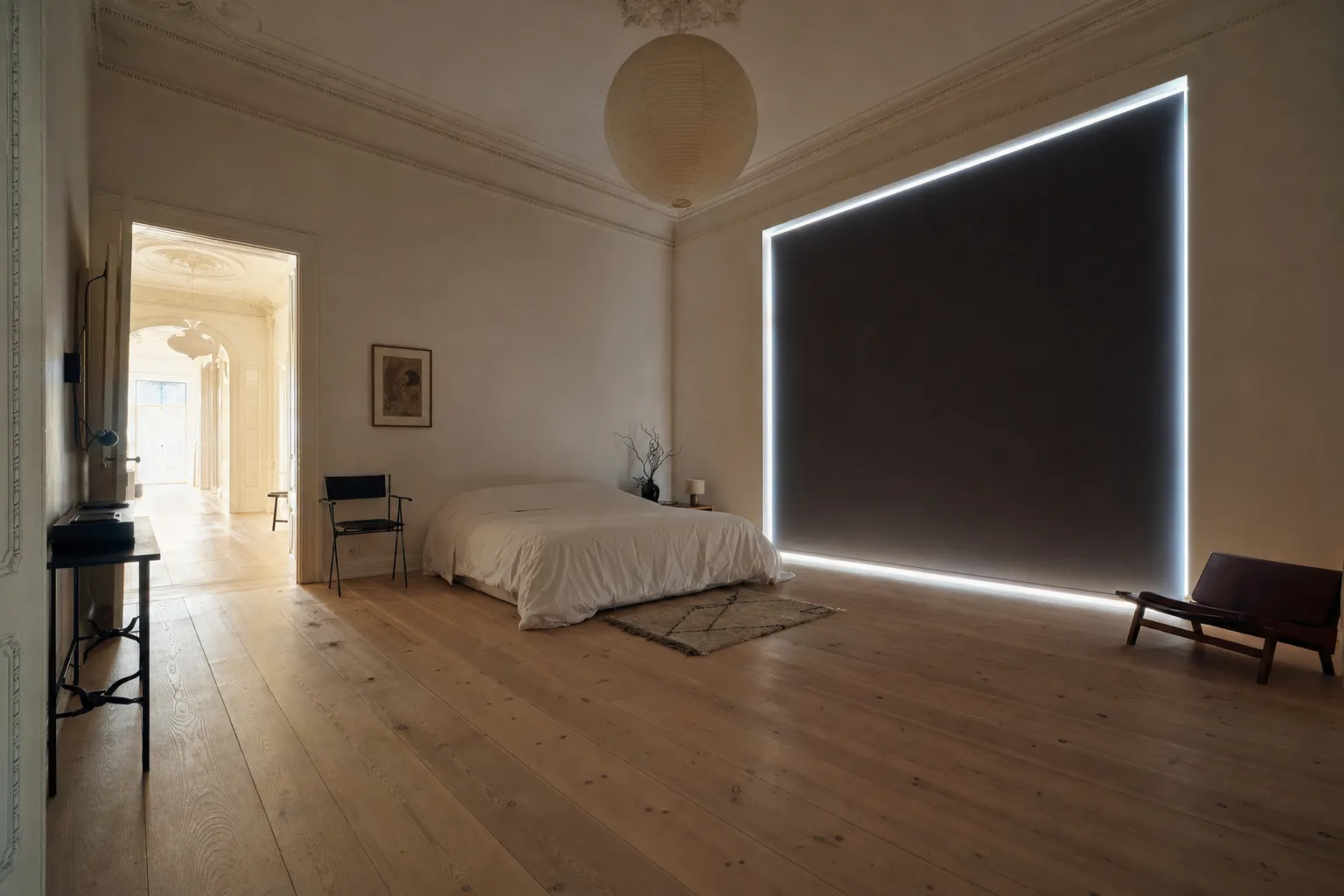
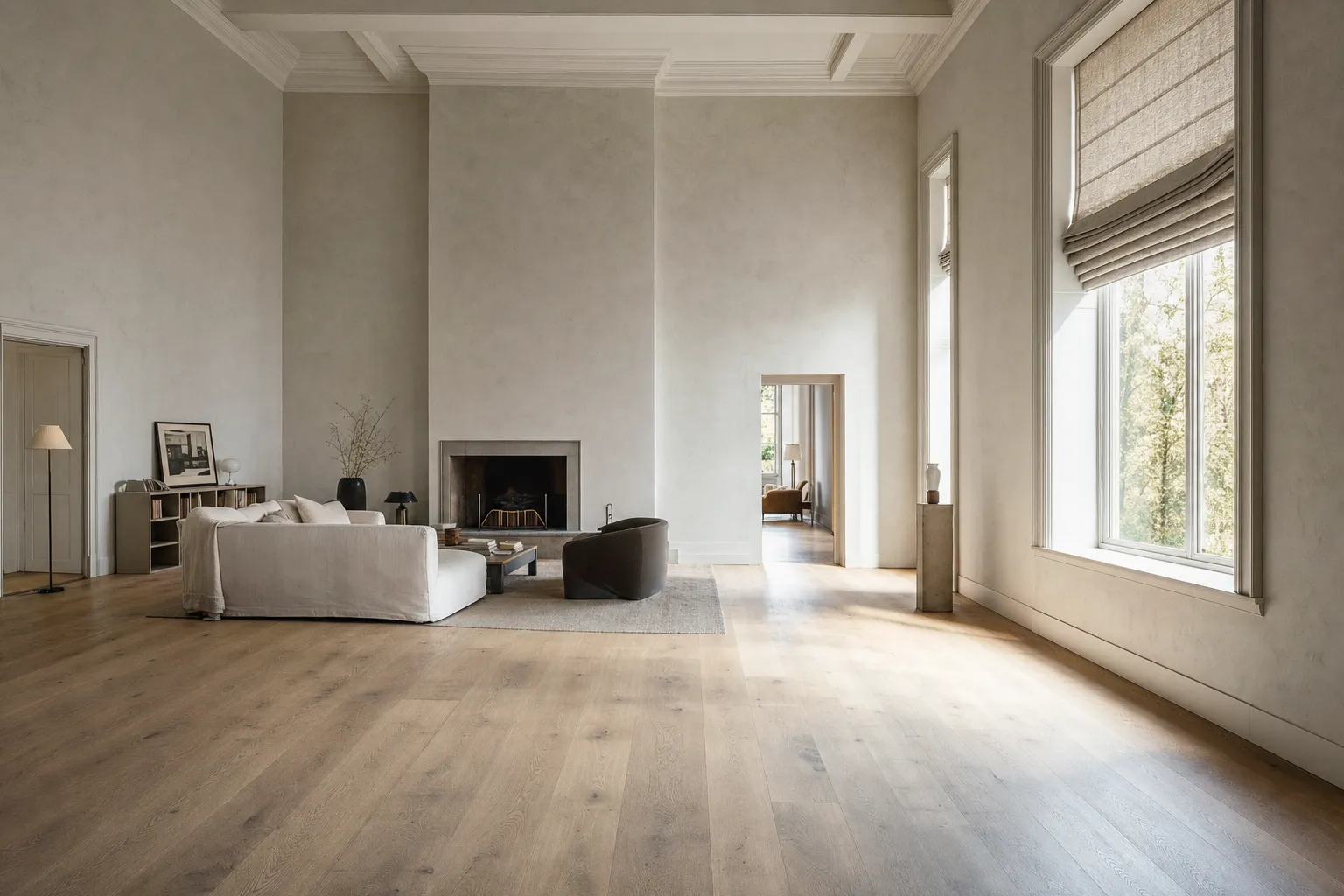
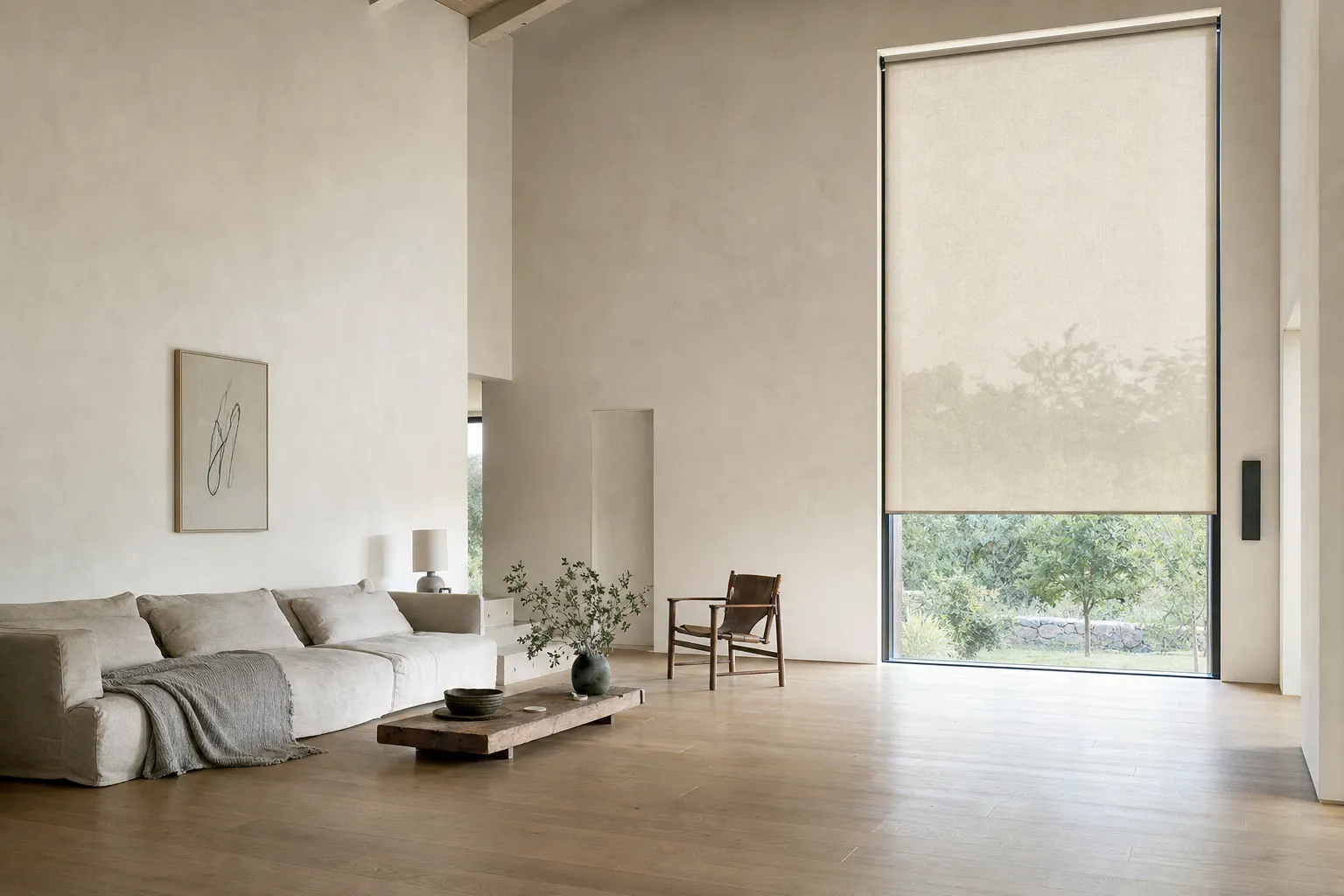
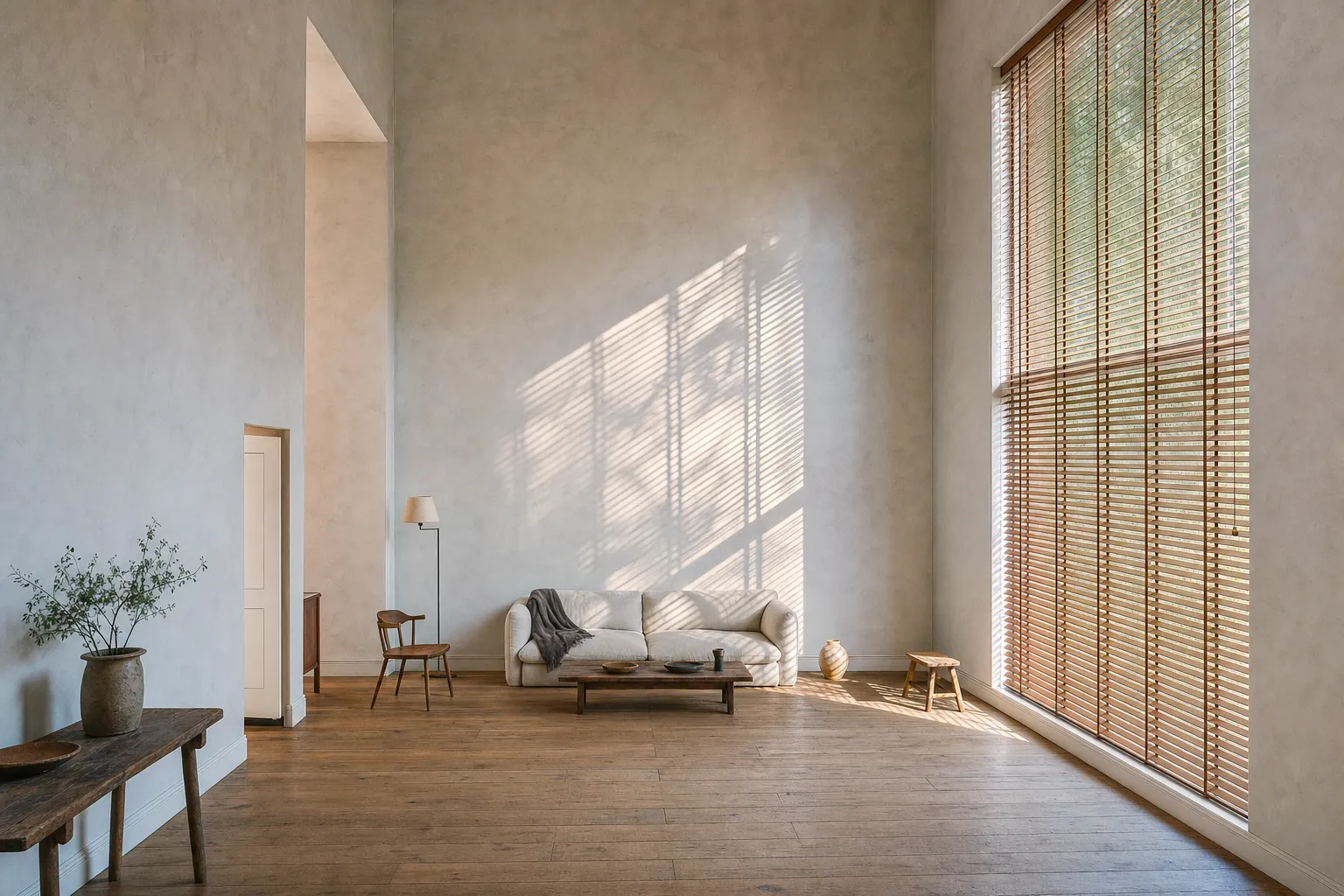
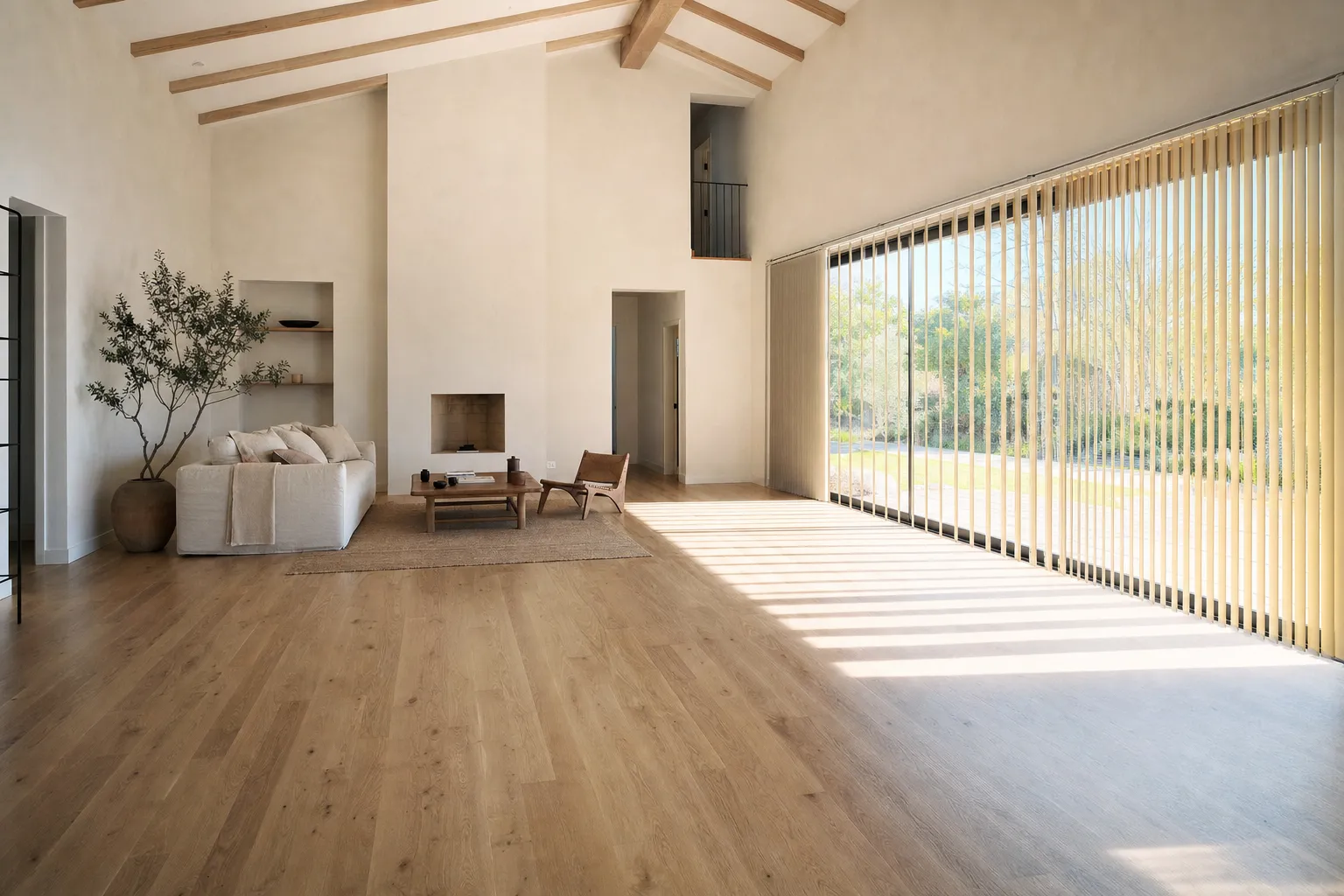
What basement window blinds look like once they are up.
The product, not our installations — a gallery of rooms we did not fit would be somebody else's portfolio with our name on it.
The problem down here is not too much light
Almost everything written about blinds assumes the enemy is the sun. In a basement that assumption is wrong, and following it produces a room nobody wants to sit in.
A below-grade window is small relative to the room, set high on the wall, and often partly obstructed outside by a window well, a fence, a deck or the neighbouring house. The light arriving is already reduced, already indirect, and in winter it arrives for a short part of the day.
So the brief inverts. Upstairs you are choosing how much light to keep out. Down here you are usually choosing the most open thing that still gives you the privacy you need, and every extra percentage of openness is worth having.
Two practical consequences that catch people out.
A fabric chosen upstairs will be too tight down here. The same 3% screen that is right on a west-facing living room makes a basement read as a cellar. Where a screen is used below grade it wants to be at the open end of the range, 10% or more, and frequently the honest answer is no screen at all.
Blackout is a real requirement in exactly one case. A lower-level bedroom used by somebody who sleeps in the day — a shift worker, a student, a guest — genuinely wants darkness, and because the window is small the perimeter matters even more than usual. Everywhere else in a basement, a blackout is a solution to a problem that does not exist.
Short drops change which products are possible
This is the constraint that decides the job, and it is about the drop rather than the width.
A typical basement opening is thirty to fifty centimetres tall. On a drop that short, every centimetre a product needs for itself is a large fraction of the window.
A roller stacks to almost nothing — a tube and a slim bracket, a few centimetres at the head. On a short window that is decisive, and it is why rollers dominate down here.
A venetian with narrow slats works well for the same reason and adds tilt, which is genuinely useful where the light is scarce: you can angle the slats up to throw what light there is onto the ceiling rather than blocking it.
A cellular blind is compact when stacked and adds real thermal value against a cold wall, which is the one place in the house where that argument is strongest.
A roman is the wrong answer. The folds pile up over the top of the glass and take roughly a fifth of the drop. On a two-metre window nobody notices; on a thirty-five centimetre window you have covered a third of it permanently.
Verticals are usually wrong too, for a different reason: the proportion. Long vertical lines in a short wide opening look like a mistake, and the stack has nowhere sensible to sit.
Egress, which is not optional
The most important paragraph on this page, and the one nobody mentions when selling a blind.
A bedroom in a legal basement unit — a registered second suite, or any room somebody sleeps in — must have a window that opens and can be climbed out of. That is a life safety requirement, and whatever covers it becomes part of whether it works.
Three things follow, and we check all three at the measure:
Nothing fixed in place. A blind that is screwed shut, or a decorative panel, or film that cannot be opened, is not acceptable on an egress window.
Nothing needing two hands or a tool. Somebody leaving in a hurry, possibly in the dark, has one hand and no patience. A blind that must be unclipped, or lifted off a bracket, does not count as openable.
Nothing in the sash’s way. Side channels, a bottom bar that sits in the opening, or a bracket fixed across the frame can all physically stop a window that would otherwise open fully. This is the one we find most often, and it is invisible until somebody tries.
The practical answer is almost always a simple roller or venetian mounted above and outside the opening, which lifts entirely clear of the sash and leaves the window exactly as the building code found it.
If you are unsure whether a room counts, tell us what it is used for. We would rather ask an awkward question at the measure than fit something that has to come off.
Damp, cold walls, and what fabric does in them
A basement wall is in contact with earth, so it runs colder than any wall upstairs, and a small window set in it is the coldest surface in the room.
That produces condensation, and a blind changes where the moisture goes.
A blind pulled tight against the glass makes it worse. It traps a pocket of humid room air against the cold pane and stops the room’s general air movement carrying it away. The water condenses, runs down, and sits on the sill. Over a few winters that is peeling paint, then soft timber, then a repair that costs more than every blind in the room.
A blind standing slightly proud of the glass is neutral. Air moves behind it and nothing collects.
So down here we deliberately do not seal the blind to the window, and we say so rather than fitting the tightest thing available and letting you find out in February.
Material follows from the same fact. In a genuinely damp basement — a laundry, a utility room, anywhere with a floor drain — PVC or faux wood is the honest choice. They wipe, they do not absorb, and they do not grow anything. Fabric belongs in a finished lower level that is dry, and even there a synthetic cloth outlasts a natural one.
Where the blind actually mounts
Basement construction rarely leaves you a reveal.
A poured concrete or block foundation with a window unit set into it, then framed and drywalled inside, typically finishes with the frame almost flush to the wall. There is nowhere to land a bracket inside the opening, and drilling into the concrete surround is neither necessary nor kind to the waterproofing.
So the blind goes on the wall above, and that turns out to be the better answer for three separate reasons.
It clears the sash entirely, which is what the egress rule wants. It covers the frame and the surround, which on a basement window is rarely the part of the room you want drawing attention. And it lets the blind be made wider than the opening, so the light leak down each side — which on a small window is proportionally large — disappears.
The one thing to check before deciding is what is above the window. Basements routinely run services along the top of the wall: a duct, a joist, a beam, wiring for a light. Two minutes with a detector at the measure is the difference between four screws and an interesting afternoon.
How much wall there is above it, which quietly picks the product
Having established that the blind goes above the opening, the next question is how much wall is up there — and in a finished basement the answer is usually less than anyone expects.
The joists overhead get boxed in, or a ceiling is dropped to hide a duct, and the band of plain wall between the top of the window frame and the underside of that bulkhead often comes to ten or fifteen centimetres. Sometimes there is no band at all and the bulkhead lands on the frame. Nobody measures this upstairs because upstairs there is half a metre of wall and every product fits.
That band has to hold the headrail and give the blind somewhere to sit when it is open, and those two numbers decide what you can have:
A roller. Tube and cassette together are around fifty millimetres. It fits in almost any band, which is the main reason it is what we fit most down here.
A cellular shade. On a short drop it compresses to forty or fifty millimetres. Also fine, and the warmest thing available at a cold window.
A 25mm aluminium venetian. Sixty to eighty millimetres of stacked slats on a typical basement drop. Fine in a normal band, tight in a shallow one.
A 50mm faux wood venetian. Around a hundred and twenty. This is where it starts being a real question rather than a formality.
A roman. Its stack is roughly a fifth of the drop plus the headrail. Even on a short window that is the deepest of the lot, and it is usually the one we say no to before anything else.
When the band is genuinely too small, the honest options are to change the product or to accept a blind that sits low and covers the top of the glass permanently. On a window this size that second option costs a noticeable share of the daylight, so we would rather change the product and say why.
One fixing note that belongs here rather than in a manual: a boxed bulkhead is drywall over framing, and four screws into drywall alone will not hold a blind that gets pulled twice a day. The fixings go into the framing where we can find it and into proper toggles where we cannot, and that is decided at the window with a detector rather than guessed at afterwards.
Window wells, and what is actually outside
Worth looking at, because it changes the privacy answer more than the blind does.
Many basement windows sit in a well — a metal or concrete surround holding back the earth. If yours does, look into it from outside: a well means nobody at ground level can see into the room at a useful angle, and the privacy requirement you assumed you had may not exist at all.
Where there is no well and the window is at grade, the opposite is true and the sightline is close, level and often from a walkway. That is the case where something genuinely opaque earns its place, and where a screen — which works only while it is brighter outside than in — will fail exactly when the room is being used in the evening.
The third case is a walkout, where the back of the lower level is at grade with full height glass and a door. That is not a basement window at all in any way that matters, and it gets specified like a ground-floor room.
Rented lower levels
A large share of the finished basements in this part of the GTA are let, or lived in by family, and the blinds get operated by somebody who did not choose them.
That argues for the plain answer over the clever one. A simple spring roller with an obvious action survives tenants; a mechanism that has to be understood does not. It also argues for choosing something whose replacement is cheap and available in a few years, because on a rented unit a damaged blind is a call, not a conversation.
Two practical notes. Keep the quote — it lists the fabric and the exact size, which makes replacing one blind in four years a phone call rather than another measure. And where a unit is registered, the egress point above is not a preference; it is a condition of the registration.
What the visit involves
The drop first, because on these openings it is what rules products out, and it is measured at three points across in case the sill is not level — in an older foundation it frequently is not.
Then what is above the window, and what is outside it. Then whether any of these rooms is a bedroom, which changes the answer completely.
Then samples, held in the room’s own light rather than at the door, because a basement reads much darker than the hallway you walked through to reach it, and a fabric chosen upstairs will disappoint down here.
You keep a written quote with a line per opening, no deposit and no card.
Last updated .
Basement openings are rarely the size they look. One visit with a tape settles it.
Our commitment
We measured the opening and the egress clearance, so a blind that blocks it is ours.
If it does not fit, we remake it
You never held the tape.
Nothing owed before you agree
No deposit, no card.
Licensed and insured
Both, before we come in.
Your date, in writing
Set at the quote. It does not move.
We will tell you not to buy
If a stock size does it, you hear so.
Cordless where a child sleeps
Standard, at no extra charge.
Reviews on Google
What people said afterwards.
Rated 4.8 out of 5 — the ones below are quoted in full, with a link to check each on Google.
Highly recommend Nick and his team. They installed blinds in my house. Looks wonderful, cheers
Timur ShafikovNick has delivered the greatest service as I recently moved in to my new townhome and needed to have blinds for all three floor windows. Not only the price was the best, but he accommodated all my requests in the process. Definitely worth every penny
Anton Kovunov
Real names, real dates, and a link to all of them — including the ones we would not have picked.
Read them on GoogleQuestions
Before you book
What is the best blind for a short, wide basement window?
Something that stacks to almost nothing, which in practice means a roller or a slim venetian. On a thirty-centimetre drop, a product that gathers into folds eats a fifth of the window before it has done anything useful, so a roman is the wrong answer however good it looks. The width is usually the easy part; the drop is what rules things out.
Can a blind block a basement bedroom window?
It must not. A bedroom in a legal basement unit needs an egress window that opens and can be climbed through, so whatever covers it cannot be fixed in place, cannot need two hands, and cannot have side channels that stop the sash. We note which windows are egress at the measure and specify around them rather than discovering it on installation day.
Our basement window is damp in winter. Does that change the blind?
It changes the material and how tightly it sits. A below-grade wall runs cold and a small window in it condenses readily, so a blind pulled tight against the glass traps moist air where it will run down onto the sill. Leave it standing slightly off the glass, and choose PVC or faux wood over fabric in anything that is genuinely damp rather than merely cool.
There is almost no reveal. Where does the blind go?
On the wall above the opening, which in a basement is usually better anyway. Concrete and block foundations often leave a window frame nearly flush with the finished wall, so there is nowhere to put a bracket inside. Mounting outside also lets the blind cover the frame, which on a basement window is rarely the prettiest part of the room.
Do you cover basement apartments and rented lower levels?
Yes, and it is a good share of the lower-level work we do. The practical difference is that the blinds get operated by somebody who did not choose them, so the answer leans towards a plain mechanism with fewer things to go wrong rather than the cleverest product on the sample board.
Not this one?
The rest of the range.
Each of these is the wrong answer somewhere, and its page says where. That is usually the faster way to find the right one.
If a basement window is a bedroom window, there are rules about what can cover it. Say which room it is and we will tell you what is allowed.