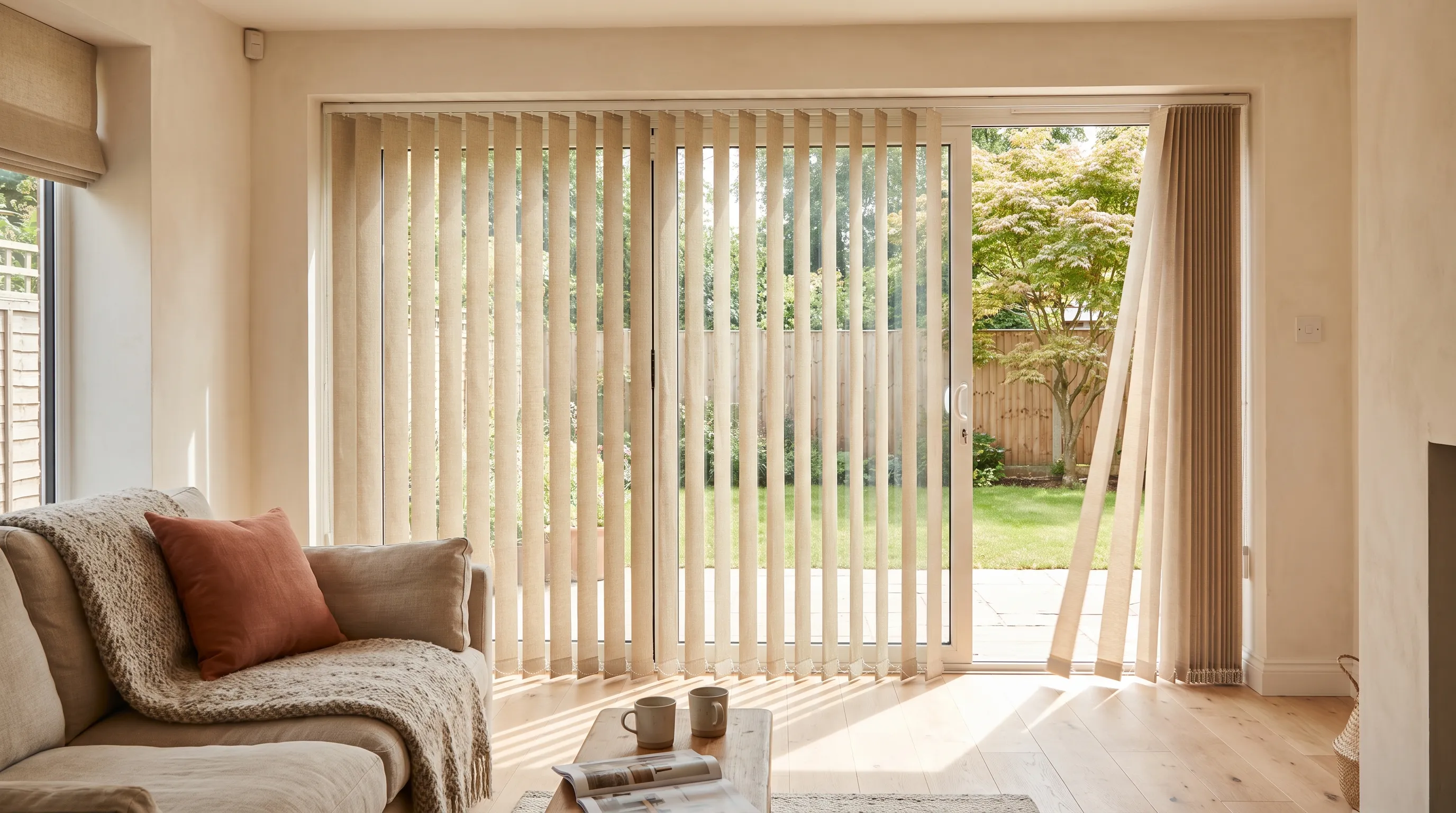
Patio door blinds
A patio door is not a wide window, and treating it as one is why so many of them end up with a blind nobody uses. It has to keep opening, several times a day, with hands full — and that single requirement rules out most of the range.
Blinds Company · Rated 4.8 out of 5 on Google
Free in-home measure · open 8am–9pm, 7 days
In short
Patio door blinds are made to your exact opening and installed across Toronto and the GTA. They suit sliding patio doors where the covering has to clear the moving panel. The in-home measure is free and carries no obligation.
Book
Let's measure your light.
We come to you, measure at your own windows, and go through fabrics and fits together. The visit costs nothing.
$99 off when you order three or more blindsApplied to your written quote at the measure.
Rather just talk?(437) 782-5452Open 8am–9pm, 7 days
The short version
Is this right for your window?
Yes — if the room is one of these.
- Sliding patio doors where the covering has to clear the moving panel
- French doors, where each leaf is its own problem
- Wide openings a single blind cannot span flat
Where it is wrong is below, and that half is the useful one.
And this is what you would be getting.
- 01
- Sized to the stack, not just the opening
- 02
- Verticals, panel track or a wide roller
- 03
- Cordless as standard, no chain across a doorway
- 04
- Measured with the door open, not shut
In a room
What patio door blinds look like once they are up.
The product, not our installations — a gallery of rooms we did not fit would be somebody else's portfolio with our name on it.
A door is not a wide window
Most of the trouble with patio door blinds comes from one wrong assumption: that a 2.4-metre door is just a 2.4-metre window with a handle. Everything else follows from correcting it.
A window has one job — control the light. A door has two, and the second one wins. It has to keep working: opened and closed several times a day, often with hands full, often by somebody not thinking about the blind at all. A covering that makes that harder does not get tolerated, it gets pushed aside permanently, and then you have paid for something that lives in one position.
So the specification runs in an order that surprises people. Not fabric, not colour, not even light control. First: where does the covering go when the door is open, and how many actions does it take to get there?
Every honest answer to that on a sliding door involves moving sideways, because anything that stacks upward has to be fully raised before you can walk through — and on a wide door that is the whole blind, every time.
The four options, and where each one fails
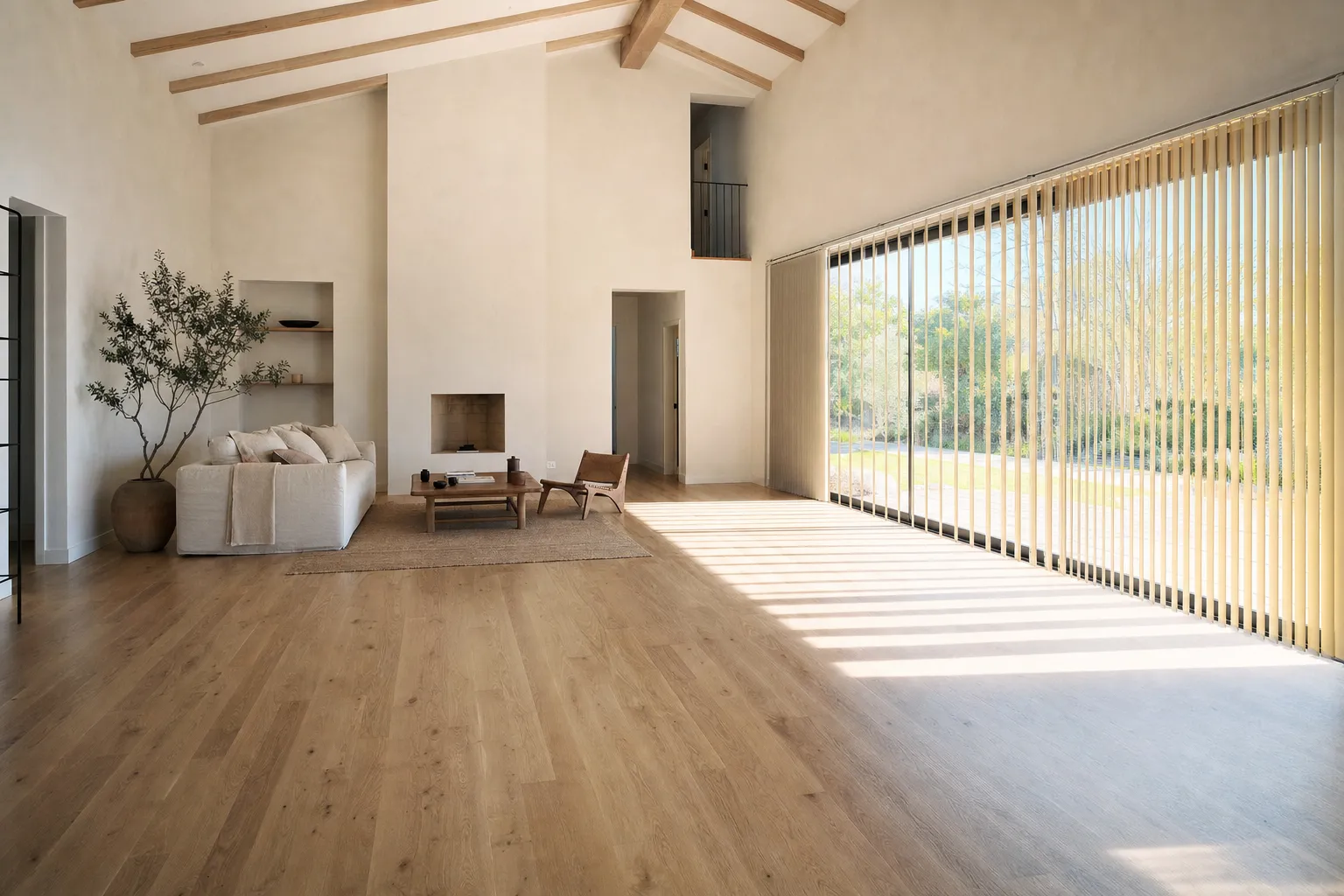
A vertical. Vanes hung from a top track that draw to one side. This is the default for a reason: it clears the opening completely in the width of a hand, it tilts for light independently of drawing for access, and it spans wide openings without any of the sag a tube-based product has. Where it fails: closed vanes overlap rather than seal, so a bedroom door will not go dark, and the vertical lines are strong in a room that already has pattern. Everything about how they are built and which way they stack is on the vertical blinds page.
A panel track. Wide flat panels on a multi-track that slide behind each other, like a shoji screen. It reads as far more contemporary than a vertical, it can carry any fabric including a blackout, and it stacks to about the width of one panel. Where it fails: it needs that panel-width of wall to stack onto, and on a very wide door the stack is deep enough to cover a meaningful strip of glass.
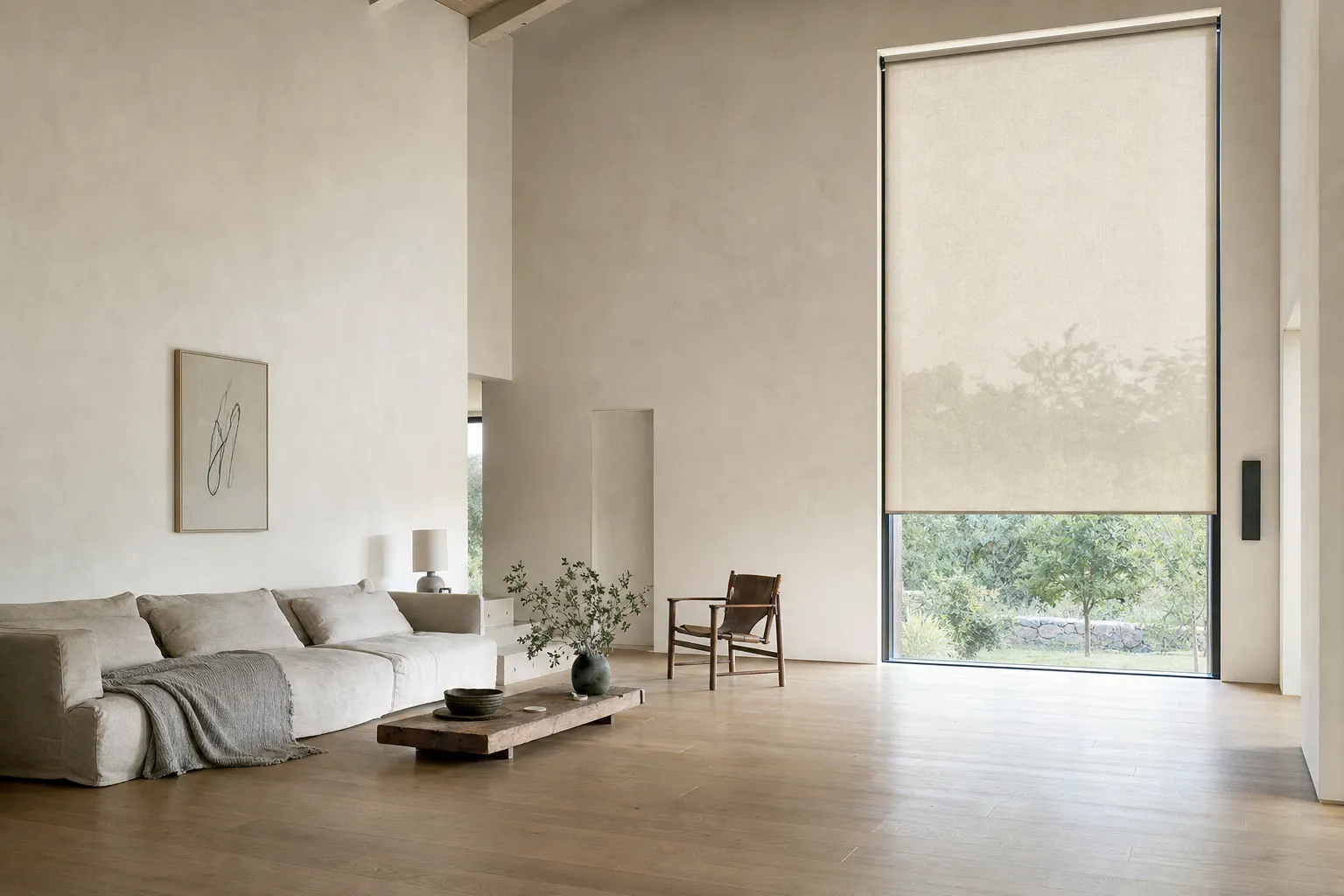
A wide roller. One blind across the whole opening. Cleanest thing to look at, best light control, and the only option that can genuinely black out a door. Where it fails: it has to be raised entirely to use the door. That is fine on a door used twice a week — a formal dining room onto a garden — and hopeless on the door a family uses to get to the barbecue.
Drapery on a track. Softest, warmest, best acoustically, and it draws to one side like a vertical. Where it fails: it needs the most stack space of anything here, and fabric hanging in a doorway that is used constantly gets caught, stood on and grubby along the leading edge.
There is a fifth thing that gets sold for doors and should not be: a standard venetian. It stacks upward, it swings when the door moves, and it is the product most likely to be damaged by a door closing on it.
The stack, in centimetres
This is the number that decides the job, and almost nobody is given it before they choose.
A vertical stacks to roughly 12 to 20 per cent of its own width, depending on vane width and whether it is fabric or PVC. So a 2.4-metre door drawn to one side needs somewhere between 30 and 50 centimetres of clear wall for the stack to live on.
Three outcomes, and which one you get is decided at the measure:
There is enough wall. The blind is made wider than the opening, the stack sits entirely on the wall, and when it is open you see the whole door. This is the good result and it is worth checking for even where it looks unlikely.
There is some wall. The stack sits partly on the wall and partly over the glass. Acceptable, and the amount of glass lost should be a number you agreed rather than a surprise.
There is no wall. The stack sits over the fixed pane. Still fine — the fixed pane is not the one you walk through — but it means the covering never fully disappears, and on a door with a view that is worth knowing before ordering.
The alternative to all three is a split draw, parting in the middle and stacking half at each end. It halves the depth of each stack and looks symmetrical, at the cost of two movements instead of one every time you open the door.
Which panel slides, and why it is the whole job
The single most common fault we are called in to fix, and it takes four seconds to get right at the measure.
A sliding door has a fixed pane and a moving pane. The stack must end up in front of the fixed one. Put it in front of the moving one and the blind is permanently in the way of the part of the door that actually opens — so it gets shoved, it wears at the leading edge, and within a season somebody has hooked the end vanes back over the track.
From inside a closed door it is not always obvious which panel moves, particularly on a symmetrical unit. We open it. If you are describing the job on the phone, the useful sentence is “it slides to the left as I look at it from inside”.
The related detail is the handle. A door handle projects into the room, and a blind set to the full depth of the opening will foul it every time the door is used. The blind either sits forward of the handle or the track is set out on brackets, and that is a measurement rather than a preference.
French doors are a different problem
Two hinged leaves that swing, usually inward. Everything above assumes a sliding door and almost none of it applies.
The covering cannot stack beside the opening, because the opening moves. Anything mounted on the wall above will be fouled by the leaf as it swings, and anything hanging loose will swing with it.
So the blind fixes to the door leaf itself — a slim roller or a pleated blind held at both top and bottom, so it travels with the door and cannot swing about when it moves. Held top and bottom is not optional: a blind fixed only at the head turns into a pendulum the first time somebody closes the door briskly.
This is the case the no-drill perfect-fit systems were designed for. A slim frame clips into the rubber bead around the glazing, the blind lives inside that frame touching the glass, and nothing is screwed into the door at all. On a uPVC or composite door that is the difference between a blind and a warranty claim, and it is also the only sensible answer in a rental.
The trade is that the blind covers only the glazed panel, not the whole door — which on a french door is what you wanted anyway.
Bifolds, and the honest answer
A bifold folds back in a concertina, and the leaves stack against each other at one end. There is no wall above the opening that stays available, because the leaves travel across it.
There is no good in-opening answer. The workable ones are:
A blind above the whole run, mounted well clear of the leaves’ travel, sized to the full opening and raised entirely when the doors are open. A wide roller or panel track.
Perfect-fit blinds on each leaf, travelling with the doors. Neat, and it means six or seven small blinds rather than one, which is more money and more things to adjust.
Nothing on the doors, and blinds on the windows either side. Genuinely the right answer more often than the trade admits — a bifold is usually there because somebody wanted the glass.
The threshold, and the gap at the bottom
Vertical vanes hang about twelve millimetres clear of the floor. That is deliberate: touching the floor means dragging, catching and a frayed hem inside a year. On a door with a raised threshold that gap is visible, and it is the thing people ask about most on handover.
Asking for them to touch the floor produces a blind that looks right for a month. Where the gap genuinely bothers somebody, the answer is a heavier weighted hem, which makes the vanes hang straighter and reduces movement, not a longer vane.
On a roller or panel track the bottom of the blind should finish at or just above the threshold for the same reason.
Wind, and doors that stand open
A door open all summer is a different specification from a door opened twice a day.
Anything loose will move, and moving fabric in a doorway makes noise against the frame. Three things reduce it and none removes it: weight in the hem, a linking chain along the bottom of a vertical, and choosing a product that gets fully clear of the opening rather than hanging across it.
The chain is the one to think about twice. It keeps the vanes evenly spaced and stops them swinging, and it is also a loop at exactly the height a small child stands. In any room a child uses we fit chainless with weighted vanes instead, at no extra charge, which is what the Canadian cord regulations point at anyway.
What we measure at the door
The door open, not shut. Almost everything on this page is invisible with the door closed.
Which panel slides. The handle position and how far it projects. The clear wall each side, measured to the nearest obstruction rather than to the corner — a radiator, a light switch and a bookcase all count. The threshold height. Whether the door is used daily or seasonally, because that decides whether a product needing to be raised is acceptable at all.
Then the opening itself, and the fabric conversation last — which on this page is genuinely the least important part.
You keep a written quote with the stack side, the stack width and the mount stated, because those three are what somebody would otherwise have to guess.
Last updated .
Show us which panel slides. That one fact decides most of this, and the visit is free.
Our commitment
We set the stack clear of the moving panel, so a door that catches is ours.
If it does not fit, we remake it
You never held the tape.
Nothing owed before you agree
No deposit, no card.
Licensed and insured
Both, before we come in.
Your date, in writing
Set at the quote. It does not move.
We will tell you not to buy
If a stock size does it, you hear so.
Cordless where a child sleeps
Standard, at no extra charge.
Reviews on Google
What people said afterwards.
Rated 4.8 out of 5 — the ones below are quoted in full, with a link to check each on Google.
I was blown away by the exceptional customer service from Blinds Company! Their staff was knowledgeable, friendly, and helped me find the perfect blinds for my living room. The installation was quick and flawless. I highly recommend them!
Merdan BerdiyevI'm thoroughly impressed with Blinds Company. From the initial consultation to the final installation, their team delivered exceptional service, expertise, and quality.
Oleksandr Stakhurskyi
Real names, real dates, and a link to all of them — including the ones we would not have picked.
Read them on GoogleQuestions
Before you book
What is the best blind for a sliding patio door?
Whatever gets fully out of the way in the least wall space, which in practice means a vertical, a panel track or a wide roller. The deciding question is not which looks best but where the covering goes when the door is open — a door is used with hands full, and anything that has to be operated first gets pushed aside within a fortnight and stays there.
How much wall do I need beside the door?
More than people expect. A vertical stacks to roughly 12 to 20 per cent of its own width, so a 2.4-metre door needs 30 to 50 centimetres of clear wall to stack onto without covering glass. A panel track needs about the width of one panel. Where there is no wall at all the stack has to sit over the fixed pane, which is the usual compromise and worth agreeing in advance.
Which side should it stack on?
In front of the fixed panel, never the sliding one. Get it the wrong way round and the blind is permanently in front of the part that moves, which is the single most common fault we are called out to correct. Tell us which panel slides at the measure — from inside it is not always obvious, and it is the one fact the whole job turns on.
Can I have a blackout blind on a bedroom patio door?
Yes, but not a vertical — closed vanes overlap rather than seal and pass a line of light down every join. For a bedroom door the honest answer is a wide blackout roller mounted above and outside the opening, raised fully when you want to use the door, or a panel track in a blackout fabric.
What about french doors — two doors that swing?
Different problem entirely. The covering has to move with each leaf rather than clear the opening, so it fits to the door itself: a slim blind held to the glazed panel top and bottom so it cannot swing about when the door does. Anything mounted on the wall above will foul the leaf as it opens.
Will it rattle when the door is open?
Anything hanging loose in a doorway will move in a draught, and on a door that is open half the summer it will knock against the frame. Weighted hems and a linking chain reduce it; nothing removes it entirely. If the door is your main way into the garden, that is worth knowing before you order rather than after.
Not this one?
The rest of the range.
Each of these is the wrong answer somewhere, and its page says where. That is usually the faster way to find the right one.
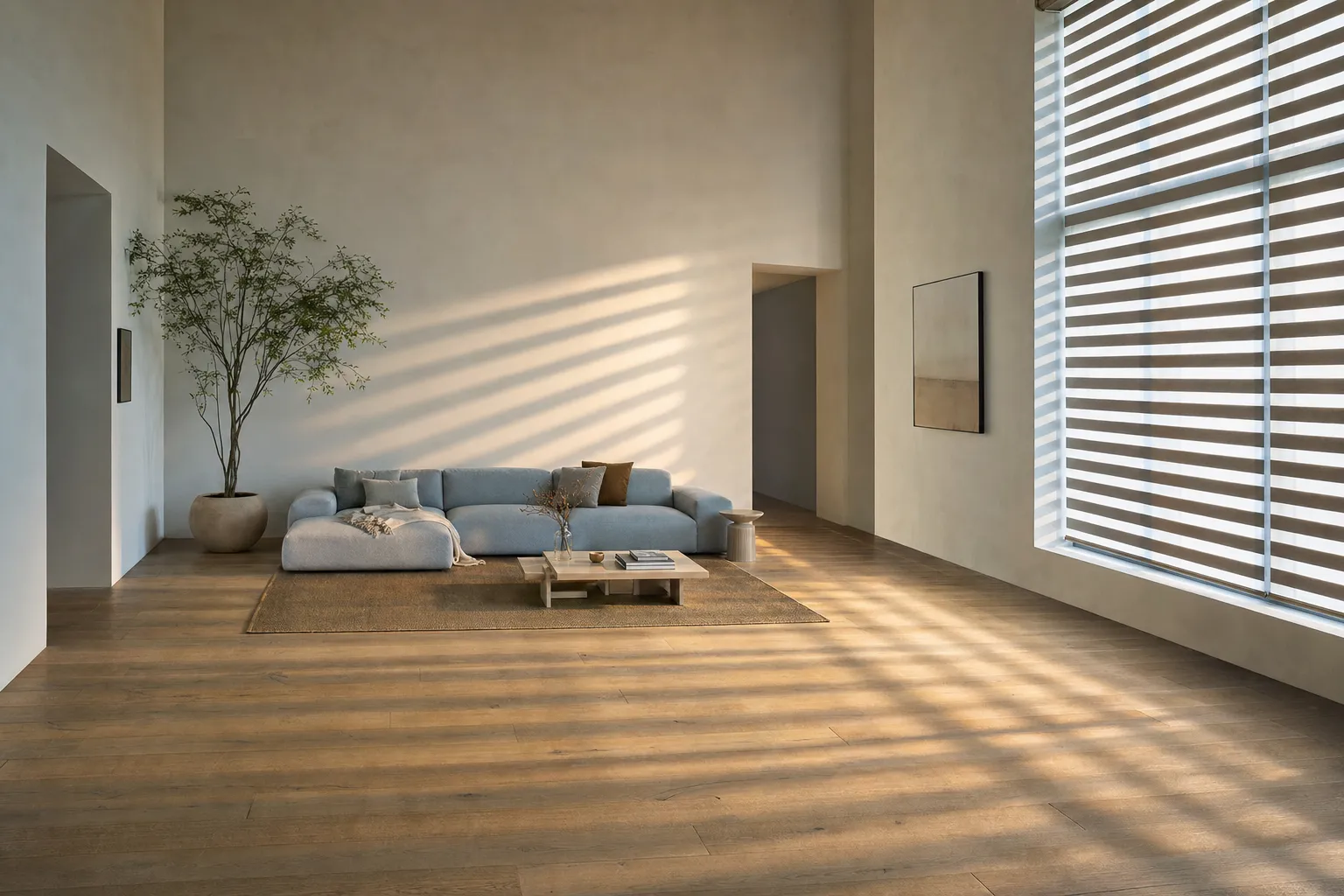
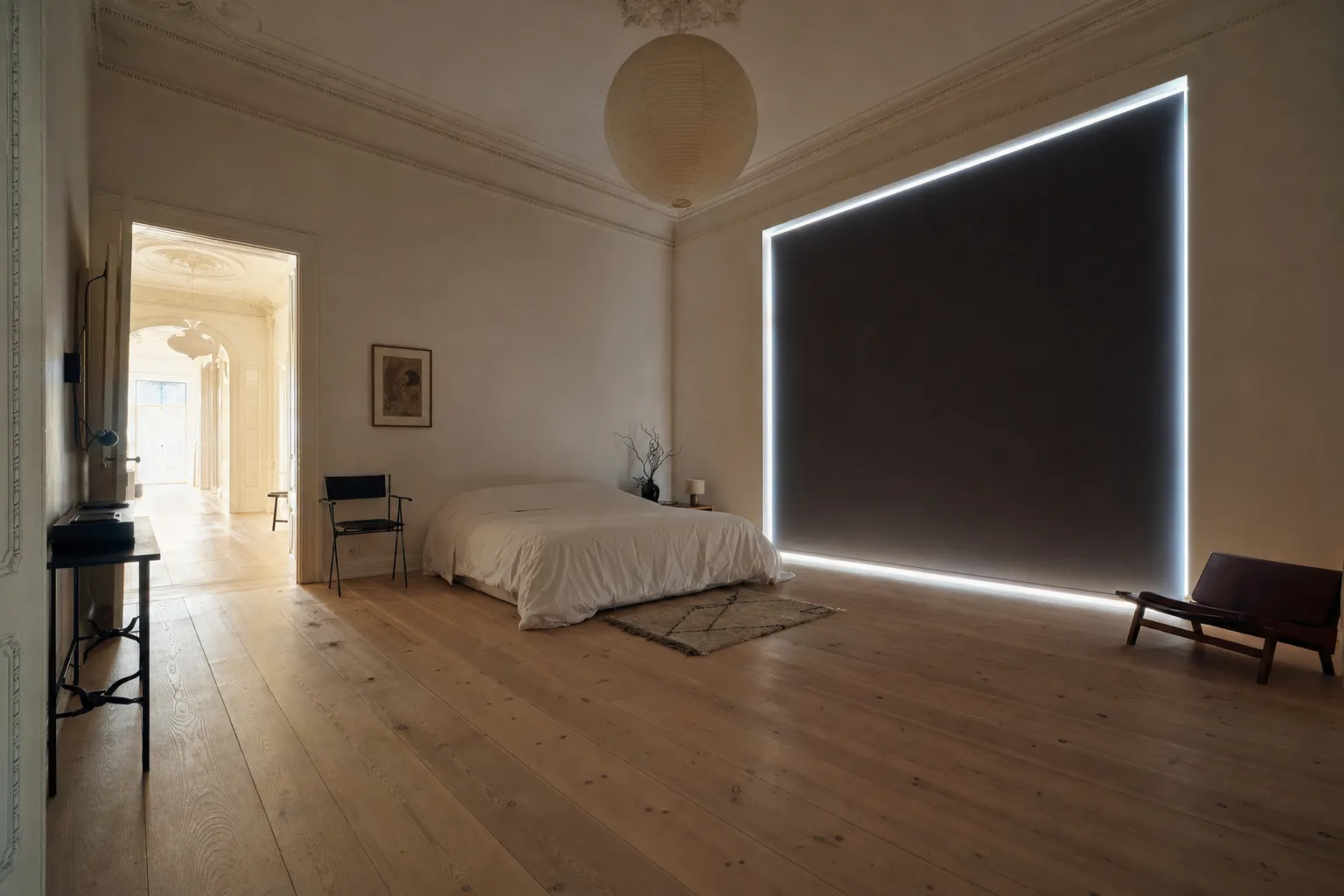
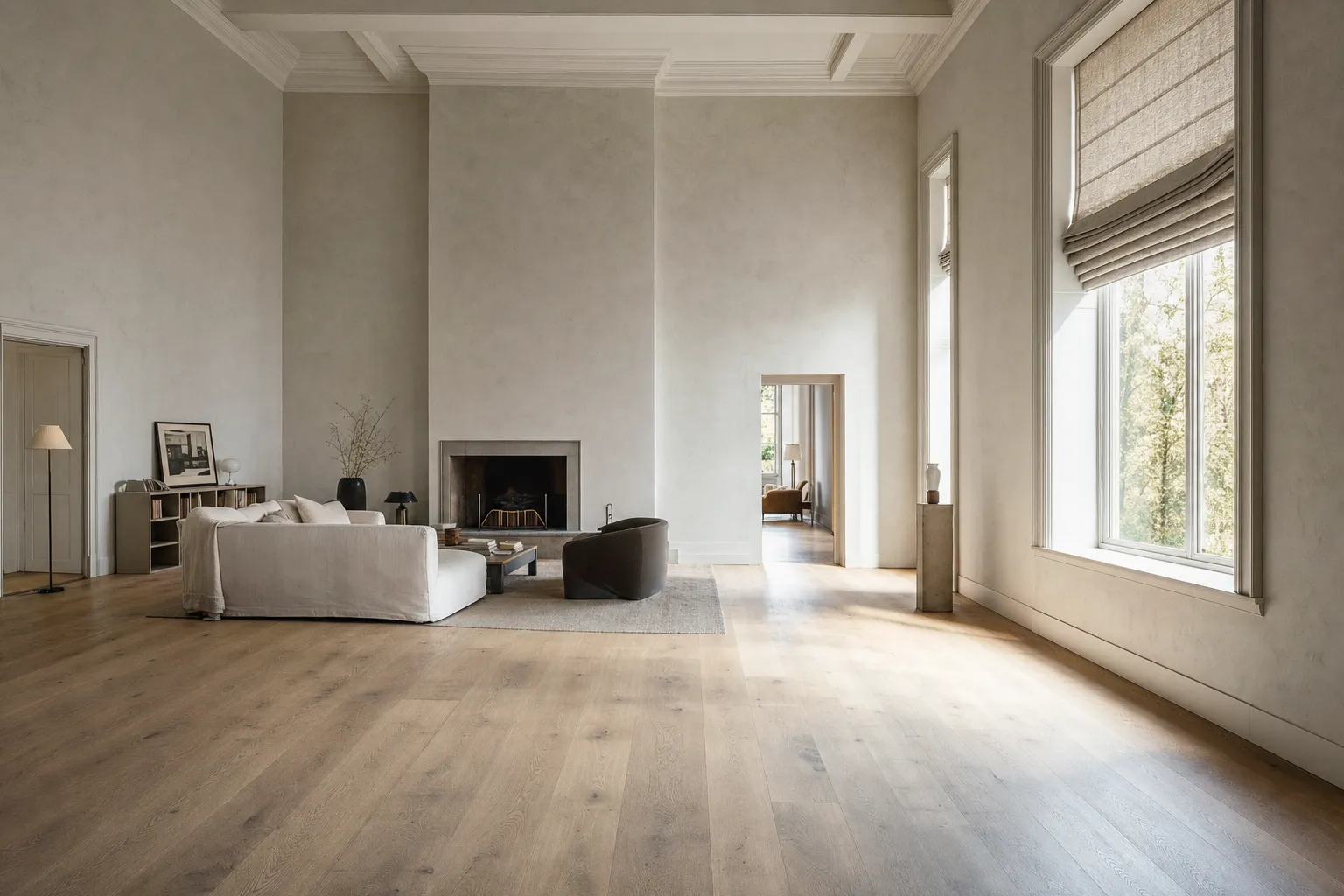
If every option you have been shown gets in the way of the door, that is a solvable problem. Ring and say which way it slides.