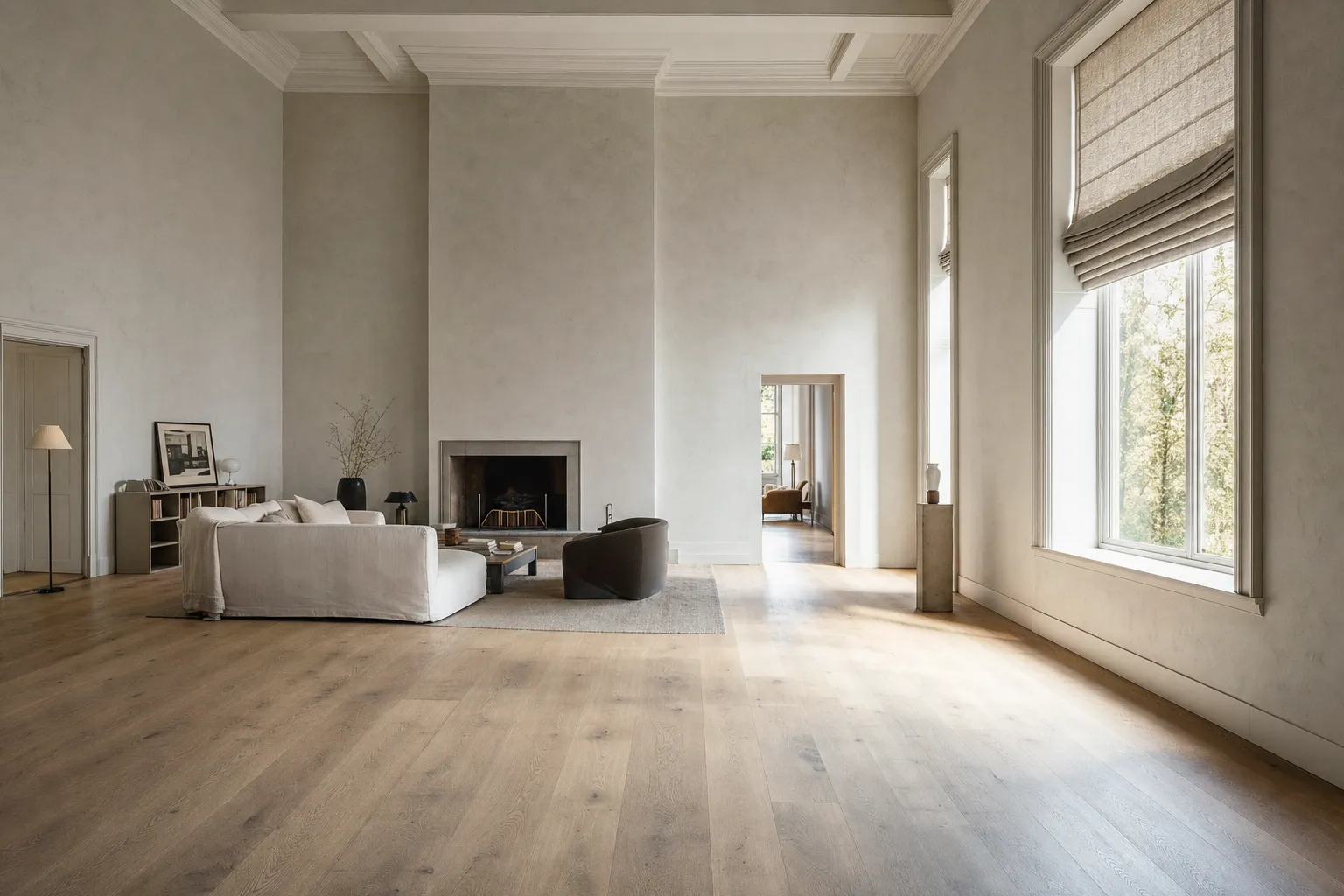
Blinds in King City
Custom window coverings in King City, with a free measure at home. If your room has broad glass, tall openings or a view you want to keep, plan the material and its useful positions around those features.
Blinds Company · Rated 4.8 out of 5 on Google
Free in-home measure · open 8am–9pm, 7 days
Illustrative room photograph; not a local installation.
In short
King City is one of the service places selected by the owner. Blinds Company measures your openings during a free home visit and discusses fabrics and fits there. A larger view need not mean giving every pane the same opacity or expecting one covering to do every job.
Book
Let's measure your light.
We come to you, measure at your own windows, and go through fabrics and fits together. The visit costs nothing.
$99 off when you order three or more blindsApplied to your written quote at the measure.
Rather just talk?(437) 782-5452Open 8am–9pm, 7 days
Give the view a place in the brief
At a King City measure, describe what you enjoy seeing through the window before describing what you want to block. A view can be valuable even when the room needs shade for part of the day. It might be greenery, open sky or the changing light itself. Naming that quality helps you compare materials and divisions without assuming that the best covering is the one that hides the most glass.
Next, identify the discomfort precisely. A bright opening may produce a reflection only near one seat. A broad wall of glass may need privacy after dark while remaining pleasant during daylight. Those are practical goals that can sit alongside keeping a view. Treat them as parts of a brief rather than forcing an early choice between a completely open room and a completely closed one.
Our home-measuring service includes King City. Blinds Company offers a free visit to measure at home and discuss fabrics and fits. Describe the dimensions that concern you, the changing light and the position from which you use the room. The roman-shade room at the top is an illustration of fabric and window proportions, not evidence of a completed project in King City.
Broad glass benefits from a clear division plan
Give broad glass independently useful settings
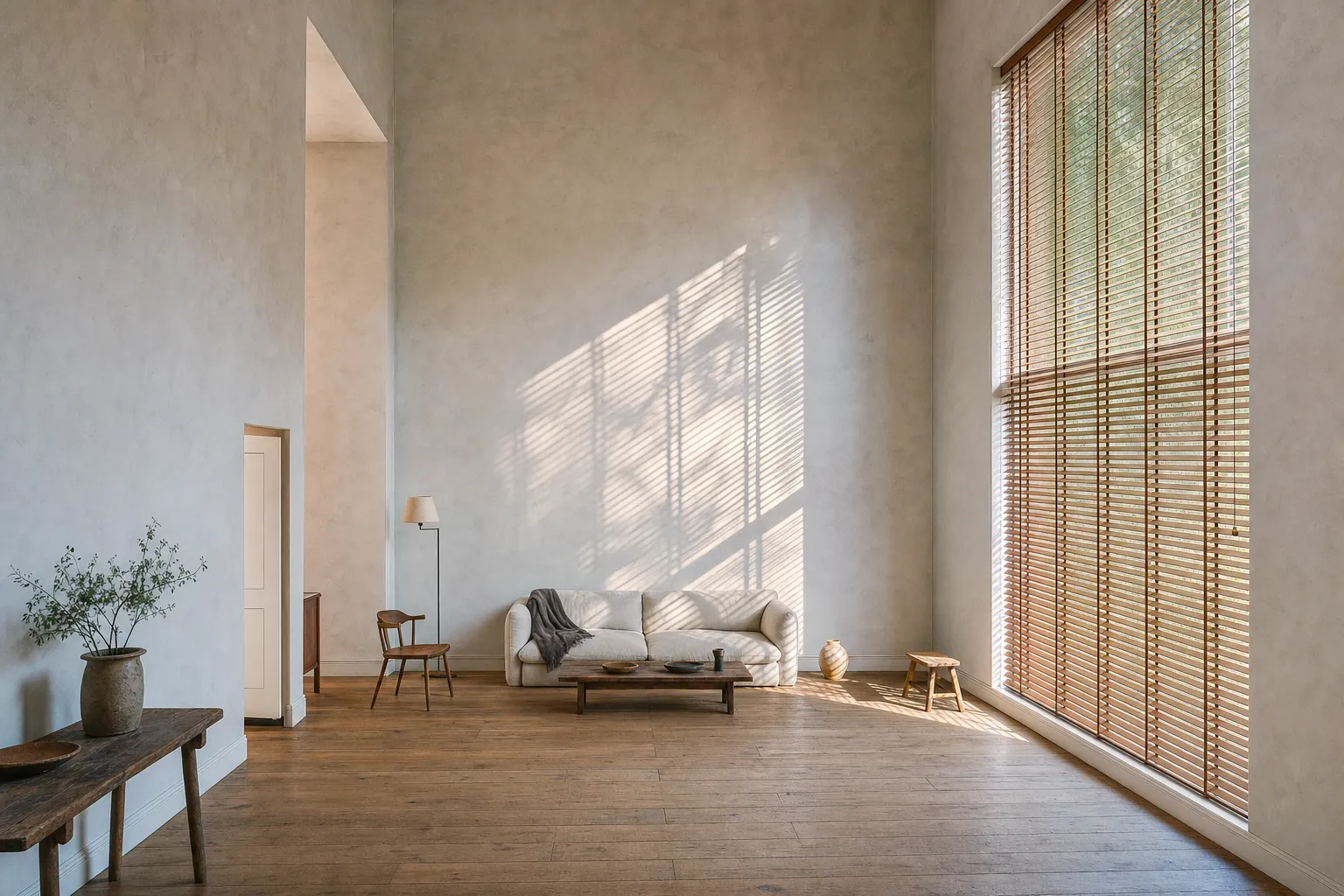
If the room has broad glazing, consider whether it should work as a single controlled surface or several independent sections. A continuous covering can create a quiet appearance, but divided controls may let you shade the work area while leaving a view open near the sofa. The existing frame lines can help organise the discussion. They do not, by themselves, prove where every bracket or rail can be fixed.
The fitting surface and product limits are part of the choice. A broad-looking pane may have a recess or support arrangement that changes the practical options. Do not turn its width into a promise about one very large blind before the opening is assessed. Explain which divisions would feel acceptable and where a gap would be most noticeable from the seats you use.
Look at the surfaces in their normal intermediate positions. Several blinds may not spend most of the day at the same height, especially if the room supports more than one activity. Decide whether independent usefulness or a single visual line matters more in that setting. The measure allows that trade-off to be discussed against the actual opening instead of making it an assumption hidden behind a catalogue picture.
Tall openings ask about reach and gathering space
For a tall pane, consider both the daily operation and the place where open material will gather. A roman shade forms folds above the glass, a roller winds onto its tube and slats gather into a stack when raised. Each can affect the upper view differently. If the height of the clear glass is one of the room’s main qualities, give that raised position proper attention.
Reach matters too. A control that is comfortable near a lower opening may not be comfortable at an upper one or behind deep furniture. Motorized blinds are in the confirmed service range and can be discussed for practical access. That discussion should include the chosen system’s power, controls and later service access. A motor changes operation; it does not erase the need to understand the supporting surface and physical reach.
If an opening is above a stair or another difficult area, show a photograph that includes the surrounding room. It helps explain what a close view of the frame leaves out. The motorized-blinds page introduces control options and the roman-shades page explains fabric folds. The final comparison still belongs beside your actual glass and access route.
Separate bright-room comfort from bedroom darkness
A view-facing living room and a sleeping room can belong to the same home without sharing the same material. A filter that preserves some daylight may be useful in the former and insufficient in the latter. Decide what each room needs at the times it is used. You can then compare a related palette while allowing opacity and fitting to follow the purpose of the room.
In a bedroom, check the edge light as well as the cloth. An opaque surface can leave bright gaps beside a frame. Discuss whether an inside or outside position provides a useful arrangement, recognising that overlap and mounting space must suit the opening. The word blackout is not a measurement of the entire room. Describe the darkness you want and where light currently enters.
For a living space used after sunset, think about visual privacy under indoor lighting. An open weave does not necessarily screen a lit room as it did during daylight. If an additional curtain layer would have a useful job, it can be considered within the confirmed range of services. Space for that layer, including where it gathers when open, should be part of the same discussion.
Let a shared palette support different movements
Visual consistency can come from several places: similar surface colours, compatible textures or related headrail positions. It does not have to come from one mechanism repeated throughout the home. A roller may suit a simple recess while curtains are worth considering where there is useful side space. A slatted covering may offer the intermediate adjustment another room needs. Start with the behaviour before comparing the decorative connection.
Hold the materials together in your home’s light. A texture can read differently when the window backlights it, and apparently similar neutrals can shift beside trim or flooring. If a permanent finish sets the room’s character, make it the reference. Colour names and online images are useful for explaining preferences but should not carry the entire decision for a large installed surface.
If a room has a fireplace, heater or other source of heat near glazing, identify it before the fitting is settled. Follow the applicable equipment and material requirements instead of deriving a clearance from an illustration. This page supplies no safe-distance rule for an appliance it has not inspected. The relationship should be discussed with the actual room and its requirements in view.
A home office can keep the outlook without keeping the glare
For a work area, identify the reflection from the chair you use. A bright window behind a screen can be comfortable to look toward yet difficult to work beside. Notice which part of the opening contributes to the reflection and when it happens. This gives you a more precise brief than closing every window simply because the room is called an office.
Partial height, independent panels or a different material may be worth comparing, depending on the actual arrangement. If you use video calls, consider whether the window sits behind you in the camera view. The light you need for reading and the light that suits the camera are related but not identical. Explain both so the covering is considered as part of the workspace.
Also plan access after the desk and storage are in their final positions. A convenient control side can become awkward behind shelving. If connected control is part of your idea, name the equipment you use and confirm compatibility for the chosen system. Smart home blinds are a confirmed service, but this page does not promise integration with every hub or device.
Bring a useful order to the free measure
For each room, choose the priority that matters most: preserve the outlook, improve evening privacy, reduce a reflection or make a high covering easier to adjust. Add any fitting obstacle, planned change or access constraint. That short list lets the visit follow your home rather than a generic package. You do not need exact measurements or a completed product schedule to begin.
Blinds Company has 5+ years in business and is licensed and insured with a home-measuring service. The free visit covers measuring at your windows and discussing fabrics and fit there. Keep the selected fabric, movement and fitting details together when you review the proposal. The installation date for the agreed work is confirmed in the written quote, based on the proposal for your actual openings.
Use the free home-measure enquiry to describe your King City windows. Mention the view you want to retain and the point where light or access becomes difficult. A useful covering can then be selected for its everyday positions, its fitting space and the room’s distinct needs. The aim is a practical relationship between the glass and the people living behind it.
Last updated .
Everything we make
The rest of the range, in King City.
Each is wrong somewhere. Its page says where.
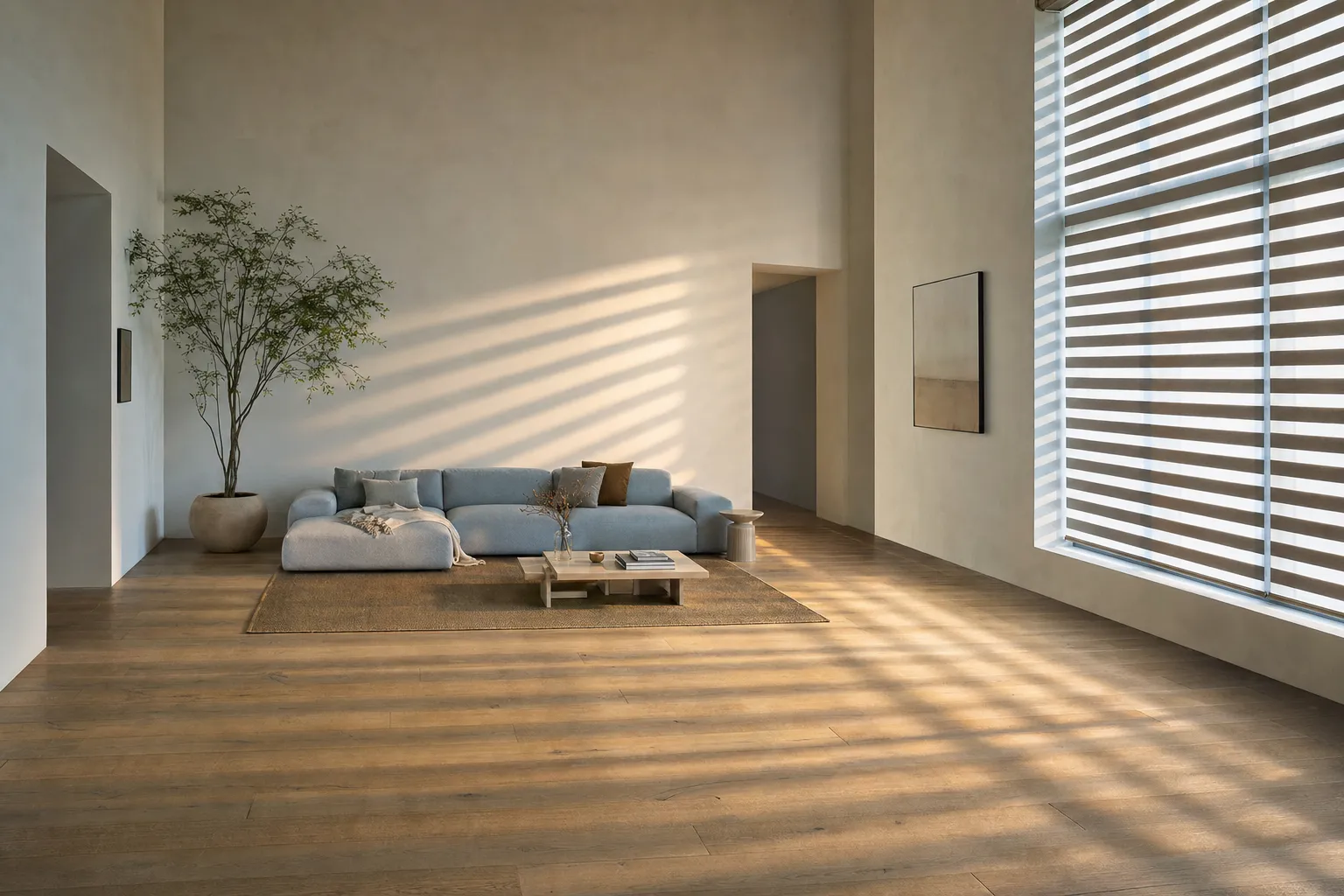
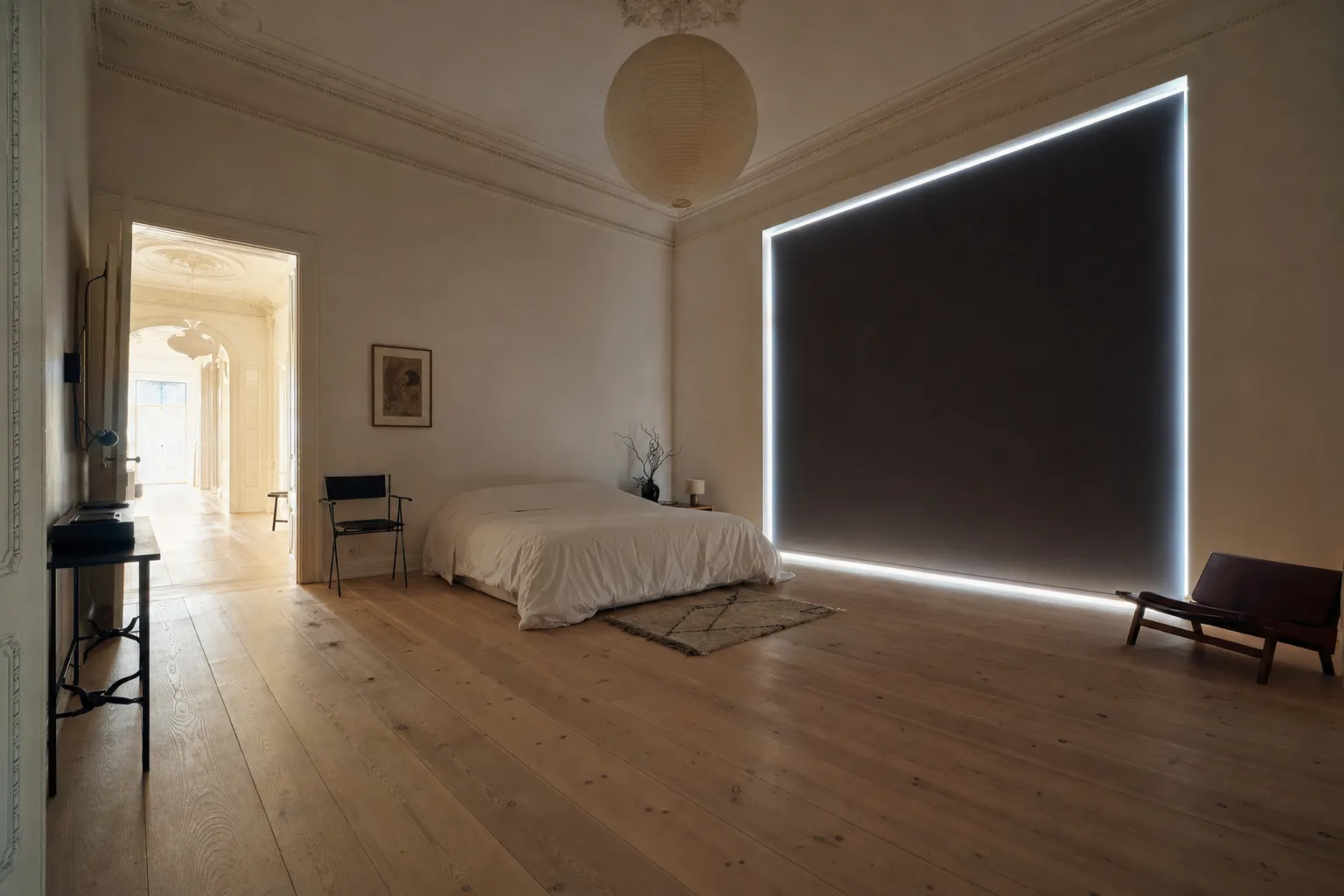
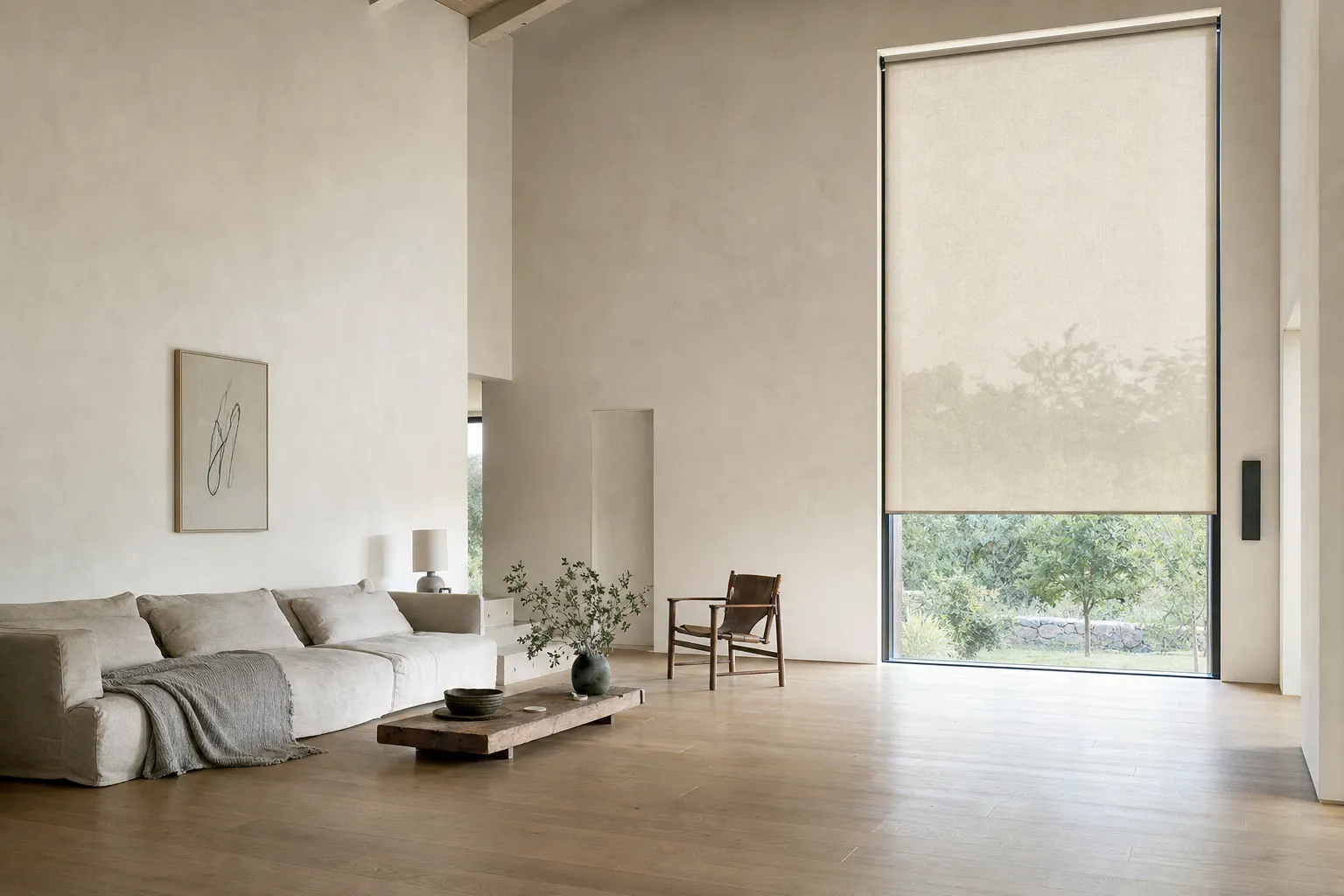
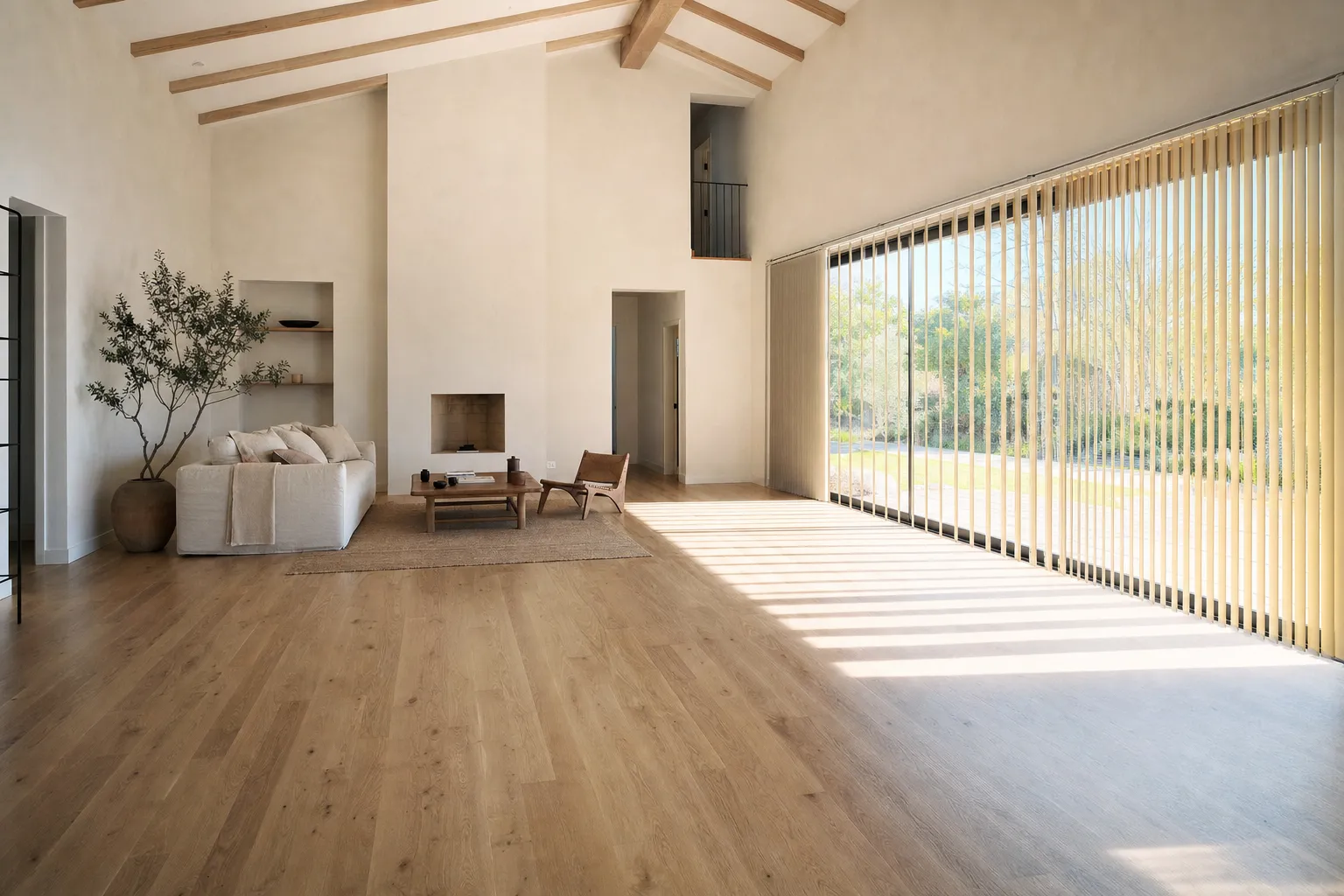
Point to the glass you want to keep clear and the seat that needs more shade.
Questions
Before you book
Is every large opening suitable for a single blind?
No single arrangement should be assumed from the apparent glass width. The supporting surface, opening divisions and product limits need consideration. Several independently moving coverings can sometimes serve different parts of a room more usefully. Discuss the divisions you would accept and the view you want to preserve before treating a continuous surface as the only attractive option.
Can I use a different opacity on opposite walls?
Different walls can have different light and privacy needs, so that is a useful option to discuss. Compare the actual materials together if a coordinated appearance matters. A related colour can connect the room while one surface filters daylight and another provides stronger visual closure. Decide from the room's use rather than assuming the same specification is required because the walls share a room name.
What should I check for a shade near a fireplace?
Identify the heat source and follow the relevant equipment and material instructions for clearances. Show the relationship at the measure. This page does not provide a safe distance or approval for a particular installation. The window covering must be considered with the actual appliance, surrounding surfaces and any requirements that govern the room, rather than judged from an illustrative fireplace photograph.
Do smart blinds work with every home-control system?
Compatibility needs confirmation for the proposed mechanism and control equipment. Name the system you already use and the functions you want, such as independent adjustment or a shared routine. Do not assume that a product described as smart supports every integration. Power, access and ordinary manual use should be discussed along with connected features.
Describe the view and the difficult light at your King City windows.