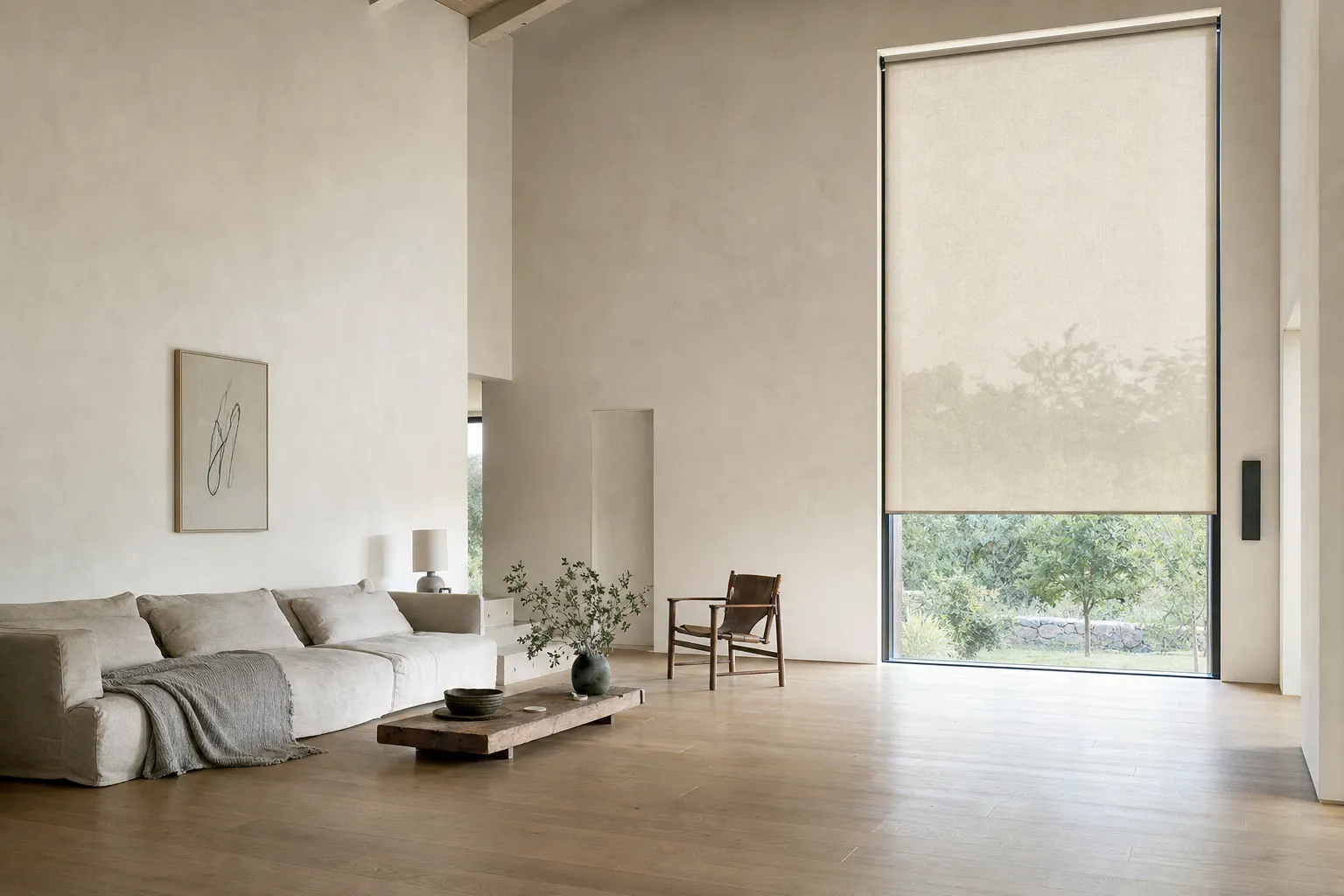
Roller blinds in Toronto
Roller blinds made to your openings and fitted across Toronto. On century housing the fabric is the easy decision; the hard one is a straight bar crossing an opening that has moved, and that is settled by measurement rather than by catalogue.
Blinds Company · Rated 4.8 out of 5 on Google
Free in-home measure · open 8am–9pm, 7 days
In short
Roller blinds made to your openings and installed in Toronto. Old openings that are not square, and the one product least willing to forgive that — which is why the measure matters more here than the fabric does.
Book
Let's measure your light.
We come to you, measure at your own windows, and go through fabrics and fits together. The visit costs nothing.
$99 off when you order three or more blindsApplied to your written quote at the measure.
Rather just talk?(437) 782-5452Open 8am–9pm, 7 days
In a room
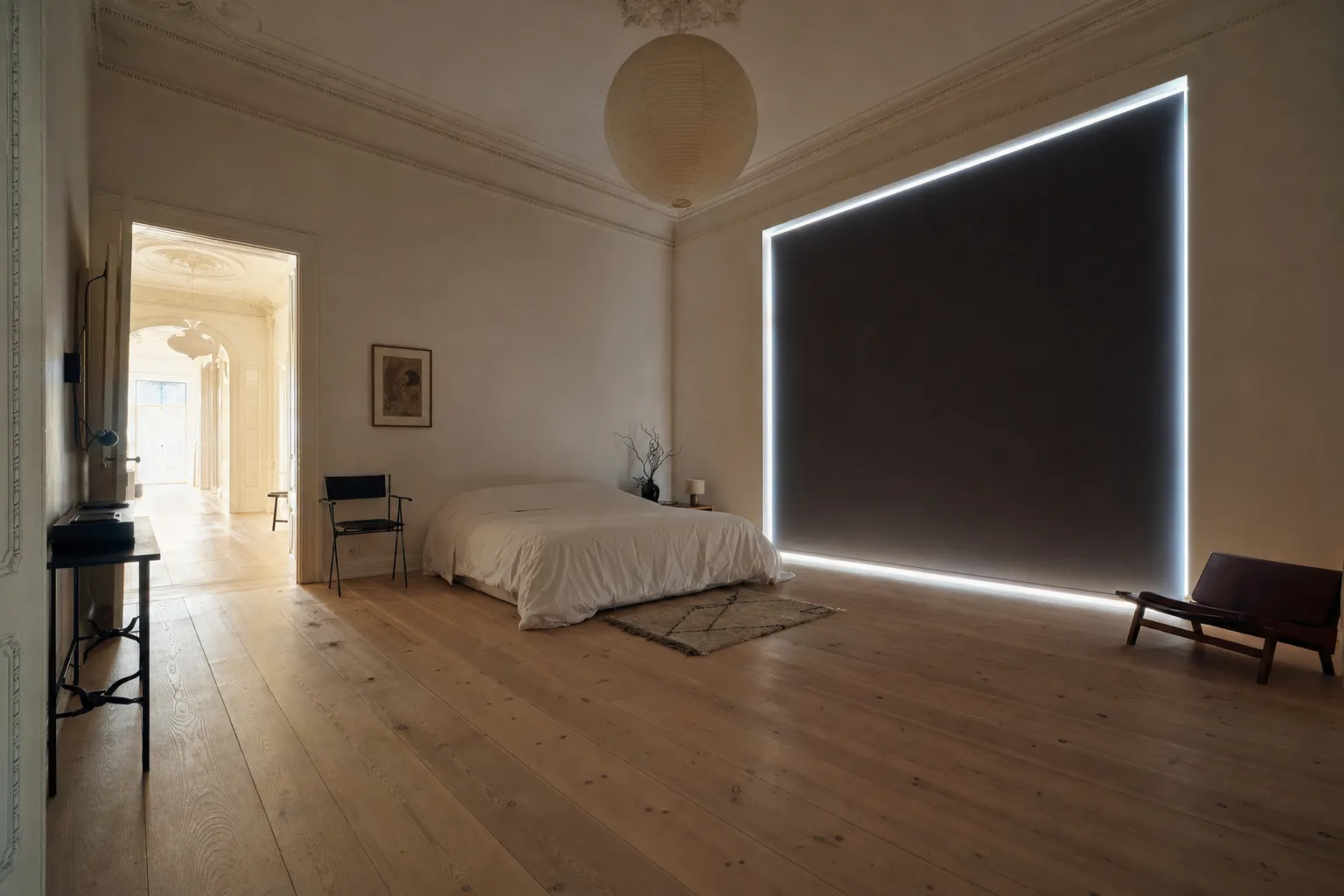
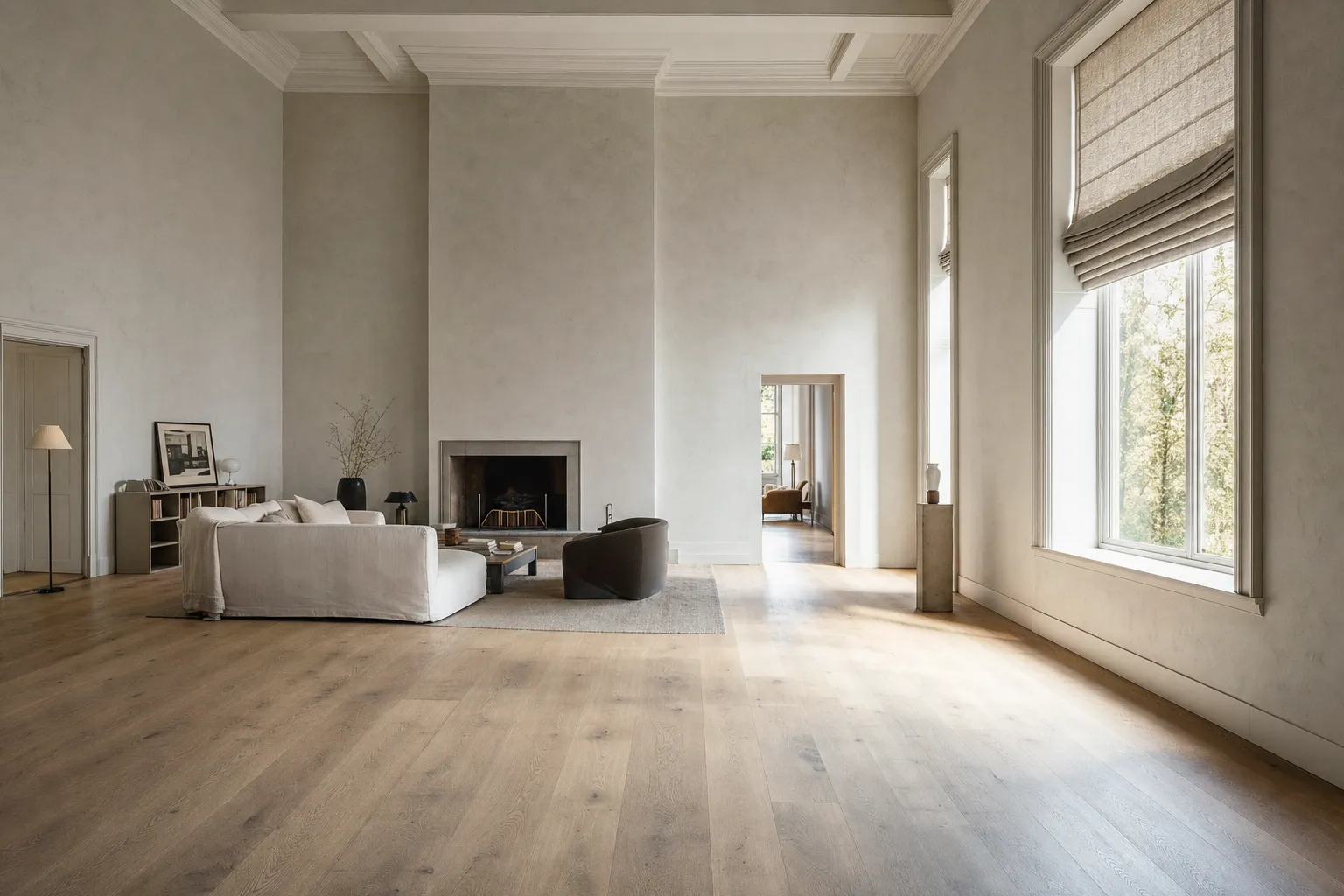
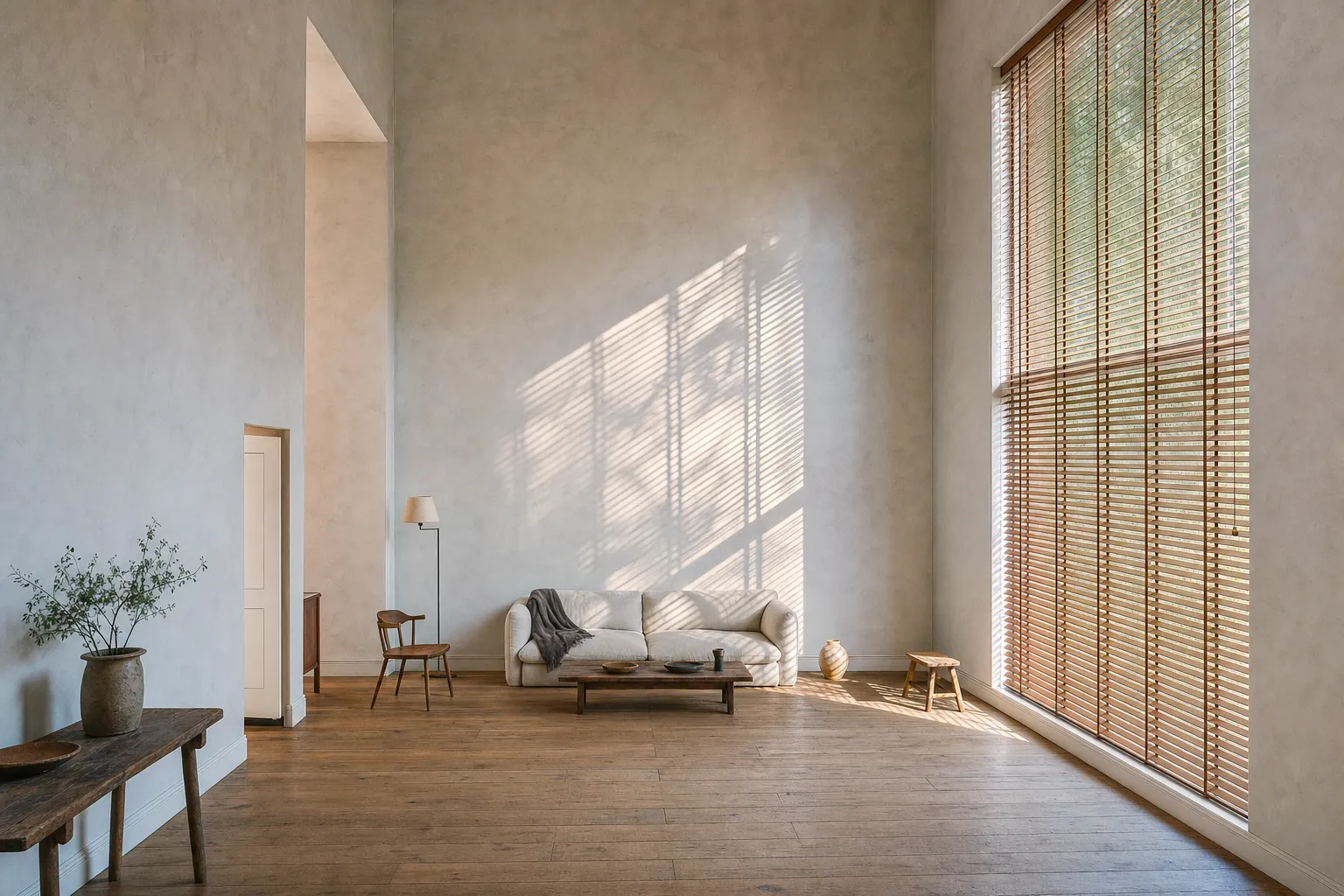
What roller blinds look like once they are up.
The product, not our installations — a gallery of rooms we did not fit would be somebody else's portfolio with our name on it.
The fabric is the easy part here
On a new build the interesting question about a roller is which screen. On Toronto’s older housing it is whether the opening will take one at all, and in what way.
A roller is a straight, rigid horizontal bar travelling down a wall. That is what makes it clean on a modern window and unforgiving on an old one: any deviation in the opening shows as a wedge of light along the bottom bar, and unlike a roman — which ends in a soft fold that settles into a gap — there is nothing to absorb it.
So the specification starts with two measurements nobody asks for on a form. Six numbers for the opening: width at top, middle and bottom, drop at left, centre and right, cut to the tightest. And both diagonals, which is the only way to find out whether the opening is a rectangle or a parallelogram. In a century semi off the Danforth the diagonals differ often enough that we check before discussing anything else.
What “out of square” actually means, in millimetres
The phrase gets used loosely, so here is the version you can act on.
Measure corner to corner, both ways. On a true rectangle the two numbers are identical. On a real Toronto window they are usually not, and the size of the difference is what decides the mount.
Under about five millimetres. Invisible once a blind is hanging. Fit inside the opening and think no more about it.
Five to fifteen millimetres. This is the band where the argument happens. A blind cut square to an opening that is not will sit true at the top and show a tapering line of daylight at the bottom, on one side only. Some people genuinely do not notice; the ones who do, notice permanently. Our default here is to mount outside, and to say why rather than quietly do it.
Over fifteen millimetres. Inside mount is off the table. The blind goes on the wall with an overlap that swallows the error.
There is a second number worth taking on the same visit, and almost nobody does: the drop measured at the left, the centre and the right. A sill that has dropped is common in these houses, and it produces the same wedge from a different cause. The blind is cut to the shortest of the three, and the two longer sides get a slightly larger gap at the bottom rather than a bar that fouls the sill at one end.
Why the houses moved in the first place
Worth a paragraph, because it explains which windows to be suspicious of.
Most of the older housing across the old city is brick over a wood frame on a rubble or early-poured foundation, built between roughly 1890 and 1930. Those houses have settled, and they have settled unevenly — more at the back where additions were built later on shallower footings, more on the side where a neighbouring house was underpinned, more where a basement was lowered.
The practical guide that follows from it: front windows on the original block tend to be the truest, rear windows and anything in a later addition tend to be the worst, and anything above a widened opening — where a wall was opened up for a kitchen or a doorway — is worth checking carefully whatever floor it is on.
Windows replaced in the last thirty years are square in themselves but sit inside whatever the original opening has become, so the frame is true and the reveal around it is not. That is why we measure to the glass rather than to the plaster.
Inside or outside, and why the answer is usually the reveal
Deep reveals are the one thing pre-war Toronto housing gives you for free. They take an inside mount comfortably, hide the headrail completely, and leave the trim visible — which on a window with mouldings worth seeing is the whole point.
The cost of an inside mount is a clearance gap of three to six millimetres a side, because a blind cut to the exact opening would bind on the way up. On a screen fabric nobody notices. On a blackout in a bedroom that gap is the entire problem, and it is why a dark room usually needs an outside mount or side channels rather than a better fabric.
An outside mount hangs the blind on the wall above the opening and past it on both sides. It kills the side gaps, it makes a small window read as larger, and it forgives an opening that is out of square. What it costs is the trim, which it covers.
Newer housing in the city — the condo stock downtown and along the waterfront — inverts the whole discussion. There the reveal is shallow or absent, the openings are square, and depth is the only constraint. A plain roller needs less depth than anything else in the range, which is exactly why it dominates there.
The hardware in the reveal
Century houses put things in the way, and every one of them is a blind that fits the opening and cannot be used.
Storm sash and triple-track aluminium. Common across the older streets, and both sit outboard of the original window with a latch or a lift that projects into the reveal. A blind set to the full depth will sit in front of it.
Casement cranks. A handle that folds is fine. One that does not needs the blind forward of it, or a reverse roll that brings the fabric down the window side and leaves the room side clear.
Deep sill trim. A generous sill nose is lovely and it means an inside-mounted blind stops above it rather than behind it, which changes the drop by an inch and looks wrong if it was not planned.
Radiators. Very common under Toronto windows, and the one that changes the answer most. A blind finishing behind a convector traps rising warm air against the coldest surface in the room and ages the fabric in dry heat. The blind stops at the sill above it, or mounts outside and stands clear.
All four get written down at the measure. Not one of them appears on a form asking for a width and a drop.
Room by room, in a Toronto house
Front living rooms on a narrow lot. The complaint is being visible from a sidewalk a few feet away, and a screen only solves half of it: it works by day and reverses at night. If that room matters after dark, the answer is an opaque roller or a screen with something behind it — and we would rather say that at the measure than have you find out in week two.
Bedrooms. Blackout fabric, and then the perimeter, which is about forty per cent of the result. A blackout blind with a clearance gap down each side is a dark room with two bright lines in it, and on an out-of-true old opening those lines are wedges.
Kitchens. A short wide window over a sink where every centimetre of view counts. A roller stacks to almost nothing at the head, which is why it beats a roman here even in a room where a roman would look better.
Third-floor rooms under the roof. Common in the semis and worth naming separately: short windows set into a dormer, often with sloped ceiling on both sides. The reveal is usually shallow and irregular, and the wall above the opening is short — which restricts the outside mount that the out-of-square geometry would otherwise want. This is the one place in a Toronto house where the answer is sometimes a smaller product than you would choose on looks.
Condo glass. Wide, shallow, square — and the only Toronto windows on this list where none of the above applies. The frames are new, the diagonals match, and the constraint moves entirely to depth.
Bay windows, in one paragraph
The old city has a great many bays, and they are the single most common thing we are asked to put right after somebody else has been — always because somebody treated one opening as one window. A bay is three or five separate openings meeting at angles, and each gets its own blind. The corners, the angles, which facet overlaps which and what to do about the radiator underneath are set out on the bay window page, because they apply whatever product goes in.
What is specific to a roller in a Toronto bay is the roll direction. All three blinds should come off their tubes the same way, so the fabric sits at a consistent distance from the glass right round the projection. Mixed directions are invisible on a flat window and obvious in a bay, because you are looking along the line rather than at it — one section stands proud of the others and the eye catches it immediately. It costs nothing to specify and cannot be changed afterwards.
Where the light comes from on a narrow lot
Worth stating because it is the opposite of the suburban case, and people arrive with the suburban advice.
Old Toronto lots are narrow and the houses are close. Direct sun on a side window is often blocked by the neighbouring wall for most of the day, so the light that reaches a side room is reflected — off brick, off a white-painted wall, off snow in winter. Reflected light is diffuse and comparatively weak, and rooms lit that way rarely have a glare problem at all. They have a gloom problem.
That inverts the specification. On those windows the useful product is the most open screen that still gives some privacy, or nothing at all, and money spent on a tight fabric there is money spent making a dark room darker.
The windows that do have a problem are the front and the back, which see the street and the garden and get the actual sun. In a typical semi that is two or three openings out of ten, and it is where the specification should concentrate.
Windows that have been painted shut
More common in this city than anywhere else we work, and it changes the installation rather than the blind.
A sash painted into its frame — sometimes several times over a century — cannot be opened, which means the window cannot be cleaned from inside and the reveal cannot be reached past the blind once it is up. Two consequences we plan around.
The blind has to come off easily. On those windows we specify brackets that release without tools, so the blind can be lifted out when the sash is eventually freed or the glass gets cleaned from a ladder. It costs nothing and it saves a call-out.
The reveal gets measured as it is, not as it should be. A painted sash usually means paint build-up in the rebate, which narrows the opening by a few millimetres in places. That is a real dimension and it goes on the sheet.
Related and worth mentioning at the measure: if you are planning to have the windows restored or replaced, tell us. A blind cut to a hundred-year-old opening will not fit the new unit that goes into it, and the sensible order is windows first, blinds after. We would rather lose the order for six months than sell you something that has to be remade.
Condensation in February, and what a blind has to do with it
Old Toronto windows run wet in winter, and a blind changes that — sometimes for the better and often for the worse. It comes up on nearly every January visit, so it is worth setting out.
A window sweats when warm, moist room air touches glass that is below the dew point. Single glazing with a storm outside it, or an early double-glazed unit in an aluminium frame, both run cold enough for that to happen most winter nights in this city.
A blind pulled tight against the window makes it worse. It traps a pocket of room air against the coldest surface in the house and stops the room’s general air movement from carrying that moisture away. The glass gets colder, the trapped air stays humid, and the sill takes it. Over a few winters that is peeling paint, then soft timber.
A blind standing slightly off the glass is neutral to helpful. Air moves behind it, the moisture goes where the rest of the room’s moisture goes, and nothing collects.
So the practical guidance for an old house is: do not seal a blind against a cold window overnight, and be careful about specifying side channels on a bedroom window in a house with original glazing — the very thing that makes a room dark also makes a sealed cavity in front of cold glass, in the room that generates the most moisture.
Where a bedroom genuinely has to be dark and the window is old, the better arrangement is an outside-mounted blackout with a generous overlap rather than channels tight to the reveal. It gets you most of the darkness and none of the trapped air.
And if a window in your house already streams in winter, say so at the measure. It changes what we recommend, and it is a fact about the window rather than a fault with any blind.
Replacing a roller that somebody else fitted
A large share of the roller work in this city is not a first fitting. It is replacing something that has been there five or fifteen years, and the reason people ring is worth knowing because it is usually not the reason they give.
“It has gone crooked.” The roll has telescoped along the tube, which happens when a spring blind is pulled down by one corner over and over. Sometimes recoverable by rolling it fully up and drawing it down square a few times. If the fabric has taken a set, it is not.
“It has stopped staying up.” A spring that has lost tension. On a decent mechanism this is adjustable; on a boxed blind it usually is not, and the cost of the part exceeds the cost of the blind.
“It has gone yellow at the bottom.” Ultraviolet, on the section that is exposed in every position. Nothing to be done, and worth remembering when choosing the replacement fabric.
“It rattles.” The bottom bar is too light for the width, or the blind is hanging in front of an opened window with nothing to weight it.
“The room is still too bright.” The most common one, and the only one where a new blind of the same specification will not help. Almost always this is a fabric chosen without the room being seen — a screen bought for a bedroom, or an inside mount where the light is coming round the edges rather than through the cloth.
When we are replacing rather than fitting new, the useful first question is which of those five it is. Three of them are a blind problem. Two of them are a specification problem, and buying the same thing again fixes nothing.
What the visit settles
At the visit the diagonals get taken on every opening in the original part of the house. That is the number this whole page is about, and it is the one thing that cannot be supplied over the phone or guessed from a photograph.
Reveal depth comes next, then the hardware in the reveal — storm latch, crank, sill nose, radiator — written down while we are standing in front of it. Bays get their angles taken. Samples come out at the window, in the room’s own light.
You leave with a written quote itemised per opening, no deposit and no card.
Last updated .
Everything we make
The rest of the range, in Toronto.
Each is wrong somewhere. Its page says where.



Both diagonals take thirty seconds and decide the whole job. We will come and take them.
Our commitment
Your opening is out of true and that is our problem to solve, not yours to explain.
If it does not fit, we remake it
You never held the tape.
Nothing owed before you agree
No deposit, no card.
Licensed and insured
Both, before we come in.
Your date, in writing
Set at the quote. It does not move.
We will tell you not to buy
If a stock size does it, you hear so.
Cordless where a child sleeps
Standard, at no extra charge.
Reviews on Google
What people said afterwards.
Rated 4.8 out of 5 — the ones below are quoted in full, with a link to check each on Google.
I was blown away by the exceptional customer service from Blinds Company! Their staff was knowledgeable, friendly, and helped me find the perfect blinds for my living room. The installation was quick and flawless. I highly recommend them!
Merdan BerdiyevI'm thoroughly impressed with Blinds Company. From the initial consultation to the final installation, their team delivered exceptional service, expertise, and quality.
Oleksandr Stakhurskyi
Real names, real dates, and a link to all of them — including the ones we would not have picked.
Read them on GoogleQuestions
Before you book
Can you fit a roller in a bay without three separate blinds?
Not well. A bay is three or five openings meeting at angles, and a single blind across the front of it covers the bay rather than dressing it — you lose the shape that was the reason the room is worth having. Each section gets its own blind, and the millimetres that matter are at the corners where two of them meet.
Our front room is a metre above the sidewalk. Does that change the fabric?
Considerably, and it is the most under-used fact in this city. A raised ground floor means a passer-by is looking at your ceiling rather than at your sofa, so the privacy requirement is far smaller than it feels from inside. Standing on your own pavement and looking in takes thirty seconds and often saves a step of openness.
My windows are not square. Will a roller still work?
Yes, but the mount decides how well. A roller ends in a rigid straight bar, so a sill that drops half an inch across its width shows as a widening wedge of light — the least forgiving product in the range on an out-of-true opening. Mounted outside the opening with an overlap, the problem disappears. We measure both diagonals to find out which you have.
Inside or outside mount on an old Toronto window?
Deep reveals are the one gift century housing gives you: they take an inside mount comfortably and hide the headrail completely. The catch is squareness. If the diagonals differ, an outside mount covers what an inside mount would frame.
How out of square is too out of square?
As a working number, a difference of more than about five millimetres between the two diagonals will show under a rigid bottom bar once the blind is down. Under that, an inside mount is usually fine. Over it, we would rather mount outside than hand you a blind with a visible wedge of daylight that no fabric can be blamed for.
Can I have a roller on a window with the original wooden storm sash?
Yes, and the thing to check is the latch rather than the glass. Storm sash and triple-track aluminium both put hardware in the reveal that a blind fitted to the full depth will sit in front of. We note the latch position at the measure and set the brackets clear of it.
Our house has had its windows replaced. Does that change anything?
Usually it helps the seal and complicates the mount. A replacement unit is fitted inside the original opening with a flange or trim around it, so the usable depth is less than the depth you can see — often by twenty or thirty millimetres. That is frequently the difference between fitting inside the opening and mounting on the wall.
Can an old sash window take a cordless blind?
Yes, and the mechanism is the same as anywhere — a spring in the tube or a motor, standard at no extra charge in any room a child uses. The only century-house complication is that a spring blind is operated by pulling the bottom bar, and on a tall Victorian window the bar starts high. Where the drop is long enough that the bar is above shoulder height when the blind is up, we specify a motor rather than leave you with something you have to reach for.
Where we work
Roller blinds across the GTA.
The same crew measures and fits in every one of these. The visit is free wherever you are on this list.
- TorontoYou are here
- MississaugaRoller blinds
- BramptonRoller blinds
- EtobicokeToronto
- Richmond HillYork
- North YorkToronto
- VaughanRoller blinds
- MiltonHalton
- BurlingtonRoller blinds
- MarkhamYork
9 of these have a page of their own so far; the rest are covered by the same crew on the same terms, and their pages are being written. Not sure whether you are inside it? Call and ask — the answer takes ten seconds.
If your window has moved — and in a house of that age it probably has — describing it on a form will not work. Ring and we will come and look at it.