Motorized blinds in Toronto
Motorized blinds measured and fitted across Toronto. In a century house the problem is that there is nowhere to run a wire; in a tower it is that the glass is unreachable and the building has rules. Both are ordinary, and they are not the same job.
Blinds Company · Rated 4.8 out of 5 on Google
Free in-home measure · open 8am–9pm, 7 days
In short
Motorized blinds made to your openings and installed in Toronto. Century houses and condo towers give a motor two completely different jobs, and the wiring question is answered opposite ways in each.
Book
Let's measure your light.
We come to you, measure at your own windows, and go through fabrics and fits together. The visit costs nothing.
$99 off when you order three or more blindsApplied to your written quote at the measure.
Rather just talk?(437) 782-5452Open 8am–9pm, 7 days
In a room
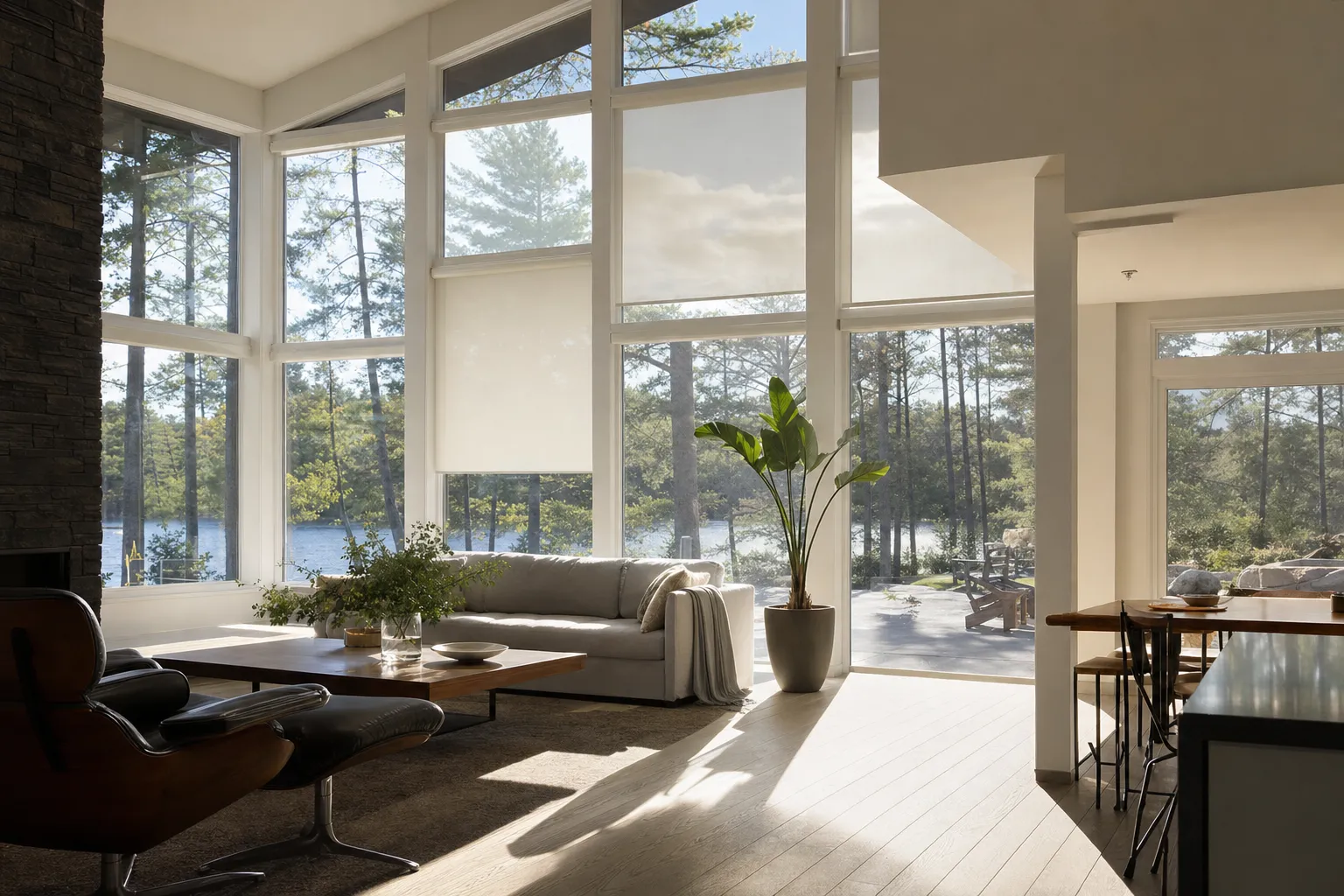
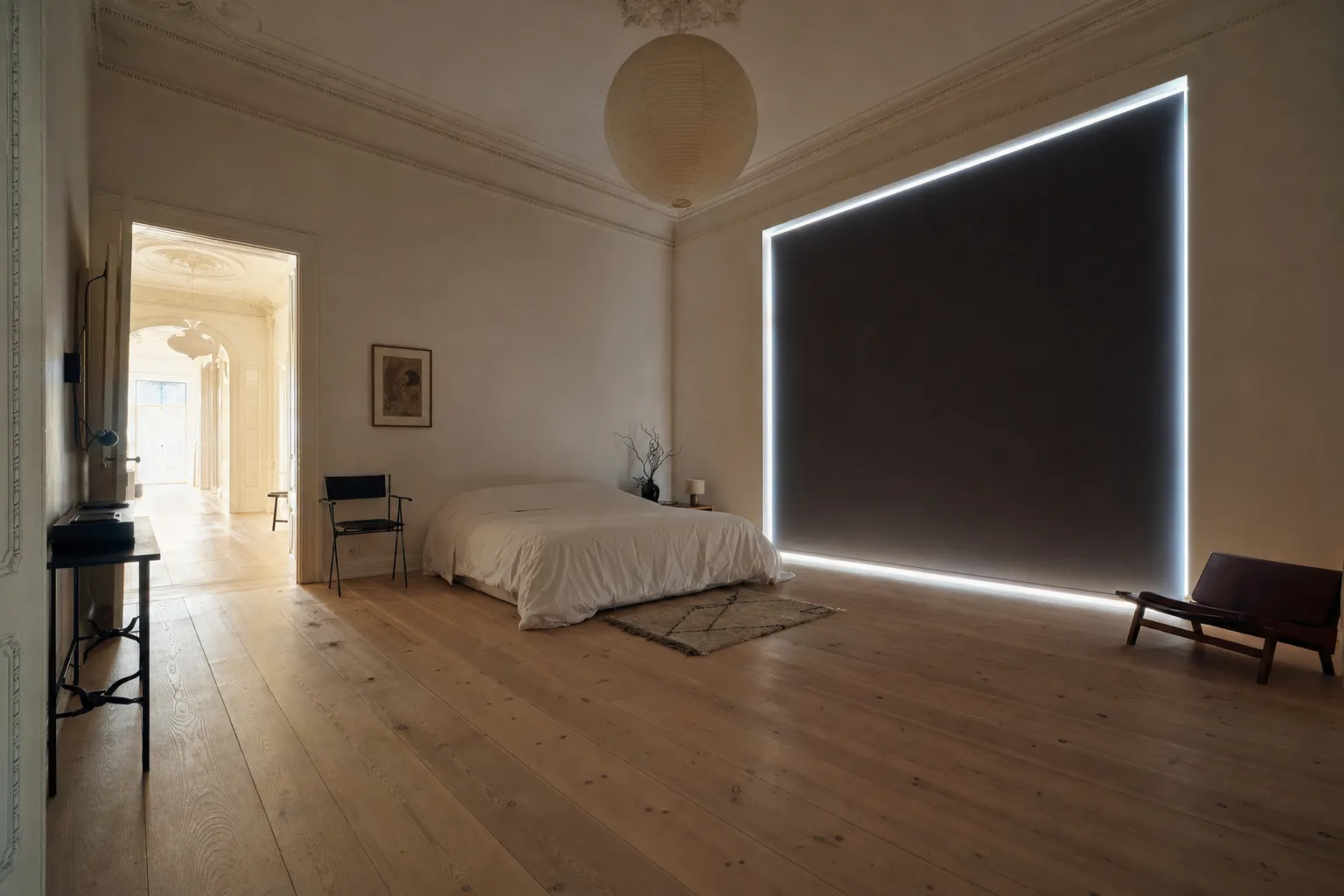
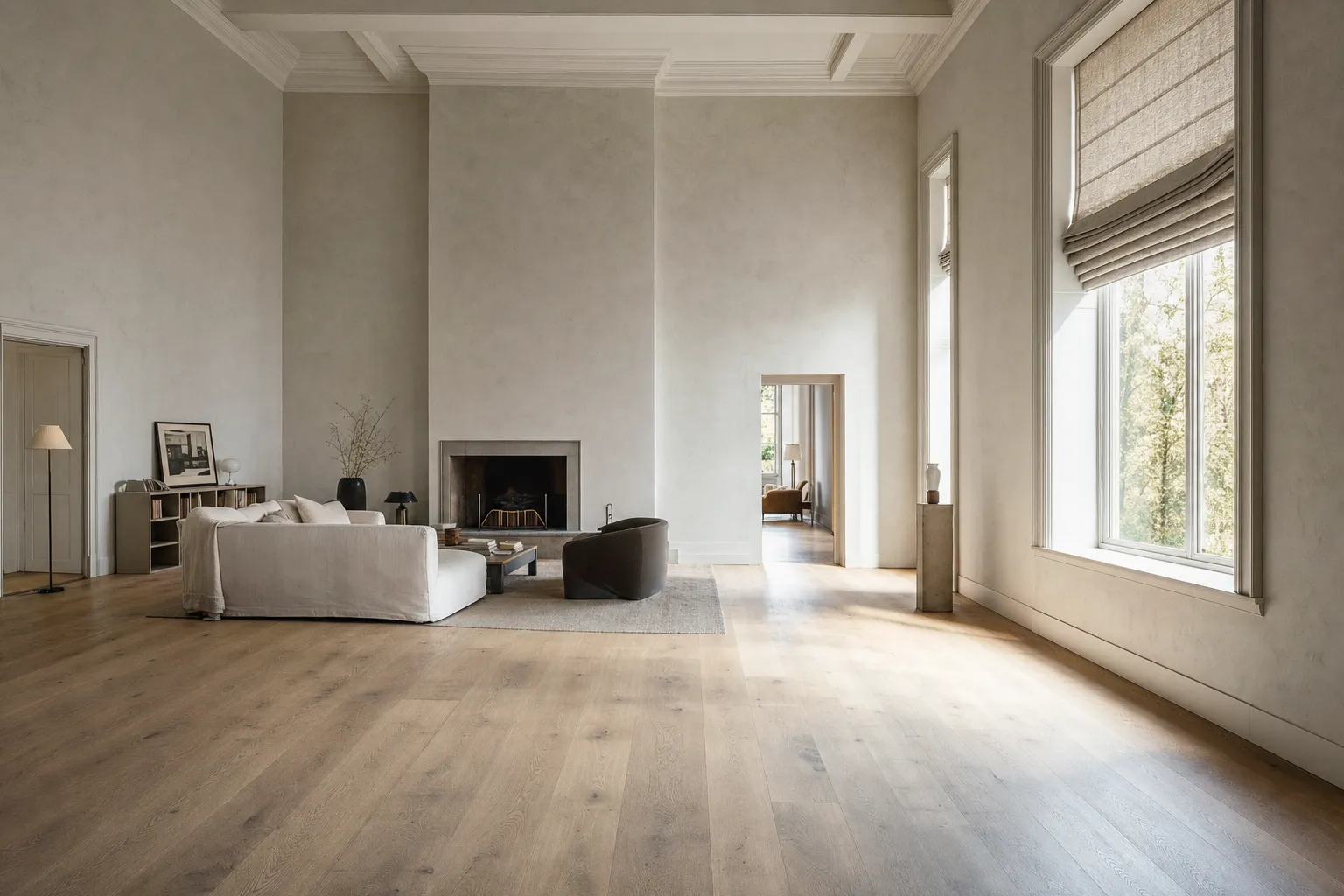
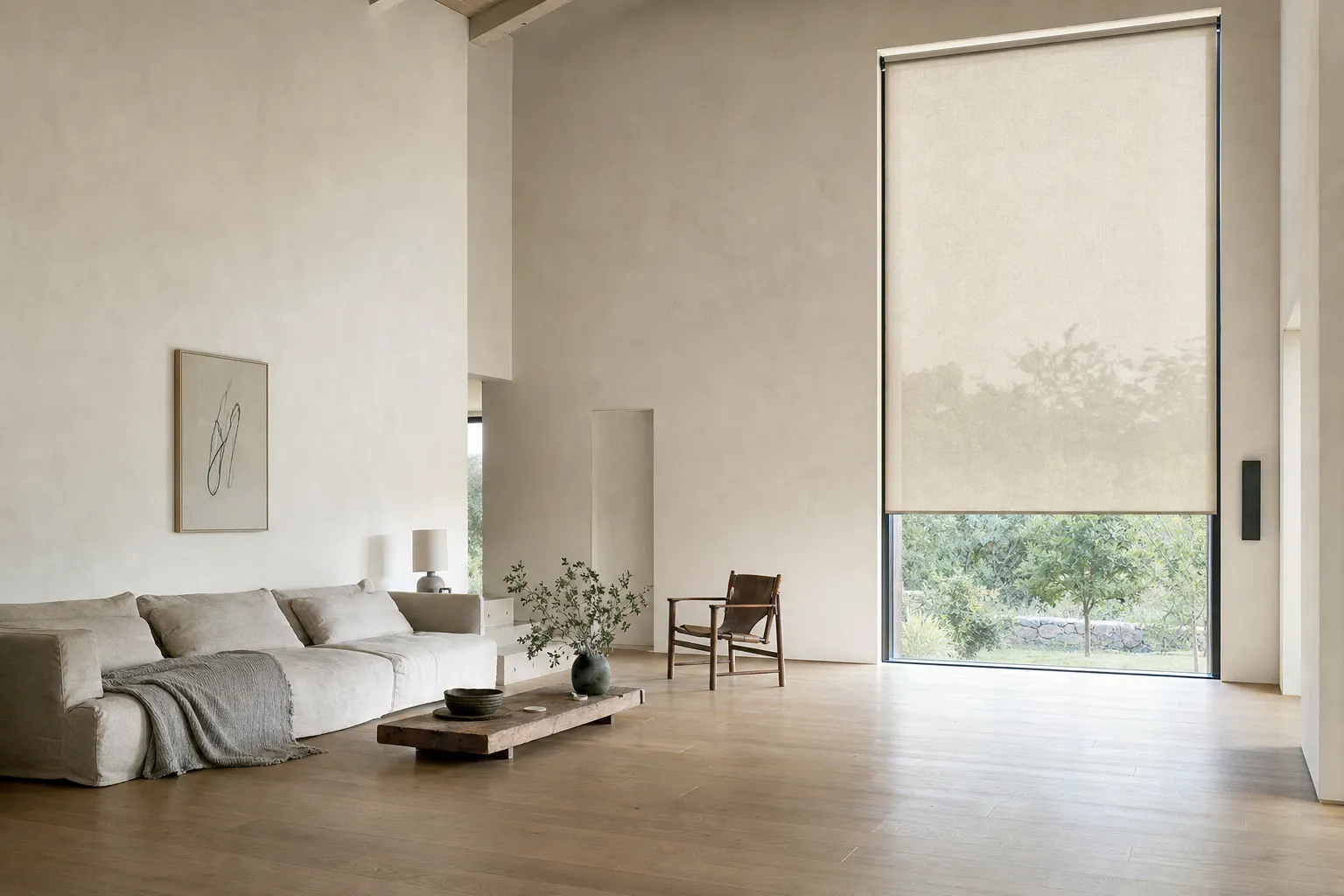
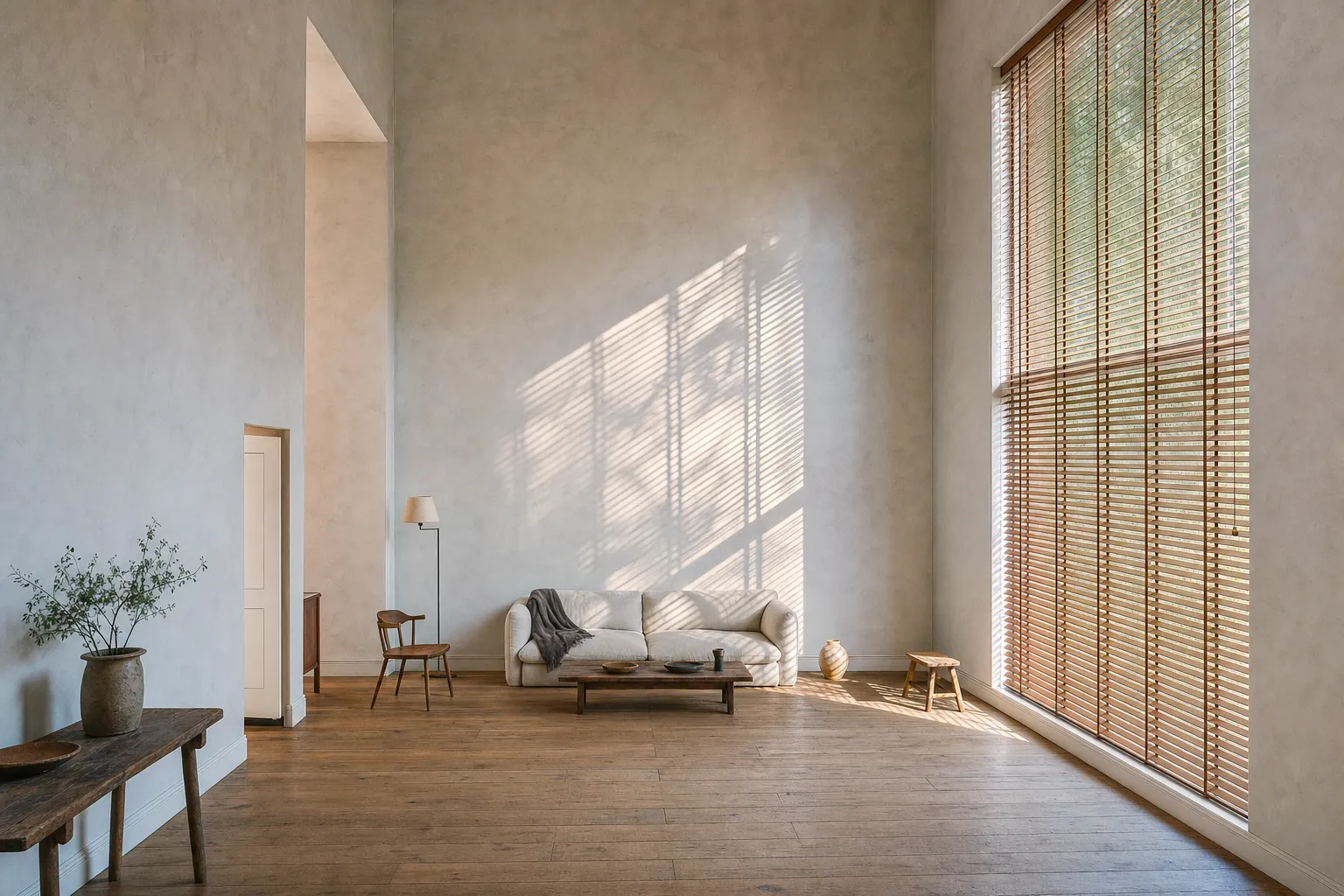
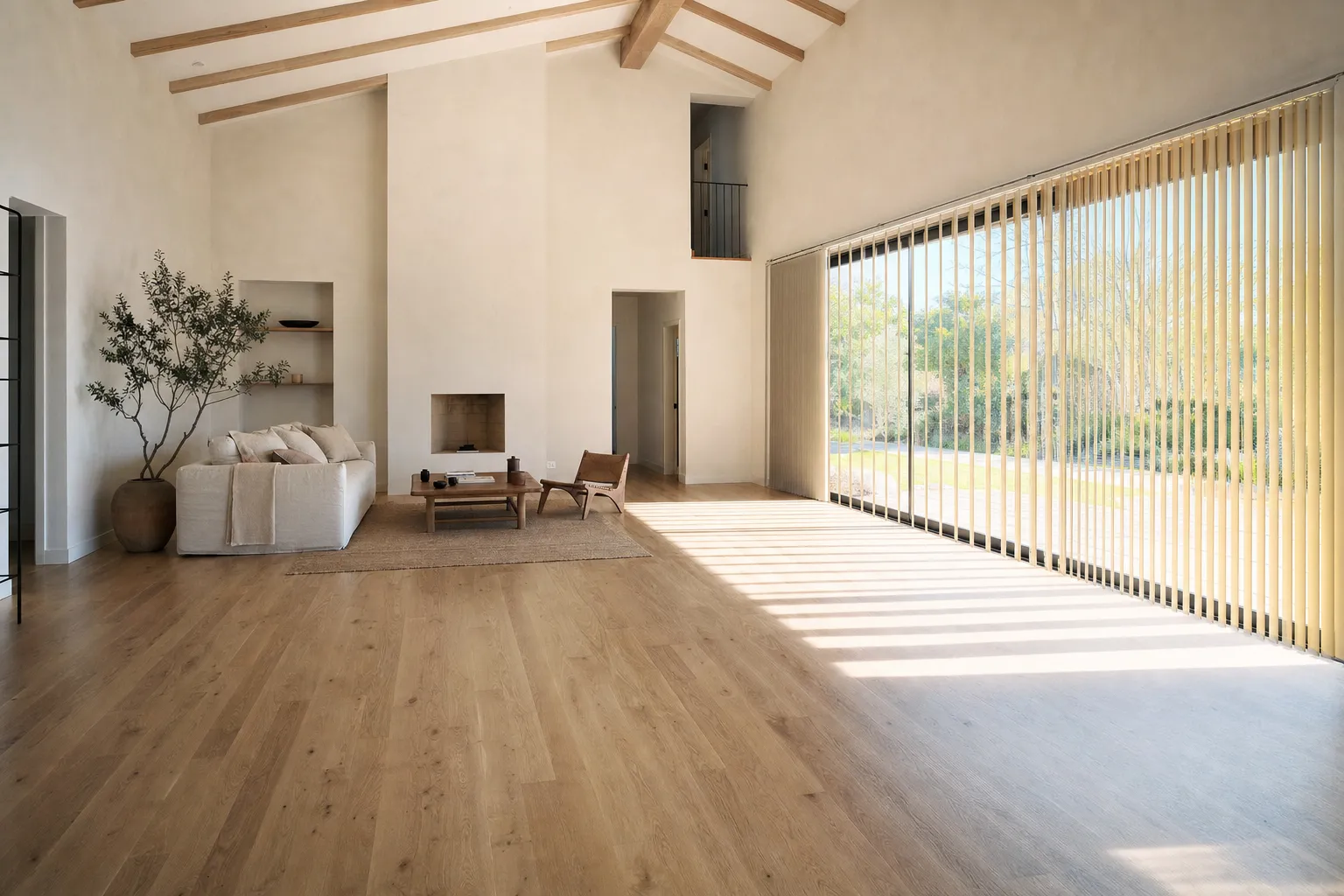
What motorized blinds look like once they are up.
The product, not our installations — a gallery of rooms we did not fit would be somebody else's portfolio with our name on it.
Two Torontos, two completely different motor jobs
Motorized blinds sell in this city for two unrelated reasons, and the specification is almost opposite in each.
In the old housing — the semis and Victorians across the east and west ends — the motor is bought because the window is awkward: a stair window on a half-landing, a transom over a front door, a tall sash in a room with a bay you cannot walk behind. The blind is reachable in theory and unreachable in practice.
In the towers — downtown, the waterfront, the Yonge corridor — the motor is bought because the glass is genuinely out of reach, or because there are six blinds across one wall and operating them individually is a chore nobody keeps up.
The difference matters because the power question flips. In a century house there is nowhere to run a wire without lifting a floor, so battery is the answer nearly every time. In a tower there is often power at the ceiling already, or a fit-out in progress, and hardwiring is straightforward and better.
Everything general about the product — motors, controls, groups, schedules, which products take a motor well — is on the motorized blinds page. This page is what is specific to doing it here.
The wiring problem in a century house
Worth being concrete, because “you’ll need an electrician” is the reason most people in older Toronto housing assume this is not for them.
You will not. A rechargeable tube motor arrives inside the blind, and the only service it ever needs is a USB cable at the headrail two or three times a year. No chasing, no lifted boards, no electrician, and nothing about the house is altered.
Where hardwiring is genuinely better is where charging is itself the problem — a blind at the top of a stairwell that would need a ladder every eight months. In that one case the honest advice is to run the wire during whatever other work is happening, because doing it as a standalone job in a plaster house is disproportionate.
There is a middle option people rarely hear about: mounting the motor’s battery pack separately at the head of the blind rather than inside the tube, so it can be unclipped and charged at a socket and clipped back. On a high window that is often the difference between a blind that gets charged and one that does not.
Signal, and the thing that actually blocks it
Radio control through a Toronto house is usually fine and there is one specific exception worth knowing.
Lath and plaster with a metal mesh. Some pre-war plasterwork uses expanded metal lath rather than wood, and a metal mesh in a wall behaves a little like a screen. It does not block a signal outright; it attenuates it, and two of those walls plus a floor can be enough to make a remote unreliable at the far end of a house.
Concrete floors in a tower. Between floors, not within them. Rarely an issue in a single unit.
Distance in a narrow three-storey semi. The geometry that catches people out: a blind on the top floor and a controller in the basement is a long vertical path through two floors.
All three are solved by a repeater, which is small, cheap, and plugs into a socket. We check the worst-case path at the measure — usually by standing where you would stand and pressing the button — rather than discovering it after installation.
The windows here that are worth it
In a typical Toronto house, one or two. The list is short and specific.
The stair window on a half-landing. There is no floor in front of it. Nothing manual is a sensible answer, and it is the single most common motorized blind we fit in this city.
A transom over a front door. Small, high, and the room’s only light leak at night if the main blind is blackout. A motor pairs it to the blind below so both move together.
A two-storey addition at the back. Common on the older semis, and the glass at the top is decorative rather than functional — which is worth asking about, because if it never needs to move, a fixed panel is cheaper and better than a motor.
A wide heavy blackout in a front room. The one people do not expect. Force scales with width and cloth weight, so a three-metre blackout at ordinary height can be harder to operate than a small blind twice as high. If somebody in the house struggles with it daily, that is the window.
What is not on the list is the rest of the house. A cordless spring blind at ordinary height is a better product than a motorized one — cheaper, nothing to charge, nothing to pair.
Limits, and why a bay punishes a careless one
Every motorized blind has a top stop and a bottom stop set on site. On one window a two-centimetre error is invisible. Put five of them in a Toronto bay — which is how bays are always done, one blind per section — and you see all five at once from the middle of the room, and the error is the first thing anybody notices.
That makes commissioning, not manufacturing, the part that decides whether a motorized bay looks right. The limits get set with somebody standing back and looking, adjusted, and looked at again. It takes twenty minutes and it is the difference between a bay that reads as one thing and five blinds that happen to be near each other.
The related decision is grouping. One button for the whole bay is right for the evening, when you want the lot closed. It is wrong in the afternoon, because the sections do not face the same way and on a corner lot one can be in full sun while another is shaded. So we usually set both: the group for convenience, and individual control for the section that misbehaves.
What a motor will not fix
Worth saying at the end, because motorizing gets proposed as a solution to things it does not solve.
It does not fix a blind that is the wrong fabric. If a room is still too bright with the blind fully down, a motor makes the wrong blind arrive faster.
It does not fix a gap. Light around the edges is a mounting problem, and a motor changes nothing about where the brackets are.
It does not fix an out-of-square opening. The bottom bar still lands where the sill is, and a motorized blind holds that error perfectly still for you to look at.
It does not make a blind quieter. It adds the one noise the product did not have.
Where a motor genuinely earns its money is narrow and we would rather name it than sell around it: a window nobody can reach, a blind too heavy for the person using it, and a room that should be shaded while the house is empty. In a Toronto house that is usually one window. Occasionally two.
Schedules in a city with real seasons
This is the part that makes automation useful here rather than a gimmick, and it is genuinely local.
Toronto’s sunset moves by more than four hours across the year — a little after half past four at the end of December, close to nine at the end of June. Any blind schedule set to a clock time is therefore wrong for most of the year: “close at six” is an hour after dark in January and three hours before it in July.
Every current system solves this the same way, and it is worth asking for by name: schedule to sunset and sunrise rather than to the clock. The system knows the date and your location and moves the offset with the season, so “close thirty minutes before sunset” means something all year.
Two Toronto-specific consequences follow.
Winter is when the schedule earns its money, not summer. People buy automation imagining July afternoons. In practice the December case is stronger: it is dark by five, the room is lit, and a blind that closes itself before the street can see in is doing a job every single evening for four months.
Morning schedules need a hand brake. Sunrise at 5:35am in June will open a bedroom blind before anybody wants it. Either the bedroom stays off the schedule, or it opens at a fixed clock time and closes at sunset — a mixed rule that every system supports and almost nobody is told about.
The third thing, which has nothing to do with the season: put a wall switch beside the light switch anyway. A schedule handles the ordinary day; the switch handles the day that is not ordinary, and it is what people actually reach for.
Adding a motor to a blind you already have
Common question here, because so much of this housing already has blinds that are five or fifteen years old.
When it works. A well-made roller with a standard tube diameter, sound brackets and fabric worth keeping. The motor replaces whatever is at one end, the blind is otherwise untouched, and it is meaningfully cheaper than a new blind.
When it does not. A proprietary tube size — common on boxed blinds — leaves nothing to fit. Fabric that has stiffened or discoloured is not worth building on. And a blind whose brackets are into tired plaster needs the fixings redone anyway, at which point the saving has gone.
The honest test. Age and construction, not brand. Under about eight years and made to measure, worth looking at. Over about fifteen, or bought in a box, almost never.
We will look and say which it is. What we will not do is quote a retrofit that technically works and leaves you with a motorised version of a blind you were about to replace anyway.
In a condominium
The motor is invisible from outside, so it is almost never what a board objects to. What comes up instead:
Anything into the building’s electrical. A battery motor avoids the question entirely, which is why it is what we specify in occupied units.
Fixing to a concrete ceiling. Routine, and worth flagging in advance because it is a different drill and, in some buildings, a different permission.
The usual paperwork. Certificate of insurance naming the corporation, booked service elevator. Started at the quote, not the week of the fit.
Hub placement, if you want scheduling. A hub needs your wifi and a socket, and in a unit where the router is at one end and the blinds at the other, that is worth deciding before installation rather than after.
Last updated .
Everything we make
The rest of the range, in Toronto.
Each is wrong somewhere. Its page says where.

Old house or new tower — the answer to "battery or wired" is opposite in each.
Our commitment
We sized the motor and set its limits, so a blind that misses its stop is ours.
If it does not fit, we remake it
You never held the tape.
Nothing owed before you agree
No deposit, no card.
Licensed and insured
Both, before we come in.
Your date, in writing
Set at the quote. It does not move.
We will tell you not to buy
If a stock size does it, you hear so.
Cordless where a child sleeps
Standard, at no extra charge.
Reviews on Google
What people said afterwards.
Rated 4.8 out of 5 — the ones below are quoted in full, with a link to check each on Google.
I'm thoroughly impressed with Blinds Company. From the initial consultation to the final installation, their team delivered exceptional service, expertise, and quality.
Oleksandr StakhurskyiHighly recommend Nick and his team. They installed blinds in my house. Looks wonderful, cheers
Timur Shafikov
Real names, real dates, and a link to all of them — including the ones we would not have picked.
Read them on GoogleQuestions
Before you book
How long does a battery last in a Toronto winter?
Cold shortens it, and the effect is smaller than people fear. A lithium pack in a heated room behaves normally; the one that struggles is a blind sitting against very cold glass in an unheated space — a sunroom, an enclosed porch — where it can drop a good deal of its run time. In an ordinary room a charge lasts several months to a year whatever the month is.
Do you set the schedule up for us or leave us the app?
We set it with you standing there, on the day, because the useful schedule is the one that matches how your house is actually used and nobody can guess that. Then we show you how to change it and how to reset a motor, because at some point in the next decade something will need re-pairing and it is thirty seconds if you know the sequence.
Can a motor be added to just one window now and more later?
Yes, and it is the sensible way to do it. Start with the window that genuinely cannot be reached, live with it for a season, and decide from there. Systems pair additional blinds to an existing remote, so a second phase joins the first rather than becoming a parallel setup with its own handset.
Can motorized blinds go in an old Toronto house without rewiring?
Yes, and battery is why. A rechargeable tube motor needs no electrician and no cable run, which matters enormously in a century house where getting a wire to a window head means lifting a floor or chasing plaster. You charge it two or three times a year from a USB cable at the headrail. Hardwiring is better where it is easy and it is rarely easy in these houses.
Will the signal reach through a century house?
Usually, and lath-and-plaster with a wire mesh is the one thing that genuinely interferes — it behaves a little like a screen. Two or three walls is normally fine; a blind at the top of a three-storey semi controlled from the basement is not. A small repeater solves it and costs very little, and we check the worst case at the measure rather than after.
Do condo boards have rules about motorized blinds?
They have rules about what the window looks like from outside, and a motor is invisible from there, so the motor itself is almost never the issue. What does come up is anything requiring a wire into the building's electrical, and anything fixed to a concrete ceiling. Battery motors sidestep both. The usual certificate of insurance and booked service elevator still apply.
Which windows in a Toronto house actually justify one?
The stair window, the transom over a front door, anything in a two-storey addition, and the wide heavy blind in a front room that somebody struggles with daily. In a typical semi that is one or two windows, not the house. Anybody quoting a whole house of motors here has decided before measuring.
Can you motorize the blinds already on my windows?
Sometimes, and it depends on the tube diameter and whether the brackets are worth building on. On a blind more than about ten years old it is usually a new blind by the time the parts are counted, and we will say so rather than quote a retrofit that disappoints.
What about a bay window with three or five sections?
Each section is its own blind and its own motor, grouped to one control so the bay moves as one thing. The part that needs care is the limits: three blinds landing at slightly different heights in a bay is far more visible than the same error on three separate windows, because you see all of them at once.
Where we work
Motorized blinds across the GTA.
The same crew measures and fits in every one of these. The visit is free wherever you are on this list.
- TorontoYou are here
- MississaugaPeel
- BramptonPeel
- EtobicokeToronto
- Richmond HillYork
- North YorkToronto
- VaughanYork
- MiltonHalton
- BurlingtonHalton
- MarkhamYork
9 of these have a page of their own so far; the rest are covered by the same crew on the same terms, and their pages are being written. Not sure whether you are inside it? Call and ask — the answer takes ten seconds.
If a window in your house never gets adjusted because nobody can reach it, that is the one worth a phone call. Say how high and which way it faces.