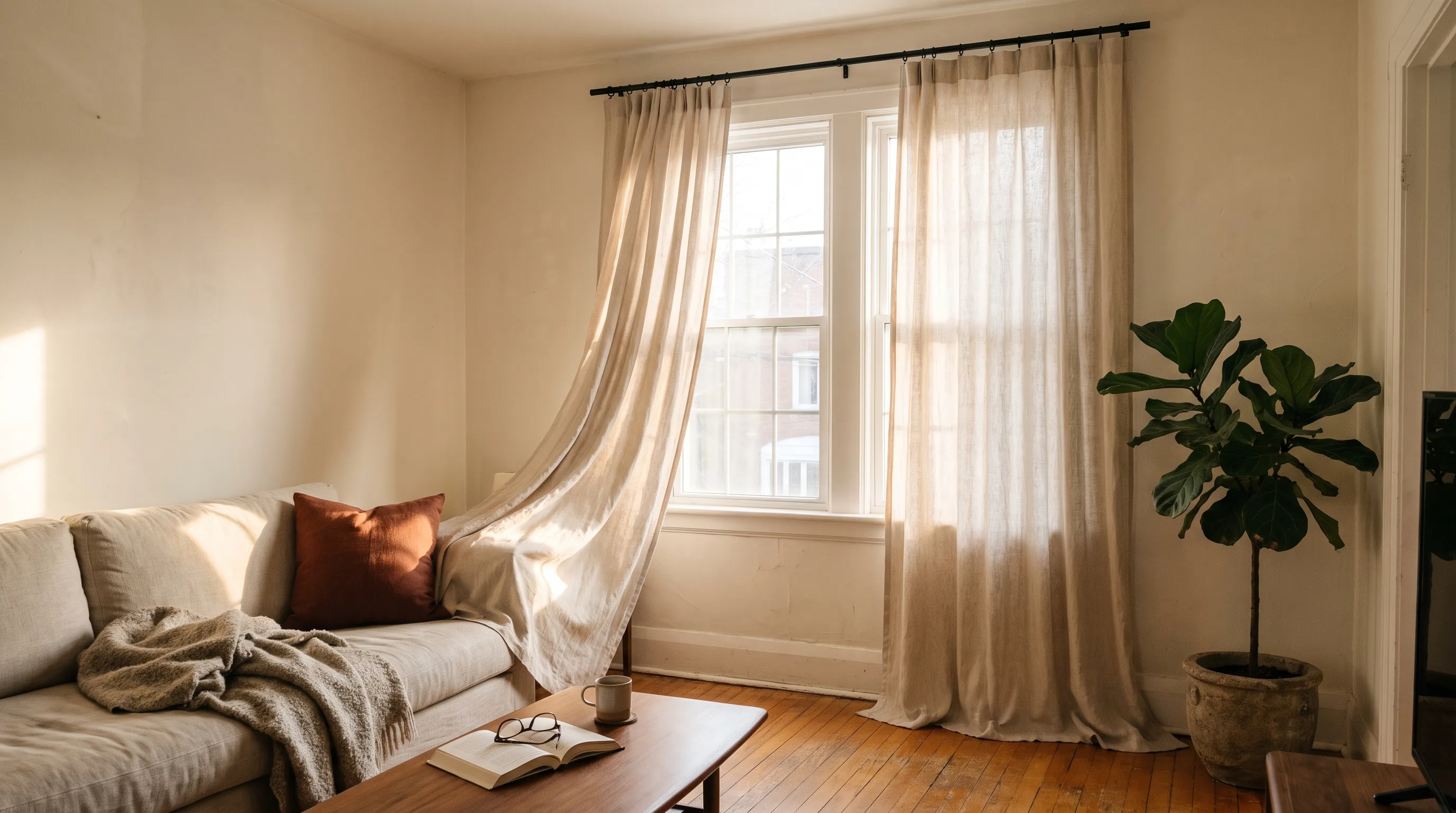
Curtains in Toronto
Curtains and drapery made to your windows and hung across Toronto. In a century house the argument is rarely decoration: it is a draughty sash, a ceiling too high for a blind to look right against, and a room that has to work in February.
Blinds Company · Rated 4.8 out of 5 on Google
Free in-home measure · open 8am–9pm, 7 days
In short
Curtains made to your openings and installed in Toronto. Old windows that leak heat and old rooms with high ceilings — the two things that make a curtain the right answer here rather than a decorative one.
Book
Let's measure your light.
We come to you, measure at your own windows, and go through fabrics and fits together. The visit costs nothing.
$99 off when you order three or more blindsApplied to your written quote at the measure.
Rather just talk?(437) 782-5452Open 8am–9pm, 7 days
In a room
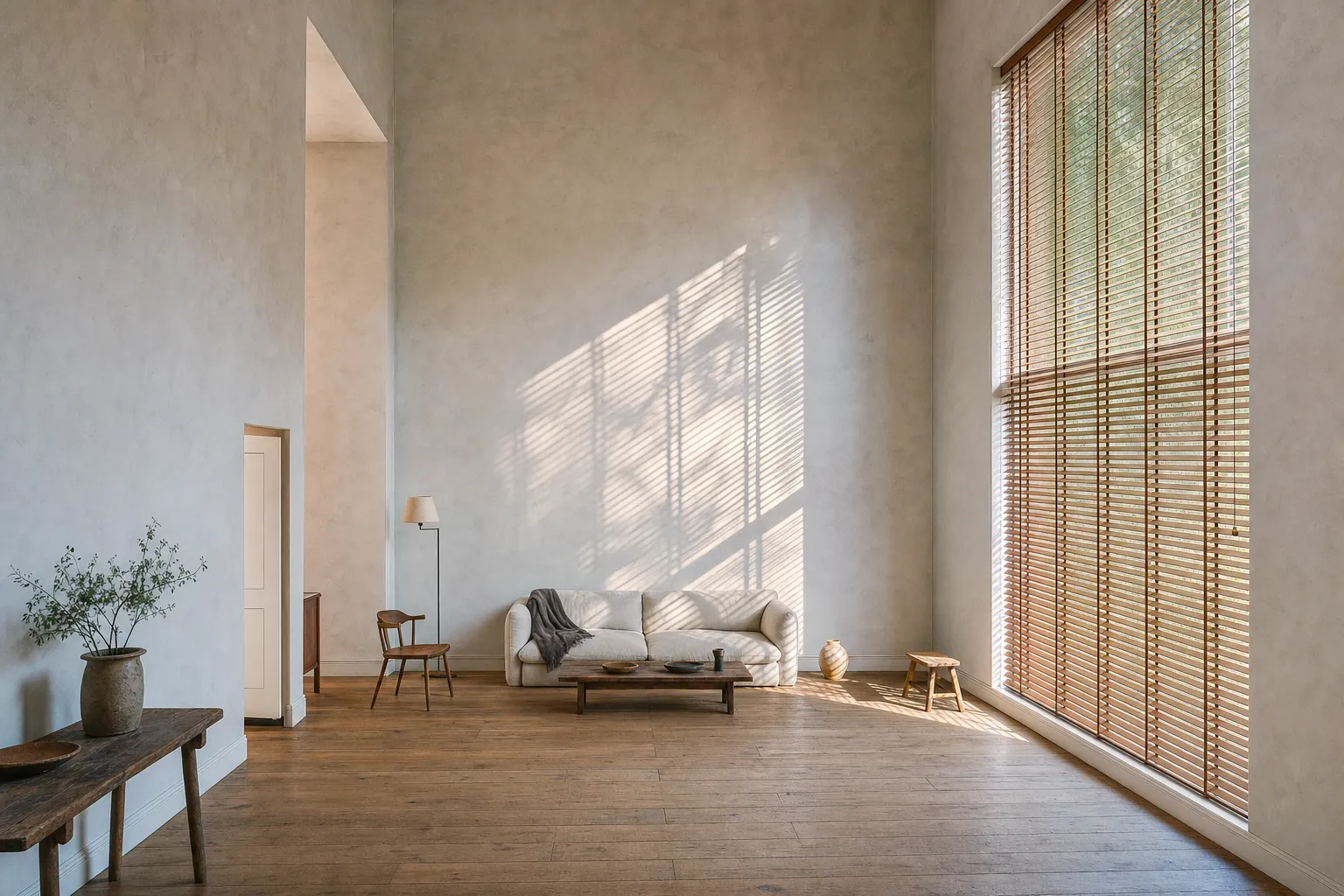
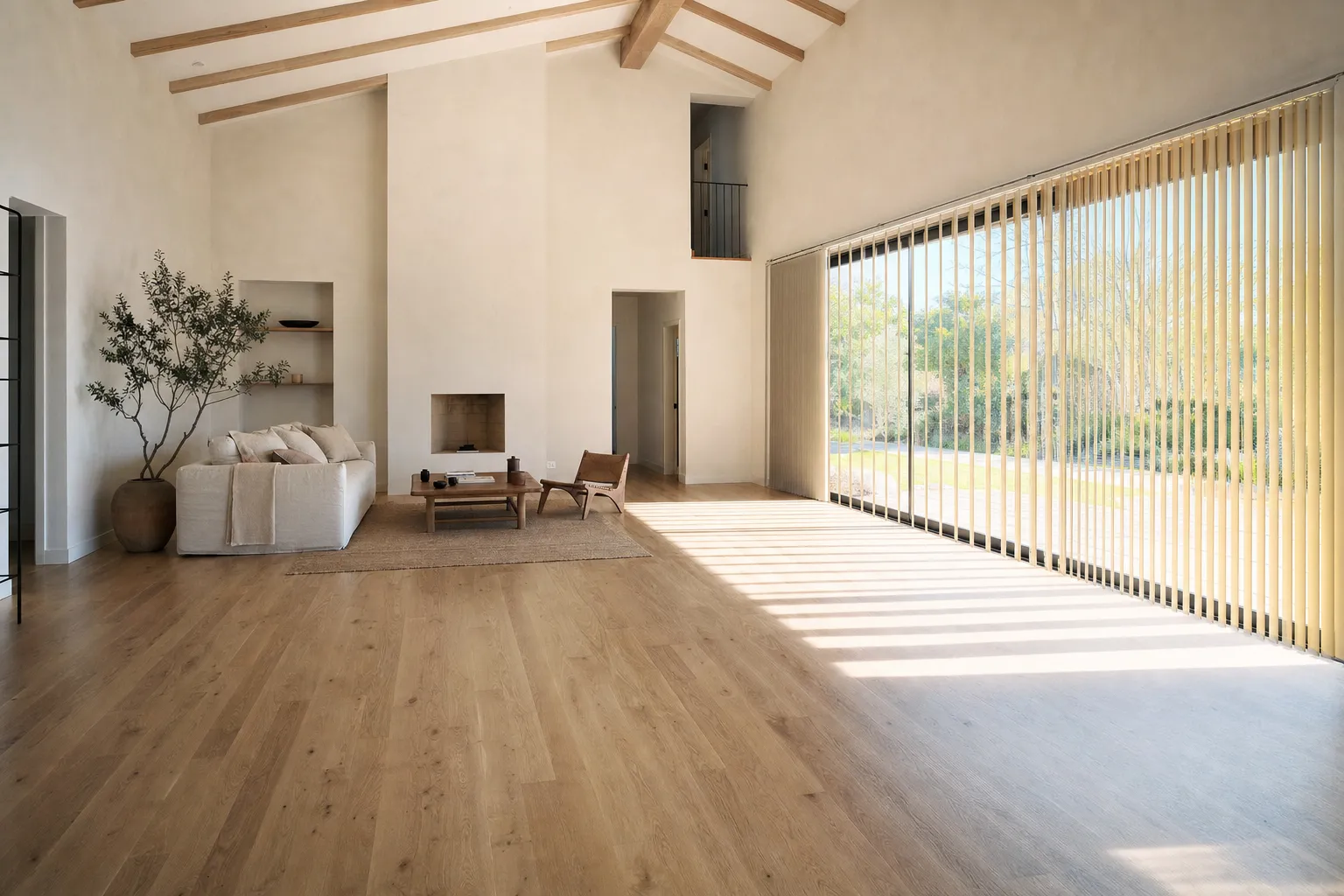
What curtains look like once they are up.
The product, not our installations — a gallery of rooms we did not fit would be somebody else's portfolio with our name on it.
Why curtains, in these houses
On a new build a curtain is usually a decorative decision layered over a blind that is already doing the work. In Toronto’s older housing the order reverses, and it is worth saying why before any conversation about fabric.
Three things about a pre-war house make a curtain the load-bearing product rather than the pretty one.
The windows leak. A single-glazed sash with a storm outside it, or an early replacement unit in a tired frame, loses heat by air movement as much as by conduction. Cold air falling off the pane spills across the floor, and the room feels several degrees colder than the thermostat says at the far end. A blind on brackets does almost nothing about that; a lined curtain closing against the wall does a great deal.
The ceilings are high. Ten and eleven feet is ordinary in these houses. A blind finishes at the top of the window frame and leaves everything above it bare, which in a tall room makes the window look like a hole in a wall. A curtain hung near the cornice takes the eye up and makes the window read as the full height of the room. That is not decoration for its own sake — it is the thing that makes a Victorian room look right rather than furnished for a bungalow.
The rooms have proportions somebody thought about. Mouldings, picture rails, plaster cornices. A soft vertical at each side of a window sits in that language. A hard horizontal line across it frequently does not.
None of that means a blind is wrong in an old house. It means that in the front room of a semi off the Danforth, a curtain is often solving the actual complaint and the blind is solving a different one.
The track is the measurement, not the window
This is the thing people are least prepared for, and it is where most of the decisions live.
A blind is measured to the opening. A curtain is measured to a track, and the track’s position is a choice made before any number is taken. Get it wrong and no fabric rescues it.
Height. Above the frame, always. How far above depends on the ceiling, on whether there is a picture rail, and on what the room is for. In a ten-foot room we are usually looking at somewhere between fifteen and thirty centimetres above the frame, or tight under the cornice where the room can carry it. A track sitting on the frame is the single most common reason a curtain looks wrong in a room like this.
Width. Wider than the window on both sides, so that when the curtains are open they stack on the wall rather than on the glass. On a narrow Toronto lot the wall either side of a front window is often only twenty or thirty centimetres, which is not enough for a full stack — so either the curtain covers part of the glass when open, or the fullness comes down, or the stack goes deeper and narrower. That trade gets made in the room with a tape, not on a form.
What the wall is made of. Plaster on lath over a masonry wall is what most of these houses have above a window, and it is not a material you can put a bracket into anywhere you like. Finding the timber, or fixing to the frame, or using a fitting that spreads the load, is decided when we can knock on it.
The part of the lining decision that is about February
What the four lining choices are, what fullness means and why two quotes for the same cloth differ by half are all on the curtains page. One thing is specific to an old Toronto house and it matters more than which lining you pick.
A curtain only insulates if it closes against something.
Cold air falling off a single-glazed sash has to go somewhere. If the curtain has a gap at the top, the cold air spills over it into the room and warm room air is drawn in behind to replace it — so the curtain becomes a chimney rather than a barrier, and the glass gets more of the room’s heat rather than less.
Three details turn a fabric panel into a thermal object, and none of them is the lining:
A pelmet or a closed head. Something across the top so air cannot fall over the track. A board, a deep fascia, or a track recessed into a boxed head.
A return at each end. The curtain finishing against the wall rather than in mid-air, so the sides are closed too.
A hem that passes the sill. Stopping at the sill leaves the coldest part of the window — the bottom, where the falling air is — outside the curtain.
Get those three and a standard lining outperforms an interlined curtain hanging loose. Get none of them and the most expensive lining in the book is decoration.
The Toronto-specific complication is the radiator, which is under the window in a good share of these houses and which makes the third point impossible. There the honest answer is sill length and a blind doing the perimeter work, or accepting that this window is not the one the heat argument applies to.
Length: three that are right and one that is not
To the sill. Finishing just above it. Correct where a radiator sits under the window, which in these houses is most of the time.
Below the sill. Ten to fifteen centimetres past, hanging in front of the wall. Better than sill length where there is no radiator and the window is short.
To the floor. Brushing it, or breaking on it by a couple of centimetres. Correct in a formal room and the only length that works in a room with real height.
Anything else. A curtain finishing halfway down a wall, or floating three centimetres above the floor, reads as a mistake even to people who could not say why.
The radiator is the Toronto-specific complication. A floor-length curtain hanging in front of a cast-iron radiator traps the heat behind the fabric, where the room does not get it and the window does. In those rooms the honest answer is sill length, or a curtain that stops above the radiator and a blind doing the rest.
The picture rail, which decides the height for you
A great many Toronto houses built before about 1930 still have a picture rail running around the room — a moulded timber strip six or twelve inches below the ceiling, put there so pictures could hang from hooks without putting nails in plaster.
It is the single most useful thing in the room for this decision, and it is usually treated as an obstacle.
It gives you the line. A track set just below the picture rail reads as deliberate, because the room already has a horizontal at that height and the eye accepts a second one aligned to it. A track set at an arbitrary height between the window frame and the rail creates a third line competing with the first two, and it looks wrong in a way people notice without being able to say why.
It is timber, and timber holds. Where the rail is original and sound, it is often the only reliable fixing on a lath-and-plaster wall. The bracket can go into the rail itself or into the wall immediately below it where the framing behind is usually more substantial.
It sets a maximum. Above the rail is not an option in most rooms — a track fixed over a picture rail looks like it was installed by somebody who did not see the rail. So the rail becomes the ceiling for this decision, and the question narrows to how far below it the track sits.
Two cases where the rail does not settle it. If it has been removed in one room and survives in the next — common where a house has been partly renovated — the two rooms will want different heights and matching them makes one of them wrong. And if the rail sits unusually low, as it does in some smaller rooms, hanging tight under it can put the curtain head below where the proportions want it, and the honest answer is to ignore it and take the height from the window instead.
Worth mentioning at the measure whether the rail is original, added later or about to be removed, because all three change the answer.
Bays, corners, and the awkward Toronto window
A bay. Three or five facets meeting at angles that are rarely the tidy numbers a drawing would use. The track is bent to the actual bay, templated in the room. The decision to make first is where the stack lives, because on a bay with short returns there is nowhere for a full stack of fabric to go except across some glass.
A window beside a door. Common on a semi’s front elevation. The track has to clear the door swing and the stack has to not sit in the entry, which usually means drawing to one side rather than parting in the middle.
A window in a corner. Two windows meeting near a corner need either one continuous bent track or two tracks with a deliberate join. Two tracks butting at a corner with no thought looks like an accident.
A window with a working sash. If you open it, the curtain has to clear the lift and the lock. Worth mentioning at the measure, because the fix is easy in advance and impossible afterwards.
Curtains over a blind, which is the common answer here
In a good number of the rooms we quote, the honest recommendation is both.
The blind takes the day: glare on a screen, the afternoon sun off a west-facing front room, privacy from a sidewalk a few metres away. It is easy to adjust and it sits close to the glass.
The curtain takes the evening and the winter: closing the room in, cutting the draught, softening the acoustics, and making the window look like part of a room rather than an aperture in it.
The reason to do both deliberately rather than one after the other is depth. The blind has to sit inside the opening or tight to it, and the track has to be far enough forward that the curtain passes without catching. Decided together, that is free. Decided a year apart, it is often a blind that has to come down.
Check the curtain path with the radiator in use
A cold radiator is easy to measure around and a poor model of the room in February. Before choosing the length, note whether the unit is still used, how far its valve and pipework project, and where warm air actually rises. The curtain needs a clear path when it is drawn and when it is stacked; neither position should leave fabric resting on the radiator or caught behind a valve.
This check often separates two workable specifications. Sill-length curtains can leave the heat source open and give the window softness, while a close-fitting blind handles privacy at the glass. Where floor length matters visually, the track and stack may be planned beyond the radiator rather than directly in front of it, if the wall allows.
The point is to draw the full arrangement in the room before ordering. Window width alone cannot describe the route the fabric must travel around an active piece of heating equipment.
What the visit involves
The track gets decided before anything is measured — height, width, where the stack goes, what the wall above the window is made of. That conversation is most of the visit and it is the part that cannot happen on a form.
Then the numbers, then the fabric, held up in the room in the room’s own light and at the height it will actually hang, because a swatch flat on a table tells you almost nothing about how a cloth falls.
You keep a written quote itemised per window, with the fullness, the heading, the lining and the track stated. Nothing owed either way.
Last updated .
Everything we make
The rest of the range, in Toronto.
Each is wrong somewhere. Its page says where.

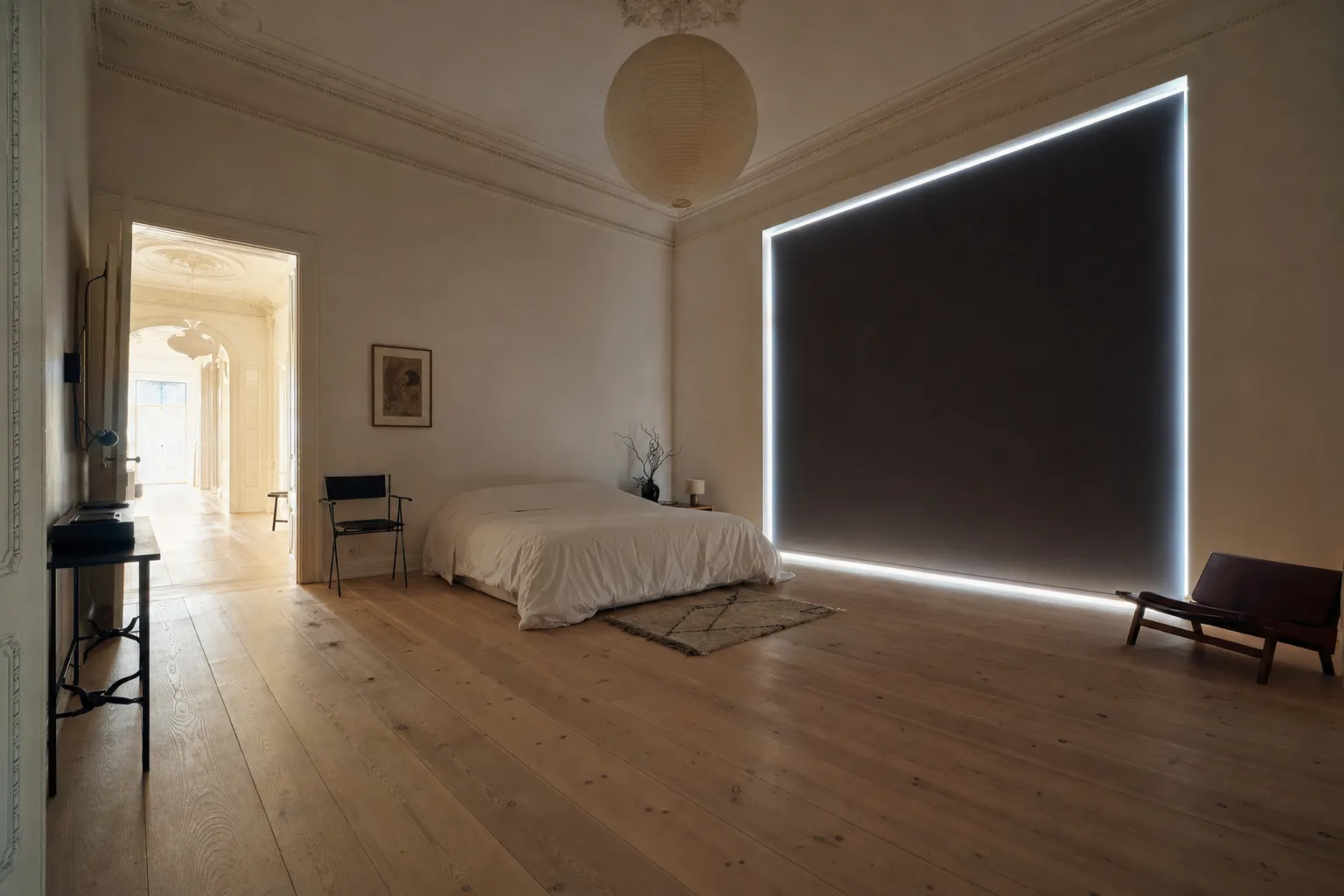
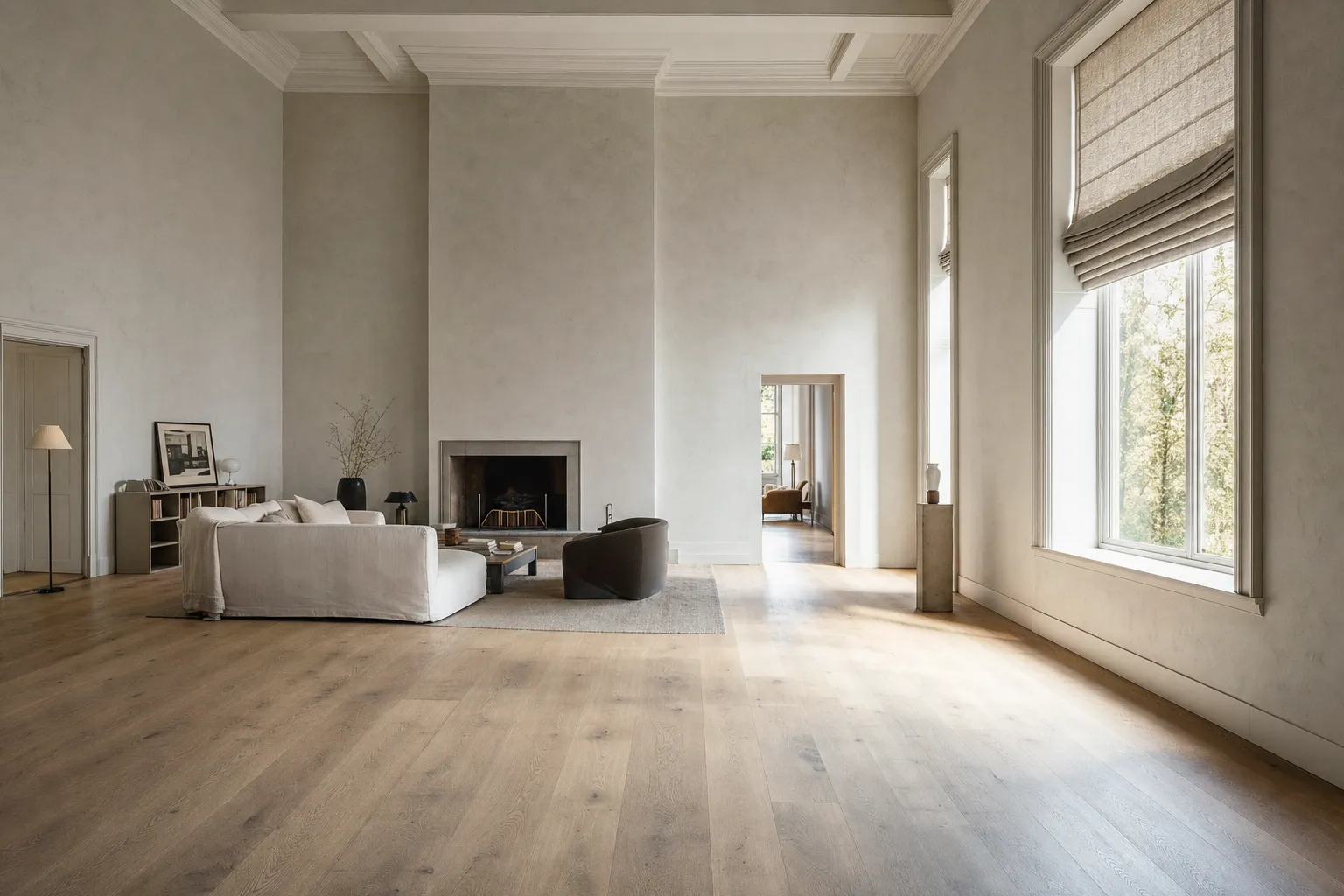
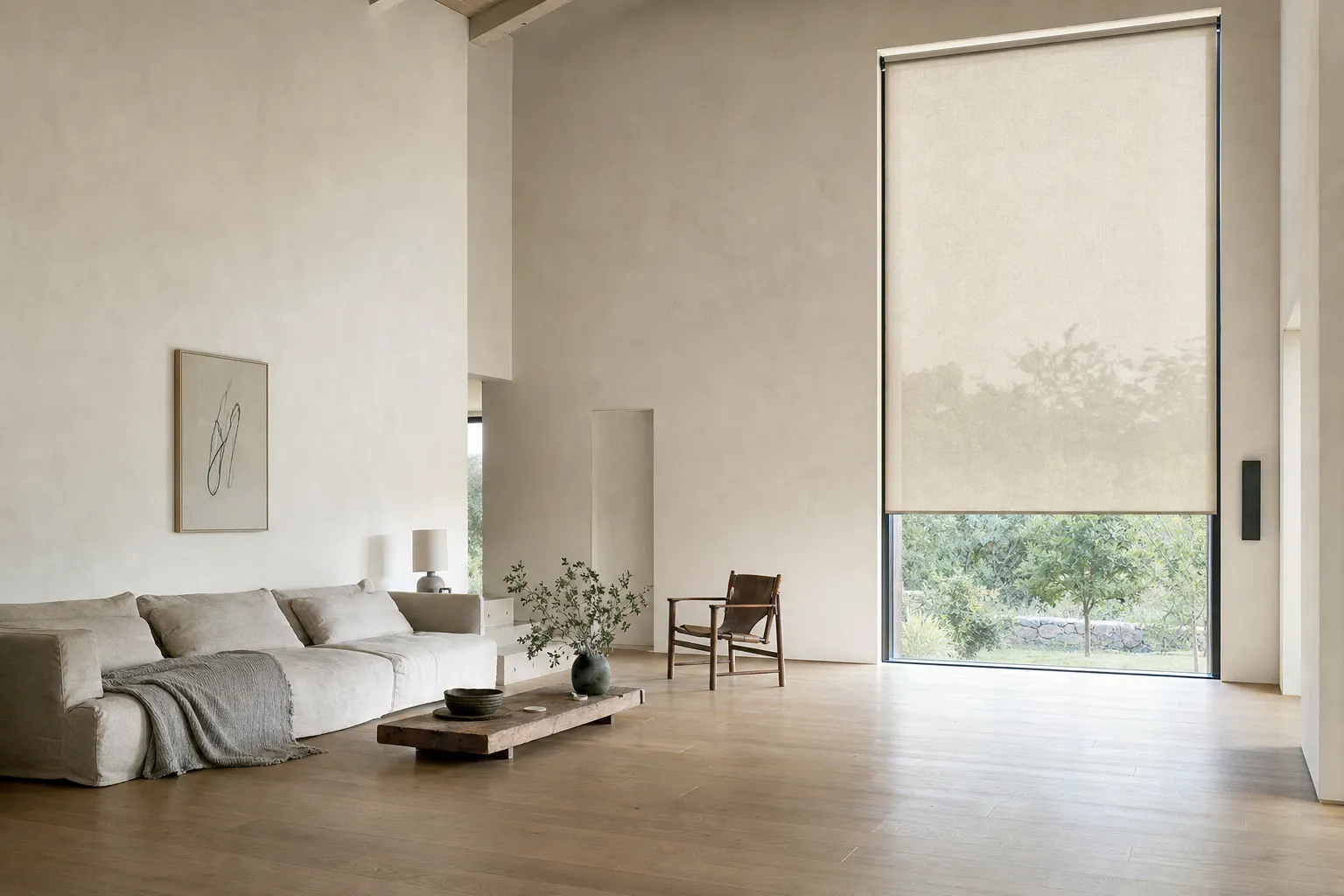
Track first, window second. That is a measure in your own room, and it costs nothing.
Our commitment
We set the track height and the width, so a curtain that hangs short is ours to fix.
If it does not fit, we remake it
You never held the tape.
Nothing owed before you agree
No deposit, no card.
Licensed and insured
Both, before we come in.
Your date, in writing
Set at the quote. It does not move.
We will tell you not to buy
If a stock size does it, you hear so.
Cordless where a child sleeps
Standard, at no extra charge.
Reviews on Google
What people said afterwards.
Rated 4.8 out of 5 — the ones below are quoted in full, with a link to check each on Google.
I was blown away by the exceptional customer service from Blinds Company! Their staff was knowledgeable, friendly, and helped me find the perfect blinds for my living room. The installation was quick and flawless. I highly recommend them!
Merdan BerdiyevI'm thoroughly impressed with Blinds Company. From the initial consultation to the final installation, their team delivered exceptional service, expertise, and quality.
Oleksandr Stakhurskyi
Real names, real dates, and a link to all of them — including the ones we would not have picked.
Read them on GoogleQuestions
Before you book
Do curtains actually help with a draughty old window?
Considerably more than a blind does, and it is the main reason we hang them in this city. A blind sits on brackets with air moving freely around it. A lined curtain closing against the wall on both sides, running past the sill rather than stopping at it, traps a layer of still air against the glass and interrupts the cold draught that falls off a cold pane into the room. It is not insulation in the building sense, and in a Victorian front room it is the difference between using the seat by the window in January and not.
How high should the track go?
Higher than the window, almost always. In a Toronto house with ten-foot ceilings, a track set just above the frame leaves a band of wall above it that makes the window look squat and the room look shorter. Halfway between the top of the frame and the cornice is the usual answer; tight under the cornice suits a room with real height. The decision is made in the room, because it depends on what else is on that wall.
Can I have curtains and a blind on the same window?
Yes, and in these houses it is often the right answer rather than an indulgence. The blind handles daylight — glare, privacy in the afternoon — and the curtain handles the evening and the cold. Two independent things, each doing one job properly, instead of one product asked to do both. The only constraint is depth: the blind has to sit inside or tight to the opening so the curtain can pass in front of it without catching.
What is fullness, and why does it change the price?
Fullness is how much fabric is gathered across the track. Double fullness means twice the track width in cloth. It is the single biggest driver of what a curtain costs and the number least often stated in a quote, which is why two prices for "the same curtains" can differ by half. A skimped curtain does not read as cheap fabric — it reads as a curtain that will not close properly and hangs flat.
Will they fit a bay window?
Yes, on a bent track made to the bay's actual angles. A bay is not a curve and it is not one straight run, so the track is templated in the room. What to decide beforehand is where the curtains stack when open: on a Toronto bay the returns are usually short, so the stack has to go across part of the glass or onto the flanking wall, and which one you accept changes the look.
Do you make them, or order them in?
Made to the measurements taken in your home, under our own name, and hung by the crew that measured. There is no third-party label and no brand markup in the price.
Where we work
Curtains across the GTA.
The same crew measures and fits in every one of these. The visit is free wherever you are on this list.
- TorontoYou are here
- MississaugaCurtains
- BramptonCurtains
- EtobicokeToronto
- Richmond HillYork
- North YorkToronto
- VaughanYork
- MiltonHalton
- BurlingtonHalton
- MarkhamYork
9 of these have a page of their own so far; the rest are covered by the same crew on the same terms, and their pages are being written. Not sure whether you are inside it? Call and ask — the answer takes ten seconds.
If a room in an old house is cold and you have been told to buy a blind, that is the wrong advice and worth five minutes on the phone.