
Curtains in Mississauga
Made-to-measure curtains and drapery across Mississauga. In newer housing the reason is rarely draught: it is a room whose glass is two storeys tall, whose floors are hard, and which sounds like a hall until something soft goes up.
Blinds Company · Rated 4.8 out of 5 on Google
Free in-home measure · open 8am–9pm, 7 days
In short
Curtains made to your openings and installed in Mississauga. Big modern windows and double-height rooms, where the question is not warmth but scale — and where a curtain is doing an acoustic job nobody mentions.
Book
Let's measure your light.
We come to you, measure at your own windows, and go through fabrics and fits together. The visit costs nothing.
$99 off when you order three or more blindsApplied to your written quote at the measure.
Rather just talk?(437) 782-5452Open 8am–9pm, 7 days
In a room
What curtains look like once they are up.
The product, not our installations — a gallery of rooms we did not fit would be somebody else's portfolio with our name on it.
A different reason from the old city
Curtains in a century house are usually solving cold and proportion. In Mississauga they are usually solving something else entirely, and the specification follows.
The housing here is newer, better sealed and squarer. A window in Erin Mills or Churchill Meadows is not leaking cold air off the glass in the way a Victorian sash does, so the thermal argument that dominates in the old city is real but secondary.
What replaces it is scale and sound.
Scale, because the rooms are large and the glass is often two storeys. A blind finishing at the head of a window in a room whose ceiling is eighteen feet up leaves an enormous field of bare wall above it, and no fabric choice fixes that. A curtain hung near the ceiling is the only common product that addresses the height of the room rather than the height of the window.
Sound, because a modern great room is acoustically hostile in a way nobody warns you about. Hard floors, a flat ceiling, a wall of glass, an open plan connecting it to a kitchen with hard surfaces of its own. There is very little in the room to absorb anything, so speech carries, television is hard to follow, and a family conversation feels like an effort. People blame the layout. It is the surfaces.
The largest soft thing you can add to a room
This is the part worth being specific about, because it is the honest reason a good number of Mississauga curtains get bought.
Sound in a room is either absorbed or reflected. Hard flat surfaces reflect; porous and folded ones absorb. A wall of glass is close to a perfect reflector, and a double-height room gives that reflection a long path with nothing in the way.
Curtains work on that for two reasons at once. They are porous, so sound passing into the fabric loses energy rather than bouncing. And they are folded, so the surface facing the room is not flat — sound arriving at an angle meets a corrugated face and gets scattered instead of returned in one direction.
Three practical consequences.
Fullness matters acoustically, not only visually. A curtain gathered at 2.5× has considerably more folded surface than the same cloth at 1.5×, and it does more.
Interlining is the upgrade that actually changes the room. The soft layer between face and lining is mass, and mass is what stops sound. It is also what makes the curtain hang beautifully, so it is one of the rare cases where the expensive option is expensive for two independent good reasons.
They only work when they are closed. Which means this argument applies to the rooms used in the evening — which is exactly when a great room’s acoustics annoy people most.
It will not turn a great room into a quiet room. It reliably takes the hard edge off one, and it is the only intervention available at a window.
Two-storey glass, and the two honest options
A window that runs up through a double-height space is the most common curtain enquiry we get in this city, and there are exactly two sensible answers.
A dress curtain that does not move. Fixed panels at each side, hung full height from a ceiling or bulkhead track, framing the glass and never drawn. This is frequently the right answer, and it is much cheaper than the alternative because there is no mechanism. It solves the scale problem and most of the acoustic one, and it leaves the light control to a blind lower down.
A motorised track. A curtain eighteen feet tall is heavy, and its leading edge is out of reach from the floor. Nobody is drawing that by hand twice a day; a pole is a thing people use once. If the curtain genuinely needs to close — a west elevation, a projector, a room overlooked from an upper storey opposite — the track is motorised or the curtain is decorative. There is no third option, and being told otherwise at the point of sale is how people end up with permanent open curtains they paid to be able to close.
What decides between them is one question we will ask at the measure: does that window have a job, or is it there? If nothing about the room is uncomfortable when the sun is on it, the fixed panels are the better spend.
Where the track goes when there is no wall above the window
Newer construction routinely leaves nothing to fix to. The head of the window sits close to the ceiling, or a bulkhead runs along the glazed wall carrying ductwork.
Ceiling fix. The track screws to the ceiling in front of the glass, and the curtain hangs the full height of the room. It looks deliberate, it hides all the hardware, and it is usually the best result on a modern wall. The requirement is knowing what is up there: drywall alone will not hold a heavy interlined curtain, so the joists get found, or a timber batten goes up first and the track fixes to that.
Bulkhead fix. The same, into the face or the underside of the bulkhead. Sound if the bulkhead is framed, and worth checking rather than assuming — some are, some are a light frame around a duct.
A recessed track pocket. Where a ceiling is being built or a room renovated, a slot in the ceiling ahead of the glass hides the track completely and the curtain appears to come out of the ceiling. It has to be planned with whoever is doing the ceiling; we can specify the dimensions if it is still on paper.
Where none of that is possible, the track goes on the wall as high as the construction allows, and we say so rather than promising a look the building will not give.
The ordinary window here, which is wider than it is tall
Most of this page has been about the dramatic openings. The window that actually turns up in the majority of Mississauga houses is plainer than that: a wide, shallow living-room or family-room opening, a metre and a bit tall and two and a half to three metres across, sometimes with a transom above it.
That proportion is the reverse of the old-city window, and it puts the whole decision on one number nobody asks about at the sample stage — stack-back.
A curtain does not go away when you open it. It gathers into a bundle at each end, and that bundle is real width: for a pair at normal fullness, budget something like twelve to fifteen per cent of the track length per side. On a three-metre track that is roughly forty centimetres of gathered cloth standing at each end.
If the track stops at the edges of the opening, those two bundles are sitting on the glass. Forty centimetres a side out of three metres is more than a quarter of the window, gone, permanently, in the state you leave the curtains in most of the time. The room reads darker than it should and nobody connects it to the curtains because the curtains are open.
The fix is not a fabric choice. It is to run the track past the opening onto the wall at each side so the stack lands on plaster instead of glass. Which means the real question at the measure is whether that wall exists — and in these houses it frequently does not, because the wide window sits close to a corner, beside a garden door, or hard against a fireplace return.
When there is wall on only one side, a single panel stacking one way is the honest answer and it looks deliberate rather than compromised. When there is wall on neither, this is the window where we will tell you a blind is the better buy, for the reason set out further down: a roller stacks to a tube and takes nothing.
None of that is guesswork on the day. The track length, the stack allowance and the wall available get written on the quote as three separate numbers, so the thing that decides how much of your window you keep is on paper before anything is ordered.
Heat vents, and the small thing that ruins a good curtain
Almost every newer house in this city has supply registers in the floor, and a great many of them sit directly under a window.
A floor-length curtain landing on a register does two bad things. It blocks the air, so the room stays cold while the heating runs longer. And it channels warm air up the back of the fabric against the coldest surface in the room, which wastes it and, over several winters, marks the lining.
Three fixes, all cheap and all decided at the measure:
Shorten the drop so the curtain finishes above the register. Move the track forward so the fabric hangs clear in front of it. Or fit a deflector that turns the air out into the room.
What we will not do is measure a floor-length curtain over a register and leave you to discover it in November.
Sheers, which are the layer people forget
On a wall of modern glass the most useful curtain is often not the heavy one, and sheers get skipped because they look like an extra rather than an answer.
A sheer is a light, open-weave panel hung on its own track in front of the glass and behind anything heavier. Drawn, it does three things at once that nothing else on the window does.
It softens the light without removing it. Direct sun through bare glass is hard and throws sharp shadows. The same sun through a sheer arrives diffused, and the room reads bright rather than glaring — with the view still legible behind it.
It gives daytime privacy at close range. In the newer subdivisions the houses are close and the ground-floor glass is generous. A sheer breaks the sightline from a neighbouring window or a footpath while keeping the room light, which is precisely the case people describe when they ring about a front room.
It fills the wall when the heavy curtains are open. This is the visual one. A two-storey window with fixed side panels and nothing between them is a large empty rectangle for most of the day. A sheer across it gives the wall a surface, and it is the reason a room with sheers looks finished and the same room without them looks like it is waiting for something.
The practical requirement is a double track — two independent runs, the sheer nearer the glass. That is a decision made at the measure, because retrofitting a second track to a ceiling that already has one fixed to it is possible and rarely tidy.
What a sheer does not do: privacy after dark. With the lights on, the effect reverses exactly as it does with a screen blind, and a sheer alone shows shapes to the street. That is what the second layer is for.
Where a blind is the better buy
We would rather say this than sell curtains into a room that does not want them.
A kitchen or a bathroom. Fabric in steam and cooking grease ages badly and cannot be wiped.
A window over a sink or a counter. A curtain in front of a working surface is in the way.
A room whose only complaint is afternoon glare. A screen roller solves that directly, costs less, and does not need to be drawn.
A bedroom that has to be dark. Curtains can be blackout-lined and they still leak at the top and the sides unless there is a pelmet and a generous return. A blackout blind mounted properly gets you a darker room for less, and the curtain can go over it for the look.
The pattern in this city: curtains for the tall rooms and the rooms used in the evening; blinds for the working windows and the west elevation. Most houses want both, in different rooms.
What the visit involves
The track first — where it can go, what it can be fixed to, how high the room wants it, and whether the window has a job. On a two-storey window that conversation decides everything else, so it happens with both of us standing in the room looking up at it.
Then the numbers, then the cloth, held at the height it will hang rather than flat on a table, because a heavy fabric falls differently from the way a swatch lies.
You keep a written quote itemised per window with the fullness, the heading, the lining and the track written down, so it can be compared against anyone else’s. No deposit, and nothing owed either way.
Last updated .
Everything we make
The rest of the range, in Mississauga.
Each is wrong somewhere. Its page says where.

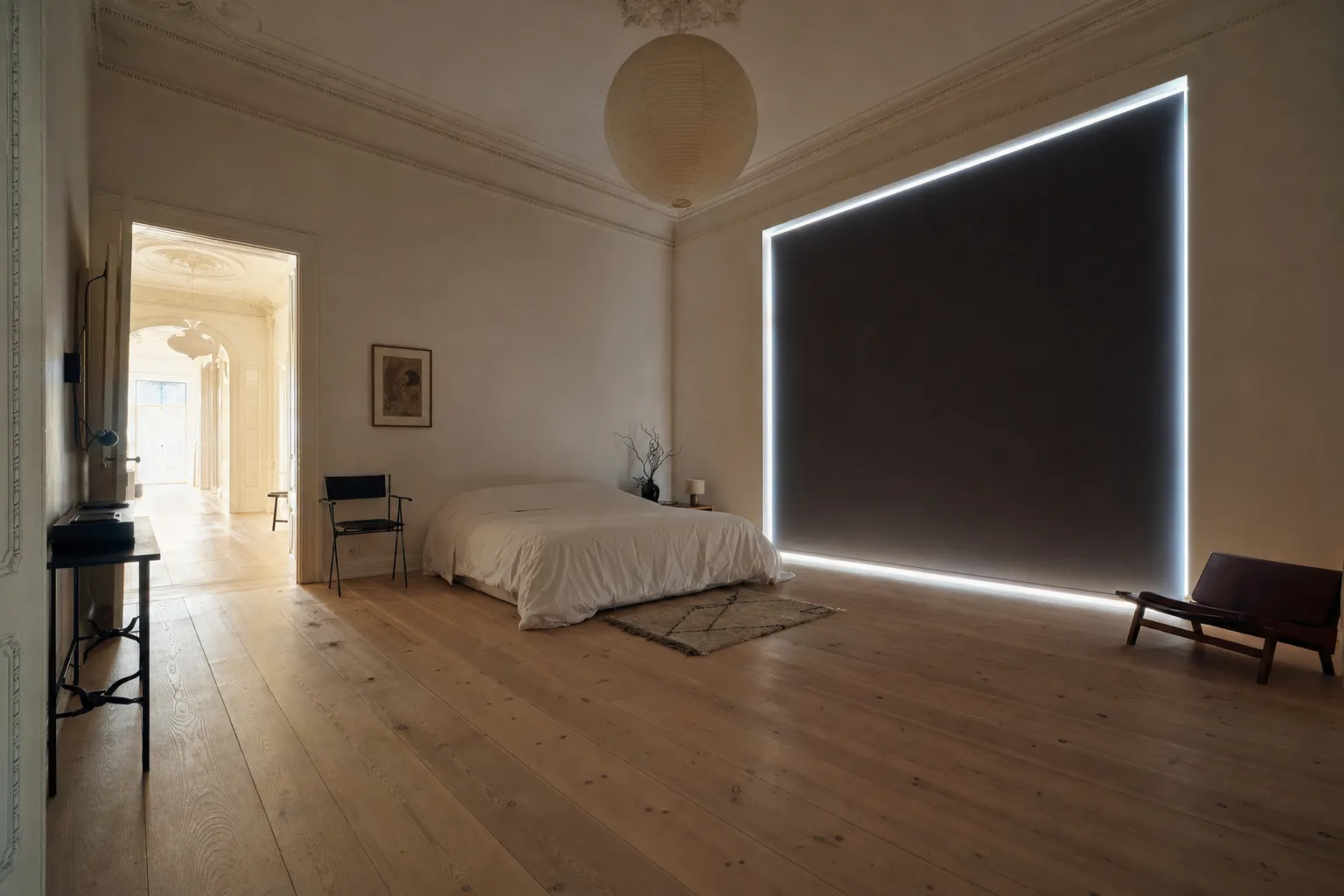




Two-storey glass needs the track decided before anything else. We will come and set it.
Our commitment
We set the track and the drop on tall glass, so a curtain that hangs wrong is ours.
If it does not fit, we remake it
You never held the tape.
Nothing owed before you agree
No deposit, no card.
Licensed and insured
Both, before we come in.
Your date, in writing
Set at the quote. It does not move.
We will tell you not to buy
If a stock size does it, you hear so.
Cordless where a child sleeps
Standard, at no extra charge.
Reviews on Google
What people said afterwards.
Rated 4.8 out of 5 — the ones below are quoted in full, with a link to check each on Google.
I was blown away by the exceptional customer service from Blinds Company! Their staff was knowledgeable, friendly, and helped me find the perfect blinds for my living room. The installation was quick and flawless. I highly recommend them!
Merdan BerdiyevI'm thoroughly impressed with Blinds Company. From the initial consultation to the final installation, their team delivered exceptional service, expertise, and quality.
Oleksandr Stakhurskyi
Real names, real dates, and a link to all of them — including the ones we would not have picked.
Read them on GoogleQuestions
Before you book
Our great room echoes. Will curtains help?
Yes, and more than most people expect. A double-height room with a wall of glass, hard flooring and a flat ceiling has almost no soft surface in it, so speech and television sound reflect rather than being absorbed. Curtains are the largest piece of textile you can introduce without buying furniture, and interlined ones do considerably more than unlined. It will not make the room a recording studio; it will stop it being tiring to sit in.
How do you hang curtains on a two-storey window?
From a track fixed at the height the room wants, which on a two-storey window is usually a bulkhead or the ceiling rather than the wall above the frame. The practical constraints are weight and reach: a curtain eighteen feet long is heavy enough to need a substantial track and a proper fixing, and it will not be opened by hand, so it is either a decorative dress curtain that never moves or it is motorised.
Can the track go on the ceiling?
Frequently, and in newer housing it is often the better answer. Where there is no wall above the window, or a bulkhead runs along it, a ceiling-fixed track puts the curtain at full room height and hides the hardware entirely. The thing to check first is what the ceiling is: a drywall ceiling needs the joists found, and a bulkhead needs to be sound enough to carry the weight.
Are curtains a bad idea over a heat vent?
Over a floor vent, yes — a floor-length curtain sitting on a supply register blocks it and the room stays cold while the curtain gets warm. That is common in newer builds where registers sit under windows. The fix is a shorter drop, a vent deflector, or moving the track forward, and it is a five-second check at the measure.
What is the difference between curtains and drapery?
In ordinary use, none — the words are interchangeable in Canada. Where people do distinguish, "drapery" implies heavier, lined, pleated and formal, and "curtains" implies lighter and simpler. Nobody will misunderstand you either way, and it does not change what gets made.
Do you make them, or order them in?
Made to the measurements taken in your home, under our own name, and hung by the crew that measured. No third-party label and no brand markup.
Where we work
Curtains across the GTA.
The same crew measures and fits in every one of these. The visit is free wherever you are on this list.
- TorontoCurtains
- MississaugaYou are here
- BramptonCurtains
- EtobicokeToronto
- Richmond HillYork
- North YorkToronto
- VaughanYork
- MiltonHalton
- BurlingtonHalton
- MarkhamYork
9 of these have a page of their own so far; the rest are covered by the same crew on the same terms, and their pages are being written. Not sure whether you are inside it? Call and ask — the answer takes ten seconds.
If your great room is uncomfortable to talk in and you assumed that was the layout, it is usually the surfaces. Ring and describe the room.