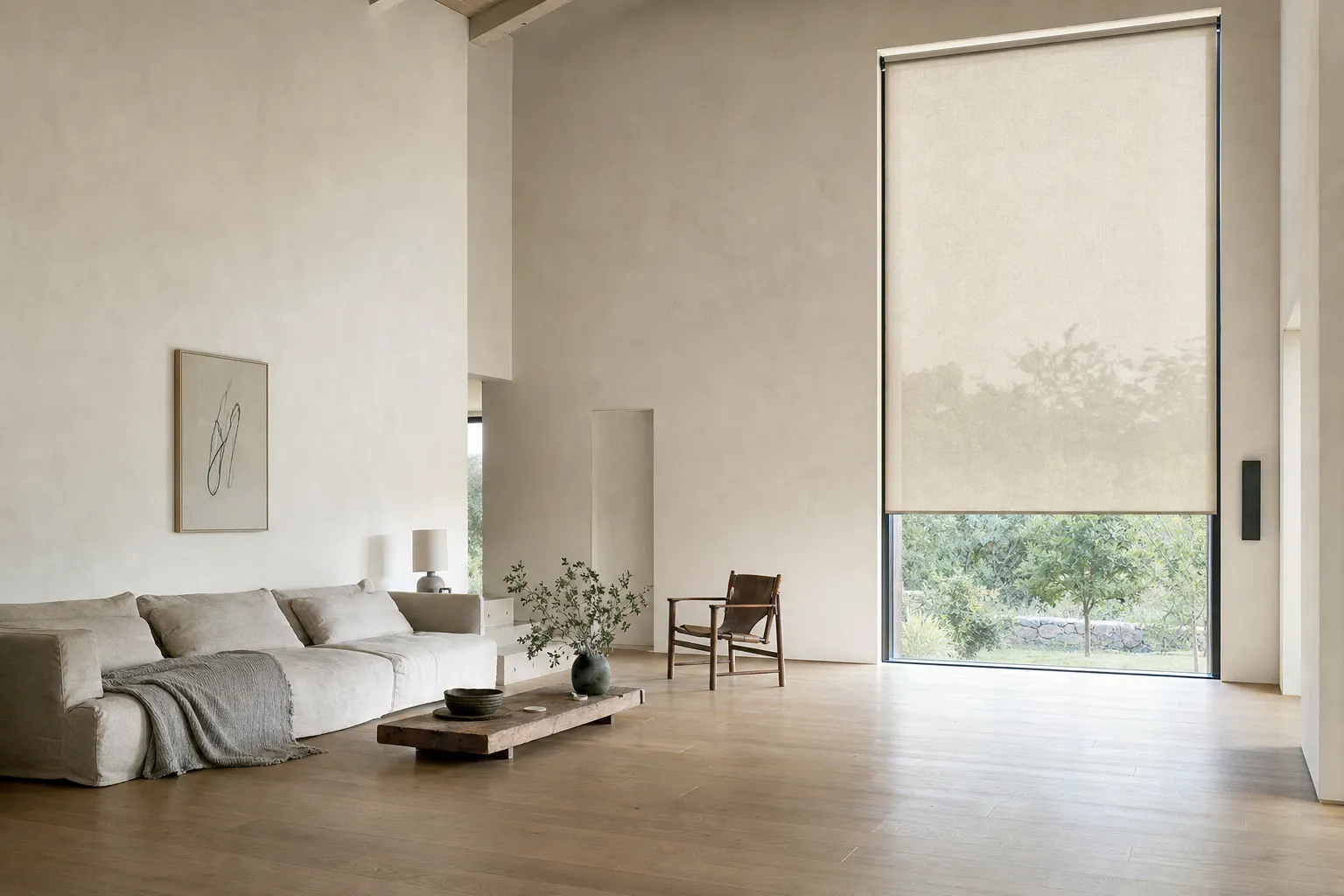
Roller blinds in Mississauga
Roller blinds made to your openings and fitted across Mississauga. The reason they sell here more than anywhere else in the GTA is the glass: newer housing with big west-facing windows, where the argument is glare rather than privacy.
Blinds Company · Rated 4.8 out of 5 on Google
Free in-home measure · open 8am–9pm, 7 days
In short
Roller blinds made to your openings and installed in Mississauga. West-facing glass and a lot of it — the specific reason roller screens outsell everything else in this city.
Book
Let's measure your light.
We come to you, measure at your own windows, and go through fabrics and fits together. The visit costs nothing.
$99 off when you order three or more blindsApplied to your written quote at the measure.
Rather just talk?(437) 782-5452Open 8am–9pm, 7 days
In a room
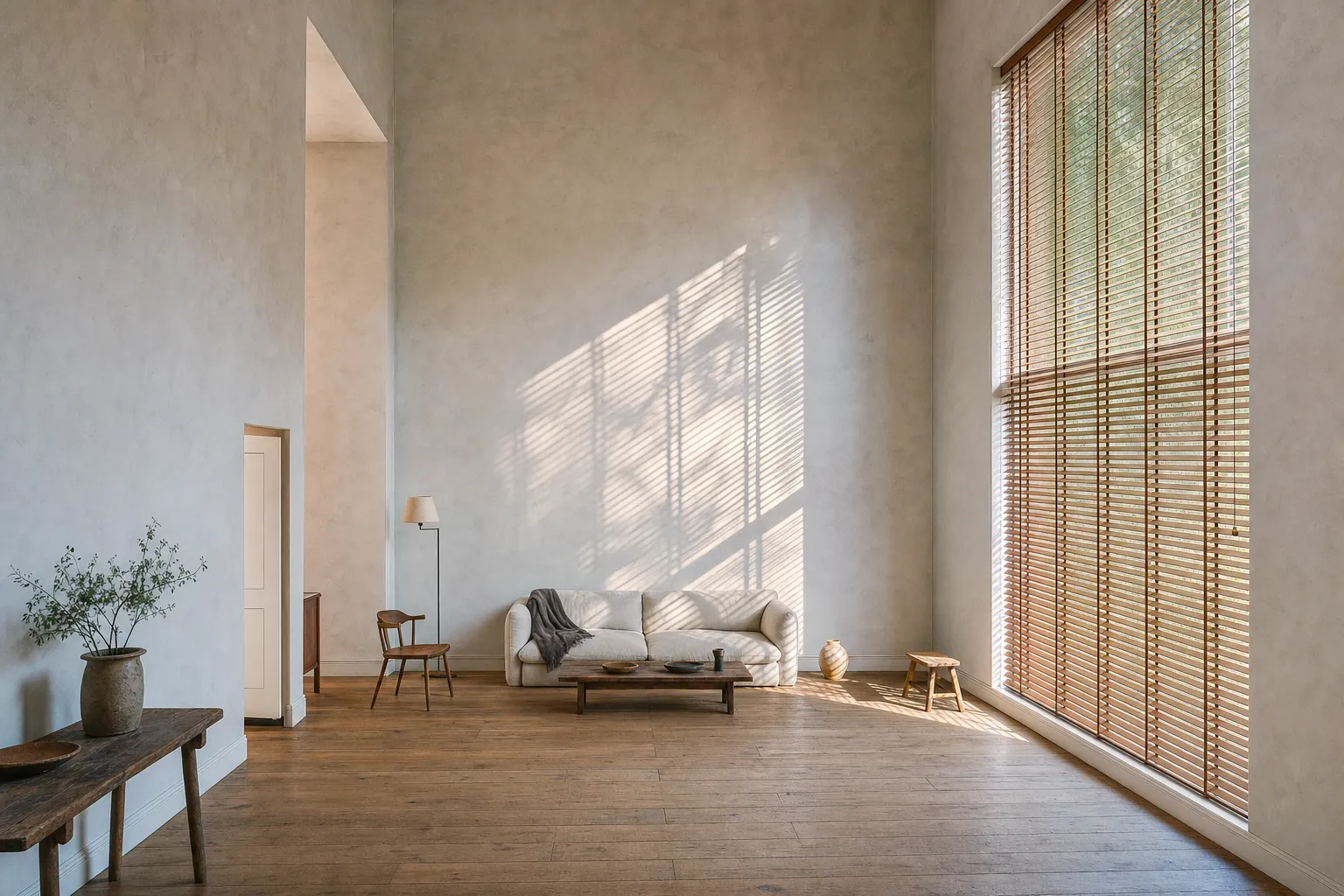
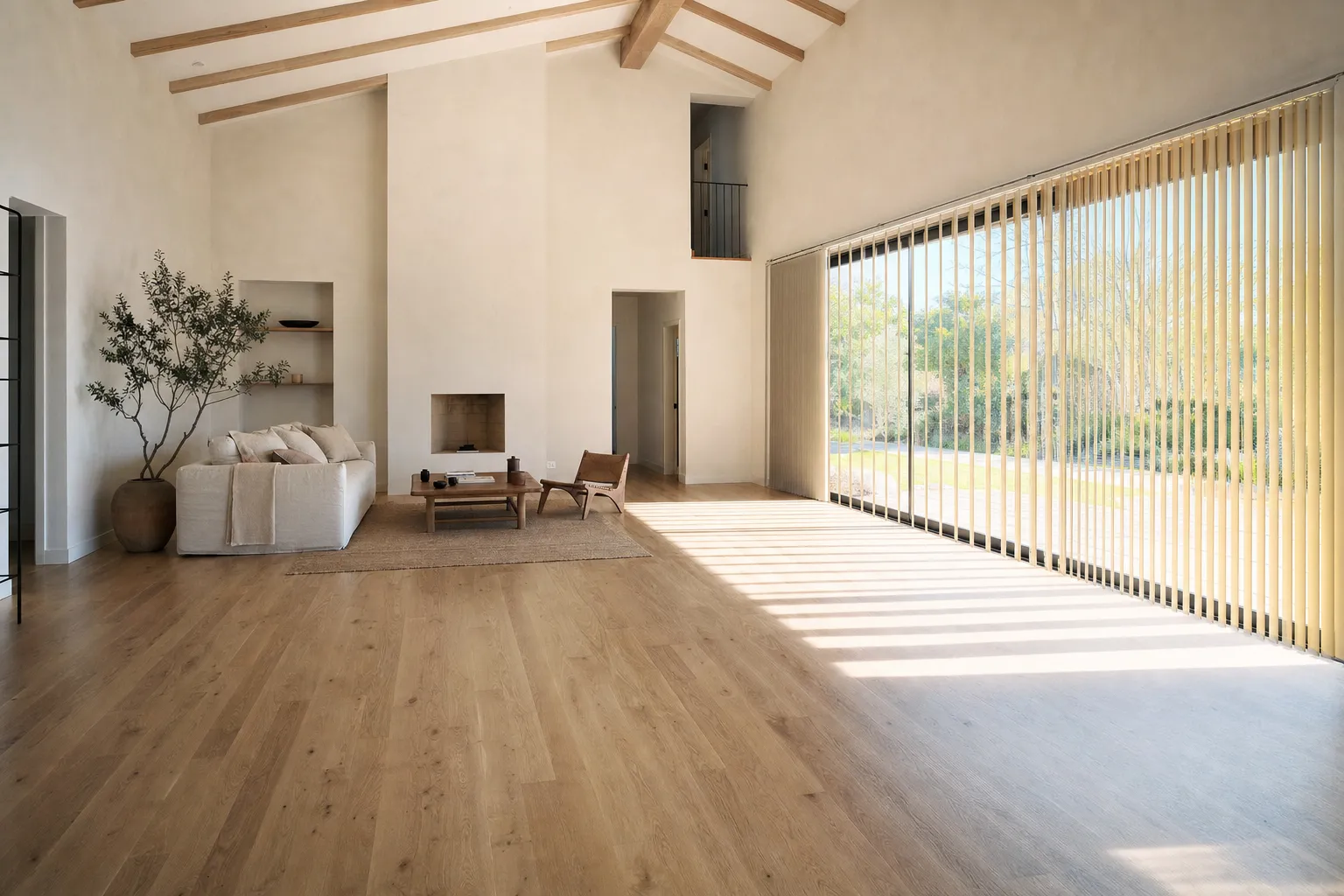
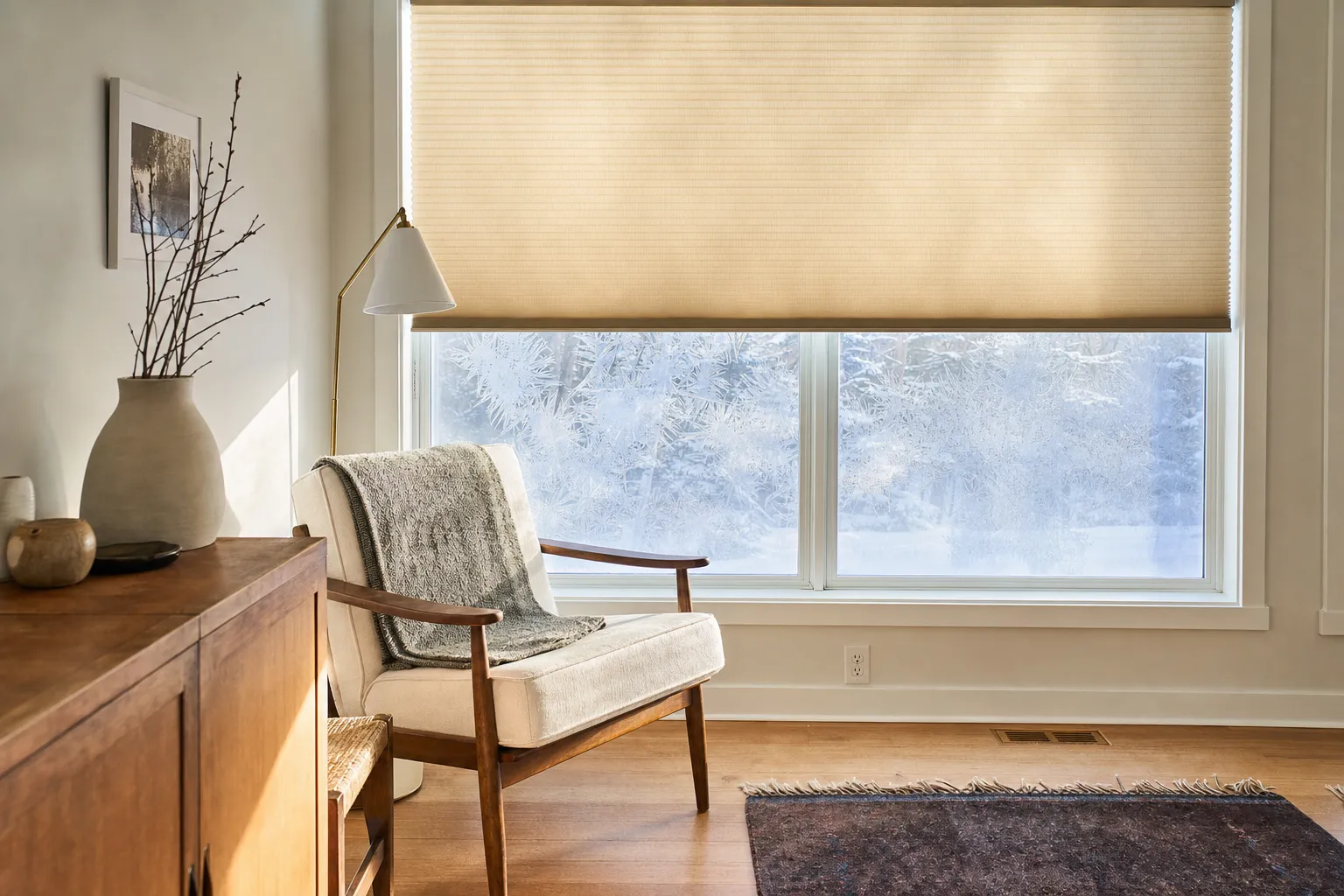
What roller blinds look like once they are up.
The product, not our installations — a gallery of rooms we did not fit would be somebody else's portfolio with our name on it.
Why this product, in this city
Mississauga is newer than Toronto on average, and newer housing means bigger windows in smaller rooms, squarer openings, and a great deal of west-facing glass. That combination is what makes the roller the default here rather than a compromise.
A roller does one thing: it puts a single flat plane of fabric across an opening, with nothing to tilt and nothing to stack. On a big modern window that is exactly right — the blind disappears into the architecture instead of adding a second pattern to a room that already has a view in it.
The argument here is also different from anywhere with older housing. On a narrow downtown lot the question is privacy from a sidewalk six feet away. In Erin Mills or Churchill Meadows the setback is much greater and the sidewalk is not the problem — the sun at half past four is. That changes what you are choosing: openness factor rather than opacity.
Which number, for which Mississauga room
The mechanics of openness — what the percentage means and the three things it trades against each other — are set out in full on the roller blinds page. What belongs here is which number actually gets specified in which room in this city, because after a few hundred visits the pattern is consistent.
A great room facing west, back of the house, Erin Mills or Churchill Meadows. 3%. This is the single most common specification we write in Mississauga. The room has a real glare problem for two to three hours, there is nobody close enough for privacy to matter, and a 3% keeps enough of the garden to be worth having.
The same room, but the complaint is heat rather than glare. Still around 3%, but in a light colour rather than a dark one, and the conversation moves to what the glass itself is doing. See the section below.
A front room on a newer street. 5%. The setback is generous, the sightline from the sidewalk is poor, and the requirement is comfort rather than concealment.
A condominium living room near Square One, above the tenth floor. 1–3%. Height removes shelter and adds sky, and the glare arrives for longer than it does at ground level.
A north-facing room, anywhere. Frequently nothing at all, or 10% if the window needs something for the sake of the room. A north window has no direct sun to cut, and a tight screen there buys nothing and costs the light.
A bedroom. Not a screen. Whatever the number, an open weave in a bedroom is a compromise nobody is happy with — the answer there is dim-out or blackout, and the two are not the same thing.
Colour does more than openness for heat
This is the part of the decision most people have backwards, and it is worth separating cleanly from the paragraph above.
Openness governs how much light passes through the holes in the weave. Colour governs what happens to the energy that hits the threads.
A light screen reflects a large share of solar radiation straight back out through the glass before it becomes heat in the room. A dark screen absorbs it — the yarn warms up, and a warm surface hanging on the room side of the window radiates that heat inward. The result catches people out: the darkest fabric in the book is not the coolest room. It is usually the hottest one that still looks smart.
Dark wins decisively on two other things, which is why it keeps getting chosen. View out is better through a dark screen, because your eye adapts to a dark frame around bright glass instead of being dazzled by a bright frame. And glare control is better for the same reason.
So the honest specification is a question rather than a preference: is the problem your eyes or the temperature? On a home office facing west, it is the eyes and the answer is dark and tight. On a south-west great room that becomes unusable in July, it is the temperature, and a light screen — or an exterior solution, which we will say if it is the real answer — does more.
The three rooms this comes up in most here
Great rooms with two-storey glass. Common in the newer subdivisions, and the practical issue is not the fabric but the reach. A blind whose bottom bar is nine feet up is a blind nobody adjusts, which means it ends up permanently down or permanently up and the money is wasted. This is where a motor stops being an upgrade and becomes the thing that makes the product work.
Kitchens over a sink. A short, wide window where every centimetre of view matters. A roller is the right answer precisely because it stacks to almost nothing — the tube and a slim cassette, a few centimetres at the head. A roman in the same opening would eat a fifth of the drop in folds.
Condo living rooms near Square One. Floor-to-ceiling glass with minimal reveal. Depth decides everything, and a plain roller needs less of it than anything else in the range. Where the reveal is genuinely nothing, the blind goes on the ceiling or the bulkhead.
Regular roll or reverse roll, and why nobody asks
The fabric can come off the front of the tube or off the back, and it is the one specification people are never offered even though it changes both the look and how well the blind works.
Reverse roll brings the fabric down the window side. It sits closer to the glass, which closes the gap at the back and cuts the light that sneaks around it — worth having on a screen you are using for glare. It also clears an obstruction on the sill, like the crank handle on a casement window.
Regular roll brings it down the room side. It needs less depth, which on the shallow reveals common in newer builds here is often what decides it.
If nobody asks you, the factory default decides. We ask.
Cassettes, fascias and what the top of the blind looks like
The other thing rarely offered, and on a wall of modern glass it matters more than on an old window because there is no trim to hide behind.
Bare roll. The tube and the fabric are visible at the head. Cheapest, and on a deep reveal it disappears anyway because you are looking at it from below.
Fascia. A flat panel across the front of the tube. Clean line, hides the roll, adds a couple of centimetres of depth.
Cassette. A full enclosure around the tube, sometimes with side channels. It hides everything, it cuts the light that escapes over the top of the blind — which on a blackout in a bedroom is a real gain — and it needs the most depth of the three.
On a shallow reveal that decision can invert the mount: a cassette that will not fit inside the opening either drops the blind onto the wall face or drops the cassette from the plan. Worth deciding at the measure with a tape in the reveal rather than from a picture.
How wide is too wide
Width is the constraint people run into here that they do not run into in older housing, because the windows are simply bigger.
A roller tube has to carry the weight of itself and of the fabric across the span without bowing. Past a point set by the tube diameter and the cloth weight, the centre drops, the bottom bar stops sitting level, and the blind looks wrong even though every measurement was right. Heavier fabrics — blackouts with a bonded backing — reach that point sooner than light screens.
There are three answers and they are chosen at the measure, not at the order.
A larger-diameter tube buys real width and is invisible once fitted, at the cost of a slightly deeper roll and a slightly larger cassette.
Splitting the opening into two blinds on one bracket line is the honest answer past that, and the seam is placed on a mullion where the eye already expects an interruption. Two blinds on a wide window also mean you can shade half a room, which on a great room with a seating area at one end is often better than one blind anyway.
A motor does not solve deflection and is sometimes sold as though it does. It solves reach, which is a different problem that the same windows tend to have.
The window nobody can get to
Newer Mississauga layouts produce a specific recurring problem that has nothing to do with fabric: a window that is physically hard to reach.
Behind a kitchen sink. Reaching over a sink and a tap to a bottom bar is awkward, wet hands make it worse, and a blind that is annoying to operate at breakfast is a blind that stays where it is. A wand-operated product, or a blind sized so the bar sits forward of the tap, or a motor on a wall switch beside the light — all three are better than the default.
Behind a fixed dining table. Common in a breakfast nook with banquette seating against the glass. The blind is reachable in theory and involves kneeling on a cushion in practice.
Above a stair. In houses with a window on a half-landing, the floor in front of the glass is not a floor. Nothing manual is a sensible answer there and we will say so.
Behind a permanently placed sofa. The most common and the least considered. A sofa backing onto a window puts the bottom bar an arm’s length beyond the cushions, which is fine for the first month.
The rule we use at the measure is simple: if operating the blind requires moving furniture, leaning over water, or standing on something, it is not going to be operated. That is not a reason to spend more on every window — it is a reason to spend more on that one.
Two blinds in one opening
The compromise this page keeps describing — view against glare, dark against gloomy — has an answer people rarely get offered, which is to stop asking one product to do both.
A screen and a blackout can share an opening on separate brackets. The screen lives down through the day, cutting glare and keeping the view. The blackout comes down at night, or in a bedroom, or when a projector is on. Two independent blinds, two independent decisions, and neither one compromised to cover for the other.
It is more expensive than one blind and it is cheaper than a blind that never quite works. The cases where we suggest it are narrow and specific:
A bedroom used in the day. A shift worker, a nursery, an office that doubles as a guest room. A single blackout leaves the room dark and unusable at noon; a single screen leaves it bright at two in the afternoon.
A great room with a television. Glare on a screen wants a tight fabric at four o’clock; the same room wants the view back at seven. One product picks one of those.
Any window where the reveal is deep enough. This is the constraint. Two roller mechanisms need roughly twice the depth of one, and on the shallow reveals common in newer builds here there is often only room for one blind inside the opening. Where that is the case, the second blind mounts to the wall face in front of the first, which works and has to be planned rather than discovered.
The reason it is worth raising is that people arrive having already decided they must choose. Frequently they do not have to.
Ordering for a house you have not moved into yet
New-build closings are common enough here that this deserves its own answer, and the answer is mostly “not yet”.
People ask whether we can measure from the builder’s floor plans and have blinds ready for the day they get the keys. We can measure from drawings and we would rather not, for three reasons that are specific to new construction.
Drawn openings and built openings differ. Not by much — usually ten to thirty millimetres — and on a blind cut to the tightest of six numbers that is the whole tolerance. A blind ordered from a plan is a blind ordered from a number nobody verified.
The reveal depth is almost never on the drawing. It depends on the window unit actually installed, on the drywall return, and on whether there is a bulkhead. It is the number that decides which products are possible, and it does not exist until the house does.
The rooms are not what the plan says they are. The room labelled bedroom becomes an office; the great room turns out to face slightly differently from what the site plan suggested; the neighbouring house goes up and changes the sightline. Every one of those changes the specification.
What does work, and what we do regularly: measure on a pre-delivery inspection or in the first week after closing, and prioritise. A bedroom that faces east is worth having covered before the first weekend. The formal room at the front can wait a month while you find out how the house is actually used.
The one case where ordering early is right is a house with a two-storey window that will need a motor. Those take longer to specify and are far easier to install before the room is furnished, so if there is one on the plan it is worth raising at the first visit rather than the second.
Fitting around a bulkhead
Common in the towers here and in newer detached builds with a dropped ceiling along the window wall, and it changes where the blind goes rather than what it is.
A bulkhead is a boxed-in run of duct or structure above the glass. It gives you two possible mounting surfaces — its underside, or the wall face below it — and the choice is not cosmetic.
Under the bulkhead puts the head of the blind above the head of the glass, so nothing shows above the fabric when it is down. It is the better light result and it usually means the blind clears the window entirely when raised.
On the wall face below it is easier and leaves a strip of glass above the blind that light comes through all day. In a bedroom that strip is the reason the room is not dark.
The catch is that a bulkhead is very rarely a consistent depth from one end of a window to the other — five or six millimetres of variation is normal, and on a wide unit that is a visible wedge of daylight along the head. So it gets measured at both ends and in the middle, and the blind is set to the tightest, exactly as an opening would be.
Where the bulkhead is too shallow to take a bracket, the blind goes on the ceiling in front of it. That looks deliberate and it is often the neatest answer in the room.
The lake, and what it does to a west window here
Mississauga has thirteen kilometres of shoreline, and the streets near it behave unlike anything inland — which matters on this page because a roller screen is chosen by a number, and the number is wrong near the water.
Water reflects. On a clear afternoon a west or south-west window within sight of the lake takes the sun twice: once directly, and once off the surface. That second dose arrives from a low angle, close to the horizon, which is precisely the part of the window a blind lowered halfway is not covering.
Three practical consequences for a roller specifically.
Go a step tighter than the number you arrived with. A 5% screen that is comfortable in Churchill Meadows is frequently a 3% job in Port Credit or Lorne Park, for the same orientation and the same room.
Half-mast stops working. Inland, leaving a roller at half height through the afternoon is a reasonable habit. Near the water the low reflected component comes in under it, so the blind is either down or it is not doing the job — which in turn is an argument for a fabric open enough to live with fully lowered.
The glare peaks later than you expect. Not at two when the sun is highest, but at five or six as it drops toward the water and the reflection angle lines up with the window. Somebody choosing fabric at midday will underestimate it, which is why on the lakeshore we suggest a time for the sample visit rather than taking whatever suits.
The same effect is stronger again on the high floors of the buildings along the shore, because height adds open water to the view and removes whatever shelter a street would have given.
What the visit looks like
Reveal depth first, because on the shallow reveals common here it decides whether a cassette is even possible, and the cassette decides the mount.
Then the openings themselves, each measured on its own. Then obstructions — a casement crank, a deep sill trim, a bulkhead running along the head in a condo.
Then the part that matters most on this page: samples against your own glass, on the west side, at the hour the room misbehaves. We will suggest a time for that rather than take whatever is convenient, because it is the one decision here that genuinely cannot be made any other way.
A written quote itemised per opening so you can walk the house with it, and nothing owed either way.
Last updated .
Everything we make
The rest of the range, in Mississauga.
Each is wrong somewhere. Its page says where.
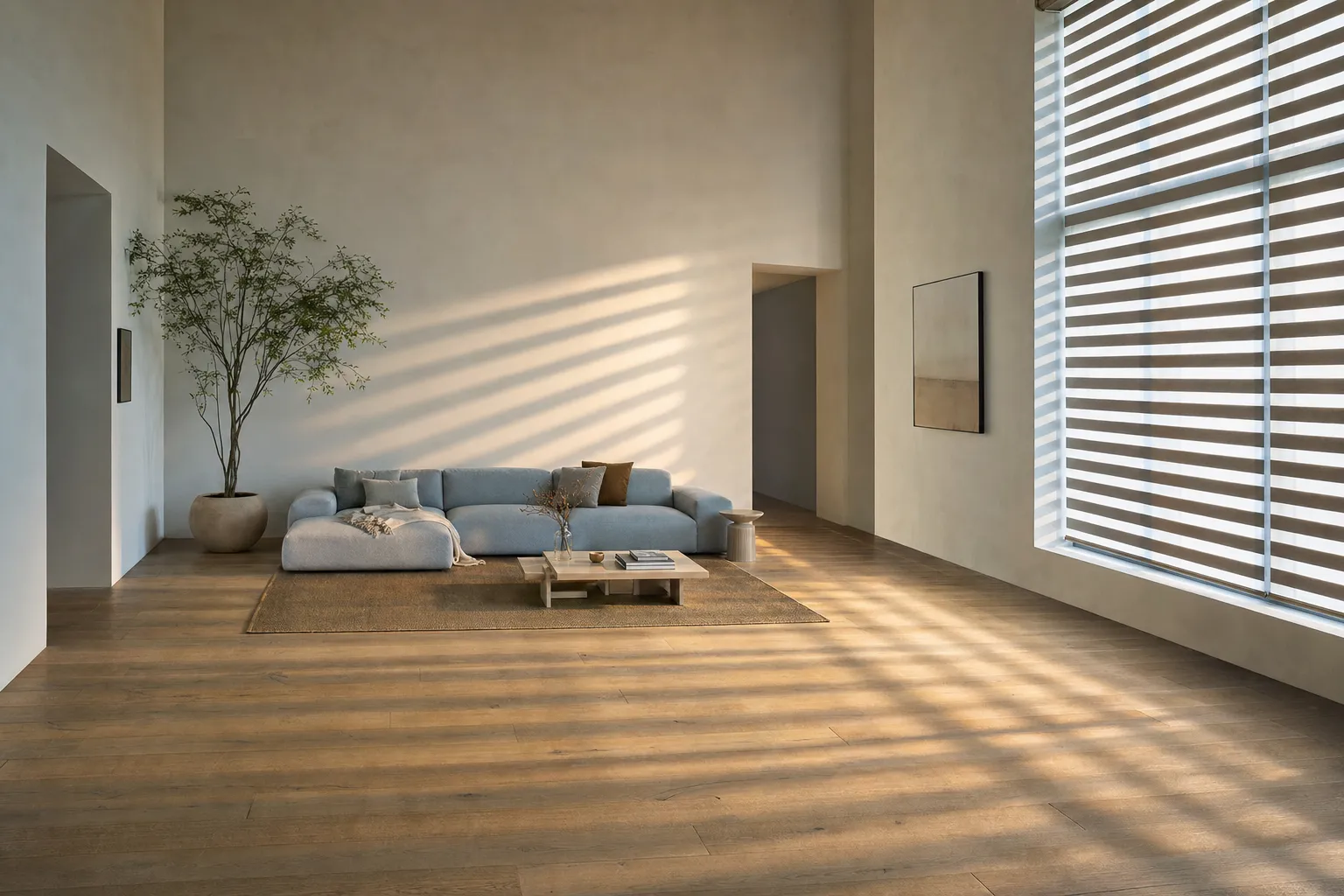
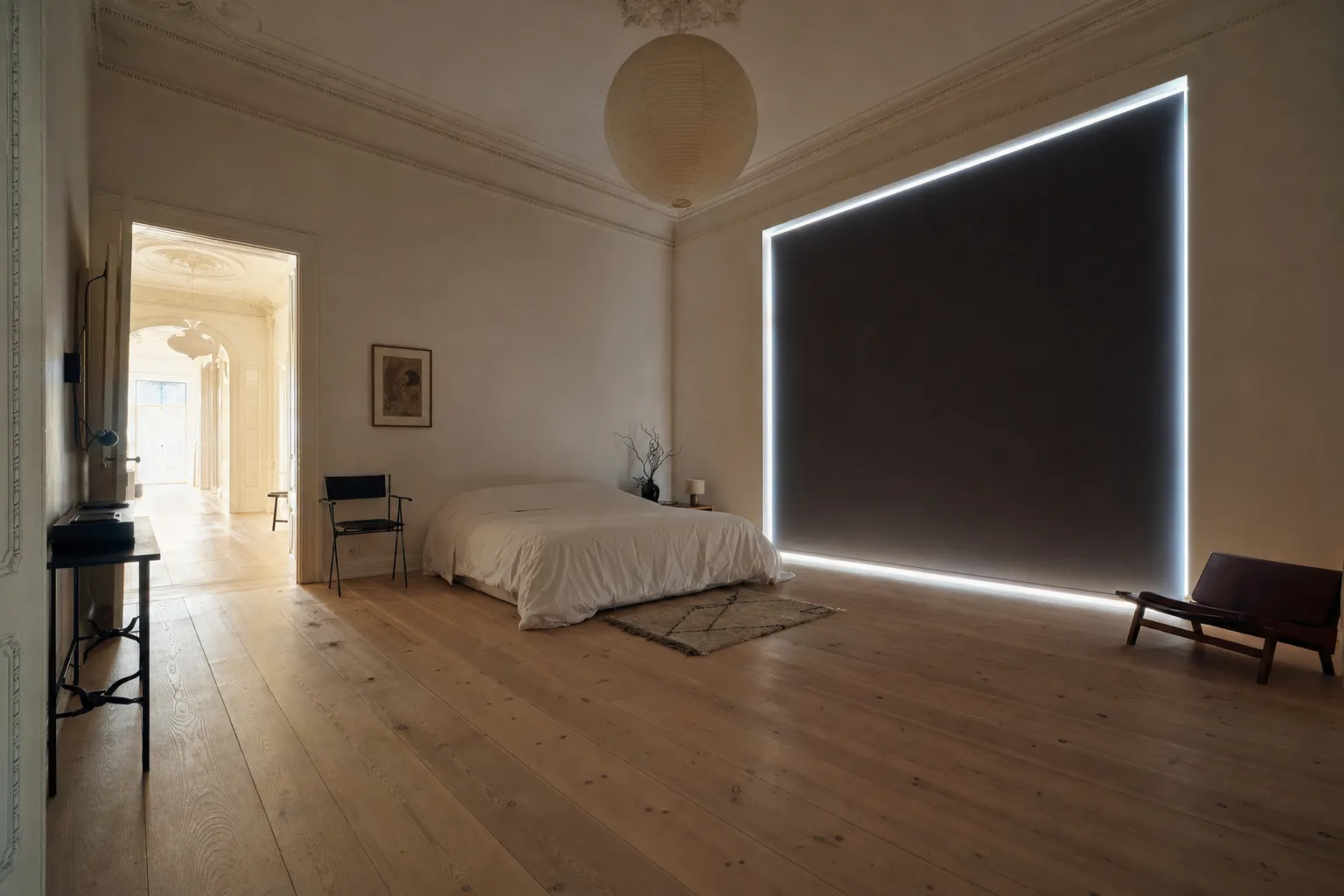
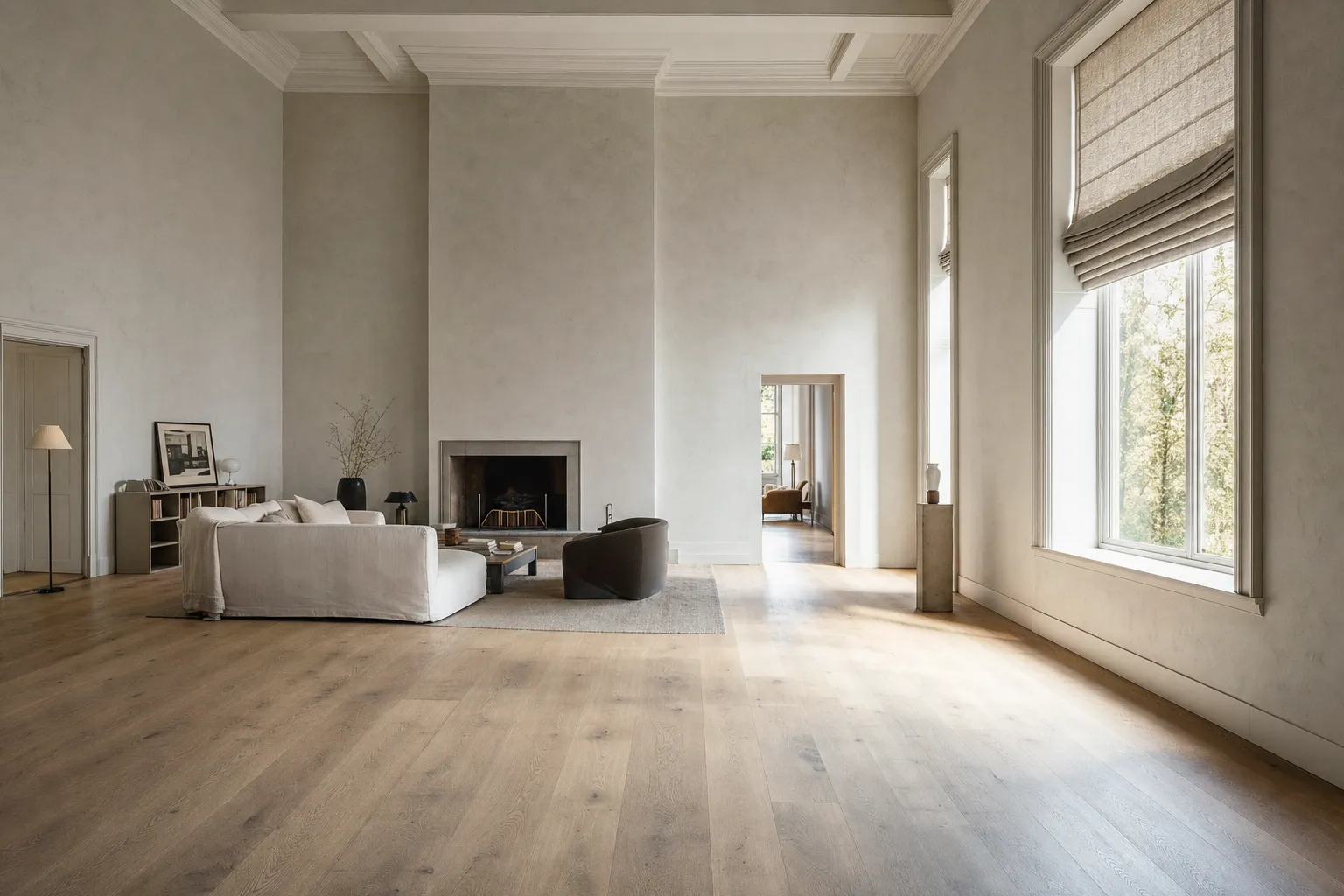
Bring us the room that is unusable at five o'clock. That is the one worth measuring.
Our commitment
We picked the openness against your own glass, so a screen that fails at five is ours.
If it does not fit, we remake it
You never held the tape.
Nothing owed before you agree
No deposit, no card.
Licensed and insured
Both, before we come in.
Your date, in writing
Set at the quote. It does not move.
We will tell you not to buy
If a stock size does it, you hear so.
Cordless where a child sleeps
Standard, at no extra charge.
Reviews on Google
What people said afterwards.
Rated 4.8 out of 5 — the ones below are quoted in full, with a link to check each on Google.
I was blown away by the exceptional customer service from Blinds Company! Their staff was knowledgeable, friendly, and helped me find the perfect blinds for my living room. The installation was quick and flawless. I highly recommend them!
Merdan BerdiyevI'm thoroughly impressed with Blinds Company. From the initial consultation to the final installation, their team delivered exceptional service, expertise, and quality.
Oleksandr Stakhurskyi
Real names, real dates, and a link to all of them — including the ones we would not have picked.
Read them on GoogleQuestions
Before you book
Which side should the chain or the control be on?
The side away from the traffic through the room, and on a patio door the side away from the handle. It sounds obvious and it is set in the blind at manufacture, so it cannot be swapped afterwards without taking the mechanism apart. We ask at the measure and write it on the sheet, because it is the commonest small thing to get wrong on an otherwise perfect blind.
Which openness factor should I ask for on a west-facing window?
For a room where the complaint is glare on a screen or a television, 1–3%. For a room where you mostly want the view kept and the heat cut, 5–10%. The number is the percentage of the fabric that is open weave, and it sets view, glare and daytime privacy all at once — there is no fabric that wins on all three, whatever a showroom says.
Will a roller blind stop the heat coming off a west window in July?
It reduces it, and colour does more of that work than openness does. A light screen reflects solar heat back through the glass before it reaches the room; a dark one absorbs it and re-emits much of it inward, which is why the darkest fabric is not the coolest room. Dark wins on view and glare, light wins on heat. We ask which one is actually bothering you.
What is the difference between a dim-out and a blackout fabric?
A blackout has an opaque coating or a bonded backing and passes no light through the cloth at all. A dim-out passes a little — enough that on a bright afternoon you can see the shape of the window through it. In a bedroom used for sleeping at night, a dim-out is often perfectly adequate and reads softer. In a room for a shift worker or a baby, it is not.
Can one roller cover a wide great-room window?
Up to a point, and the point is tube deflection: past a certain span the tube sags at the centre and the bottom bar stops sitting level. A larger diameter tube buys width, which is why a wide blind is not a narrow blind with more fabric in it. Past that we split the opening and put the join on a mullion.
Do they work on the floor-to-ceiling glass near Square One?
Usually, and the constraint is depth rather than height. A plain roller needs less room front to back than a zebra, so it fits reveals that a banded blind cannot. Where there is no reveal at all the blind mounts to the ceiling or the bulkhead, which looks deliberate and often better.
Our great room window is nine feet up. Can it still be cordless?
It has to be, and on that window cordless means a motor rather than a spring. A spring blind is operated by pulling the bottom bar, so a bar at nine feet is not reachable whatever the mechanism is. Battery tube motors need no wiring, charge two or three times a year, and are the reason those windows get used rather than left in one position for years.
Where we work
Roller blinds across the GTA.
The same crew measures and fits in every one of these. The visit is free wherever you are on this list.
- TorontoRoller blinds
- MississaugaYou are here
- BramptonRoller blinds
- EtobicokeToronto
- Richmond HillYork
- North YorkToronto
- VaughanRoller blinds
- MiltonHalton
- BurlingtonRoller blinds
- MarkhamYork
9 of these have a page of their own so far; the rest are covered by the same crew on the same terms, and their pages are being written. Not sure whether you are inside it? Call and ask — the answer takes ten seconds.
Nobody can choose an openness factor from a website, and a showroom will not tell you either. Ring, and we will hold two against your window in the afternoon.